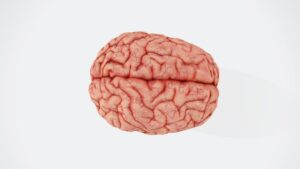
Acataphasia: When Your Thoughts Lose Their Meaning
Scientifically Reviewed · Dr. Marwa Abd-Alazim · September 6, 2026
Review Criteria & Clinical Standards
This content undergoes rigorous scientific peer-review and medical editorial standards at Arab Psychology Network to ensure clinical accuracy, validity, and compliance with evidence-based guidelines from leading psychological and healthcare authorities (APA / WHO).

ACATAPHASIA (AKATAPHASIA): Definition and Context
Acataphasia, sometimes spelled akataphasia, is a specialized psychological and linguistic term referring to a pervasive disturbance in expressive language characterized by the consistent production of speech that is incomprehensible, unsuitable for the context, or grammatically incorrect. This disorder transcends simple grammatical mistakes or occasional malapropisms; rather, it represents a fundamental breakdown in the ability to formulate and articulate coherent, socially functional verbal output. It is crucial to understand acataphasia not merely as a speech impediment, but as a symptom reflecting underlying cognitive disorganization, particularly concerning semantic and syntactic processing necessary for effective communication. The resulting verbalizations often baffle listeners, leading to significant impairment in social interaction, educational attainment, and occupational functioning, thereby reinforcing its clinical significance within psychopathology.
The term itself derives etymologically from Greek roots, suggesting a lack or failure of articulation or statement. While sometimes used broadly in historical texts to describe general language chaos, modern clinical definitions focus specifically on the complex interplay of semantic drift, syntactic fragmentation, and pragmatic failure. Unlike global aphasia, where the impairment is often linked directly to structural brain damage affecting language centers, acataphasia is historically associated with functional mental disorders, where the integrity of thought processes dictates the integrity of speech formation. Consequently, research into acataphasia often overlaps with studies on formal thought disorder (FTD), serving as one of the most visible behavioral manifestations of cognitive slippage characteristic of severe psychiatric conditions. The manifestation of acataphasia varies greatly among affected individuals, ranging from mild disorganization to profoundly idiosyncratic and unintelligible neologisms, necessitating careful clinical assessment to distinguish it from other forms of language dysfunction.
Understanding the nuances of acataphasia requires appreciation of the three core deficits simultaneously present: the lack of comprehensibility, the contextual inappropriateness, and the structural non-adherence to grammatical rules. These three elements combine to produce a communication style marked by unpredictability and semantic deviation. For instance, a sentence might be grammatically sound but semantically nonsensical, or conversely, the intended meaning might be discernible but delivered through a jumble of incorrectly structured phrases. This tripartite definition highlights the complexity of the underlying cognitive deficit, suggesting a failure in the central coordination mechanisms responsible for translating structured thought into structured speech. It is a condition that significantly impacts the individual’s ability to participate in shared reality through language, making it a critical focus area within clinical psychology and psychiatry.
Linguistic Characteristics: Incomprehensibility and Syntactic Failure
The linguistic profile of acataphasia is defined by distinct features that disrupt standard communication paradigms. One of the primary indicators is the element of incomprehensibility, which arises from several mechanisms, including the use of neologisms—newly invented words that hold meaning only for the speaker—and significant word salad, where real words are strung together randomly without logical or syntactic connection. These verbalizations defy conventional semantic interpretation, rendering the speaker’s message opaque to the listener. This phenomenon differs from simple vocabulary limitations; rather, it indicates a failure in the lexical retrieval and organization processes, suggesting a severe disruption in the internal lexicon mapping system where concepts are linked to appropriate linguistic symbols. The listener experiences a profound sense of confusion, as the rules governing meaningful discourse appear to be suspended entirely.
Furthermore, acataphasia exhibits profound issues relating to syntactic failure, manifested as agrammatism or paragrammatism. Agrammatism involves the reduction of structural complexity, often omitting function words (like articles, prepositions, or auxiliary verbs) and relying primarily on content words, resulting in “telegraphic speech.” Paragrammatism, more typically associated with the fluent but disorganized speech seen in acataphasia, involves substituting or misusing grammatical morphemes, resulting in overly complex sentences that are structurally flawed and often run-on. For example, tense agreements may be ignored, subordinate clauses may be improperly embedded, or pronouns may lack clear antecedents. This structural decay indicates that the cognitive mechanisms responsible for applying the rules of grammar during speech production—the mapping of abstract thought onto linear, rule-based linguistic sequences—are compromised.
The element of unsuitability further defines the disorder, encompassing pragmatic deficits where speech, even if grammatically or semantically sound in isolated parts, is entirely inappropriate for the social context or topic of conversation. This may involve abrupt topic shifts (derailment or tangentiality), speaking at inappropriate volume or speed, or utilizing overly formal or bizarre vocabulary in casual settings. This aspect highlights the connection between acataphasia and disturbances in executive functions, specifically the ability to monitor and regulate speech output based on contextual cues and social norms. The cumulative effect of incomprehensibility, grammatical deviation, and contextual inappropriateness is a form of communication that is highly disorganized and functionally isolating, positioning acataphasia as a hallmark feature of significant psychopathology.
Etiology and Primary Association with Schizophrenia
Historically and clinically, acataphasia is most strongly and consistently associated with schizophrenia, particularly the disorganized subtype, though modern diagnostic systems often categorize these severe language disturbances under the umbrella of formal thought disorder (FTD). In individuals suffering from schizophrenia, acataphasia is viewed as a direct manifestation of the underlying cognitive fragmentation and associative loosening characteristic of the condition. The failure to maintain a consistent logical train of thought translates directly into a failure to maintain a consistent, rule-based linguistic structure. The severe disturbances in working memory and attention typical of schizophrenia further impede the complex, multi-step process required for successful speech formulation, leading to the erratic and often nonsensical verbal output defined as acataphasia.
While schizophrenia remains the primary context for diagnosis, similar acataphasic features can occasionally be observed in other severe psychiatric or neurological conditions, albeit usually less pervasive or chronic. These include severe mania (where pressure of speech and tangentiality approach incomprehensibility), certain forms of dementia (where semantic memory degradation leads to word substitutions and neologisms), or acute psychotic states induced by substance use or mood disorders with psychotic features. However, the chronic, deeply entrenched pattern of linguistic disorganization found in schizophrenia sets the classic presentation of acataphasia apart. The presence of acataphasia in a clinical setting often serves as a significant prognostic indicator, generally correlating with greater severity of illness, poorer functional outcomes, and greater resistance to standard pharmacotherapy, emphasizing its central role in the pathophysiology of severe mental illness.
Neurobiological research attempts to localize the cognitive deficits responsible for acataphasia, often implicating dysfunction in the prefrontal cortex and related subcortical circuits. Specifically, areas involved in executive planning, semantic organization, and the sequencing of motor acts (including speech articulation) are hypothesized to be compromised. Reduced functional connectivity between Wernicke’s area (language comprehension) and Broca’s area (speech production), mediated by the arcuate fasciculus, coupled with deficiencies in dopaminergic and glutamatergic neurotransmission, are often cited mechanisms underlying formal thought disorder, of which acataphasia is a key component. The failure of inhibitory mechanisms to filter irrelevant or inappropriate semantic associations is believed to contribute to the bizarre and tangential nature of acataphasic speech, allowing disorganized thought processes to directly shape linguistic output.
Differential Diagnosis: Distinguishing Acataphasia from Other Language Disorders
Accurate clinical assessment necessitates careful differentiation of acataphasia from other conditions that involve disturbed language production, primarily various forms of aphasia and less severe speech abnormalities like clang associations or simple mutism. Aphasias, such as Wernicke’s or Broca’s aphasia, are typically caused by localized structural brain damage (e.g., stroke, trauma, tumor) and primarily affect specific aspects of language processing—either comprehension or production—but usually retain the underlying coherence of thought. In contrast, acataphasia stems from a disturbance in the underlying thought process itself, meaning the linguistic chaos is reflective of cognitive disorganization rather than a mere mechanical failure of the language faculty. While a patient with Wernicke’s aphasia might produce fluent but nonsensical speech (paraphasia), they generally do not exhibit the complex, chronic, contextually bizarre and grammatically fragmented speech patterns characteristic of acataphasia linked to psychosis.
It is also crucial to distinguish acataphasia from simpler forms of thought disorder. For example, clang associations involve linking words based purely on sound rather than meaning (e.g., “The cat sat on the mat, fat, spat, rat”). While clang associations are a form of linguistic deviation often seen in mania, they are generally focused and recognizable disruptions. Acataphasia, conversely, involves a global breakdown that includes clang associations but also incorporates semantic shifts, neologisms, and profound grammatical decay simultaneously, making the communication far more globally impaired. Similarly, tangentiality and circumstantiality, where the speaker eventually returns to the point, are less severe than the derailment seen in acataphasia, where the original topic is abandoned completely due to the inability to maintain a goal-directed stream of thought.
The definitive differentiating factor often lies in the clinical history and concurrent symptoms. If the language disturbance is sudden in onset, localized to specific deficits (like difficulty naming objects or repeating phrases), and accompanied by clear neurological signs, a primary aphasia is more likely. If the language disturbance is chronic, fluctuating, accompanied by delusions, hallucinations, and profound affective flattening, and represents a pervasive disorganization of thought, acataphasia linked to a primary psychotic disorder is the favored diagnosis. Utilizing structured assessment tools like the Thought Disorder Index (TDI) helps clinicians quantify the severity and specific types of linguistic errors, allowing for a more precise differential diagnosis and tailored treatment plan.
Clinical Presentation and Diagnostic Assessment
The clinical presentation of acataphasia is highly variable but consistently includes features that make conversational interaction difficult or impossible. Clinicians observe a lack of logical progression in speech, frequently marked by loose associations, where ideas shift abruptly from one subject to another without any discernible connection. This is often interwoven with poverty of content of speech, where the verbal output is extensive but conveys very little information, using vague, repetitive, or overly abstract language. The hallmark feature remains the combination of semantic breakdown (incomprehensible words or concepts) and syntactic breakdown (grammatically invalid structures). A patient exhibiting acataphasia may produce sentences that begin logically but dissolve into word salad towards the end, or they may utilize highly idiosyncratic grammar that makes interpretation impossible for the external listener.
Diagnostic assessment relies heavily on careful observation during clinical interviews, often supplemented by formal psycholinguistic analysis. Clinicians look for specific types of errors that define formal thought disorder. These errors are often classified into categories, including:
- Derailment/Tangentiality: Shifting topics without logical connection.
- Neologisms: Creation of new words.
- Incoherence/Word Salad: Speech that is essentially incomprehensible due to the random mixture of words and phrases.
- Clang Associations: Linking words based on sound rather than meaning.
- Poverty of Speech: Despite appearing functional, the quantity of speech is severely reduced.
The consistent presence and severity of these linguistic markers, especially neologisms and profound incoherence, strongly support a diagnosis incorporating acataphasia. Furthermore, the assessment must determine if the disturbance is reversible, acute (as in intoxication), or chronic (as in schizophrenia), informing the overall prognosis and management strategy.
Objective measurement of acataphasia, though challenging, often utilizes standardized rating scales for thought disorder. These scales provide quantifiable metrics for the frequency and type of speech anomalies observed. Reliability in scoring is achieved through rigorous training of assessors, ensuring that subjective interpretations of “incomprehensible” or “unsuitable” are minimized through clearly defined operational criteria. The assessment process is critical because the presence of severe acataphasia significantly influences treatment selection; for instance, disorganized thought patterns may require higher doses of antipsychotic medication or specific psychosocial interventions aimed at improving cognitive organization before verbal communication can become therapeutically useful. Thus, the diagnostic process functions not only to label the symptom but also to guide the subsequent therapeutic pathway.
Theoretical Frameworks: Cognitive and Neurobiological Models
Theoretical explanations for acataphasia generally fall into two interconnected domains: cognitive models focusing on information processing deficits, and neurobiological models focusing on underlying structural or chemical abnormalities. The dominant cognitive model views acataphasia as a failure of cognitive filtering or attentional control. In typical speech production, the brain selects the most appropriate semantic and syntactic elements while inhibiting countless irrelevant associations. In acataphasia, this inhibitory mechanism is postulated to fail, leading to an overflow of weakly associated, inappropriate, or bizarre linguistic elements being incorporated into speech output. This aligns with theories suggesting a deficit in the central executive component of working memory, preventing the maintenance of a coherent goal state (the intended message) during the encoding process.
A second major cognitive perspective relates acataphasia to a fundamental disturbance in the Theory of Mind (ToM) or pragmatic abilities. Successful communication requires the speaker to model the listener’s knowledge, expectations, and context. When this ability is impaired, the speaker fails to judge whether their language is suitable or comprehensible to the audience, resulting in the contextually inappropriate and idiosyncratic speech hallmarks of acataphasia. This explains why an individual might use highly personalized neologisms without recognizing the necessity of defining them for the listener; they assume the listener shares their unique linguistic world.
From a neurobiological perspective, acataphasia is linked to widespread hypofrontality and abnormal connectivity. Post-mortem and neuroimaging studies often reveal structural and functional abnormalities in the superior temporal gyrus, the hippocampus, and the dorsolateral prefrontal cortex (DLPFC)—areas critical for working memory, semantic processing, and cognitive control. Disrupted neurotransmitter systems, particularly the hyperfunction of dopamine in the mesolimbic pathway and hypofunction in the mesocortical pathway, are believed to contribute to the cognitive disorganization that manifests as acataphasia. This neurobiological viewpoint posits that the symptoms are the direct result of a disorganized brain state, challenging the complex coordination required to produce grammatically and semantically intact speech.
Management and Therapeutic Approaches
Management of acataphasia is complex, primarily because it is a symptom of severe underlying psychiatric illness, necessitating treatment focused on the core disorder, typically schizophrenia. The first-line treatment involves antipsychotic medication, which aims to stabilize the underlying psychotic process and reduce the severity of formal thought disorder. Second-generation antipsychotics (SGAs) are generally preferred due to their potential benefits in improving cognitive symptoms, including those related to disorganized speech, though response varies significantly among individuals. Reduction in positive symptoms (like delusions and hallucinations) often correlates with a measurable improvement in the coherence and comprehensibility of speech.
Beyond pharmacotherapy, psychosocial and cognitive interventions play a crucial supportive role. Cognitive Remediation Therapy (CRT) focuses on improving the specific cognitive deficits thought to underlie acataphasia, such as attention, working memory, and executive function. By practicing tasks that require sustained attention and logical sequencing, patients may gradually improve their ability to maintain a coherent train of thought, which subsequently translates into more organized speech. Similarly, Social Skills Training (SST) addresses the pragmatic aspects of acataphasia, teaching patients how to monitor their verbal output for contextual appropriateness and how to utilize conversational repair strategies when communication breaks down.
For highly chronic and severe cases, supportive therapies focused on communication skills are essential. This may involve training family members and caregivers on validating the individual’s attempts at communication while gently redirecting them toward clearer expression. Therapists may use structured conversation formats or visual aids to help the patient anchor their thoughts, reducing the likelihood of derailment and neologism formation. Crucially, the goal is not always to achieve perfect speech, but rather to minimize the functional impairment caused by the acataphasic symptoms, enabling the individual to engage more meaningfully with their environment and improve their overall quality of life.
Prognosis and Functional Outcomes
The prognosis for individuals exhibiting severe acataphasia is generally guarded, as the symptom often indicates a more severe, chronic, and treatment-resistant form of psychosis, particularly schizophrenia. Persistent, profound acataphasia is highly correlated with poor functional outcomes, including difficulty maintaining employment, forming stable social relationships, and living independently. The communication barrier created by acataphasia isolates the individual, reducing opportunities for cognitive stimulation and social integration, thereby exacerbating the core symptoms of the disorder.
However, it is vital to acknowledge that acataphasia is not universally immutable. Improvement, particularly in younger patients or those whose symptoms are linked to an acute episode (rather than chronic deterioration), is possible with intensive, sustained treatment. When effective pharmacotherapy successfully controls the underlying psychotic symptoms, the associated formal thought disorder, including acataphasia, frequently diminishes. The ability to achieve stable, organized thought processes allows for the corresponding improvement in linguistic expression.
The anecdotal accounts of recovery, while not representative of all cases, offer important insight into the potential for change. For instance, the observation that “Fortunately, Michael outgrew his acataphasic traits with age and practices perfect speech,” while perhaps an oversimplification of a complex recovery process, underscores the fact that some individuals demonstrate significant developmental or therapeutic progress. This demonstrates that for some, the disorganization is transient or manageable. Recovery often involves a long-term commitment to pharmacological management and continuous cognitive and psychosocial support, leading to a reduction in the use of incomprehensible or grammatically flawed language, and a gradual shift towards organized, functional communication.
Summary of Acataphasia Characteristics
To summarize the key components of this severe language disturbance, the following list outlines the central features that define acataphasia in a clinical context:
- Incomprehensibility: The speech produced is often unintelligible due to a high frequency of neologisms, word salad, and semantic chaos.
- Syntactic Disruption: Sentences exhibit significant grammatical flaws, including misuse of function words, incorrect tenses, and overall structural decay (paragrammatism).
- Contextual Unsuitability: Speech frequently violates pragmatic rules, being irrelevant, tangential, or inappropriate for the social setting.
- Association with Psychosis: Acataphasia is a primary symptom of formal thought disorder, most frequently and severely associated with schizophrenia.
- Cognitive Deficit: The symptom reflects deep underlying deficits in cognitive control, attention, working memory, and the filtering of associations.