Action Painting: Unlocking the Unconscious Mind
Scientifically Reviewed · Dr. Marwa Abd-Alazim · September 1, 2026
Review Criteria & Clinical Standards
This content undergoes rigorous scientific peer-review and medical editorial standards at Arab Psychology Network to ensure clinical accuracy, validity, and compliance with evidence-based guidelines from leading psychological and healthcare authorities (APA / WHO).
Defining Action Painting and Its Origins
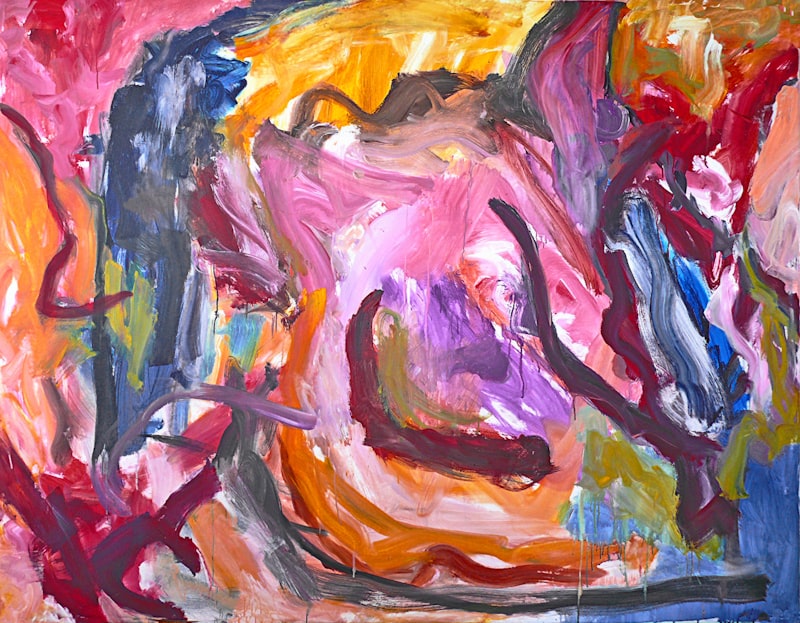
Action painting, frequently referred to as tachisme, is a profound and intensely physical mode of artistic creation originating primarily within the mid-20th century movement of Abstract Expressionism. Psychologically, it is defined by the spontaneous and often uncontrolled method of paint application, where the artist generates impromptu theoretical works. Unlike traditional painting, which emphasizes careful composition and deliberate brushwork, action painting shifts the focus from the finished product to the kinetic process of creation itself. The resulting formation is a direct, visceral record of the artist’s engagement with the materials, serving as a non-verbal narrative of internal psychological states. This methodology intentionally bypasses conscious cognitive censorship, allowing deeper, often repressed, emotional and psychological material to manifest directly onto the canvas surface. The profound link between physical action and expressive outcome makes this technique particularly relevant for therapeutic interventions, specifically within art therapy settings, where the movement itself is paramount to the therapeutic release.
The core philosophy hinges on employing alternative application skills that defy conventional painting techniques. These methods include, but are not limited to, spraying, dripping, trickling, or sloshing the paint, often aimlessly or haphazardly, onto the canvas, which is frequently positioned horizontally on the floor. This approach transforms the canvas from a window into a depicted scene into an arena for action, a concept heavily influenced by the existential philosophy prevalent during the movement’s rise. The technique demands a full-body engagement, integrating gross motor movements and the expenditure of significant physical energy, which contributes substantially to its utility in clinical contexts focused on emotional regulation and somatic experience. The resultant artwork is therefore not merely an image, but an artifact of an embodied psychological event, providing rich data for subsequent clinical analysis and interpretation.
While historically rooted in the artistic explorations of major figures in the New York School, its adaptation into therapeutic practice recognized the inherent expressive power of unmediated mark-making. The lack of structured constraints or expected outcomes minimizes performance anxiety, enabling individuals, particularly those struggling with verbal expression, to externalize complex inner turmoil. The freedom provided by the aimless application—the removal of the ‘aim’ itself—is a crucial psychological mechanism. By eliminating the necessity for representational accuracy or aesthetic perfection, the individual is liberated to focus solely on the rhythm, intensity, and texture of the physical interaction, ensuring that the painting becomes a pure projection of the unconscious self rather than a conscious intellectual exercise. This foundational principle underscores its continuing relevance in modern psychotherapeutic modalities.
The Psychological Underpinnings of Impromptu Creation
The impromptu nature inherent in action painting is central to its psychological efficacy. Impromptu creation mandates the suspension of critical judgment and intellectual planning, forcing the creator into a state of present-moment awareness and pure spontaneity. This psychological state facilitates a direct conduit between the unconscious mind and the physical act of painting. Traditional art often involves a time delay between the psychological impulse and the application of the material, mediated by cognitive filters concerning technique, color theory, and composition. Action painting significantly reduces this delay, ensuring that emotional surges, latent conflicts, or immediate affective states are recorded almost instantaneously through the velocity and viscosity of the paint application. This immediate transcription of internal experience makes the artwork an authentic, unfiltered psychological portrait of the moment of creation.
Furthermore, the concept of applying paint aimlessly is a deliberate psychological technique designed to bypass the ego’s need for control and organization. In a therapeutic context, individuals who rigidly adhere to structure or suffer from obsessive control issues often find this enforced randomness challenging yet ultimately cathartic. The act of relinquishing control over the final visual outcome allows the individual to safely confront and integrate aspects of the self that are typically suppressed or deemed chaotic. The resulting patterns—whether they display rhythmic consistency, explosive fragmentation, or dense layering—are interpreted as reflections of the client’s internal regulatory mechanisms, stress tolerances, and affective range. The therapist utilizes the visual evidence of this uncontrolled action to gain insight into the client’s psychological architecture and capacity for emotional release.
The theoretical foundation for interpreting these spontaneous acts often draws upon Jungian principles of active imagination and psychoanalytic concepts of projection. The canvas acts as a transitional object onto which powerful, often ambivalent, emotional energies are transferred. The texture, density, and directionality of the dripping or sloshing paint are viewed not as mere artistic choices but as symbolic representations of psychological forces. For example, highly aggressive, rapid, and scattered marks may signify intense anxiety or suppressed rage, whereas slow, pooled, and dense applications might suggest depressive inertia or profound psychological containment. The impromptu creation thus serves as a powerful diagnostic tool, offering visual evidence that complements, and sometimes contradicts, the client’s verbal self-report.
Technical Methods and Material Engagement
The defining characteristic of action painting resides in its radical technical methods, which fundamentally redefine the interaction between the artist, the medium, and the surface. The techniques—such as dripping, sloshing, and spraying—are methods of indirect application, where the artist rarely touches the canvas with a traditional brush. Instead, gravity, momentum, and the physical properties of the paint become co-creators. This deliberate distance between the hand and the surface fosters an environment where the act of throwing or pouring paint becomes a dynamic, almost ritualistic performance. The material engagement requires an understanding of paint viscosity; highly diluted paint will create fine, delicate trickles, while thicker, heavier paint will produce dense, volumetric sloshes and splatters. These material characteristics are intrinsically linked to the intensity of the physical action undertaken by the individual.
The choice of tools is equally non-traditional, often involving sticks, hardened brushes used as dispensers, syringes, or even direct pouring from the paint can. This rejection of conventional artistic implements underscores the psychological intent: to remove the mediation of established craft and encourage raw, uninhibited expression. The physical demands of these techniques are substantial; they require movement across the entirety of the canvas, which necessitates constant physical repositioning and dynamic energy output. The resulting composition is a complex layering of time and motion, where each layer of paint represents a specific moment of physical and psychological energy expenditure. The forensic examination of these layers—how one color interacts with another, whether they blend or clash, whether they cover or reveal the underlying marks—provides crucial insights into the sequence and intensity of the client’s emotional processing during the session.
Furthermore, the horizontal orientation of the canvas, traditionally placed on the floor or ground, is a crucial technical and psychological element. This positioning allows the individual to approach the work from all four sides, integrating movement and perspective in a way that vertical easel painting does not permit. It transforms the two-dimensional surface into an enveloping environment, often forcing the creator to step into and around the work, effectively integrating their own body shadow and spatial awareness into the creative field. This complete immersion in the physical space of creation enhances the embodied experience, deepening the therapeutic potential by ensuring that the action is not merely observational but fully participatory. The interaction with the painting becomes a contained, yet expansive, exploration of boundaries and personal space.
Action Painting within the Framework of Art Therapy
When action painting is utilized specifically in therapeutic settings, its application moves beyond aesthetic concerns and focuses primarily on the process as a mechanism for psychological healing and integration. Art therapy leverages the non-verbal expressive qualities of this modality to reach clients for whom verbalization is difficult, painful, or insufficient—such as those dealing with severe trauma, profound grief, or developmental limitations. The chaotic and impulsive nature of the painting process provides a safe, structured outlet for the expression of overwhelming emotions that might otherwise be acted out destructively in the external environment. The therapeutic setting provides the essential safety net, ensuring that the intensity of the action remains contained within the therapeutic hour and the boundaries of the canvas.
The therapeutic value is often maximized by focusing on the sensation and sequence of the actions rather than the interpretation of the final image during the initial phase. The therapist might prompt the client to focus on how it feels to forcefully throw paint or the sensation of the paint dripping off their fingers. This somatically oriented approach helps clients reconnect with their physical selves and process emotions through bodily experience, which is particularly vital for clients experiencing dissociation or psychosomatic distress. The action itself serves as a powerful emotional discharge mechanism, offering immediate relief from pent-up energy, anxiety, or internal pressure. This immediate relief can create an opening for subsequent verbal processing and cognitive integration later in the session or in future therapeutic work.
A key strength of action painting in therapy is its capacity to facilitate re-experiencing and mastery. For individuals dealing with trauma, the controlled chaos of the painting can mirror the chaotic, overwhelming nature of their traumatic experience. By consciously engaging in and controlling the creation of chaos on the canvas, the client can shift from a passive victim of overwhelming sensation to an active agent controlling a symbolic environment. This process of externalization and containment allows the client to work through intense emotional material in a symbolic, manageable form, promoting psychological resilience and self-efficacy. The therapist’s role is crucial in holding the space, validating the intensity of the expression, and guiding the client safely through the emotional peaks of the action.
Clinical Assessment and Interpretation of Action Formations
In clinical practice, the formations generated through action painting are rigorously evaluated and grouped into treatment programs, forming a critical component of the overall psychological assessment. Interpretation moves beyond standard formal elements (like color) to include dynamic process variables. The assessment focuses heavily on kinetic evidence: the force applied (measured by splatter patterns), the rhythm and pace (indicated by consistent or erratic mark-making), the use of space (whether the paint is contained or expands beyond the canvas borders), and the layering strategy (the sequence of colors and textures). These process variables offer deeper insight into the client’s habitual modes of coping, emotional regulation, and energy levels than traditional structured art tasks might provide.
Assessment typically involves the therapist observing the client’s body language and vocalizations throughout the process, correlating these non-verbal cues with the marks appearing on the canvas. For instance, a client who reports feeling calm but exhibits rigid posture and applies paint with sharp, forceful splatters may be demonstrating a disconnect between their conscious emotional report and their somatic experience. The evaluation then groups these patterns—such as a pervasive use of muddy, overlapping colors suggesting confusion or ambivalence, versus bright, distinct colors applied in separate zones suggesting clear emotional compartmentalization—to inform the therapeutic direction. This grouping allows the therapist to track changes in the client’s internal state over multiple sessions, providing objective, visual evidence of psychological shifts that may precede verbal acknowledgement of progress.
The interpretation process is highly individualized, but therapists often rely on established art therapy assessment tools adapted for kinetic works. Key areas of focus include analyzing the center of gravity within the painting (does the action concentrate in the middle or along the edges?), the boundary management (is the paint controlled within the surface or does it spill onto the surrounding floor?), and the prevailing affect demonstrated by the palette and speed. The resulting data is integrated with the client’s history and current clinical presentation to refine diagnostic hypotheses and tailor interventions. For example, evidence of extreme fragmentation and lack of spatial integration in the painting might suggest underlying dissociative tendencies, prompting the therapist to prioritize grounding techniques in subsequent sessions.
The Role of Kinesiology and Embodiment in Action Painting
The significance of action painting extends profoundly into the field of kinesiology, emphasizing the inseparable link between physical movement and psychological expression. The act of dripping, throwing, or sloshing paint requires large-scale, often unconstrained, movements of the entire body—the trunk, arms, and legs are all mobilized. This full-body engagement ensures that the client’s psychological state is literally embodied and externalized. Changes in posture, breathing, muscular tension, and gait during the creation process are immediately reflected in the resulting lines and forms on the canvas. Therefore, the painting becomes a physical map of the client’s embodied emotion.
In therapeutic terms, the kinetic output of action painting facilitates somatic experiencing, allowing clients to release trauma or tension stored within the body’s muscular system. Many psychological defense mechanisms manifest as physical restriction (e.g., holding one’s breath, tightening the shoulders). Action painting mandates movement, temporarily breaking down these physical defenses and encouraging a release of bound energy. The velocity and momentum required to execute the techniques allow the individual to experience their own physical power and agency, which can be profoundly empowering, especially for clients who feel immobilized or helpless in their lives. The rhythm of the action can also be regulatory; repetitive sloshing or dripping can serve as a self-soothing, rhythmic activity, similar to rhythmic movement in other therapeutic modalities.
The evaluation of the kinesiological data focuses on the quality of the movement: was the movement constrained, jerky, fluid, expansive, or repetitive? A client using short, hesitant movements to apply paint may be demonstrating psychological inhibition, even while attempting an expressive act. Conversely, a client exhibiting sweeping, fluid, and expansive motions across the entirety of the canvas may be demonstrating a growing sense of liberation and self-acceptance. The therapist may use video recording or detailed observational notes to capture these kinetic details, which are often fleeting, providing objective data on the client’s psychomotor output and capacity for expressive freedom.
Differentiation from Related Abstract Expressionist Movements
While Action Painting is often broadly categorized under the umbrella of Abstract Expressionism, it requires careful differentiation from related movements, particularly its European counterpart, tachisme. The term tachisme (derived from the French word tache, meaning ‘spot’ or ‘stain’) emphasizes the visual outcome—the appearance of spots, stains, or blotches on the canvas—rather than the physical process. Although the results can appear visually similar, the primary psychological and philosophical emphasis differs. Action painting, as articulated by its American proponents, places the existential weight squarely on the dramatic, physical action of the artist, viewing the painting as a relic of a performance. The psychological utility in therapy is therefore tied to the release inherent in the movement.
Conversely, while tachisme shares the element of spontaneity and a rejection of geometric structure, its focus often leans toward the textural and material qualities of the stain itself, sometimes incorporating techniques less dependent on gross motor movement, such as blotting or spreading paint with a palette knife rather than throwing it. In clinical application, while both techniques are valuable, action painting is often preferred when the therapeutic goal involves high-energy release, addressing somatic tension, or facilitating embodied expression of intense affect. Tachisme, focusing more on the textural interplay and color field, might be employed when the goal is to explore internal ambiguities or subtle emotional shading.
Furthermore, action painting must be distinguished from Color Field Painting, another Abstract Expressionist variant. Color Field focuses on large areas of flat, saturated color intended to evoke a contemplative or sublime response, often achieved through soaking or staining the canvas to eliminate the appearance of the artist’s hand or gestural mark. Action painting, by contrast, deliberately highlights the gestural mark, the trace of the artist’s action, making the psychological presence unavoidable and central to the work’s meaning. For art therapy, this emphasis on the visible gesture is crucial, as it provides the tangible evidence necessary for the clinical evaluation of the client’s emotional and physical engagement.
Therapeutic Applications and Case Study Considerations
The application of action painting techniques spans a broad spectrum of psychological disorders and clinical goals. It is particularly effective in treating conditions characterized by high levels of internalized stress, such as chronic anxiety, post-traumatic stress disorder (PTSD), and adjustment disorders. By providing a sanctioned outlet for intense or aggressive impulses, it allows clients to symbolically externalize these feelings without fear of retribution or consequence, a process critical for healthy emotional discharge.
-
Trauma Processing: Action painting allows clients to reenact the energy of a traumatic event in a symbolic, controlled manner. The fast, intense movements can help discharge fight/flight energy that was frozen or immobilized during the trauma, facilitating somatic completion and integration.
-
Anger Management and Impulse Control: For clients struggling with explosive anger or poor impulse control, the technique provides a safe, boundary-defined space to express aggression kinetically. The act of throwing paint is a highly regulated form of aggressive output, teaching clients that intense feelings can be channeled into productive, contained forms.
-
Depression and Apathy: In cases of severe depression or psychological inertia, action painting can mobilize physical energy and break through affective flatness. The sheer physical demand of the technique can activate the client and reintroduce them to feelings of agency and vitality, countering the lethargy associated with depressive states.
-
Non-Verbal Communication: For clients with autism spectrum disorder, severe developmental delays, or those with language barriers, action painting offers a primary, non-linguistic pathway for self-expression, allowing them to communicate internal complexities that speech cannot capture.
Case study analyses frequently highlight the dramatic shifts in client affect following the action phase. A client who enters the session withdrawn and unable to articulate distress may, through the vigorous act of creation, release tension and subsequently become more available for reflective dialogue. The artwork then serves as a concrete reference point for the ensuing conversation, transitioning from the chaotic creation to a structured, verbal reflection on the experience. The clinical success of action painting relies heavily on the therapist’s capacity to frame the activity as a psychological necessity rather than merely an artistic endeavor, emphasizing that the value lies in the courage to act spontaneously.
Ethical Considerations and Future Directions in Practice
The application of action painting in clinical settings necessitates stringent adherence to ethical guidelines, primarily concerning safety, boundary management, and appropriate interpretation. Due to the high-energy and potentially regressive nature of the activity, the therapist must ensure the physical safety of the client and the environment, often requiring specialized studio spaces where mess and vigorous activity are permissible. Furthermore, the therapist must maintain clear boundaries, ensuring the client understands that the expressive freedom is contained within the session and the canvas, preventing the translation of impulsive behavior outside the therapeutic frame.
A significant ethical consideration lies in the interpretation of the client’s work. Given the ambiguity inherent in abstract and spontaneous formations, interpretation must be collaborative, avoiding definitive, unilateral judgments based solely on the visual data. The therapist must integrate the client’s self-report, their observed behavior during the action, and the formal elements of the work to arrive at a holistic, validated understanding. Misinterpretation of the raw, aggressive energy released in action painting could lead to misdiagnosis or inappropriate treatment planning, highlighting the necessity for specialized training in this expressive modality.
Future directions in the clinical use of action painting are increasingly integrating neuroscientific findings. Research is exploring how the kinetic engagement and spontaneous creation impact specific brain regions involved in emotion regulation, executive function, and motor planning. The use of biofeedback and other physiological monitoring tools alongside the painting process may offer quantifiable data on the autonomic nervous system’s response to the expressive act. Ultimately, action painting remains a powerful, embodied tool in the art therapist’s repertoire, providing a unique pathway for clients to confront, express, and ultimately integrate the deepest, most difficult aspects of their psychological landscape through the profound release of physical action.