Color Perception: How Light Shapes Your Reality
Scientifically Reviewed · Dr. Marwa Abd-Alazim · September 20, 2026
Review Criteria & Clinical Standards
This content undergoes rigorous scientific peer-review and medical editorial standards at Arab Psychology Network to ensure clinical accuracy, validity, and compliance with evidence-based guidelines from leading psychological and healthcare authorities (APA / WHO).
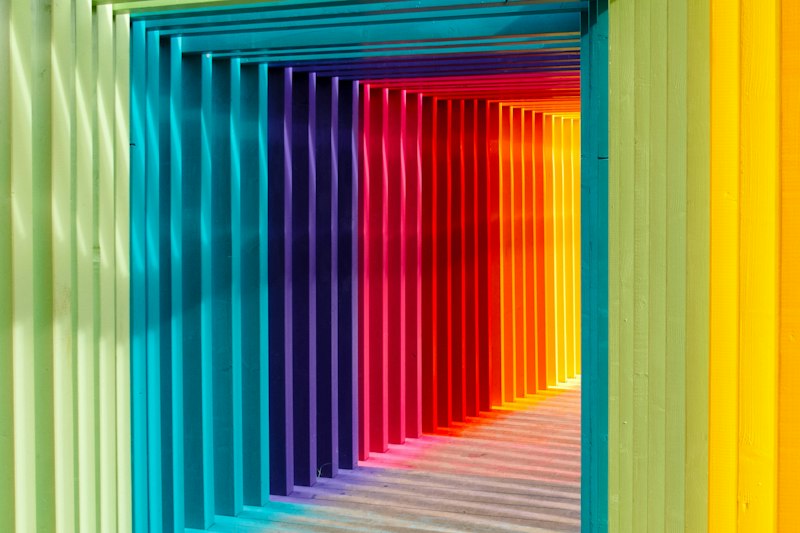
Additive Color Mixture: A Comprehensive Overview
Additive color mixture represents the fundamental process by which colors are created through the combination of light sources. Unlike subtractive color mixing, which relies on the absorption of light by pigments, the additive model operates on the principle of light emission. When two or more colored lights are projected onto the same surface, the resultant color perceived by the observer is the sum of the wavelengths of the combined lights. This crucial distinction makes additive mixing the cornerstone of modern digital display technology, influencing everything from high-definition television screens and computer monitors to sophisticated projection systems.
The core concept revolves around the use of three primary colors: Red, Green, and Blue (commonly abbreviated as RGB). These three colors are considered primary because, when mixed in varying proportions, they can reproduce a vast spectrum of visible colors, often referred to as the color gamut. The intensity level of each primary light source is meticulously controlled, allowing for billions of possible combinations in modern digital systems. A key characteristic of additive mixing is that when all three primary colors are combined at their maximum intensity, the resulting output is perceived as white light—a direct consequence of summing all wavelengths within the visible spectrum.
Understanding additive color mixture is essential not only for content creators and engineers but also for comprehending the mechanics of human visual perception. The process directly mirrors the way the human eye, specifically the cone cells in the retina, processes light stimuli. Because our visual system is trichromatic (sensitive primarily to long, medium, and short wavelengths, corresponding roughly to red, green, and blue light), the additive model provides an elegant and scientifically sound method for simulating the natural world through emitted light. This foundational principle dictates the engineering standards and quality metrics used across the entire digital media industry globally, ensuring color accuracy and visual fidelity.
The Physics of Light and Perception
The success of the additive color system is inextricably linked to the physical properties of light and the subsequent physiological response of the human eye. Light is a form of electromagnetic radiation, and different colors correspond to different wavelengths within the visible spectrum, generally ranging from approximately 380 nm (violet) to 750 nm (deep red). When discussing additive mixing, we are dealing exclusively with light energy being emitted directly from a source, such as a pixel on a screen, rather than light being reflected off a surface. The chosen primary colors—red, green, and blue—are strategic because they align optimally with the peak sensitivities of the three types of cone photoreceptors found in the human retina, maximizing the efficiency of color simulation.
The trichromatic theory of color vision asserts that any perceived color can be synthesized by differentially stimulating these three types of cones: L-cones (long wavelength, sensitive to red/yellow), M-cones (medium wavelength, sensitive to green), and S-cones (short wavelength, sensitive to blue). By adjusting the relative intensities of the Red, Green, and Blue light sources, engineers can stimulate these cones in varying ratios, effectively tricking the visual system into perceiving virtually any color within the system’s reproducible range. For example, the perception of yellow is achieved not by exciting cones sensitive to the yellow wavelength directly, but by stimulating both the L-cones and M-cones equally via a mixture of red and green light. This specific physiological response is the bedrock upon which all RGB displays are built.
It is important to recognize that the term “primary” in this context is functional rather than absolute. While the chosen RGB primaries are standardized for digital display technology (often based on specific spectral distributions like those defined by Rec. 709 or DCI-P3), they are selected because they maximize the color gamut that can be achieved relative to the physiological limits of human vision. The physics ensures that the addition of light energies results in a brighter, more saturated output. For instance, combining a red light (peak around 630 nm) and a green light (peak around 530 nm) results in a yellow light that is physically brighter than either component alone, as the total number of photons hitting the retina is increased, leading to an amplified signal interpreted by the brain.
Core Principles of Additive Synthesis
The mathematical and physical rules governing additive synthesis are precise and predictable. The entire color space is constructed by manipulating the intensity levels of the three fundamental components (R, G, B), typically represented digitally using a scale of 0 to 255 for each channel in an 8-bit system. This structure allows for 256 intensity levels per color, resulting in 256 x 256 x 256, or over 16.7 million distinct color possibilities. A value of 0 signifies the complete absence of that color component, corresponding to black when all three channels are zero (0, 0, 0). Conversely, 255 signifies the maximum possible intensity, resulting in white when all three channels are maximized (255, 255, 255). The complexity of a resultant color is determined by the specific combination vector of these three values.
The process follows clear rules for generating secondary and tertiary colors. When two primary colors are mixed at full intensity, they produce a secondary color. These secondary colors—Cyan, Magenta, and Yellow (CMY)—are particularly significant because they serve as the primary colors in the opposing model, subtractive color mixture, used in printing and pigments. The rules for forming these secondary colors in the additive system are universally applied across all digital media devices:
- The combination of Red light and Green light produces Yellow light.
- The combination of Green light and Blue light produces Cyan light.
- The combination of Red light and Blue light produces Magenta light.
- The combination of Red, Green, and Blue lights at equal maximum intensities produces White light.
Furthermore, shades and tints are created by manipulating the overall intensity and the relative ratios of the primaries. A neutral gray scale is produced when the values of R, G, and B are equal but less than 255 (e.g., 100, 100, 100). The process of gamma correction is also crucial in additive synthesis; this non-linear encoding corrects for the way displays output light and how the human eye perceives brightness, ensuring that the perceived brightness gradient matches the digital input signal. This careful control over light emission and perceived brightness is what allows digital displays to render photorealistic imagery with immense dynamic range and color detail.
Primary Applications in Digital Media
The most pervasive application of additive color mixture is found within the realm of digital display technology, defining how modern society consumes visual information. Every modern device that emits light to display imagery—including Liquid Crystal Displays (LCD), Light Emitting Diodes (LED), Organic Light Emitting Diode (OLED) screens, and sophisticated digital projectors—utilizes the RGB additive model. The fundamental unit of these displays is the pixel, which is composed of three adjacent sub-elements or sub-pixels, each dedicated to emitting red, green, or blue light. By precisely controlling the luminance of each sub-pixel, the device is able to synthesize the desired color for that specific point on the screen, creating a high-resolution mosaic of color.
In television and computer graphics, the additive model ensures color consistency and accuracy across different platforms. Graphics processing units (GPUs) and video standards process image data based on RGB color values, translating complex algorithms into tangible light output. The rapid refreshment rate of the screen ensures that the human eye perceives the combined light output as a single, unified color rather than three distinct dots of light, a phenomenon based on visual persistence. This highly efficient technique allows for the accurate representation of complex images, including photography, streaming video, and highly detailed computer-generated imagery (CGI), across standardized color spaces like sRGB, thereby promoting fidelity across vast quantities of hardware.
Beyond consumer electronics, additive mixing is foundational to advanced scientific visualization and immersive technologies such as virtual reality (VR) and augmented reality (AR). In high-fidelity VR headsets, the exact calibration of RGB primaries is crucial for mitigating visual discomfort and achieving a convincing sense of presence, requiring extremely fast switching and high luminance output. Moreover, in specialized fields like medical imaging and remote sensing, additive color is used extensively for pseudocoloring. This technique translates non-visible spectral data (such as infrared, X-ray, or magnetic resonance data) into the visible RGB range, allowing researchers and clinicians to highlight critical details and patterns that would otherwise be imperceptible to the human observer.
Additive Color in Specialized Fields
While digital screens are the most common embodiment, additive color mixture also plays a vital, dynamic role in professional stage lighting and architectural design. Modern theatrical and concert lighting systems utilize sophisticated RGB LED arrays to achieve dynamic color shifts and specialized atmospheric effects. By mixing primary color beams of light, designers can instantaneously create virtually any hue required for a scene without the latency or mechanical constraints associated with physically changing colored filters or gels. This capability offers unprecedented flexibility, precise cue timing, and substantial energy efficiency compared to older systems reliant on high-heat tungsten bulbs.
Furthermore, additive mixing is crucial in experimental physics and laboratory settings, particularly in fields dealing with optics, photometry, and spectroscopy. Scientific devices such as colorimeters and spectrophotometers rely on the principles of additive synthesis and decomposition to analyze and reproduce precise color stimuli for research purposes. For studies involving the human visual system, color constancy, or specific color deficiencies (like various forms of color blindness), highly calibrated additive light sources are essential tools for generating repeatable, standardized visual environments under controlled conditions.
The additive model also influences specialized digital fabrication and 3D printing processes. While most traditional printing uses subtractive colors, certain additive manufacturing techniques, particularly those involving stereolithography (SLA) or light-curing resins, use light sources to initiate polymerization. In advanced systems, precise combinations of UV or visible light colors are mixed to control the curing process or affect the material properties of the final printed object. This blending of optical and material science demonstrates the adaptability and widespread technological dependence on the additive principles of light combination and intensity control.
Comparative Analysis: Additive vs. Subtractive Mixing
To fully appreciate additive color mixture, it is necessary to contrast it directly with its counterpart, the subtractive color mixture model. The fundamental difference lies in the nature of the medium: additive mixing deals with light sources (emission), while subtractive mixing deals with physical materials like pigments, dyes, or inks (absorption and reflection). In the additive model (RGB), the starting point is darkness (black), and colors are added to achieve lightness, culminating in white. In the subtractive model (CMY/CMYK), the starting point is white (the reflective substrate, typically paper), and pigments are added to subtract or absorb specific wavelengths of incident light, culminating theoretically in black (the absorption of all light).
The primary colors differ fundamentally between the two systems. Additive primaries are Red, Green, and Blue. Subtractive primaries are Cyan, Magenta, and Yellow. Critically, the secondary colors of one system are the primary colors of the other. For instance, combining Red and Green light additively produces Yellow. Conversely, in the subtractive system, applying both Magenta and Yellow pigments absorbs green and blue light, respectively, resulting in the reflection of only red light back to the observer. This inverse and complementary relationship highlights the functional duality of color theory and why translation between digital screens and printed materials is often complex.
Gamut and brightness also serve as major distinguishing factors. Additive systems typically produce a much wider range of highly saturated, pure colors and inherently result in brighter outputs because light energy is being combined, increasing the total luminance. Digital screens excel at producing vibrant, luminous colors that are physically impossible to replicate using pigments alone. Subtractive systems, constrained by the physical limitations of pigment absorption and the imperfect reflectance of the medium, tend to produce a smaller, dimmer gamut, especially toward the brighter, more saturated end of the spectrum. Consequently, a color viewed on a monitor (additive) often appears significantly more vivid and luminous than its corresponding printed counterpart (subtractive), necessitating careful gamut mapping during the conversion process.
Advantages of Additive Color Systems
One of the primary advantages of the additive model is its innate simplicity and efficiency in the digital domain. Because the three primary light sources can be controlled independently and precisely via electronic signals, color reproduction is highly accurate and instantaneous. This precision allows for seamless transitions between colors and rapid display of complex moving images, making it the only feasible model for video and interactive graphics. The digital control afforded by the RGB system vastly surpasses the inconsistency and complexity inherent in mixing physical pigments or dyes.
A significant benefit tied to light emission is the superior representation of high saturation and high brightness. Since additive mixing involves summing light energy, the resulting colors can be extremely luminous, often exceeding the brightness levels achievable by reflected light sources. This characteristic is particularly critical for applications intended for bright environments, such as outdoor LED billboards, or those requiring strong visual impact, like high-dynamic-range (HDR) video content, which relies heavily on the ability to display intense whites and vibrant primary colors simultaneously for maximum realism.
Furthermore, additive systems naturally align with the principles of human color vision, ensuring that the colors generated are perceived accurately by the majority of viewers. This biological compatibility reduces the need for extensive color management systems compared to printing, where translating an RGB image into CMYK requires substantial computational effort (gamut compression) to compensate for the fundamental differences in the underlying color generation mechanism. The clean, direct relationship between the electronic signal and the visual output is a core strength that guarantees the consistency necessary for modern communication and entertainment platforms.
Limitations and Challenges
Despite its overwhelming advantages in the digital realm, additive color mixture presents certain practical limitations that engineers continually strive to overcome. One of the main challenges is the accurate reproduction of colors across different display technologies. Since the physical properties (spectral distribution) of the red, green, and blue light emitters can vary significantly between devices (e.g., between an OLED screen, a Quantum Dot display, and an inexpensive LCD panel), a color defined identically as (255, 0, 0) in the digital code may look slightly different in hue or saturation on two separate physical devices. This issue necessitates rigorous color calibration and the adoption of standardized color profiles (like sRGB or DCI-P3) to ensure acceptable visual consistency.
Another inherent limitation is the difficulty in representing true black. In the additive model, black is defined as the total absence of light (0, 0, 0). However, most display technologies, particularly traditional LCDs, require a continuous backlight to operate, meaning that even when trying to display black, some residual light leakage occurs. This leakage reduces the achievable contrast ratio. While newer technologies like OLED panels can achieve near-perfect black (by turning individual pixels completely off), the theoretical ideal of zero light emission for black remains a constant technological hurdle that directly affects perceived image depth and realism, particularly in low-light viewing conditions.
Finally, the additive gamut, while vast, cannot reproduce every conceivable color visible to the human eye. The colors that fall outside the triangle defined by the three specific primary light sources used in a display cannot be accurately rendered. This limitation is particularly noticeable when trying to match highly saturated fluorescent colors or certain metallic sheens, which rely on complex spectral reflectance properties that cannot be synthesized purely by mixing three narrow-band lights. The reliance on three fixed primary sources imposes a boundary on the achievable color space, necessitating continuous research into wider gamut primaries and additional light components (such as RGBCY displays) to push the boundaries of visual realism.
Conclusion
Additive color mixture stands as a foundational concept in optics and digital science, defining how we interact with technology that relies on emitted light. By leveraging the specific spectral properties of Red, Green, and Blue light, and aligning these with the trichromatic sensitivity of the human visual system, the RGB model allows for the synthesis of millions of distinct colors with exceptional precision and luminosity. This process is indispensable across a spectrum of applications, from personal computing and high-definition broadcasting to specialized scientific visualization and dynamic theatrical lighting.
While offering unparalleled benefits in terms of simplicity, electronic control, and brightness, the additive model must be consistently understood and managed in contrast to the subtractive system used in physical media. Recognizable challenges, such as gamut limitations, device dependence, and the difficulty of rendering true black across all display types, continue to drive immense innovation in display technology, pushing manufacturers toward purer primary light sources and more efficient pixel structures to enhance the viewing experience.
Ultimately, the principles of additive color mixture provide a robust and scientifically validated framework for color reproduction in the digital age. Its role as the engine behind the visual experience of modern media ensures its enduring relevance as researchers strive to create displays that perfectly mimic the complexity and richness of the natural world with ever-increasing fidelity and accuracy.
References
The following resources provide foundational context and advanced discussion on the principles and applications of color theory:
- Chen, P., & Wang, M. (2015). Understanding color principles and applications. In Color in Digital Media (pp. 36-45). Berlin, Heidelberg: Springer.
- Maeda, J. (2009). The Laws Of Simplicity. Cambridge, MA: The MIT Press.
- Smith, W. (2003). Color Mixing Bible: All You’ll Ever Need to Know About Mixing Pigments in Oil, Acrylic, Watercolor, Gouache, Soft Pastel, Pencil, and Ink. Cincinnati, Ohio: North Light Books.