Neural Afterdischarge: Why Your Brain Keeps Firing
Scientifically Reviewed · Dr. Marwa Abd-Alazim · August 21, 2026
Review Criteria & Clinical Standards
This content undergoes rigorous scientific peer-review and medical editorial standards at Arab Psychology Network to ensure clinical accuracy, validity, and compliance with evidence-based guidelines from leading psychological and healthcare authorities (APA / WHO).
The Core Definition of Afterdischarge
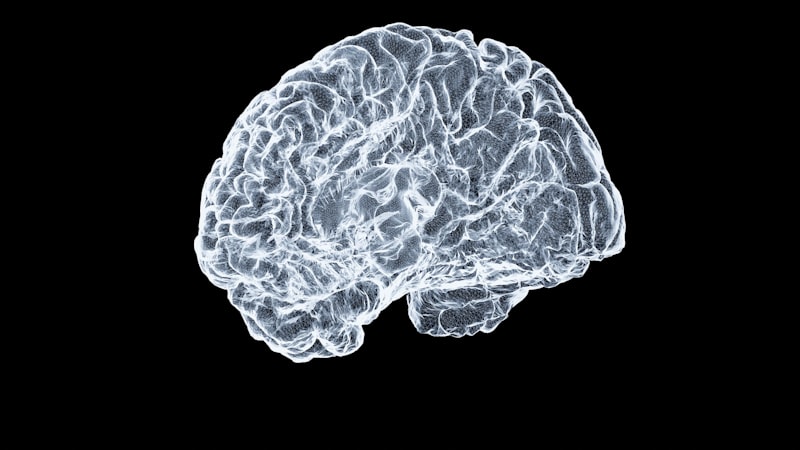
Afterdischarge is fundamentally defined as the sustained, ongoing creation of neural impulses that continue to fire within a neuronal circuit even after the original excitatory stimulus has been completely removed. This phenomenon reflects a critical property of the nervous system, which is its capacity for temporal persistence or inertia, meaning that an electrical or chemical event does not instantly cease upon the termination of its trigger. In simpler terms, the nervous system has been sufficiently activated or “charged” that it temporarily maintains the state of excitation. While the initial stimulus may have lasted only a fraction of a second, the resulting afterdischarge can last from milliseconds up to several seconds, influencing subsequent perception or motor response. This lingering activity ensures that information processing is not merely instantaneous but possesses a necessary temporal window for integration and transmission, particularly within complex pathways of the central nervous system.
The core mechanism behind afterdischarge lies in the structural and functional organization of neuronal pools. When a primary stimulus excites a group of neurons, the resulting activity often travels through parallel pathways or is sustained by what are known as reverberating circuits. These circuits are designed such that the output from a neuron feeds back, either directly or through interneurons, to re-excite an earlier neuron in the chain. This positive feedback loop allows the electrical signal to cycle repeatedly, effectively generating the continuation of activity—the afterdischarge—until the contributing neurons become fatigued, or until inhibitory mechanisms successfully override the cycle. This persistent firing is not merely a weak echo of the original signal but a demonstrable electrical event, sometimes perceived introspectively as a slight twitch, a pulsating sensation, or a lingering visual or auditory response long after the stimulating agent was presented in some form.
Crucially, the intensity and duration of the afterdischarge are directly related to the strength and duration of the preceding stimulus. A brief, weak stimulus might elicit negligible afterdischarge, whereas a prolonged, intense stimulus is likely to activate a broader network of neurons and establish more robust reverberating pathways, leading to a much longer period of residual activity. Understanding afterdischarge is essential because it provides insight into how sensory information is integrated over time, how motor commands maintain stability, and, pathologically, how abnormal electrical activity, such as that seen in epileptic seizures, can propagate and sustain itself throughout the brain without continuous external input.
Historical Context and Physiological Discovery
The concept of persistent neural activity following stimulation emerged prominently in the early 20th century, particularly driven by the foundational work of neurophysiologists studying reflex actions. Sir Charles Sherrington, a pioneering figure in neurophysiology, laid the groundwork by meticulously documenting the properties of reflexes and the integration of excitation and inhibition in the spinal cord. While Sherrington did not formally name the phenomenon “afterdischarge” in his earliest works, he observed and described the lingering motor responses and sustained muscle contractions that occurred after the cessation of the conditioning stimulus, attributing this to the continuing activity within the reflex arc. This observation was key, suggesting that the nervous system’s response was not a simple switch-like mechanism but involved a temporal decay curve.
The formalization and detailed study of afterdischarge accelerated with the advent of electrophysiological techniques, such as electroencephalography (EEG) and microelectrode recordings, which allowed researchers to directly measure the electrical activity of isolated neuronal groups and larger brain regions. By the mid-20th century, researchers began systematically investigating the phenomenon in various parts of the central nervous system, including the motor cortex, sensory pathways, and cerebellar circuits. These studies confirmed that afterdischarge was not merely a peripheral muscular effect but a core property of central processing. Early experimental models often involved stimulating sensory nerves (afferent pathways) and observing the duration of electrical activity recorded in the associated spinal tracts or cortical areas after the stimulus was turned off.
The investigation into afterdischarge was instrumental in developing the understanding of neuronal network function. Scientists began to realize that the delay and sustained activity observed were not artifacts of measurement but rather evidence of complex synaptic dynamics. Concepts such as synaptic delay, temporal summation, and, most importantly, the existence of self-exciting or closed-loop neural circuits became crucial explanatory frameworks. The ability of the nervous system to sustain activity without continuous external input was recognized as fundamental to short-term memory, sustained attention, and the coordination of rhythmic motor patterns, solidifying afterdischarge as a primary area of investigation within systems neuroscience.
The Underlying Neural Mechanism
The physical manifestation of afterdischarge relies heavily on the architecture of neuronal assemblies, particularly the existence of parallel pathways and reverberating circuits. When a strong input arrives, it excites a population of neurons. Instead of a simple linear transmission, the axons of these neurons branch extensively. Some branches proceed to the next stage of processing, while others loop back to synapse onto the dendrites or cell bodies of neurons that were earlier in the pathway, or onto facilitatory interneurons that then re-excite the initial group. This anatomical arrangement creates a closed loop, allowing the action potential to “reverberate” or cycle repeatedly through the circuit. Each cycle effectively acts as a renewal of the excitatory input, maintaining the firing rate of the participating neurons beyond the duration of the original stimulus.
Furthermore, the duration of afterdischarge is often modulated by properties of the individual synapses involved. Excitatory postsynaptic potentials (EPSPs) can summate both spatially and temporally. When a stimulus causes rapid, repetitive firing, the resulting EPSPs may accumulate, leading to a sustained depolarization of the postsynaptic neuron. Even after the input stops, the lingering chemical changes in the synapse—such as residual calcium ions within the presynaptic terminal or prolonged binding of neurotransmitters to receptors—can contribute to the continuation of the electrical signal. This residual activity contributes to the overall phenomenon of temporal summation, where rapid, sub-threshold inputs combine their effects to eventually trigger an action potential, sustaining the output signal.
The termination of afterdischarge is typically achieved through two primary mechanisms: synaptic fatigue and inhibitory feedback. Synaptic fatigue occurs when the continuous firing leads to the depletion of neurotransmitter vesicles in the presynaptic terminals, making it temporarily impossible to transmit the signal efficiently. Alternatively, and often more rapidly, inhibitory interneurons (which are frequently part of the same neural network) become activated. These inhibitory neurons release neurotransmitters like GABA, which hyperpolarize the excited neurons, making them less likely to fire and effectively breaking the reverberating loop. The interplay between excitation and inhibition dictates the precise length of the afterdischarge period, ensuring that the system can eventually reset and prepare for the next incoming stimulus without being locked in a perpetual state of activity.
A Practical Example in Everyday Sensation
One of the most relatable examples of afterdischarge in everyday life involves the visual system, specifically the experience of negative afterimages. Imagine walking into a dark room after spending several minutes staring intently at a bright, high-contrast image or a strong light source, such as a camera flash or a neon sign. When the stimulus is removed (i.e., you look away or the light is extinguished), the initial, immediate sensation is gone, yet a lingering visual impression persists. This is the sensory manifestation of afterdischarge within the retinal and cortical visual pathways.
The “How-To” application of this principle demonstrates the physiological process step-by-step. In the first step, the intense light stimulus overwhelms the photoreceptors in a specific area of the retina. These photoreceptors, particularly the cones responsible for color vision, become highly excited and fire strongly, sending massive neural impulses up the optic nerve. In the second step, due to the sustained, intense stimulation, the chemical photopigments within these photoreceptors are temporarily depleted or “bleached.” The subsequent electrical activity in the associated neural circuit continues to fire, utilizing the established reverberating circuits in the visual cortex. Finally, in the third step, when the eyes are closed or shifted to a uniform surface, the external stimulus is removed. However, the overstimulated and temporarily fatigued photoreceptors and the active neural circuits continue to signal. Because the excited cells cannot immediately return to their resting state, they generate a residual signal—the afterdischarge—which the brain interprets as a persistent image, often inverted in color (the negative afterimage) due to the temporary fatigue of the specific color-detecting cones. This lingering visual perception is a direct result of neural circuits maintaining activity after the input has vanished.
Another common manifestation occurs in the auditory system. If a person is exposed to a very loud, high-frequency tone for a short period, they may experience a brief, residual “ringing” or sensation of sound after the tone stops. This is often an example of afterdischarge in the cochlear nuclei or auditory cortex, where the neurons responsible for processing that specific frequency maintain an elevated level of firing activity until inhibitory mechanisms restore baseline function. These simple sensory phenomena highlight that afterdischarge is a fundamental, time-based property of sensory processing that helps bridge instantaneous inputs into continuous conscious experience.
Significance and Application in Neuropsychology
The concept of afterdischarge holds profound significance for the field of psychology, particularly in understanding the basic mechanisms of learning, memory, and pathological states. In its most fundamental role, afterdischarge provides a physiological basis for short-term memory. The ability of a neural circuit to maintain activity for a few seconds after an event allows the brain sufficient time to process and consolidate the information. This temporal overlap is crucial for tasks requiring immediate recall or continuous tracking of information, such as repeating a phone number immediately after hearing it. The reverberation of signals during afterdischarge is hypothesized to be a necessary precursor to more permanent structural changes required for long-term memory formation, aligning with the “Hebbian principle” where persistent firing strengthens synaptic connections.
In clinical neuropsychology, the study of afterdischarge is paramount in understanding seizure disorders, most notably epilepsy. An epileptic seizure essentially represents an uncontrolled, excessively prolonged, and widespread afterdischarge. Researchers utilize experimental models, such as the “kindling” phenomenon, where repeated, sub-convulsive electrical stimulation to certain brain areas (like the amygdala) leads to a progressive increase in the duration and intensity of the resulting afterdischarge. Eventually, this sustained activity crosses a critical threshold, resulting in a full-blown seizure. The study of the neural circuits responsible for maintaining and propagating afterdischarge provides critical targets for pharmacological intervention aimed at dampening excessive neuronal excitability and terminating seizure activity.
Beyond clinical applications, afterdischarge is relevant in the study of motor control and behavioral psychology. For instance, in rhythmic movements or sustained postures, the underlying motor circuits rely on a degree of sustained activity to maintain muscle tone and coordinate smooth transitions between actions. If the circuits lacked the property of afterdischarge, every motor command would need continuous input, resulting in jerky, unstable movements. Thus, the inherent ability of motor circuits to sustain activity briefly ensures fluidity and stability in complex behaviors, reinforcing its importance as a fundamental physiological principle underlying psychological function.
Connections to Related Psychological Concepts
Afterdischarge is inextricably linked to several other key concepts in neurobiology and psychology, serving as a physiological bridge between immediate stimulation and enduring effects. One critical connection is to Temporal Summation. While temporal summation describes the process by which multiple sub-threshold stimuli occurring in rapid succession can add up to trigger an action potential, afterdischarge describes the resulting persistence of that triggered activity. The mechanisms facilitating temporal summation—such as lingering neurotransmitter effects and persistent depolarization—are also the mechanisms that sustain the afterdischarge once the threshold is crossed.
A second major relationship exists with Synaptic Plasticity, the ability of synapses to strengthen or weaken over time in response to activity. The continuous, high-frequency firing characteristic of afterdischarge provides the exact conditions necessary for the induction of certain forms of synaptic strengthening, such as Long-Term Potentiation (LTP). LTP, which is widely considered a cellular correlate of learning and memory, requires a period of intense, sustained postsynaptic depolarization, which the self-sustaining nature of afterdischarge readily provides. Therefore, afterdischarge is often viewed as the temporary electrical mechanism that precipitates the more permanent chemical and structural changes associated with synaptic plasticity.
The broader category of psychology to which afterdischarge belongs is primarily **Physiological Psychology** (or **Neuroscience**), as it deals directly with the electrical and anatomical functioning of the nervous system. However, its implications extend deeply into **Cognitive Psychology** (especially memory and attention studies) and **Sensory Psychology**, where the temporal resolution and persistence of sensory inputs are critical variables. It provides a biological explanation for why perception is continuous and why certain sensory experiences, such as a strong aroma or a sudden bright flash, linger in conscious awareness for a short period after the physical stimulus is gone.