Visual Perception: How Your Eyes See the Past
Scientifically Reviewed · Dr. Marwa Abd-Alazim · September 15, 2026
Review Criteria & Clinical Standards
This content undergoes rigorous scientific peer-review and medical editorial standards at Arab Psychology Network to ensure clinical accuracy, validity, and compliance with evidence-based guidelines from leading psychological and healthcare authorities (APA / WHO).
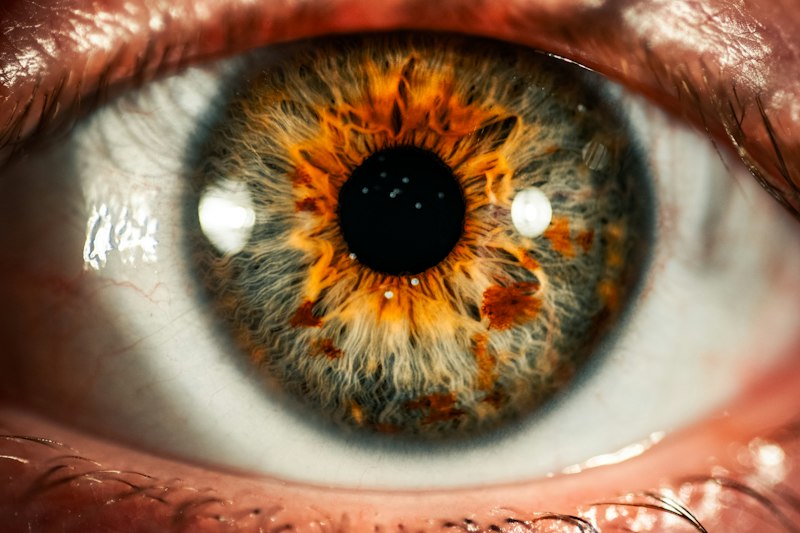
Introduction and Definition of Afterimage (Aftersensation)
The phenomenon known as the afterimage, formally termed aftersensation, represents a fascinating aspect of human visual perception, defined as the persistence of a visual impression after the original stimulus that caused it has ceased or been removed. This involuntary visual effect demonstrates the complex mechanisms of sensory adaptation and neural processing within the ocular system and the brain. Afterimages are not merely lingering memories of light; they are genuine visual experiences generated internally, providing critical insights into how the retina and visual cortex manage sustained stimulation and maintain perceptual homeostasis. While often considered a single phenomenon, afterimages vary significantly in their characteristics, primarily categorized based on whether they mimic the original stimulus (positive) or display its inverse properties (negative).
Understanding the afterimage requires acknowledging that the visual system is inherently dynamic, constantly adjusting its sensitivity based on the prevailing light conditions. When a person fixates intensely on a bright or high-contrast object for an extended duration, the sensory apparatus responsible for detecting that light undergoes temporary changes, leading to a state of imbalance. It is this subsequent adjustment or recovery phase that manifests as the afterimage. This lingering perception highlights the inertia inherent in neural pathways; the physiological systems designed to transduce light energy into neural signals do not instantly reset to a baseline state but rather decay gradually, generating the sensation that the image is still present.
The study of afterimages bridges ophthalmology, psychology, and neuroscience, serving as a powerful, non-invasive tool to investigate the inner workings of visual adaptation. Although transient, these visual artifacts reveal fundamental principles of color coding, intensity processing, and the temporal limitations of sensory input. They underscore the fact that what we perceive as continuous sight is actually a rapid succession of sensory inputs and internal adjustments, where the afterimage represents the residual signal left over from a recent, strong input. The persistence of the image is a direct result of biological processes, ranging from the photochemical bleaching of pigments in the retina to the adaptive suppression or excitation of neurons in the visual cortex.
Classification: Positive Versus Negative Afterimages
Afterimages are broadly divided into two principal categories based on their appearance relative to the inducing stimulus: positive afterimages and negative afterimages. The distinction between these two types is critical for diagnosing the underlying physiological mechanisms at play, often correlating the positive type with immediate, short-term neuronal inertia and the negative type with longer-term retinal fatigue and color opponent processes. While both types involve the persistence of sensation, their duration, color characteristics, and physiological origins are markedly different, reflecting various stages of visual system recovery.
The positive afterimage is characterized by retaining the same qualities—color, brightness, and spatial layout—as the original stimulus. These are typically momentary and observed immediately upon removal of a very bright stimulus, particularly in dark or low-light conditions. Their fleeting nature is attributed to the brief inertia of the neural response; the photoreceptors and subsequent neurons remain active for a fraction of a second after the light source is extinguished because the chemical or electrical processes initiated by the light have not yet decayed. Because the visual system is still actively signaling the presence of the original image, the aftersensation mirrors the original in intensity and hue. However, due to rapid neural recovery, positive afterimages seldom last more than a few milliseconds.
In contrast, the negative afterimage is the far more common and durable form. This type is characterized by an inversion of the original stimulus’s properties: areas that were bright in the original stimulus appear dark in the afterimage, and crucially, colors are perceived as their complementary or opponent colors. For instance, if one stares at a red square and then looks at a neutral white surface, the resulting afterimage will be a cyan (blue-green) square. This inversion is the definitive signature of retinal adaptation and fatigue. Prolonged exposure to a specific color or brightness causes the corresponding photoreceptors (cones) or neural pathways to become temporarily saturated or desensitized, a process often referred to as bleaching. When the gaze shifts to a neutral background, the fatigued cells respond less strongly, allowing the non-fatigued, opponent color channels to dominate perception, thereby generating the complementary color image.
Historical Foundations of Afterimage Study
The recognition of afterimages as a distinct scientific phenomenon, rather than merely a curiosity of vision, began earnestly in the mid-19th century, although informal observations date back much further. Early investigations sought to move beyond purely descriptive accounts toward a mechanistic understanding rooted in human physiology. This era marked the transition from philosophical speculation about the nature of sight to rigorous experimentation aimed at localizing the source of visual persistence, primarily focusing on whether the effect originated in the eye itself (retinal mechanism) or within the central nervous system (cortical mechanism).
A pivotal figure in formalizing the study of aftersensation was the renowned German physician and physicist, Hermann von Helmholtz (1821–1894). His monumental work, particularly the third volume of his Handbuch der physiologischen Optik (Handbook of Physiological Optics) published in 1866, provided detailed observations and theoretical explanations for many visual phenomena, including afterimages. Helmholtz systematically described how the duration and intensity of the original stimulus dictated the characteristics of the resulting afterimage. His observations established a framework for understanding visual adaptation as a physiological process that could be studied and quantified, setting the stage for subsequent color theories.
Following Helmholtz, the late nineteenth century saw contributions from other prominent scientists who refined and challenged the initial physiological models. Figures such as Johannes Purkinje (1787–1869), who made detailed observations on various subjective visual phenomena, and Ewald Hering (1834–1918), who developed the influential Opponent Process Theory of color vision, incorporated afterimages as central evidence for their respective theories. Purkinje’s meticulous descriptions of retinal sensitivity variations, including what is now known as the Purkinje effect, indirectly supported the concept of dynamic retinal adjustment. Hering, however, used the precise complementary nature of negative afterimages to argue against the prevailing Young-Helmholtz trichromatic theory, proposing instead a model based on opposing biological mechanisms for color perception.
Early Physiological Hypotheses: Helmholtz and Retinal Fatigue
Helmholtz’s primary contribution to afterimage science was the hypothesis of retinal cell fatigue, a concept that explained the negative afterimage based on the exhaustion of the light-sensitive elements within the eye. This theory posited that when the retina, specifically the photoreceptors (rods and cones), is exposed to intense or prolonged stimulation, the photochemical pigments responsible for light transduction are temporarily depleted or “bleached.” This localized desensitization then dictates the subsequent visual experience once the stimulus is removed.
According to this model, if an observer stares at a bright red object, the cones sensitive to red wavelengths are intensely stimulated, leading to significant fatigue. When the observer then shifts their gaze to a neutral white or gray background—which normally stimulates all color receptors equally—the fatigued red receptors cannot respond fully. Consequently, the signals from the non-fatigued green and blue receptors dominate the neural output for that area of the visual field. The brain interprets this imbalanced signal as the complementary color, cyan (a combination of blue and green), thereby creating the negative afterimage.
This photochemical exhaustion model provided a powerful, mechanistic explanation for both the color inversion and the persistence of the negative afterimage. The duration of the afterimage, according to Helmholtz, was directly related to the time required for the bleached pigments to regenerate and for the photoreceptors to return to their baseline level of sensitivity. While this model accurately describes the initial processes occurring at the retinal level, modern neurobiology recognizes that adaptation is not solely a peripheral phenomenon but also involves complex processing at higher neural centers, refining but not entirely invalidating Helmholtz’s foundational insight into the role of retinal depletion.
Chemical and Opponent Process Theories
The most significant theoretical development building upon the observations of afterimages came from Ewald Hering and his Opponent Process Theory, proposed in 1878. Hering utilized the characteristics of negative afterimages—specifically the mandatory appearance of the complementary color—as primary evidence to argue that color vision is processed not through three independent receptors (as suggested by the Young-Helmholtz theory), but through three antagonistic chemical systems.
Hering proposed three opponent channels: Red vs. Green, Blue vs. Yellow, and Black vs. White (luminance). He suggested that stimulation of a receptor system causes a certain chemical reaction (e.g., anabolic or catabolic) that signals one color (e.g., Red), and that prolonged stimulation leads to the depletion or fatigue of that specific chemical process. Upon removal of the stimulus, the system overcompensates, or recovers by initiating the opposing chemical reaction, thus signaling the opponent color (e.g., Green). This neatly explained why staring at red inevitably leads to a green afterimage, and why blue leads to yellow, and vice-versa, lending immense credibility to the opponent processing model.
Furthermore, the work of earlier pioneers such as Johannes Purkinje, though not focused exclusively on opponent processing, provided necessary groundwork. Purkinje was a pioneer in subjective visual phenomena, meticulously documenting how the perception of light and color changes under varying illumination. His observations demonstrated the inherent variability and adaptive nature of the retina, underscoring that sensory input is highly dependent on the current physiological state of the visual apparatus. The detailed recording of phenomena like afterimages became essential data points supporting the idea that the sensory system is built upon dynamic, self-regulating biological mechanisms that strive for equilibrium, and that the afterimage represents a temporary deviation from that equilibrium.
Neurobiological Mechanisms and Modern Understanding
While early theories correctly localized the initial stages of afterimage generation to the retina, modern neuroscience confirms that afterimages involve a complex interplay between peripheral (retinal) and central (cortical) mechanisms. The transition from photochemical bleaching to the conscious perception of an afterimage requires intricate neural signaling and adaptation occurring throughout the visual pathway, including the lateral geniculate nucleus (LGN) and various areas of the visual cortex (V1, V2, etc.).
The current understanding posits that the generation of a negative afterimage begins with receptor adaptation in the retina, consistent with Helmholtz’s theory. However, the stability, spatial localization, and perceived movement of the afterimage are often attributed to adaptation occurring at higher processing levels. For instance, studies using functional magnetic resonance imaging (fMRI) have shown corresponding changes in activity within the primary visual cortex (V1) during the perception of an afterimage, suggesting that cortical neurons tuned to specific features of the stimulus (such as orientation, spatial frequency, or motion) also undergo adaptation and fatigue, contributing to the perceived aftereffect.
In the context of positive afterimages, which are much briefer, the mechanism is primarily attributed to neural inertia. This involves the sustained depolarization or activity of neurons in the visual pathway that continue to fire immediately after the cessation of the stimulus, effectively extending the neural signal. This inertia is often mediated by the transient release of neurotransmitters, which briefly maintain the communication flow between neurons even when the initial external trigger is gone. This rapid decay explains why positive afterimages are typically only observable under conditions of extreme contrast change, where the residual neural activity stands out sharply against a newly dark environment.
The distinction between purely retinal afterimages and those involving cortical adaptation is often blurred. Phenomena known as motion aftereffects (the waterfall illusion) or tilt aftereffects, while related to visual persistence, are strong indicators of adaptation occurring specifically in cortical areas sensitive to complex features. The color afterimage, while initiated by retinal fatigue, is maintained and stabilized by central processing mechanisms, demonstrating the highly interconnected nature of visual perception—the afterimage is truly a product of the entire eye-brain connection working to restore equilibrium.
Psychological Significance and Clinical Applications
From a psychological perspective, afterimages are significant because they expose the non-linear, adaptive nature of sensory experience. They demonstrate that perception is not a passive recording of light, but an active, dynamic process involving constant calibration. The study of afterimages allows psychologists to probe the operational limits and thresholds of the visual system, providing evidence for theories of color coding (like Hering’s Opponent Process Theory) and sensory adaptation. Furthermore, the reliability and predictability of afterimage generation make them ideal tools for psychophysical experimentation aimed at mapping human perceptual capabilities.
In clinical settings, understanding afterimages is crucial for differentiating normal physiological responses from pathological visual disturbances. While transient afterimages are common and benign, certain persistent or anomalous afterimage experiences can be symptomatic of neurological or ocular conditions. For example, individuals suffering from migraine with aura often report visual phenomena that share characteristics with prolonged afterimages. More specifically, the condition known as Visual Snow Syndrome involves the perception of continuous, pervasive visual static across the visual field, sometimes accompanied by highly persistent and bothersome afterimages (palinopsia).
The clinical study of afterimage persistence is therefore integral to diagnostics. If afterimages are excessively prolonged, distorted, or generated without appropriate preceding intense stimuli, it may indicate underlying issues related to neural excitability, neurotransmitter dysregulation, or difficulties in neural habituation within the visual cortex. Neuroscientists utilize the afterimage response latency and duration as biomarkers to study conditions ranging from epilepsy and schizophrenia to mild traumatic brain injury, as these conditions can sometimes affect the balance of inhibitory and excitatory processes that govern neural recovery time.
Afterimages in Art and Aesthetics
The principles governing afterimages have been consciously incorporated into art and aesthetic theory for centuries, long before their detailed physiological basis was understood. Artists recognized that the human eye naturally seeks complementary colors and that strong contrasts generate visual effects that extend beyond the physical boundaries of the canvas. This phenomenon provides a dynamic element to static visual art.
Artists utilized the concept of complementary color aftereffects to enhance the vibrancy and psychological intensity of their work. For instance, the Impressionists and Post-Impressionists, particularly figures like Georges Seurat, utilized optical mixing and juxtaposed complementary colors. By placing small dots of highly saturated, complementary colors adjacent to each other—such as red next to green—they relied on the viewer’s eye and brain to blend these colors optically. More fundamentally, the intense contrast between a primary color and its complementary shade often induces a temporary, minor afterimage in the periphery of the viewer’s vision, making the focal color appear more brilliant or intense than it physically is.
In the mid-twentieth century, the principles of afterimage generation became central to the Op Art (Optical Art) movement. Artists like Bridget Riley and Victor Vasarely designed works specifically to exploit the limitations and adaptive biases of the visual system. These pieces often feature highly repetitive, high-contrast geometric patterns that are designed to overload specific retinal and cortical channels, intentionally triggering involuntary visual experiences, including strong motion aftereffects, shimmering, and color afterimages. Op Art deliberately demonstrates the active, subjective contribution of the viewer’s visual system to the final perceived image, proving that the artwork exists as much in the viewer’s head as it does on the canvas.
Selected Bibliography
The following resources provide detailed foundational and contemporary research on the topic of afterimages and visual persistence:
- Alpern, M., & Kline, D. W. (1996). Afterimages. American Scientist, 84(5), 402-407.
- Doron, S. (2006). A scientific history of afterimages. Perception & Psychophysics, 68(1), 1-11.
- Helmholtz, H. von (1866). Handbuch der physiologischen Optik (Vol. 3). Leipzig: Voss.
- Purkinje, J. (1825). Über die Functionen der Nerven. In J. Müller (Ed.), Handbuch der Physiologie des Menschen (pp. 8-12). Leipzig: Voss.
- Spillmann, L., & Werner, J. S. (2009). Afterimages: A comprehensive review and theoretical framework. Vision Research, 49(21), 2649-2666.