Agnosia: When the Brain Fails to See Reality
Scientifically Reviewed · Dr. Marwa Abd-Alazim · August 29, 2026
Review Criteria & Clinical Standards
This content undergoes rigorous scientific peer-review and medical editorial standards at Arab Psychology Network to ensure clinical accuracy, validity, and compliance with evidence-based guidelines from leading psychological and healthcare authorities (APA / WHO).
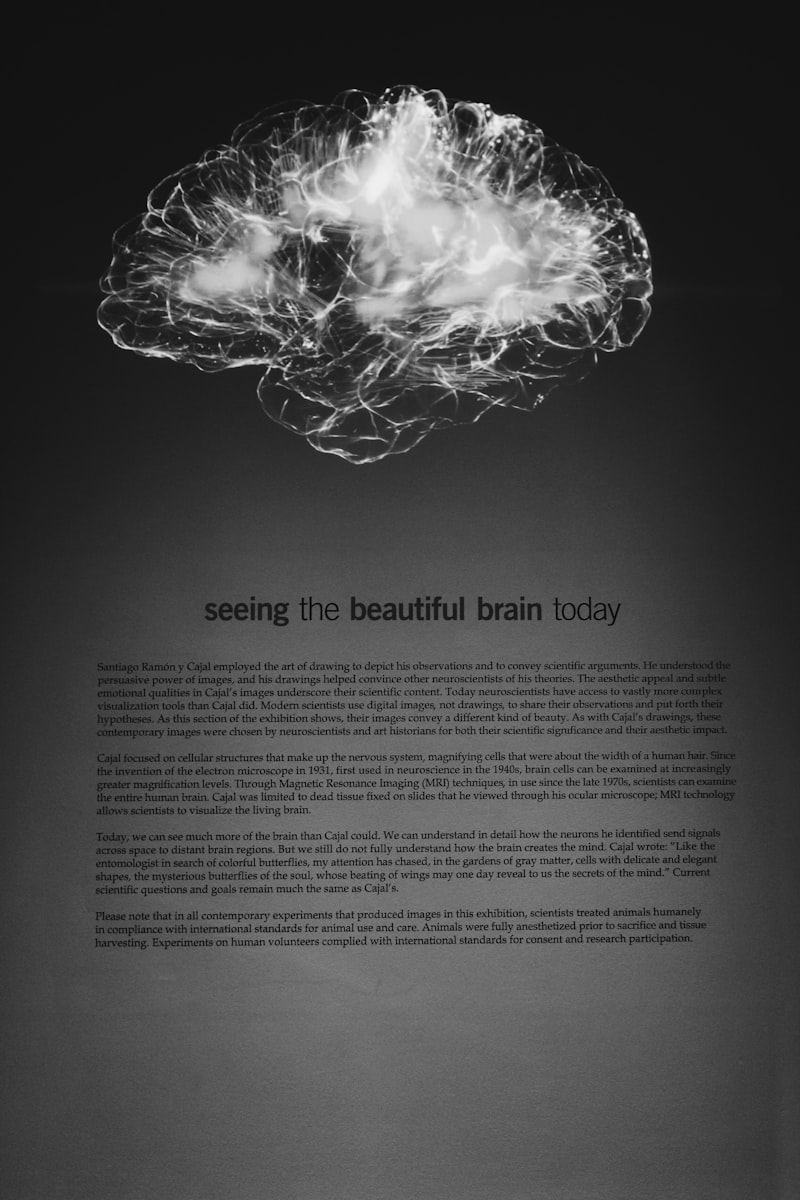
Agnosia, derived from the Greek meaning “not knowing,” is a profound neurological disorder characterized by the inability to acknowledge, understand, or recognize the definition of sensory stimuli, despite the presence of intact primary sensory function (e.g., sight, hearing, touch) and retained cognitive abilities such as alertness and language comprehension. This condition represents a failure in the higher-order processing and interpretation of incoming sensory information within the association cortices of the brain. Agnosia is not a singular disease but rather a symptom or group of syndromes directly correlated with focal neurological injury or specific neurologic disease processes. The resulting impairment disrupts the critical link between perception and memory, fundamentally altering an individual’s interaction with the surrounding world.
The core distinction defining agnosia is the preservation of sensation versus the failure of recognition. A person with visual agnosia, for instance, can clearly see an object—the lines, colors, and shapes are perceived by the retina and transmitted to the primary visual cortex—yet they are utterly incapable of identifying what that object is or what purpose it serves. This complex deficit highlights the hierarchical organization of sensory processing, where primary sensory areas handle basic input (like light and sound intensity), while the secondary and tertiary association areas are responsible for integrating these inputs into meaningful, recognizable percepts. Because these specialized recognition pathways can be damaged independently, agnosia occurs in many ways, manifesting specifically across various sensory modalities.
Understanding agnosia requires an appreciation for the brain’s intricate network of specialized pathways. The integrity of the sensory organs themselves is essential, but equally vital is the integrity of the pathways leading from the primary sensory cortices to the limbic system, where memories and meaning are stored. When trauma, stroke, tumor, or degenerative conditions affect these specific processing regions—most frequently located in the temporal, parietal, or occipital lobes—the result is an isolated inability to link incoming data to existing knowledge. This failure of association underscores why agnosia is considered a disorder of recognition, separating it distinctly from conditions like blindness (a primary sensory deficit) or general memory loss (amnesia).
The Neurological Basis and Etiology of Recognition Failure
Agnosia is invariably tied to damage within the cerebral hemispheres, particularly the association areas responsible for consolidating and interpreting complex sensory data. These areas, situated downstream from the primary sensory receiving cortices, are crucial for integrating individual sensory features into a coherent, recognizable whole. For visual recognition, the critical pathway involves the occipital lobe projecting forward into the temporal lobe—known as the ventral stream or the “What” pathway—which specializes in object identification and recognition. Damage to this stream, or the connections linking it to memory structures, is the typical substrate for visual agnosia.
The etiology of agnosia is diverse, though the common thread is localized brain damage. Common causes include acute events such as cerebrovascular accidents (strokes), especially those affecting the posterior cerebral artery territory, which supplies the visual association areas. Traumatic brain injury (TBI), cerebral tumors, and surgical resection can also result in localized destruction of the recognition pathways. Furthermore, agnosia may present as an early or prominent symptom of progressive neurodegenerative disorders, such as Alzheimer’s disease, Lewy body dementia, or specific forms of primary progressive aphasia, where the atrophy selectively targets regions involved in sensory integration and semantic memory retrieval.
In terms of localization, specific agnosias map predictably onto damaged brain regions. For instance, many visual agnosias are associated with bilateral lesions in the occipital and temporal lobes, or unilateral lesions in the dominant hemisphere. Auditory agnosias typically involve damage to the superior temporal gyrus. The specificity of the deficit—the fact that a patient might recognize faces but not objects, or objects but not sounds—provides crucial insights into the highly specialized and modular organization of the human recognition system. This modularity means that recognition processes, while ultimately interconnected, rely on distinct anatomical circuits that can fail independently of one another, resulting in the wide spectrum of agnosic presentations observed clinically.
Classification by Sensory Modality
Agnosias are traditionally classified based on the sensory channel that is impaired, reflecting the modality-specific nature of the processing failure. While patients often present with deficits in only one modality, damage to adjacent or overlapping association areas can sometimes lead to multi-modal agnosias. The three primary categories are visual, auditory, and tactile (somatosensory) agnosias, each demanding specialized diagnostic testing to rule out primary sensory loss or generalized cognitive decline.
The significance of this classification lies in its diagnostic utility, helping clinicians pinpoint the likely location of the neurological lesion. For example, a patient presenting solely with an inability to recognize sounds, known as auditory agnosia, directs attention immediately toward the temporal lobe. Conversely, the inability to recognize objects by touch, or astereognosis, suggests damage primarily within the parietal lobe. This differential diagnosis is crucial because treatment and prognosis often depend heavily on the underlying neurological cause and its precise localization within the cerebral cortex.
Within each primary category, further subdivisions exist based on the specific type of information that cannot be processed (e.g., inability to recognize colors versus inability to recognize faces). Furthermore, many agnosias can be functionally separated into two broad types: apperceptive agnosia, where the basic perceptual ability to synthesize sensory features into a coherent whole is lost, and associative agnosia, where the perception is formed correctly, but the patient cannot link the percept to its semantic meaning or name. This distinction between “seeing” (or hearing/feeling) and “knowing” is fundamental to the clinical understanding of agnosia.
Detailed Examination of Visual Agnosias
Visual agnosia is perhaps the most recognized form of the disorder, defined as the inability to recognize visually presented objects, despite intact visual acuity and color vision. As previously noted, visual agnosia is subdivided based on the stage of visual processing that fails. Apperceptive visual agnosia results from a failure in object construction. Patients with this condition cannot copy images, match shapes, or discriminate between objects because they cannot properly synthesize the individual visual features (lines, edges, contours) into a unified perceptual experience. They see fragmented elements but cannot “put them together” mentally. This is often associated with more extensive bilateral damage to the posterior occipital lobes.
In contrast, associative visual agnosia involves a deficit in linking a fully formed visual percept to stored knowledge. The patient can accurately draw, describe the object’s features, and even pantomime its use, demonstrating that the visual perception itself is sound. However, they cannot name the object or state its function. This disconnection syndrome typically involves lesions affecting the pathways between the visual association cortex (occipital and temporal lobes) and the language or memory centers. A classic example is the case of a patient who can describe a key in detail but cannot recognize it as an object used to open a door until they are allowed to touch it.
Specific subtypes of visual agnosia are highly illustrative of the modularity of recognition:
- Prosopagnosia (Face Blindness): The inability to recognize familiar faces, including one’s own reflection, while often retaining the ability to identify people by voice, clothing, or gait. This highly specific deficit suggests a dedicated neural module for face processing, typically localized to the fusiform face area (FFA) in the fusiform gyrus.
- Color Agnosia: The inability to recognize or name colors, despite the physical ability to see them (i.e., not color blindness). This is often associated with lesions in the left hemisphere, disconnecting color perception from language centers.
- Simultanagnosia: A rare and debilitating condition (often part of Balint’s syndrome) where the patient can perceive only one object at a time. They may see a tree but fail to notice the forest, severely limiting complex visual interpretation and navigation.
- Alexia without Agraphia: An inability to read (alexia) despite retaining the ability to write (agraphia). This is a disconnection syndrome where visual information about words cannot reach the language processing centers, often due to damage to the left visual cortex and the corpus callosum.
These specific manifestations underscore how precise neurological damage can result in incredibly focused deficits, leaving other cognitive functions untouched, thus emphasizing the importance of detailed neuropsychological testing for accurate diagnosis.
Auditory Agnosias: The Failure to Recognize Sound
Auditory agnosia is defined as the inability to recognize sounds, despite normal hearing acuity. The failure lies within the interpretation of acoustic patterns by the auditory association cortex, typically located in the temporal lobes. Similar to visual agnosia, auditory agnosia can be broadly categorized based on the type of sound affected and the level of processing failure. The recognition of non-verbal environmental sounds (e.g., a ringing phone, a barking dog, running water) is often specifically impaired, leading to profound disorientation in the patient’s environment.
The spectrum of auditory agnosia includes several key syndromes. Amusia, or musical agnosia, is the inability to recognize musical tones, melodies, or rhythms, despite intact language and environmental sound recognition. Patients may describe music as confusing noise or fail to recognize previously familiar tunes. This suggests specialized processing networks dedicated to musical structure, often involving the non-dominant (right) temporal lobe.
The most functionally debilitating form of auditory agnosia is pure word deafness (also known as auditory verbal agnosia). In this condition, the patient can hear speech sounds and often perceive non-verbal sounds, but they are unable to recognize spoken words as language. They hear the sounds of speech but cannot decode them into phonemes, meaning language sounds like a foreign language or meaningless noise, even though the patient retains the ability to speak, read, and write normally. This disconnection syndrome is typically caused by bilateral lesions to the superior temporal gyri or their pathways, isolating the primary auditory cortex from the Wernicke’s area (language comprehension center).
Tactile Agnosias and Somatosensory Recognition
Tactile agnosia, or somatosensory agnosia, involves the inability to recognize objects or stimuli through touch alone, despite having intact primary somatosensory functions (i.e., sensation of pressure, temperature, pain, and proprioception). The most common manifestation of this failure is astereognosis (also called tactile asymbolia), where the patient cannot identify an object placed in their hand, even though they can describe its texture, shape, and weight. The failure occurs because the parietal association cortex, which integrates these separate features into a coherent 3D percept, is damaged.
Astereognosis typically results from lesions in the contralateral parietal lobe, specifically the secondary somatosensory areas. For a diagnosis of astereognosis to be confirmed, the clinician must rigorously ensure that the patient has no underlying deficits in primary sensory input, such as peripheral neuropathy or damage to the primary somatosensory cortex. If primary sensation is impaired, the failure to recognize the object is due to a sensory deficit, not an agnosia.
Related disorders of somatosensory recognition include Autotopagnosia, the inability to localize or recognize one’s own body parts. For example, a patient may be asked to point to their elbow but cannot correctly identify it, despite knowing what an elbow is conceptually. This is generally associated with dominant (left) parietal lobe lesions. Another critical related syndrome is Anosognosia, a lack of awareness or denial of one’s own neurological deficit (e.g., a stroke patient with hemiplegia who genuinely believes they can move their paralyzed limb). While not strictly a sensory agnosia, anosognosia represents a failure of metacognitive recognition, often linked to non-dominant (right) parietal lobe damage.
Diagnosis, Prognosis, and Management
The diagnosis of agnosia requires a systematic, multi-stage approach aimed at localizing the deficit and ruling out alternative explanations. Initially, a comprehensive neurological examination must confirm the integrity of the primary sensory pathways. For visual agnosia, this means confirming normal visual acuity and visual fields; for auditory agnosia, normal audiometry is required; and for tactile agnosia, primary sensation tests (light touch, vibration, proprioception) must be intact. Once primary sensory deficits are ruled out, neuropsychological testing becomes essential. These specialized tests are designed to isolate the recognition failure, often requiring the patient to identify stimuli through different modalities (e.g., if a patient fails to visually identify a hammer, they are asked to identify it by touch or sound, or to name it based on a verbal description).
Neuroimaging techniques, particularly Magnetic Resonance Imaging (MRI), are crucial for identifying the underlying structural pathology, whether it is a cerebral infarction (stroke), tumor, hemorrhage, or evidence of diffuse atrophy characteristic of a neurodegenerative process. The location and extent of the lesion are often correlated directly with the type and severity of the agnosia observed. For example, confirmation of a posterior cerebral artery stroke affecting the lingual and fusiform gyri strongly supports a diagnosis of visual agnosia.
The prognosis for individuals with agnosia is highly dependent on the etiology. If the agnosia results from an acute, localized event like a stroke or trauma, there is potential for recovery, particularly if the damage is mild or the brain demonstrates plasticity and reorganization over time. Recovery tends to plateau after the first six to twelve months post-injury. However, if the agnosia is secondary to a progressive degenerative condition, such as Alzheimer’s disease, the symptoms are likely to worsen over time, leading to increasing functional dependence.
Currently, there are no specific pharmacological treatments that cure agnosia. Management is primarily focused on rehabilitation and compensatory strategies.
- Occupational Therapy: Helps patients develop alternative strategies for interaction, such as relying heavily on intact sensory modalities. For instance, a patient with visual agnosia might be trained to use tactile or auditory cues to identify objects they cannot see.
- Environmental Modification: Simplifying the environment and using labeling systems (e.g., using large print or Braille labels) can mitigate the functional consequences of recognition failure.
- Cognitive Rehabilitation: Specific training exercises may attempt to strengthen the compromised processing pathways, though the effectiveness varies greatly depending on the extent of the underlying neurological damage.
Ultimately, effective management requires a personalized approach that leverages the patient’s preserved abilities to navigate a world that has become fundamentally unfamiliar due to the failure of sensory acknowledgment and recognition.