Alien Abduction: The Psychology of Extraordinary Claims
Scientifically Reviewed · Dr. Marwa Abd-Alazim · August 31, 2026
Review Criteria & Clinical Standards
This content undergoes rigorous scientific peer-review and medical editorial standards at Arab Psychology Network to ensure clinical accuracy, validity, and compliance with evidence-based guidelines from leading psychological and healthcare authorities (APA / WHO).
Introduction and Phenomenological Definition
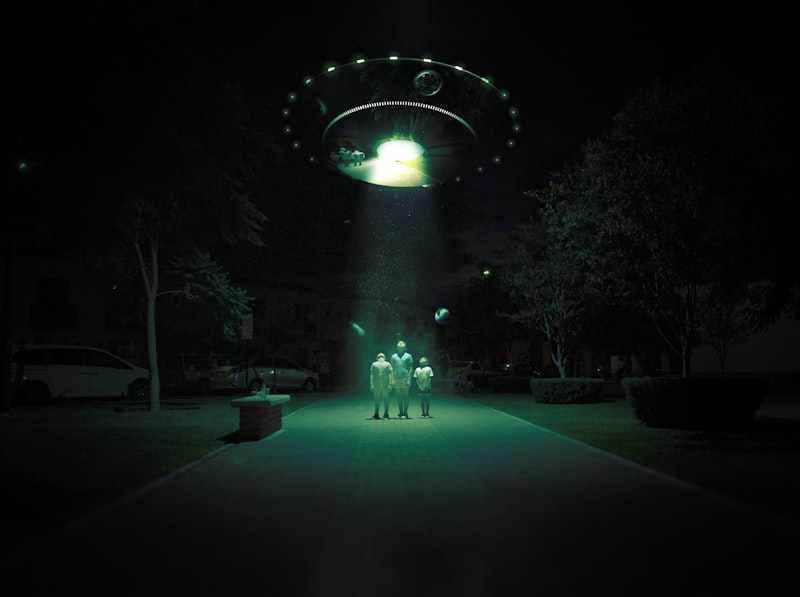
The concept of alien abduction refers to a deeply held, subjective declaration made by certain individuals who report being involuntarily seized, transported, and subjected to various procedures by non-human, extraterrestrial entities. These accounts typically involve complex narratives detailing transportation aboard spacecraft, often including physical examinations, reproductive experiments, and interactions with beings commonly described as “Greys.” While these experiences are reported with profound conviction and often involve intense emotional distress, the scientific and legal communities have consistently maintained that, to date, there exists no comprehensive, objective, or independently verifiable physical evidence to substantiate such extraordinary declarations. This lack of empirical corroboration places the phenomenon squarely within the domain of psychological and sociological investigation, rather than establishing it as a confirmed physical event, necessitating a rigorous examination of the underlying cognitive processes and environmental factors that contribute to the formation and maintenance of these beliefs.
Defining the experience within a psychological framework requires acknowledgment of the intense reality it holds for the claimant, often resulting in symptoms parallel to those experienced after conventional trauma. Abduction narratives frequently exhibit common structural elements across various cultures and geographical locations, suggesting a potential template derived from shared cultural mythologies, media portrayals, or perhaps shared underlying psychological mechanisms. The consistency of these narratives—which often detail bright lights, missing time, paralysis, and clinical procedures—has led some researchers to explore the possibility of shared neurological or physiological triggers that are subsequently interpreted through the lens of extraterrestrial encounters. Understanding alien abduction reports involves distinguishing between the subjective reality of the experience and the objective veracity of the claims, focusing intently on the mental health implications and cognitive frameworks utilized by the individuals reporting these events.
Despite the extraordinary nature of the content, the phenomenon is studied seriously within clinical psychology due to its implications for trauma processing and dissociative states. The experience functions as a highly personalized belief system that often provides an explanatory framework for otherwise inexplicable physical or psychological symptoms, such as chronic pain, anxiety, or dissociative episodes. Importantly, while the initial sensation is frequently correlated with various forms of psychological stress, including minor responses to undue stress, post-traumatic stress symptoms (PTSD), and occasionally neurotic thought processes, a significant subset of individuals presenting these claims exhibit no other readily apparent or diagnosable signs of severe cognitive illness or psychotic disorders, complicating any straightforward pathologizing of the phenomenon. This necessitates careful differential diagnosis to rule out organic pathology while exploring non-pathological psychological explanations, such as misinterpretation of nocturnal events or heightened imaginative capacity.
Historical Context and Cultural Evolution
The modern template for the alien abduction narrative solidified in the mid-20th century, largely following the 1961 case of Betty and Barney Hill, whose detailed, hypnotically-retrieved accounts became the paradigm upon which subsequent reports were modeled. Prior to this highly publicized event, reports of encounters with non-human entities were often subsumed within folklore, religious visions, or fairy narratives. However, the post-war era, characterized by rapid technological advancement, the Cold War space race, and heightened anxieties regarding unknown threats, provided a fertile cultural environment for the emergence of the sophisticated, high-tech extraterrestrial narrative. The popularization of science fiction and the widespread dissemination of UFO sightings created a readily accessible cognitive schema that individuals could unconsciously draw upon when seeking explanations for unusual subjective experiences, thus transforming earlier mystical encounters into encounters with highly advanced, technologically superior beings.
The evolution of the narrative demonstrates a strong correlation between media exposure and the specific details reported by abductees. As film, television, and literature elaborated upon the visual and procedural elements of these encounters, subsequent abduction reports often mirrored these changes, a phenomenon suggesting a powerful role for social learning and cultural feedback loops. For instance, the archetype of the small, grey, large-headed alien, now ubiquitous in abduction claims, was largely popularized through media depictions originating in the 1980s, further illustrating the dynamic interplay between collective imagination and individual subjective experience. This cultural scaffolding provides a shared lexicon and narrative structure, which, while lending apparent consistency to the reports, simultaneously raises questions about the independent, non-suggested origins of the reported details.
Furthermore, the geographical distribution of these reports is not uniform, suggesting regional or national cultural influences play a crucial role. For example, the original content notes that tales of alien abduction are relatively more common in specific areas, such as Arizona in the United States, likely due to a combination of factors including high levels of UFO-related tourism, established subcultures focused on extraterrestrial phenomena, and significant media attention directed toward alleged sighting hotspots. This clustering effect highlights the importance of social reinforcement and the development of localized belief systems. Where a strong, supportive subculture exists, individuals may feel more comfortable reporting their experiences and may find existing narrative structures more readily available for interpreting ambiguous stimuli, thereby perpetuating the cycle of reporting within that specific geographical or social context.
Psychological Correlates and Differential Diagnosis
Clinical investigation into the psychology of abductees reveals a complex profile, often characterized by elevated levels of certain psychological traits, even in the absence of severe psychopathology. Researchers frequently note correlations with high levels of fantasy proneness, a tendency toward dissociative experiences, and occasionally, a personality style leaning toward neurotic thought processes, which involves a general tendency toward anxiety, worry, and emotional instability. It is critical to differentiate correlation from causation; while these traits may predispose an individual to interpret ambiguous internal or external stimuli in an extraordinary way, they do not automatically signify mental illness. Instead, these traits may simply reflect a heightened capacity for rich internal experience or an increased sensitivity to environmental stress, which subsequently fuels the construction of the abduction narrative as a coping mechanism or explanatory framework.
A significant portion of clinical work involves the differential diagnosis to distinguish these reports from known psychiatric conditions. While overt psychosis or delusional disorders are rare among the majority of abductees, careful screening is essential to rule out conditions where reality testing is impaired. The fact that many abductees present no additional obvious signs of cognitive illness is a primary challenge, suggesting that the experience, while extraordinary, may be non-pathological in origin. Clinicians must meticulously consider alternative explanations, including complex partial seizures, side effects of medication, or the misinterpretation of hypnagogic or hypnopompic states (sleep-wake transitions). The diagnosis of Post-Traumatic Stress Disorder (PTSD) is also relevant, as the reported terror and physical violation experienced during the alleged abduction can genuinely result in criteria-meeting symptoms, such as flashbacks, hyperarousal, and avoidance behaviors, regardless of the objective reality of the initial trauma.
The relationship between stress and abduction reports is particularly salient. The original content observes a correlation with minor responses to undue stress, suggesting that the abduction narrative may emerge during periods of high emotional or psychological vulnerability. When individuals face overwhelming life challenges, the mind may seek external, dramatic explanations for internal feelings of helplessness, violation, or physical discomfort. The narrative of being abducted and controlled by powerful, external entities can serve as a potent projection of internalized feelings of loss of autonomy or unresolved trauma from non-alien sources. Furthermore, the intensity of the reported experience often necessitates therapeutic intervention focused on trauma resolution, regardless of the clinician’s stance on the reality of the extraterrestrial claim, prioritizing the patient’s distress and symptomatic relief.
Cognitive and Neuroscientific Theories
Neuroscientific investigation provides compelling alternative explanations for the core features of the abduction phenomenon, focusing particularly on altered states of consciousness. One of the most robust theories links key aspects of the reports—such as paralysis, a sense of presence, auditory and visual hallucinations, and intense fear—to episodes of sleep paralysis. Sleep paralysis occurs when an individual awakens during the REM stage of sleep, resulting in temporary muscle atonia combined with full consciousness. During this state, the brain is highly susceptible to hypnopompic hallucinations, which often involve menacing figures standing over the bed (the “intruder” archetype), feelings of pressure on the chest, and difficulty breathing, aligning precisely with many details of alleged alien examinations. The brain’s attempt to make sense of this profound disorientation often leads to the construction of a coherent narrative, which, given the cultural context, frequently involves extraterrestrial beings.
Memory distortion and cognitive biases also play a pivotal role. The process of memory retrieval is reconstructive, not purely reproductive, meaning memories can be unconsciously altered or augmented over time, particularly when influenced by strong emotional content or external suggestion. Techniques often used to “recover” these memories, such as hypnosis, are known to increase confabulation—the production of fabricated, distorted, or misinterpreted memories without the conscious intention to deceive. An individual experiencing ambiguous physical sensations or unexplained dreams may, through suggestibility and repeated questioning, unconsciously fill in the gaps with culturally available alien narratives, ultimately solidifying a false memory that feels entirely real and emotionally valid to them. This mechanism explains why many of the most detailed reports emerge only after therapeutic or investigative intervention.
Furthermore, research into temporal lobe sensitivity suggests that certain individuals may be more prone to experiencing anomalous internal sensations that could be misinterpreted as external events. The temporal lobes are implicated in processing sensory information, integrating memory, and generating emotional responses. Minor electrical disturbances or unusual sensitivity in these areas might lead to feelings of disembodiment, auditory phenomena, or complex visual hallucinations. When coupled with a pre-existing belief system or high anxiety, these internal neurological events are often attributed to external, non-human agency, thereby providing a powerful neurological basis for the initial, inexplicable sensation that later forms the foundation of the detailed abduction narrative.
The Role of Suggestibility and Social Contagion
The development of detailed alien abduction accounts is often inextricably linked to the influence of external suggestion, a process frequently accelerated by certain therapeutic or investigative modalities. The use of regressive hypnosis in the 1980s and 1990s, aimed at uncovering “missing time” or repressed memories, proved highly effective at generating detailed, coherent narratives. However, decades of psychological research have demonstrated that hypnosis does not reliably access accurate repressed memories; rather, it makes the subject highly susceptible to suggestion, whether intentional or unintentional, from the hypnotist. Leading questions, subtle cues, or the mere expectation that a traumatic, hidden event occurred can guide the subject toward constructing an abduction scenario, which subsequently becomes deeply integrated into their personal history, reinforcing the subjective conviction of the experience.
Social contagion and the powerful influence of media narratives further amplify and standardize these experiences. As high-profile accounts are publicized through books, documentaries, and internet forums, they establish a cultural script that others experiencing ambiguous symptoms can readily adopt. This process of collective reinforcement occurs within subcultures dedicated to UFO and abduction research, where support groups and investigators actively validate the individual’s account, solidifying the narrative and potentially adding further suggested details. This validation provides immense social and emotional comfort, often fulfilling a need for attention, community, or meaning, especially for individuals who might feel marginalized or isolated in conventional society. The communal acceptance of the narrative strengthens its perceived reality for the individual, making disconfirmation highly unlikely.
The study of suggestibility also intersects with the concept of fantasy proneness. Individuals who score highly on measures of fantasy proneness often possess vivid imaginations, spend significant time engaged in fantasy, and may confuse imagined events with real experiences, a phenomenon sometimes referred to as reality monitoring failure. While this is not pathological, it indicates a cognitive style that is particularly receptive to external suggestion and internal narrative construction. In the context of alien abduction, high fantasy proneness acts as a mediating variable, making the individual more likely to generate a rich, detailed, and emotionally salient narrative when presented with ambiguous stimuli, thereby contributing to the complex tapestry of the abduction experience.
Clinical Management and Therapeutic Approaches
When an individual presents to a clinician with claims of alien abduction, the primary therapeutic goal is not to debate the ontological reality of the experience, but rather to address the associated distress, anxiety, and post-traumatic symptoms. The approach must be grounded in unconditional positive regard and non-judgemental acceptance of the client’s subjective reality. The clinician must first conduct a thorough psychological assessment to rule out acute mental health crises, psychosis, or substance-induced states, utilizing standardized scales for depression, anxiety, and dissociation. Therapeutic intervention typically focuses on managing the emotional consequences of the alleged trauma, treating the subjective terror and sense of violation that parallel conventional trauma responses, regardless of the source of the trauma.
Effective therapeutic modalities often incorporate trauma-focused treatments such as Cognitive Processing Therapy (CPT) or Eye Movement Desensitization and Reprocessing (EMDR), adapted to help the client process the overwhelming emotions associated with the reported events. A key component involves psychoeducation regarding the nature of memory, sleep disorders (like sleep paralysis), and the potential for suggestion, framed not as an attempt to invalidate the client’s experience, but as tools for understanding the origins of their distress. The focus shifts from the external (the aliens) to the internal (the psychological and physical sensations), allowing the client to regain a sense of control over their emotional life, rather than remaining perpetually victimized by an unknown external force.
In cases where the narrative appears highly resistant to reinterpretation or where the client derives significant meaning and identity from the abduction experience, the therapist may employ techniques centered on narrative therapy. This involves helping the client integrate the experience into their life story in a way that minimizes distress and maximizes functional coping, treating the abduction story as a powerful, meaningful myth rather than a literal historical event that constantly threatens their stability. This approach acknowledges the profound significance of the belief system while promoting psychological resilience and reducing the often debilitating effects of chronic fear and perceived vulnerability associated with the belief that they may be abducted again.
Societal Impact and Persistence of the Narrative
Despite the consistent lack of concrete evidence and the existence of robust psychological explanations, the narrative of alien abduction persists and maintains a strong grip on public imagination, reflecting enduring societal anxieties and psychological needs. The persistence is fueled by the narrative’s ability to address fundamental human questions regarding life beyond Earth, the existence of higher powers, and the fear of the unknown. In a secularizing society, the alien abduction scenario often functions as a modern mythology, providing an explanatory structure for inexplicable suffering or personal feelings of being “special” or chosen, thereby fulfilling quasi-religious or existential needs that traditional institutions might no longer satisfy effectively.
The societal impact extends to the creation of a specialized industry, including investigative organizations, conferences, and media production, which actively reinforces the legitimacy of the phenomenon. This feedback loop ensures that the narratives remain current and culturally relevant, continually introducing new details and interpretations that align with contemporary scientific discourse (e.g., genetic manipulation, nanotechnology). Furthermore, the phenomenon serves as a powerful symbol of societal distrust in institutions—both scientific and governmental—as abductees often believe that evidence is being actively suppressed, tapping into widespread cynicism regarding official narratives and promoting counter-cultural epistemologies.
In conclusion, while the declaration of being taken by unearthly beings remains scientifically unsubstantiated—with zero rounded and intact proof to support such claims—its importance lies in its role as a complex psychological and cultural phenomenon. The study of alien abduction provides invaluable insights into the mechanisms of memory distortion, suggestibility, trauma response, and the profound human tendency to construct coherent, meaningful narratives in the face of ambiguity and distress, making it a critical, albeit unique, field within the psychology of belief systems.