Alterity: The Psychology of Being Different
Scientifically Reviewed · Dr. Marwa Abd-Alazim · August 27, 2026
Review Criteria & Clinical Standards
This content undergoes rigorous scientific peer-review and medical editorial standards at Arab Psychology Network to ensure clinical accuracy, validity, and compliance with evidence-based guidelines from leading psychological and healthcare authorities (APA / WHO).
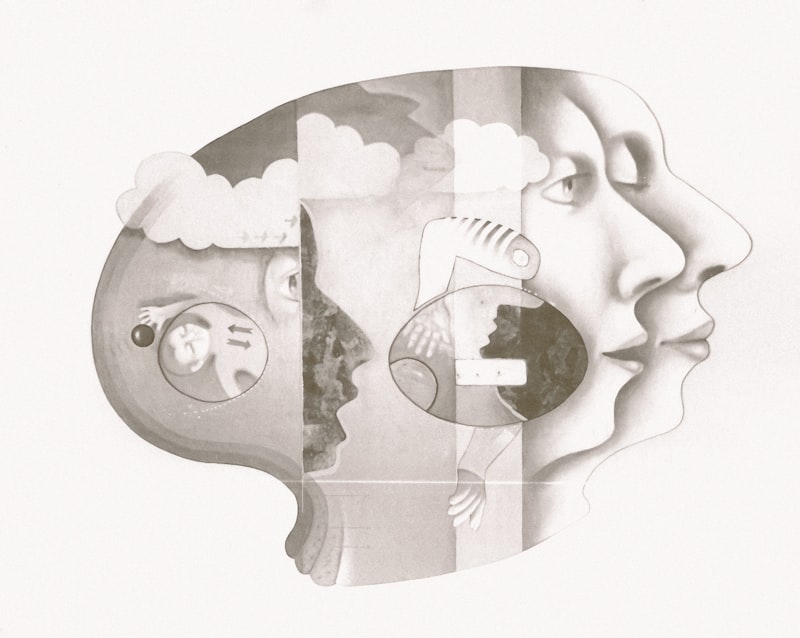
Etymological Foundation and Definition
The prefix ALIO-, often presented in its shortened form ALL- when preceding certain consonants or vowels, serves as a crucial blending form rooted in the concept of discrepancy, otherness, or fundamental distinctness from a perceived norm or baseline. This linguistic element signifies deviation, separation, or a state of being wholly separate from the expected or typical configuration, whether applied to psychological states, biological processes, or semantic structures. In highly technical fields, particularly medicine and psychology, the application of this root often highlights a pathological or statistically unusual state, emphasizing how a particular condition or characteristic stands apart from the healthy or modal population average. The understanding of ALIO- is intrinsically tied to comparative analysis, requiring an established standard against which the subject’s distinct nature can be measured and articulated, thus forming the foundational descriptive vocabulary for myriad conditions that defy typical physiological or psychological expression.
This notion of distinctness is not merely descriptive; it carries significant conceptual weight within taxonomic systems, allowing clinicians and researchers to categorize phenomena that exhibit an atypical morphology, function, or origin. When a biological structure or behavioral pattern is described using a term derived from ALIO-, the immediate implication is that the phenomenon represents a deviation that requires specialized attention or interpretation, distinguishing it sharply from homeostatic maintenance or typical developmental trajectories. Therefore, the prefix acts as a linguistic flag, directing focus toward an anomaly—a state of being fundamentally different from the established framework of health or statistical normalcy—thereby initiating investigative processes aimed at understanding the causes and consequences of this specific form of discrepancy. This linguistic precision ensures that discussions surrounding pathological states are grounded in clear recognition of their separation from healthy function, underpinning the rigorous diagnostic criteria utilized across clinical disciplines.
The philosophical implications of defining states through the lens of otherness or discrepancy also extend into the realm of identity and psychological processing. An individual experiencing a condition defined by ALIO--derived terminology is, by definition, confronting a physical or mental state that sets them apart, introducing elements of self-perception that are dictated by this perceived divergence from societal or physiological expectations. This recognition of distinctness necessitates a complex adaptive response, involving cognitive restructuring and emotional regulation to integrate the atypical state into one’s sense of self. The conceptual framework provided by the root ALIO- thus allows for a formal, objective description of the divergence while simultaneously acknowledging the profound subjective experience of living with a significant physiological or psychological alteration that marks one as separate or different from the majority.
The Concept of Physiological Discrepancy
Physiological discrepancy, as related to the root ALIO-, refers to any marked divergence from the established parameters of bodily homeostasis, encompassing failures in typical cellular function, organ system integration, or structural integrity. Such discrepancies are crucial indicators of underlying pathological processes, signaling that regulatory mechanisms designed to maintain equilibrium have been overwhelmed or compromised. These deviations can manifest across various scales, from molecular abnormalities affecting enzyme activity to large-scale systemic failures impacting major organ performance, but they universally share the characteristic of representing a state wholly “other” than the healthy baseline. The systematic study of these physiological discrepancies forms the core of pathology, utilizing diagnostic tools and biomarkers to precisely quantify the extent and nature of the divergence from the norm, thereby informing prognosis and treatment strategy.
A key aspect of understanding physiological distinctness involves the concept of threshold violation, where normal biological variation gives way to definitive pathology. While biological systems naturally exhibit a range of variability, the term discrepancy is reserved for those deviations that cross a critical diagnostic threshold, indicating a breakdown in the organism’s capacity for self-repair or adaptation. For instance, processes involving rapid or uncontrolled loss of a fundamental bodily component, such as the excessive shedding of hair or the rapid degradation of muscle tissue, represent acute physiological discrepancies. These conditions are characterized by a failure in the normal regulatory feedback loops—the mechanisms that typically ensure replacement matches loss—leading to a distinctly altered state of physical presentation or function that requires external medical intervention to correct or manage the underlying imbalance responsible for the divergence.
Furthermore, the manifestation of a physiological discrepancy often initiates a cascade of secondary effects, impacting not only the primary affected site but also the individual’s psychological well-being and social interaction capabilities. The visible or palpable nature of some discrepancies, such as significant changes in integumentary health or physical appearance, transforms an internal biological divergence into a highly visible marker of distinctness. This external presentation can profoundly affect self-esteem, body image, and social integration, demonstrating that the scope of physiological discrepancy extends far beyond mere cellular malfunction. It necessitates an integrated approach to care that addresses both the biological origins of the ALIO- state and the subsequent psycho-social consequences arising from the patient’s recognition of their physical divergence from established norms.
Clinical Manifestation: The Case Study of Alopecia
One profound clinical manifestation often discussed in contexts relating to significant physiological discrepancy is Alopecia, a condition characterized by the marked loss of hair, frequently affecting large or localized areas of the body, and representing a stark departure from typical integumentary integrity. The condition is often severely defined in clinical texts: “Alopecia is a condition marked by the loss of hair all over one’s body.” This extensive, sometimes total, hair loss (Alopecia universalis) is a dramatic example of a system failure where the normal hair growth cycle is interrupted, prematurely terminated, or attacked by the body’s own immune system, resulting in a physical state of extreme distinctness. This condition serves as a powerful illustration of how regulatory system failure translates into visible, pervasive physiological discrepancy that alters the individual’s physical configuration fundamentally.
The etiology of Alopecia is complex, often involving autoimmune processes where the body mistakenly identifies hair follicles as foreign threats, leading to their inflammatory destruction. This misdirected immune response represents a critical breakdown in self-recognition, which is the ultimate form of internal physiological discrepancy. The rapidity and extent of the hair loss dictate the severity of the clinical presentation, ranging from localized patchy loss (Alopecia areata) to the complete loss of all body hair. Regardless of the subtype, the condition fundamentally involves a biological process that is wholly “other” than the normal functioning of the pilosebaceous unit, demonstrating a profound regulatory failure that manifests externally as significant physical divergence. This discrepancy requires detailed immunological and dermatological investigation to classify the precise nature of the destructive process responsible for the hair follicle loss.
Furthermore, the study of Alopecia highlights the critical interplay between genetic predisposition, environmental triggers, and immunological status in generating a state of physiological distinctness. While some forms are clearly linked to specific genetic markers, others appear to be triggered by severe stress, hormonal fluctuations, or concurrent illnesses, suggesting that the body’s capacity to maintain normalcy is finely balanced and susceptible to disruption by various internal and external stimuli. The resulting hair loss is not merely a cosmetic issue; it is the visible endpoint of a significant internal biological discrepancy, demanding comprehensive medical management that often targets the underlying inflammatory or autoimmune process responsible for the dramatic alteration in physical appearance and the subsequent psychological distress associated with this visible divergence from the norm.
Psychological Impact of Distinctness
The experience of living with a significant physical discrepancy, such as severe Alopecia, imposes substantial burdens on psychological health, challenging the individual’s sense of self-worth, body image, and acceptance within social spheres. When a condition creates a highly visible state of distinctness, the affected individual often faces issues related to stigma, unsolicited attention, and the fundamental disruption of their identity as previously constructed around their physical appearance. The sudden or progressive loss of hair, which is culturally significant in defining gender, youth, and health, can trigger profound emotional responses, including grief, anxiety, and clinical depression, requiring dedicated psychological intervention alongside medical management.
Coping mechanisms utilized by those experiencing such a pronounced physical otherness vary widely, but often involve strategies aimed at either concealing the discrepancy or radically re-framing its meaning. Concealment strategies, such as the use of wigs or head coverings, represent an effort to mitigate the visible distinctness and reduce the external scrutiny associated with the condition. Conversely, re-framing involves an internal cognitive shift where the individual actively redefines their identity to decouple self-worth from appearance, embracing the state of divergence as a unique characteristic rather than a deficiency. Both approaches are responses to the psychological stress induced by the perceived separation from the norm, illustrating the deep impact that physiological discrepancies have on mental resilience and adaptive capacity.
Moreover, the concept of perceived control plays a critical role in mediating the psychological impact of highly visible ALIO- conditions. Conditions like autoimmune Alopecia are often unpredictable in their onset and progression, leading to feelings of helplessness and profound uncertainty regarding future appearance and health status. This lack of control over a major aspect of physical presentation exacerbates anxiety and contributes to significant emotional distress. Effective therapeutic strategies must therefore address not only the visible manifestation of the discrepancy but also the complex internal psychological landscape—helping the individual navigate the emotional repercussions of living in a state of physical distinctness that challenges fundamental assumptions about bodily predictability and control.
Biological Underpinnings of Hair Loss
Understanding the biological machinery responsible for generating the profound discrepancy seen in conditions like Alopecia requires a detailed examination of the hair growth cycle, which normally operates in three phases: anagen (growth), catagen (transition), and telogen (rest). In healthy individuals, these phases are tightly regulated, ensuring that hair loss (exogen) is balanced by new growth. Pathological hair loss, or Alopecia, arises when this delicate balance is catastrophically skewed, often due to premature entry into the telogen phase (telogen effluvium), the destruction of the follicle structure itself (cicatricial alopecia), or, most commonly, an immune-mediated attack that compromises the anagen phase, leading to the rapid manifestation of physical distinctness.
The immune system’s role in creating this physiological otherness is central to several forms of Alopecia. In autoimmune variants, specific T-lymphocytes erroneously target antigens within the hair follicle, particularly during the active growth phase, leading to localized inflammation and subsequent follicular collapse. This targeted destruction represents a fundamental immunological discrepancy—a failure of the body to recognize and tolerate its own tissues. Research has focused intensely on identifying the specific cytokine and chemokine pathways that mediate this inflammatory response, seeking novel pharmacological targets that can re-establish immune tolerance and halt the progression of the hair loss, thereby reversing the state of structural divergence and restoring normal integumentary function.
Further complexity arises from the interplay of hormones and genetic factors that predispose individuals to certain types of hair loss, such as androgenetic Alopecia. In these cases, heightened sensitivity to androgens causes follicular miniaturization over time, leading to a gradual but irreversible physical discrepancy. This condition is genetically mediated, highlighting how inherited biological differences can predetermine a gradual deviation from the norm, resulting in a distinct pattern of hair density and distribution. Addressing these biological underpinnings requires therapeutic approaches that target hormonal signaling pathways or utilize regenerative techniques aimed at stimulating dormant or miniaturized follicles, striving to correct the inherent physiological divergence responsible for the clinical presentation of thinning hair.
Differential Diagnosis and Related Conditions
The conceptual root of ALIO-, signifying distinctness or discrepancy, extends beyond isolated conditions like Alopecia to encompass a broad range of medical and psychological states defined by their deviation from typical parameters. In differential diagnosis, clinicians routinely utilize the concept of discrepancy to distinguish between conditions that present with similar outward signs but arise from fundamentally different etiologies. For example, distinguishing telogen effluvium (stress-induced shedding) from autoimmune Alopecia areata requires identifying the precise nature of the physiological discrepancy—is the hair merely resting prematurely, or is the follicle actively being destroyed by a malfunctioning immune system? This process of differentiation is crucial for assigning the correct diagnostic label that accurately reflects the underlying pathological ‘otherness’.
Conditions related conceptually to ALIO- often involve significant alterations in body composition, perception, or function. Examples include various forms of allodynia (pain resulting from a non-painful stimulus—a sensory discrepancy), allostasis (the process of achieving stability through physiological change—an adaptive divergence), and certain metabolic disorders where enzymatic function is distinctly aberrant. In psychology, terms describing discrepancies in self-perception or identity, such as depersonalization or certain dissociative states, rely on the core concept of a fundamental separation or distinctness between the individual and their reality or body. These conditions all share the common theme of a measurable, significant departure from the established biological or psychological norm, requiring specific intervention tailored to the unique nature of the divergence.
To accurately classify these discrepant states, extensive diagnostic workup often involves comprehensive laboratory testing, imaging studies, and detailed clinical histories to pinpoint the exact biological mechanism responsible for the deviation. The goal is always to move past the superficial manifestation of distinctness and identify the core etiological discrepancy. For instance, severe nutritional deficiencies can lead to hair loss that mimics Alopecia, but the underlying discrepancy is metabolic rather than autoimmune. A successful differential diagnosis identifies the specific pathway of pathological otherness, ensuring that treatment targets the root cause of the system failure rather than merely attempting to mask the physical or psychological symptoms arising from the divergence.
Therapeutic Approaches and Management of Discrepant States
The management of conditions characterized by profound physiological discrepancy, particularly those like widespread Alopecia, necessitates a multi-modal therapeutic approach aimed at mitigating the underlying pathology while simultaneously addressing the significant physical and psychological consequences of the resulting distinctness. Treatment strategies for autoimmune hair loss, for example, focus heavily on immunomodulation, utilizing systemic or topical corticosteroids, or increasingly, targeted Janus kinase (JAK) inhibitors, to suppress the misdirected immune response and halt the destruction of the hair follicles, thereby attempting to restore the physiological equilibrium that defines the non-discrepant state.
Beyond pharmacological intervention, the management of visible physiological otherness often incorporates supportive and restorative measures. For individuals with extensive or total hair loss, these measures include cosmetic interventions such as custom hair systems or cosmetic tattooing of the scalp, which serve to reduce the visible manifestation of the discrepancy, thereby significantly improving the patient’s quality of life and facilitating better social integration. Furthermore, nutritional and lifestyle adjustments are often crucial, particularly when the underlying discrepancy relates to systemic health issues, emphasizing that comprehensive care must address all contributing factors to the patient’s divergent state.
Crucially, effective management protocols must integrate robust psychological support to help patients cope with the emotional weight of their distinctness. Cognitive Behavioral Therapy (CBT), support groups, and counseling are vital components, assisting individuals in processing grief, managing anxiety related to appearance, and developing healthy coping strategies for living with a chronic condition defined by deviation from the norm. The overarching goal of therapeutic management is not simply to reverse the physical discrepancy, but to empower the individual to achieve a state of psychological and functional homeostasis despite the presence of a chronic physical alteration, ensuring that their distinctness does not preclude a fulfilling and integrated life.