Allocortex: Unlocking the Brain’s Primal Core
Scientifically Reviewed · Dr. Marwa Abd-Alazim · September 1, 2026
Review Criteria & Clinical Standards
This content undergoes rigorous scientific peer-review and medical editorial standards at Arab Psychology Network to ensure clinical accuracy, validity, and compliance with evidence-based guidelines from leading psychological and healthcare authorities (APA / WHO).
Introduction and Definition of Allocortex
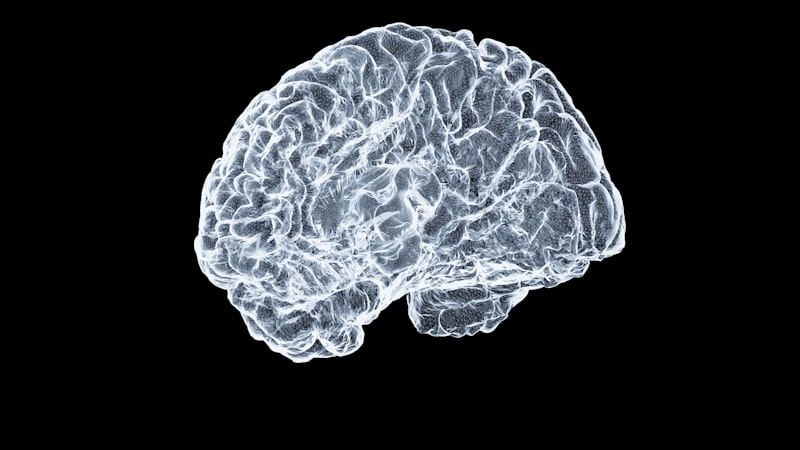
The allocortex represents a fundamental division of the cerebral cortex, distinguished anatomically and phylogenetically from the expansive six-layered structure known as the neocortex (or isocortex). By definition, the allocortex is cerebral cortex which possesses fewer than the six distinct cortical layers characteristic of the neocortex. This structural simplification, typically manifesting as three or four layers, reflects its ancient evolutionary origin and specialized processing roles within the mammalian brain. Its existence highlights a crucial principle of neuroanatomy: not all cortical regions are built upon the same uniform six-layer template, suggesting that diverse functions require diverse internal architectures.
The allocortex is not a homogenous structure but is classically subdivided into two primary components based on their evolutionary age and primary function: the archicortex and the paleocortex. The archicortex, exemplified by the hippocampal formation, is considered the phylogenetically oldest component and is critically involved in memory consolidation and spatial navigation. Conversely, the paleocortex, which includes structures like the piriform cortex, is primarily dedicated to processing olfactory information, making it the most direct cortical pathway for sensory input in the brain, bypassing the complex relay systems utilized by other senses.
Understanding the allocortex requires appreciating its transitional boundaries. While the neocortex is defined by its six layers, the allocortex adheres strictly to fewer layers (three to five). Between these two major cortical types lie the periallocortex and proisocortex, transitional zones that display intermediate laminar patterns and serve as vital communication hubs. These zones, such as the entorhinal cortex, ensure the smooth integration of primitive, specialized allocortical functions (like memory encoding) with the vast, associative processing capabilities of the modern neocortex, illustrating a seamless anatomical continuum across the cerebral mantle.
Structural Components: The Archicortex
The archicortex constitutes the most ancient and structurally simple component of the allocortex, fundamentally organized around a characteristic three-layered arrangement. This structure is best represented by the hippocampal formation, a complex, curved structure deep within the medial temporal lobe that is indispensable for the formation of new declarative memories and the mapping of spatial environments. The archicortex includes three major interconnected subdivisions: the dentate gyrus, the hippocampus proper (Ammon’s horn), and the subiculum, all working in concert to process and consolidate incoming sensory data into stable, retrievable memory traces.
The functional architecture of the archicortex is defined by a highly specific, unidirectional flow of information known as the trisynaptic circuit. Input from the neocortex first arrives via the entorhinal cortex, which projects to the dentate gyrus. From there, mossy fibers project to the CA3 region of the hippocampus, and then Schaffer collaterals project to the CA1 region. This circuit is the anatomical basis for Long-Term Potentiation (LTP), the persistent strengthening of synapses based on recent patterns of activity, which is the leading cellular model for memory storage. The three-layered structure supports this specialized information bottleneck, focusing resources on pattern separation (in the dentate gyrus) and pattern completion (in CA3).
Beyond its memory functions, the archicortex is a key node in the Papez circuit, a neuroanatomical pathway historically associated with emotion and motivation. The hippocampus’s extensive efferent projections, particularly those leading to the fornix and eventually reaching the mammillary bodies and anterior thalamic nucleus, link memory processing directly to the limbic system. This connectivity explains the deep interdependence between emotional state and memory encoding—highly emotional events are often encoded more robustly, a function mediated by the close regulatory relationship between the archicortex and the amygdala.
Structural Components: The Paleocortex
The paleocortex, often referred to as the “old cortex,” represents the second major subdivision of the allocortex and is predominantly characterized by its specialization in processing olfactory information. Unlike the archicortex’s three layers, the paleocortex typically exhibits a structure ranging from three to five layers. Its structures are situated near the ventral and basal aspects of the forebrain, strategically positioned to receive and process input originating from the olfactory bulb, making olfaction the only sensory modality that has a direct, primary cortical representation within the allocortex.
Key structures comprising the paleocortex include the olfactory bulb, the anterior olfactory nucleus, and most notably, the piriform cortex. The piriform cortex receives direct axonal projections from the olfactory bulb, forming the primary olfactory cortex. This direct pathway is highly significant: all other sensory modalities (vision, audition, somatosensation) are obligatorily routed through the thalamus before reaching the neocortex, but olfaction bypasses this relay entirely. This anatomical shortcut allows for extremely rapid integration of smell with emotional and memory centers.
The functional implications of this direct paleocortical pathway are profound. Because the piriform cortex connects immediately and extensively to limbic structures—including the amygdala and the archicortex (via the entorhinal cortex)—olfactory stimuli possess a unique capacity to evoke intense, automatic emotional responses and vivid memories. This rapid, non-thalamic integration suggests that the paleocortex evolved to prioritize the immediate identification of environmental cues critical for survival, such as detecting predators, recognizing mates, or locating food sources, highlighting its role as a fundamental, ancient surveillance system.
Laminar Organization and Transitional Zones
The defining characteristic of the allocortex is its deviation from the six-layered organization (or hexalaminar structure) of the neocortex. This laminar reduction is not merely a simplification but a functional specialization. For instance, the archicortex, particularly the hippocampus, employs a trilaminar structure. These three layers—the molecular layer, the pyramidal layer, and the polymorphic layer—are highly optimized for the specific task of memory encoding and retrieval, focusing density on pyramidal cell activity and dendritic arborization rather than the broad, diverse connectivity seen in the granular layers of the neocortex.
A crucial concept in understanding cortical organization is the existence of transitional zones that bridge the structural gap between the three-layered allocortex and the six-layered neocortex. These zones, collectively termed the mesocortex, include the periallocortex and the proisocortex. The periallocortex is adjacent to the allocortex and typically exhibits four or five layers, retaining some allocortical features while beginning to incorporate neocortical organizational principles. Structures like the cingulate gyrus and the insula often fall into this intermediate category.
The proisocortex represents the next step toward the fully developed neocortex, possessing nearly six layers but still showing differences in cell density or layer thickness compared to true isocortex. These transitional regions, such as the entorhinal cortex, are immensely important functionally. The entorhinal cortex, for example, acts as the primary sensory interface for the hippocampus, serving as the gateway through which all highly processed multimodal information from the vast areas of the neocortex must pass before entering the memory circuits of the archicortex. This intricate layering demonstrates that cortical evolution proceeded not by replacement, but by the gradual addition and refinement of specialized laminar structures.
Functional Significance in Memory and Spatial Cognition
The allocortex, especially the archicortex, plays a central and irreplaceable role in cognitive functions, primarily focused on memory and spatial navigation. The hippocampus is essential for declarative memory—the memory of facts and events—and damage to this structure results in profound anterograde amnesia, preventing the formation of new long-term memories, a phenomenon dramatically illustrated by patient H.M. The allocortical architecture is uniquely suited to this task, capable of rapidly encoding novel information based on single exposures.
Furthermore, the archicortex is the core neural substrate for spatial memory and navigation, particularly in mammals. Specialized pyramidal cells within the hippocampus, known as place cells, fire selectively when an animal is located in a specific position within its environment. These place cells, along with grid cells found in the adjacent entorhinal cortex, form a cognitive map that allows organisms to efficiently navigate and recall specific locations. This highly evolved spatial function is critical for survival, linking the ancient allocortical structure directly to complex environmental mapping and problem-solving.
The functional significance extends beyond mere encoding. The archicortex is believed to facilitate the process of memory consolidation, whereby unstable short-term memories are reorganized and transferred over time to the neocortex for permanent storage. This complex dialogue between the three-layered allocortex and the six-layered neocortex, mediated by sleep-dependent oscillatory rhythms, is essential for transforming transient experiences into enduring knowledge. Thus, the allocortex serves not only as a processing center but also as a temporary holding and editorial office for the brain’s entire memory system.
Evolutionary Perspective and Phylogeny
From an evolutionary standpoint, the allocortex is considered the most primitive form of cortex, predating the massive expansion of the neocortex observed in primates and particularly in humans. In early vertebrates, such as fish and reptiles, the structure homologous to the allocortex constituted the majority, if not the entirety, of the pallial structures (the forebrain roof). This evolutionary history dictates that the functions governed by the allocortex—olfaction, basic emotional response, and immediate spatial orientation—were the initial priorities for cerebral development.
The relative size of the allocortex versus the neocortex serves as a powerful indicator of evolutionary development. In phylogenetically older species, the paleocortex and archicortex are proportionally much larger and more dominant. As species evolved toward mammals, and particularly complex mammals, the neocortex underwent explosive growth (neocorticalization), gradually enveloping the older allocortical structures. However, the allocortex was not eliminated; rather, it was preserved and integrated into the evolving cognitive system, retaining its specialized roles where a six-layered structure would be unnecessarily complex or inefficient.
The preservation of the allocortex emphasizes the concept of evolutionary layering, where new, complex structures are built upon and around existing, functional architectures. The human brain retains the allocortex because its unique, simplified laminar structure is perfectly optimized for rapid, non-associative processing (olfaction) and high-fidelity pattern separation (memory encoding), functions that remain critical for survival and learning despite the emergence of advanced associative thought handled by the neocortex.
Clinical Relevance and Pathology
Due to its crucial role in memory and its unique anatomical position, the allocortex is centrally implicated in several major neurological and psychiatric disorders. Perhaps the most recognized pathology involving the allocortex is Alzheimer’s disease (AD). The hippocampal formation and the adjacent entorhinal cortex (a transitional zone intimately linked to the archicortex) are among the first brain regions to exhibit significant neurofibrillary tangles and amyloid plaque accumulation. Damage to these areas directly causes the progressive memory loss and disorientation characteristic of early AD.
Furthermore, the allocortex, particularly the hippocampus, is highly vulnerable to excitotoxicity and is frequently the site of seizure initiation in epilepsy, specifically temporal lobe epilepsy (TLE). The neurons within the archicortex possess intrinsic properties that make them highly excitable, and damage—often caused by early life febrile seizures or trauma—can lead to hippocampal sclerosis, where the tissue scars and acts as a persistent epileptic focus. Surgical removal or precise electrical modulation of this allocortical tissue is often necessary to control severe, drug-resistant TLE.
Research also highlights the dynamic nature of the allocortex in relation to mental health. The dentate gyrus component of the hippocampus is one of the few regions in the adult mammalian brain where neurogenesis (the birth of new neurons) actively occurs. This process is sensitive to stress, depression, and pharmacological interventions. Understanding how stress impacts allocortical neurogenesis and how antidepressants modulate this activity offers critical avenues for developing new treatments for major depressive disorder and post-traumatic stress disorder, underscoring the allocortex’s relevance not just to memory, but to emotional regulation and plasticity throughout life.