Visual Perception: Light Manipulates Your Reality
Scientifically Reviewed · Dr. Marwa Abd-Alazim · August 26, 2026
Review Criteria & Clinical Standards
This content undergoes rigorous scientific peer-review and medical editorial standards at Arab Psychology Network to ensure clinical accuracy, validity, and compliance with evidence-based guidelines from leading psychological and healthcare authorities (APA / WHO).
Definition and Nomenclature of the Anaglyptoscope
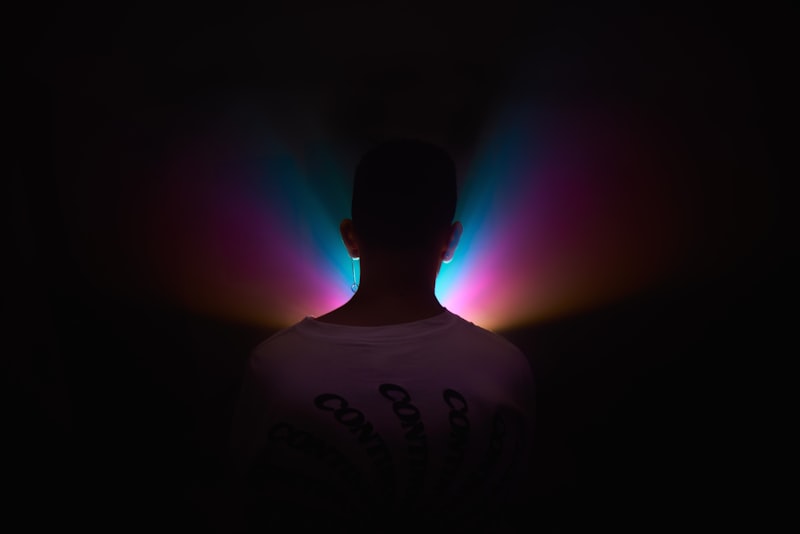
The Anaglyptoscope is defined fundamentally as a specialized optical instrument utilized to manipulate the perception of depth and relief on a three-dimensional object or a two-dimensional representation by strategically altering the reflection of light and shadow across its surface. This alteration fundamentally changes the comprehension of the item’s inherent depth characteristics, often resulting in exaggerated texture or the reversal of perceived relief. Functioning primarily through highly controlled optical redirection, the device intercepts ambient or directed light and projects carefully calibrated portions of light and shadow back onto the subject, deceiving the viewer’s monocular depth cues and forcing a reinterpretation of the object’s spatial orientation.
Nomenclature surrounding this specific device often presents minor inconsistencies, with the term occasionally being rendered incorrectly as anadglyphoscope in common usage or older literature. However, the correct etymology is crucial for understanding its function: deriving from Greek roots, ana meaning “up” or “again,” glyptos referring to “carved” or “engraved,” and scope meaning “to view,” the term accurately describes a tool used to enhance or re-examine the engraved or carved features of a surface. This precise naming underscores its utility not just in general photography, but specifically in fields requiring meticulous examination of surface topology, such as cartography, archaeology, and the detailed analysis of sculptural work where subtle variations in relief must be highlighted for documentation or artistic effect.
In practice, the anaglyptoscope serves as a powerful means of visual augmentation, demonstrating the profound subjectivity of visual perception. It operates on the principle that the human visual system relies heavily on consistent shading gradients to infer whether a surface is concave or convex; by introducing conflicting or amplified shadows, the device disrupts this cognitive consistency. Consequently, it is classified as a sophisticated optical tool designed not merely for observation, but for the deliberate restructuring of visual information, making it invaluable for professionals who require a highly controlled environment to visualize and record the nuanced interplay between light, form, and perceived volume.
The Physics of Light Manipulation
The operational success of the anaglyptoscope rests upon highly specialized principles of geometric optics and the precise control of incident and reflected light. Unlike standard illumination which aims for even coverage, this device employs a system of adjustable reflectors, polarizing filters, or sometimes prisms, meticulously positioned to select and redirect specific wavelengths or angles of light onto the target object. The goal is to generate artificial shadow contours that either dramatically accentuate minute surface irregularities or, conversely, create smooth gradients that minimize actual depth, thereby overriding the natural shadow patterns that would typically be cast by ambient light.
Central to this process is the manipulation of shading cues, which are perhaps the most reliable monocular indicators of depth and relief. By positioning a reflective surface at an unconventional angle relative to the primary light source and the viewing aperture, the anaglyptoscope can introduce strong, directional shadows that simulate illumination from a source that is physically absent or oriented differently. For example, a shadow that naturally suggests a depression might be artificially filled with reflected light, leading the brain to interpret that area as a convex protrusion, a phenomenon known as pseudo-relief. This targeted reflection must be calibrated with exceptional precision to ensure the resulting visual inconsistency is interpreted as altered depth rather than mere artifact or glare.
The device effectively isolates and amplifies the importance of the light-fall gradient, demonstrating that our perception of form is highly contingent upon the assumption of where the light source originates. When the anaglyptoscope forces an interpretation based on manipulated light rays, it proves that the brain prioritizes the visual input from the shading over other depth cues, such as relative size or texture gradient, especially in the context of close-up examination. This mastery over light transmission and reflection allows the operator to essentially paint with shadows, sculpting the perceived three-dimensionality of the subject long before it is captured by a camera or recorded in a viewer’s memory.
Psychological Principles of Depth Perception
The efficacy of the anaglyptoscope is deeply rooted in established psychological principles governing human visual processing and the interpretation of depth from two-dimensional retinal input. The device specifically targets and exploits the visual system’s heavy reliance on monocular depth cues, particularly the consistency of shading and shadow. Our brains are hardwired to assume that light generally comes from above and that areas receiving less light are receding (concave) or are located further away, while brightly lit areas appear to advance (convex). The anaglyptoscope systematically violates this fundamental, evolutionary assumption.
When the device introduces contradictory lighting—for instance, illuminating the underside of a small ridge while shadowing the top—the cognitive system is forced into a state of ambiguity. To resolve this perceptual conflict, the brain often defaults to the most compelling spatial interpretation provided by the strongest visual cue, which, in this case, is the dramatically altered shading pattern. This results in the compelling illusion of altered depth, often causing flat surfaces to appear highly textured or relief features to appear inverted. This immediate, involuntary cognitive reassessment highlights the automatic nature of perceptual constancy and how easily it can be tricked when optical input is carefully controlled.
Furthermore, the manipulation achieved by the anaglyptoscope serves as a critical demonstration of the top-down processing inherent in vision. The viewer is not merely seeing light and shadow; they are constructing a hypothesis about the object’s physical reality based on the input. By providing highly specific, yet misleading, visual data, the anaglyptoscope demonstrates the plasticity of spatial cognition. The resulting visualization is not a true representation of the object’s physical form but rather a successful cognitive projection derived from the device’s optical intervention, proving that the perceived depth is a product of interpretation rather than solely physical measurement.
Historical Development and Antecedents
While the sophisticated mechanism known today as the anaglyptoscope represents a refinement of optical technology, its conceptual roots lie in the long historical pursuit of manipulating visual perception and enhancing the three-dimensional rendering of two-dimensional images. The 19th century, in particular, saw a flourish of inventions aimed at depth illusion, most notably the development of the stereoscope by Sir Charles Wheatstone, which capitalized on binocular disparity. The anaglyptoscope, however, diverges from these path-breaking inventions by focusing intensely on monocular cues, demonstrating a shift in focus from retinal separation to light manipulation.
Antecedents to the modern device can be found in specialized illumination techniques used by cartographers and engravers who sought methods to make subtle topographical features visible in two-dimensional renderings. Early techniques often involved shining a highly directional light source obliquely across a map or etched plate to maximize shadow length and contrast, thereby emphasizing minute changes in relief. These manual, often cumbersome methods proved the psychological power of controlled shadow casting, setting the stage for the creation of a dedicated, mechanized instrument capable of reproducible and precise manipulation of light reflection. The necessity for objective analysis of surface texture in fields like mineralogy and paleontology further spurred the development of such specialized viewing aids.
The formalized design of the anaglyptoscope eventually arose from the need for a tool that could rapidly and reliably generate the illusion of depth alteration, particularly for photographic recording. As photography evolved, scientists and artists required a method to capture not just the physical appearance of an object, but also a manipulated visual state that highlighted specific features. Thus, the device transitioned from a conceptual technique into a piece of dedicated optical hardware, allowing professionals to standardize the process of creating pseudo-relief for analytical or creative purposes, serving as a critical bridge between simple directional lighting and full stereoscopic visualization.
Technical Operation and Mechanics
The technical operation of the anaglyptoscope demands meticulous setup and calibration, making it a tool that requires specialized knowledge in geometric optics and visual perception. A typical setup involves a stable platform for the object, a high-intensity, adjustable light source (often LED or halogen for precise color control), and a system of articulated reflective components, which may include parabolic mirrors or specialized diffusion screens. The primary mechanical function is to allow the operator to independently control the angle of incidence, the intensity, and the path of the reflected light that ultimately defines the perceived depth features.
The procedure for achieving a desired effect, such as relief inversion, involves several iterative steps. First, the object is placed under the primary light source. Second, the operator introduces the reflective components, adjusting their orientation until they selectively reflect light into the shadowed areas that would normally define concavity. For instance, to make a carved inscription appear raised rather than sunken, the mirror system must introduce reflected light into the base of the cut, minimizing the natural shadow and thereby confusing the visual system’s depth interpretation. Precision micrometers or calibrated rotational stages are often incorporated into the device to ensure that these adjustments are repeatable and measurable, which is crucial for scientific documentation.
A key mechanical distinction of many advanced anaglyptoscopes is the inclusion of variable light intensity controls and the option for color filtering, which adds another layer of control over the resulting visual perception. By altering the spectral composition of the reflected light, the operator can influence not only the perceived depth but also the apparent material properties of the subject. This high degree of technical control ensures that the resulting visualization, whether captured photographically or viewed directly, is a precise representation of a calculated visual distortion, making the anaglyptoscope a specialized instrument in the field of non-destructive visual analysis.
Applications in Abstract and Fine Art Photography
The specialized capacity of the anaglyptoscope to manipulate perceived depth makes it an exceptionally valuable tool for professional photographers, particularly those specializing in abstract art and experimental visual media. In abstract photography, the goal is often to move beyond literal representation, capturing instead the essence of form or a manipulated reality. The anaglyptoscope facilitates this by allowing the artist to create visual paradoxes—images where texture and depth defy physical expectation—resulting in prints that possess a dynamic, unsettling quality that challenges the viewer’s relationship with two-dimensional space.
The artistic intent behind using this device is often tied to exploring the subjectivity of perception. By carefully controlling the lighting to achieve effects like exaggerated texture mapping or the complete reversal of relief, the photographer transforms mundane subjects into complex visual puzzles. A simple piece of crumpled paper, when viewed through the anaglyptoscope and subsequently photographed, might appear as a jagged mountain range or a series of impossible folds, entirely divorced from its original material reality. This technique elevates the photographic print from a mere record of light to a document of a carefully engineered visual illusion, emphasizing the creative possibilities inherent in manipulating fundamental optical laws.
Furthermore, the use of the anaglyptoscope allows for the capture of transient, highly specific lighting conditions that would be impossible to replicate through standard studio lighting or digital post-processing alone. The resulting photographs are uniquely expressive of the interplay between light and form, often achieving a level of dramatic tension that defines much of modern abstract expressionism in visual arts. The photographer becomes a sculptor of light, utilizing the anaglyptoscope to define the psychological volume of the subject, rendering an image where the perceived depth is the primary subject matter itself.
Comparison to Related Stereoscopic Technologies
While the goal of the anaglyptoscope is to manipulate the perception of depth, it operates on fundamentally different principles than most related stereoscopic technologies, such as the classic stereoscope or the modern application of anaglyph imaging (red/cyan glasses). The stereoscope achieves 3D perception by presenting two laterally displaced images, one to each eye, relying on the brain’s ability to fuse these images and interpret the resulting binocular disparity as depth. The anaglyptoscope, conversely, typically works with a single object or image and manipulates the monocular cue of shading before the image is even recorded or presented.
The distinction between the anaglyptoscope and typical anaglyph glasses is particularly important. Anaglyph imaging involves encoding depth information onto a 2D surface by shifting the color channels (e.g., red and cyan) of the image, requiring the viewer to use color-filtered glasses to separate the input to each eye. This is a post-processing technique applied to the image data. The anaglyptoscope, however, is a pre-imaging optical device; it physically manipulates the light falling upon the subject in real-time, changing the object’s appearance before it is captured by a lens or viewed by the unaided eye. It alters the environmental input, whereas anaglyph glasses alter the processing of the output image.
Therefore, the anaglyptoscope is best categorized as a specialized light manipulation instrument rather than a viewing mechanism reliant on binocular separation. Its focus on controlled reflection and shadow casting allows for subtle, continuous alterations of perceived texture and relief, providing a level of physical control over the visual information that is not achievable with purely digital or post-processing stereoscopic methods. This makes it uniquely suited for tasks where the non-destructive analysis and visualization of physical surface topology are paramount.
Modern Relevance and Digital Adaptation
In the contemporary landscape of visual technology, the physical anaglyptoscope maintains a niche but critical relevance, particularly in fields requiring absolute fidelity in surface analysis. While much of depth manipulation in media now occurs digitally through software utilizing algorithms for normal mapping or displacement mapping, the physical device remains essential for non-destructive testing, forensic analysis, and the documentation of artifacts where the physical interaction of light and material must be observed directly and accurately. Museum conservators, for example, rely on the device to assess minute cracks or surface wear on historical objects without physically touching or altering the artifact.
The principles pioneered by the anaglyptoscope have, however, been fully absorbed and amplified within the realm of computational photography and 3D rendering. Modern graphic software simulates the effect by allowing artists to manipulate virtual light sources and shading parameters with infinite variability, producing the same psychological impact of altered depth and texture without the need for physical reflectors. Tools like high dynamic range (HDR) capture and advanced rendering engines are essentially digital anaglyptoscopes, giving creators the power to selectively emphasize or suppress surface relief in digital assets, mirroring the optical control of the physical device.
Nevertheless, the enduring value of the traditional anaglyptoscope lies in its tangibility and its ability to serve as a foundational pedagogical tool. It physically demonstrates the profound connection between light physics and visual psychology, illustrating explicitly how slight changes in illumination geometry drastically alter human perception of reality. As both a historical artifact of optical ingenuity and a functional instrument for highly specialized tasks, the anaglyptoscope remains a powerful testament to the fact that viewing is an active, interpretative process governed by the quality of the light input.