Analytic Psychology: Unlocking Your Hidden Potential
Scientifically Reviewed · Dr. Marwa Abd-Alazim · August 31, 2026
Review Criteria & Clinical Standards
This content undergoes rigorous scientific peer-review and medical editorial standards at Arab Psychology Network to ensure clinical accuracy, validity, and compliance with evidence-based guidelines from leading psychological and healthcare authorities (APA / WHO).
Defining Analytic Psychology: The Foundations of Jungian Thought
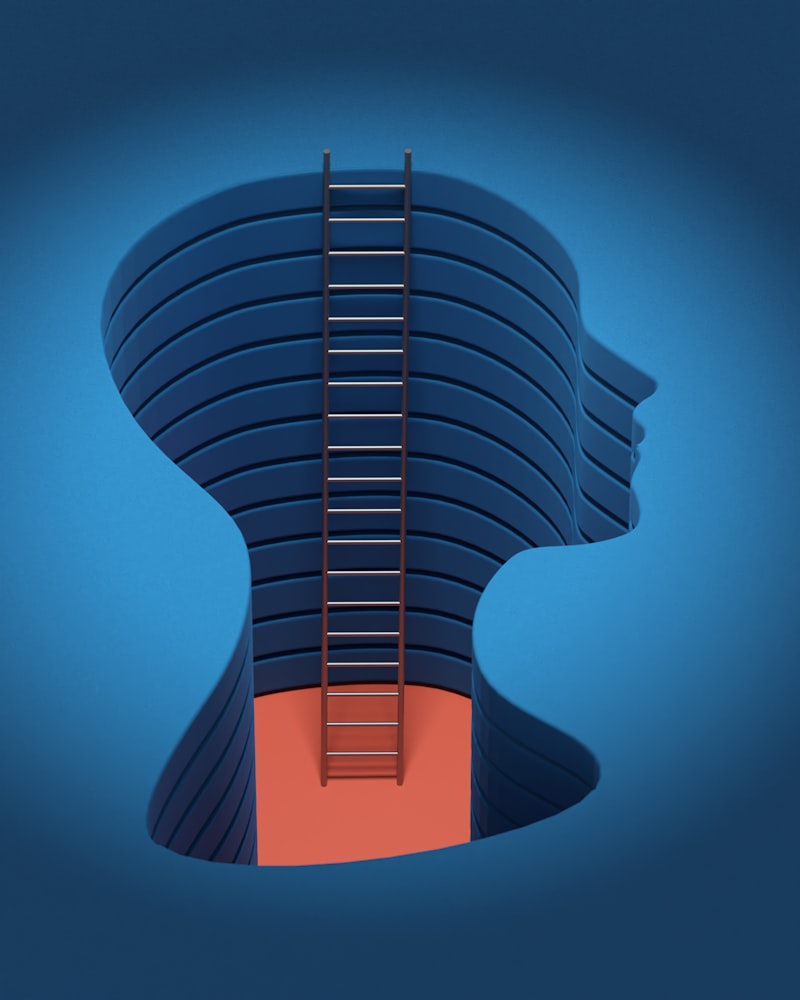
Analytic Psychology, a comprehensive and profound system introduced by the Swiss psychiatrist Carl Jung, stands as a distinct counterpoint to the classical psychoanalysis of Sigmund Freud. Jung conceived of the mind not merely as a repository of repressed sexual drives or early childhood trauma, but as a vast, complex composite structured around philosophical values, primordial images and symbols, and, crucially, an inherent, driving urge for satisfaction and completeness within one’s being. This system is fundamentally teleological, meaning it views human development as oriented toward future goals and self-realization, rather than being solely determined by past causal events. The purpose of Analytic Psychology is the synthesis of conscious and unconscious elements, providing a framework for understanding the individual’s unique journey toward psychological wholeness, a process Jung termed individuation.
The conceptual divergence between Jung and Freud centered primarily on the nature of the libido and the extent of the unconscious. While Freud saw the libido predominantly as sexual energy, Jung broadened this definition to encompass a generalized psychic energy—a vital life force driving all human endeavors, including spiritual, creative, and intellectual pursuits. This redefinition allowed Jung to incorporate spirituality, mythology, and cultural anthropology directly into his psychological model, elevating the psyche from a purely clinical phenomenon to a dynamic, self-regulating entity aiming perpetually for equilibrium. This equilibrium is maintained through the dynamic interplay of opposites, where tension systems—such as introversion versus extroversion, or conscious values versus unconscious urges—serve as the engine for psychological growth and transformation throughout the lifespan.
Jungian thought emphasizes the symbolic life, arguing that symbols are not arbitrary signs but the best possible expressions of complex, unconscious psychic facts. The exploration of these symbols, often found in dreams, myths, religion, and art, forms the core methodology of analytic therapy. By viewing the mind through this symbolic lens, Analytic Psychology offers a holistic understanding of the personality, recognizing that rational thought must be perpetually balanced by the irrational, the conscious by the unconscious, and the personal history by the collective heritage of humanity. Thus, the system is designed to facilitate a deeper understanding of the self by mapping the inner world, revealing its inherent structure, and guiding the individual toward the ultimate integration of these disparate parts into a functioning, harmonious whole.
The Structure of the Psyche: Maps of the Inner World
Jung structured the psyche into three interacting domains: the Ego, the Personal Unconscious, and the Collective Unconscious. These components are not static compartments but fluid, dynamically interacting layers that define personality and behavior. At the center of the field of consciousness lies the Ego, which serves as the organizing core of awareness. The Ego is responsible for continuity and identity, ensuring that the individual experiences themselves as a coherent being over time. Its primary function is to attain and manage equality between a person’s aware and unaware behaviors, acting as the gatekeeper of consciousness and mediating between the internal demands of the psyche and the external realities of the world. The development of a strong, yet flexible, Ego is a prerequisite for subsequent psychological development, culminating in the later stages of individuation.
Closely related to the Ego, and serving as its outward-facing counterpart, is the Persona. Derived from the Latin word for an actor’s mask, the Persona represents the self that the individual presents to the world—a carefully constructed compromise between the individual’s inner self and the expectations of society. It encompasses social roles, professional titles, and conventional behaviors, enabling the person to function effectively within a community. While necessary for social adaptation, the Persona carries an inherent psychological risk: inflation, or over-identification. If an individual mistakes their social mask for their true self, they risk alienating themselves from the deeper, more authentic layers of their psyche, leading to rigidity, superficiality, and a profound sense of emptiness when the social role is challenged or removed.
The interplay between the Ego and its surrounding elements dictates the flow of psychic energy. A healthy psyche requires the Ego to maintain dialogue with the unconscious layers, preventing the conscious attitude from becoming too narrow or one-sided. If the Ego represses too much material or becomes too rigid, the repressed content gathers energy in the unconscious, often manifesting as neurotic symptoms or complexes. Therefore, the structure of the psyche is inherently dynamic, built upon a constant negotiation between the demands of external reality (mediated by the Persona), the necessities of internal continuity (managed by the Ego), and the powerful, foundational influences stemming from the depths of the unconscious.
The Personal Unconscious and the Formation of Complexes
The Personal Unconscious (PU) constitutes the second layer of the psyche, situated directly beneath the Ego. It is comprised of all psychic material that was once conscious but has been forgotten, ignored, repressed, or subliminally perceived. This includes memories, emotions, and ideas which are all grounded in individual encounters that have taken place throughout one’s unique life history. Unlike the collective layer, the PU is strictly autobiographical, containing everything that the Ego has consciously rejected or failed to integrate into awareness. While less profound than the Collective Unconscious, the PU is the most immediate source of unconscious influence on daily life, often manifesting in slips of the tongue, mood swings, or recurring dreams.
The defining characteristic of the Personal Unconscious is the Complex. A complex is an emotionally charged cluster of associations, memories, and ideas orbiting a central core, often autonomous and possessing a powerful emotional tone. For example, a “mother complex” is not merely the individual’s relationship with their mother, but an entire constellation of expectations, fears, and emotional responses related to nurturing, authority, and dependence, all gathered from personal experience. When a complex is activated, it can temporarily seize control of the Ego, causing the individual to behave in ways contrary to their conscious will, leading to what Jung called “being spoken by the complex.” Complexes are rooted in individual experience but often draw their intense emotional power from archetypal foundations in the Collective Unconscious.
In analytic therapy, complexes are viewed not merely as pathological entities but as crucial points of entry into the deeper psyche. They are the key linkage between the conscious Ego and the vast resources—or dangers—of the unconscious. By analyzing the content and emotional charge of a complex, the therapist and client can trace its origins, understand its autonomous influence, and work toward integrating the energy bound up within it back into the conscious personality. This process neutralizes the complex’s power to dictate behavior and allows the Ego to grow stronger and more comprehensive, harnessing energy that was previously locked away in autonomous psychic fragments.
The Collective Unconscious: Inherited Psychic Structures
The deepest and most revolutionary concept in Analytic Psychology is the Collective Unconscious (CU). Unlike the personal unconscious, the CU is not acquired through individual experience but is inherited, universal, and common to all humanity. It is comprised of structural elements—visualizations of one’s antecedents—that form a basis for the genetic passing on of innate human aptitudes and characteristics. The CU represents the psychic residue of human evolution, containing the shared patterns of thought and behavior that have been repeated throughout history. It is the psychic blueprint that predisposes us to experience and react to the world in fundamentally human ways, giving rise to universal themes in mythology, religion, and folklore across all cultures.
The building blocks of the Collective Unconscious are the Archetypes. An archetype is an unmanifested potential, an innate organizing principle, or a psychic predisposition to experience certain fundamental situations. Archetypes are not memories or images in themselves, but rather the empty forms or “potential molds” that give rise to specific symbolic images when they enter consciousness (e.g., the potential for a “Hero” archetype, when activated, manifests as specific heroic figures in dreams or myths). Key archetypes include the Shadow, the Anima and Animus, the Wise Old Man, and the Great Mother. These figures exert profound, often unseen, influence on our perceptions, relationships, and life choices, forcing the Ego to confront universal human problems.
Among the most critical archetypes is the Shadow, which represents the inferior, primitive, and morally objectionable aspects of the personality that the Ego rejects and represses. Confrontation with the Shadow is the first major task of individuation, requiring the individual to acknowledge and integrate their darker, less acceptable qualities. Integration does not mean acting out these aspects, but consciously recognizing their existence and channeling their energy constructively. Similarly, the Anima (the feminine image in men) and the Animus (the masculine image in women) represent the contra-sexual soul image, mediating between the individual’s consciousness and the Collective Unconscious. Successful integration of these archetypes is vital, as they determine the quality of one’s emotional life and relationships with the opposite sex.
Dynamic Polarities and Tension Systems
Analytic Psychology views the flow of psychic energy (libido) as governed by dynamic principles, rooted in the idea that energy arises from the tension between opposing forces. Jung termed these interactive oppositions dynamic polarities, sometimes called tension systems. These polarities stem their psychic momentum not only from the sexual drive but from all vital forces, and they impact the growth and declaration of the Ego by forcing it to adapt and synthesize contradictions. The core principle governing this dynamic is the law of equivalence: if energy is removed from one pole of a polarity (e.g., consciousness), an equal amount of energy will appear at the opposite pole (the unconscious). This self-regulating mechanism ensures that the psyche constantly seeks balance.
Several key polarities are essential to understanding psychological function. These include: aware vs. unaware values, representing the tension between the conscious moral and ethical framework of the individual and the repressed, often instinctual, values residing in the unconscious; and sublimation vs. subjugation, describing the ways psychic energy is either constructively channeled into higher cultural activities (sublimation) or is repressed and denied, leading to neurotic symptoms or explosive, uncontrolled expression (subjugation). These tensions are not meant to be resolved in favor of one side, but to be held in creative tension, fueling the psychic engine.
Perhaps the most famous of Jung’s polarities are the Attitude Types: introvert vs. extrovert characteristics. Extroversion is defined by the orientation of the libido toward the external world—objects, people, and objective facts—where the person’s primary interest lies outside themselves. Conversely, introversion is characterized by the orientation of the libido toward the inner, subjective world of thoughts, feelings, and fantasies. Jung stressed that these are not mutually exclusive categories but opposing poles; every person possesses both attitudes, but one is always dominant and conscious, while the other remains recessive and unconsciously influential. The dominant attitude governs conscious behavior, while the inferior attitude, residing in the unconscious, often reveals itself in times of stress or through dreams, demanding integration for a fuller personality development.
Psychological Functions: The Tools of Consciousness
In addition to the two Attitude Types (Introversion and Extroversion), Jung developed a system of four Psychological Functions, which represent the fundamental ways in which the Ego processes information and orients itself toward the world. These functions are paired into two sets of opposites: the Rational Functions and the Irrational Functions. The Rational Functions are Thinking and Feeling, which are used to evaluate and judge information. The Irrational Functions are Sensation and Intuition, which are used purely for perceiving and gathering data, without evaluation.
The Rational Functions involve evaluation: Thinking is the function that determines the truth or falsity of something based on objective, logical processes, providing cognitive understanding. Feeling, despite its modern connotation, is also a rational function in Jungian terms, as it determines the subjective value or worth of an object or situation—is it good or bad, acceptable or unacceptable? These two functions stand in opposition because one cannot simultaneously apply objective logic and subjective value to the same object without conflict, creating another necessary psychic tension.
The Irrational Functions are concerned with perception: Sensation relies on the five senses to establish that something exists, perceiving concrete facts and details of the present moment. Intuition, conversely, is the function that perceives possibilities, hidden meanings, and future potential, often sensing the totality of a situation without knowing the specific facts. According to Jungian typology, every individual possesses a hierarchy of these functions: one function is superior (dominant and conscious), one is auxiliary (supportive), and the opposing pair of the dominant function is always inferior (poorly developed and unconscious). The inferior function is perpetually problematic, often projecting its contents onto others, yet its integration is essential for psychological completion, forcing the individual to develop the underdeveloped aspects of their personality.
The Goal of Life: The Process of Individuation
The primary objective in any person’s life, according to Carl Jung, is the realization of the Self through the process of Individuation. This is not merely an achievement of individualism, but the lifelong, arduous endeavor of becoming a whole, unified, and unique being—a process that slowly forms an exclusive being via the successful integration of conscious and unconscious material. Individuation is the ultimate aim of the psyche, representing the true harmony and equilibrium met across all these psychic sectors as a whole. It involves stripping away the layers of the Persona, confronting the Shadow, integrating the Anima/Animus, and ultimately shifting the center of the personality’s gravity from the Ego to the Self.
The individuation process typically begins in the second half of life, after the individual has successfully established their career, family, and social identity (the tasks of the first half). Once the Ego is firmly rooted in external reality, the focus shifts inward toward the confrontation with the unconscious. This phase often involves a descent into the depths of the psyche, symbolized in mythology as the hero’s journey into the underworld. The individual must engage with the contents of the Personal and Collective Unconscious, particularly the archetypes that hold tremendous psychic energy. Failure to engage with this process results in stagnation and the continuation of a life lived out under the dictates of unconscious compulsion or societal norms.
The culmination of Individuation is the discovery and activation of the Self archetype. The Self is defined as the archetype of order, totality, and wholeness—it is the center of the entire psyche (conscious and unconscious combined), whereas the Ego is merely the center of the conscious field. The Self acts as the inner guide, directing the individual toward their unique destiny and potential. Symbolically, the Self is often represented by mandalas, circles, quaternity figures, or the philosopher’s stone—images that universally signify unity and totality. By realizing the Self, the individual achieves a state of profound psychological balance, resolving the dynamic polarities and experiencing an authentic, purposeful existence rooted in their own unique inner truth.
Therapeutic Application and Modern Resonance
Analytic Therapy is fundamentally focused on facilitating the individuation process. The primary tools employed by the analyst are methods designed to bring unconscious contents into dialogue with consciousness, including detailed dream analysis (viewing dreams as symbolic messages from the Self), active imagination, and the analysis of transference and countertransference. The therapeutic relationship is viewed as a crucible for transformation, where the analyst acts as a guide, helping the client interpret the symbolic language of their unconscious and integrate the complexes and archetypes that are disrupting their conscious life. The goal is always to widen the scope of consciousness and restore the connection between the Ego and the Self.
The influence of Analytic Psychology extends far beyond the clinical setting, having permeated philosophy, art, literature, and popular culture. The core concepts, such as the Shadow, the Anima/Animus, and synchronicity (meaningful coincidence), are now common intellectual currency. This broad acceptance is due, in part, to Jung’s powerful articulation of the spiritual dimension of the human experience, offering a psychology that speaks directly to the need for meaning and transcendence. Consequently, Analytic Psychology is very much alive and kicking in modern philosophical and spiritual movements, often providing the theoretical underpinning for concepts central to new age philosophies today such as harmony, karma, and inner peace.
In conclusion, Analytic Psychology provides a profound framework for understanding the human condition as a quest for wholeness, driven by an inherent impetus toward psychic development. By mapping the deep structures of the Collective Unconscious and defining the necessary stages of Individuation, Jung offered a system capable of addressing the spiritual crises of modern life. The objective in any person’s life, as envisioned by Jung, is to achieve a true, dynamic harmony and equilibrium met across all sectors of the psyche—a realization that the internal universe is as vast and demanding of exploration as the external one, ensuring the continued relevance of his work for those seeking a meaningful existence.