Analytical Intelligence: Sharpen Your Logical Mind
Scientifically Reviewed · Dr. Marwa Abd-Alazim · September 24, 2026
Review Criteria & Clinical Standards
This content undergoes rigorous scientific peer-review and medical editorial standards at Arab Psychology Network to ensure clinical accuracy, validity, and compliance with evidence-based guidelines from leading psychological and healthcare authorities (APA / WHO).

Introduction to Analytical Intelligence
Analytical intelligence represents a fundamental dimension of human cognition, primarily characterized by the ability to decompose complex problems into their constituent parts and evaluate potential solutions through logical reasoning. Within the broader landscape of psychological study, this form of intelligence is often equated with the capacity for abstract thinking and the systematic processing of information. It involves a rigorous application of logic to identify patterns, discern relationships, and apply deductive or inductive reasoning to arrive at a correct conclusion. In many ways, analytical intelligence serves as the cognitive engine for academic success, enabling individuals to navigate the structured demands of formal education and technical disciplines.
The conceptualization of analytical intelligence is most prominently associated with Robert J. Sternberg and his influential Triarchic Theory of Intelligence. Sternberg posited that intelligence is not a singular, monolithic entity but rather a multi-faceted construct comprising three distinct components: analytical, creative, and practical. While creative intelligence involves generating novel ideas and practical intelligence focuses on adapting to everyday environments, analytical intelligence is centered on the internal mental mechanisms that lead to intelligent behavior. This specific domain is what most traditional intelligence quotient (IQ) tests aim to measure, focusing on mathematical proficiency, linguistic analysis, and spatial reasoning.
At its core, analytical intelligence is defined by the quality of mental self-government. It encompasses the internal processes that an individual uses to plan, monitor, and evaluate their own problem-solving strategies. When a student solves a complex algebraic equation or a scientist analyzes data from a laboratory experiment, they are heavily reliant on their analytical faculties. This type of intelligence is highly valued in Western educational systems, where the ability to critique arguments, compare and contrast theories, and solve well-defined problems is seen as the hallmark of intellectual achievement.
To understand the depth of analytical intelligence, one must examine its role in information processing. It is not merely about possessing a large repository of facts, but rather about the efficiency and accuracy with which those facts are manipulated. High levels of analytical intelligence allow for the selective encoding of relevant information while filtering out irrelevant noise, a skill that is crucial in an era of information overload. By focusing on the structural integrity of arguments and the validity of evidence, individuals with strong analytical skills can avoid common cognitive biases and reach more objective conclusions.
The Framework of the Triarchic Theory
The development of the Triarchic Theory of Intelligence marked a significant shift in psychology, moving away from the “g factor” or general intelligence models proposed by earlier theorists like Charles Spearman. Sternberg argued that traditional models were too narrow because they primarily focused on the types of skills required for school-based tasks. By introducing analytical intelligence as one of three pillars, Sternberg provided a more comprehensive view of how individuals interact with the world. He categorized analytical intelligence under the componential subtheory, which details the various mental processes that underlie all intelligent thought.
The componential subtheory identifies three specific types of mental processes that constitute analytical intelligence. These are known as metacomponents, performance components, and knowledge-acquisition components. Each of these plays a specific role in the lifecycle of a cognitive task, from the initial recognition of a problem to the final evaluation of the result. By breaking down intelligence into these functional units, Sternberg allowed researchers to pinpoint exactly where an individual might excel or struggle during the problem-solving process, providing a more granular look at human cognition.
One of the primary goals of the Triarchic Theory was to explain why some individuals who excel in academic settings may struggle in real-world environments, and vice versa. Sternberg noted that while analytical intelligence is essential for success in environments where problems are clearly defined and have a single correct answer, it must be balanced with creative and practical skills for “successful intelligence.” However, within the confines of the analytical domain, the focus remains strictly on the internal mechanics of the mind. This involves the ability to judge, evaluate, compare, and contrast information in a way that is both systematic and replicable.
Furthermore, the Triarchic Theory emphasizes that analytical intelligence is not static but can be developed through deliberate practice and instruction. Because it relies on specific cognitive strategies, individuals can be taught to improve their metacomponents—such as learning how to better plan their approach to a task—and their performance components, such as increasing the speed and accuracy of their mental calculations. This perspective has profound implications for education, suggesting that “smartness” is not just an innate trait but a set of skills that can be refined over time through targeted cognitive training.
Metacomponents: The Executive Control Center
The metacomponents are perhaps the most critical element of analytical intelligence, acting as the “executive” processes that direct all other mental activities. These higher-order processes are responsible for planning what to do, monitoring what is being done, and evaluating what has been done. Before a person even begins to solve a problem, the metacomponents are at work, identifying the nature of the problem and selecting the appropriate strategy for solving it. Without effective metacomponents, an individual might possess great knowledge but fail to apply it correctly because they cannot organize their thoughts or manage their cognitive resources effectively.
A central function of metacomponents is problem recognition. This involves the ability to realize that a problem exists and to define it in a way that makes it solvable. For example, a research scientist must be able to look at a set of anomalous data and recognize that it represents a significant challenge to an existing theory rather than a mere measurement error. Following recognition, the metacomponents take charge of resource allocation, deciding how much time and effort should be spent on various stages of the task. Individuals with high analytical intelligence are often characterized by their ability to spend more time on global planning and less time on local execution, leading to more efficient results.
During the execution of a task, metacomponents provide the necessary monitoring to ensure that the strategy is working as intended. If a particular approach is not yielding the desired results, the metacomponents trigger a shift in strategy. This cognitive flexibility is a hallmark of analytical prowess. Finally, once the task is complete, the metacomponents engage in evaluation, reflecting on the success of the outcome and the efficiency of the process. This reflective practice allows the individual to learn from their experiences and improve their analytical performance in future endeavors.
Metacomponents also play a vital role in decision-making. By weighing the pros and cons of different options and anticipating potential consequences, these executive processes allow for more rational and less impulsive choices. In professional settings, such as management or engineering, the quality of one’s metacomponents often determines their ability to lead complex projects. The ability to maintain a high-level overview of a situation while simultaneously managing the details of execution is what distinguishes a truly analytical thinker from someone who merely follows instructions.
Performance Components: The Mechanics of Processing
While metacomponents plan and monitor, performance components are the lower-order processes that actually carry out the instructions of the metacomponents. These are the “workers” of the cognitive system, responsible for the actual execution of tasks. Performance components include processes such as encoding stimuli, inferring relations between objects, and applying those relations to new situations. In the context of an analytical task, these components are what allow an individual to transform raw data into meaningful information through a series of mental operations.
The process of encoding is the first step in performance, where the individual identifies the relevant features of a problem and stores them in working memory. For instance, when reading a complex legal document, the performance components must identify key terms and their relationships to one another. Following encoding, the individual must infer the underlying rules or patterns. If an individual is presented with an analogy like “A is to B as C is to D,” the performance components are what allow them to see the relationship between A and B and then map that relationship onto C and D.
Another critical performance component is comparison, which involves checking the hypothesized solution against the information provided in the problem. This ensures that the logical steps taken are consistent with the initial constraints. In mathematical problem-solving, this might involve checking a derived formula against known constants. The speed and accuracy of these performance components are often what is measured by timed standardized tests. Those who can perform these mental operations rapidly and without error are typically classified as having high analytical intelligence in a traditional psychometric sense.
It is important to note that performance components are highly dependent on the efficiency of working memory. Because analytical tasks often require holding multiple pieces of information in mind simultaneously while manipulating them, the capacity of one’s mental “scratchpad” is a limiting factor. Improvements in performance components often come from the automatization of basic tasks. When certain mental operations become second nature through repetition, they require less conscious effort, freeing up cognitive resources for the more demanding metacomponents to handle complex planning and evaluation.
Knowledge-Acquisition: The Process of Learning
The third component of analytical intelligence is knowledge-acquisition, which involves the processes used in learning new information. While metacomponents and performance components deal with using what you already know, knowledge-acquisition components are responsible for how you gain that knowledge in the first place. This is not simply about memorization; it is about the sophisticated ability to extract meaning from the environment. Sternberg identified three primary processes in this category: selective encoding, selective combination, and selective comparison.
Selective encoding is the ability to distinguish between relevant and irrelevant information. In any learning situation, there is a vast amount of data, but only a small portion is truly important for understanding the core concept. An analytically intelligent learner can quickly identify the key points in a lecture or the essential variables in a scientific problem, ignoring the “noise” that might distract others. This skill is vital for academic mastery, as it allows for more efficient study and deeper comprehension of complex subjects.
Once the relevant information has been encoded, selective combination allows the individual to integrate those disparate pieces of information into a coherent whole. This involves seeing how different facts relate to one another to form a unified theory or model. For example, a medical student must take various symptoms, lab results, and patient history and combine them to form a single diagnosis. The ability to synthesize information in this way is a higher-order analytical skill that goes beyond simple fact-gathering and enters the realm of conceptual understanding.
Finally, selective comparison involves relating new information to knowledge already stored in long-term memory. This is the “aha!” moment where a person realizes that a new problem is similar to one they have solved before, or that a new scientific principle is an extension of an old one. By anchoring new learning in existing frameworks, the analytically intelligent individual can build a robust and interconnected knowledge base. This process of analogical reasoning is a cornerstone of analytical intelligence, enabling the transfer of skills across different domains and contexts.
Analytical Intelligence and Academic Evaluation
In the modern era, analytical intelligence is the primary metric used by educational institutions to assess student potential. Standardized tests such as the SAT, GRE, LSAT, and MCAT are specifically designed to measure analytical skills, including verbal reasoning, quantitative ability, and analytical writing. These tests assume that a student’s ability to solve structured, well-defined problems is a reliable predictor of their future success in rigorous academic environments. Consequently, analytical intelligence has become a gatekeeper for entry into prestigious universities and professional careers.
The emphasis on analytical intelligence in schools is reflected in the curriculum design of most subjects. Mathematics, the natural sciences, and formal logic are almost entirely focused on developing and testing analytical capabilities. Students are taught to follow specific procedures, apply formulas, and engage in critical analysis of texts. This focus ensures that graduates possess the foundational skills necessary for technical and clerical work. However, critics argue that this over-emphasis on the analytical domain can lead to a narrow definition of “intelligence” that ignores those who excel in creative or interpersonal areas.
Despite these criticisms, the correlation between analytical intelligence and academic GPA remains significant. This is because academic success requires the very skills that define the componential subtheory: the ability to plan one’s study time (metacomponents), the ability to process information quickly during exams (performance components), and the ability to learn new material from textbooks and lectures (knowledge-acquisition components). For many, analytical intelligence provides the “academic self-discipline” necessary to navigate the complexities of higher education and achieve professional licensure.
However, it is essential to distinguish between analytical intelligence and “book smarts” in a pejorative sense. While the term is sometimes used to describe someone who is good at school but lacks common sense, true analytical intelligence is a powerful tool for objective problem-solving in any context. In the legal profession, for example, the ability to analyze statutes and case law is a purely analytical task that is essential for the pursuit of justice. Similarly, in engineering, the analytical evaluation of structural integrity is what ensures the safety of buildings and bridges, demonstrating that these skills have profound real-world consequences.
Synthesis with Creative and Practical Intelligence
While this entry focuses on the analytical, it is impossible to fully understand the concept without seeing how it interacts with the other two parts of Sternberg’s Triarchic Theory. Analytical intelligence is often the “critic” of the mind. While creative intelligence is responsible for generating new and innovative ideas, analytical intelligence is what evaluates those ideas to see if they are viable or logical. Without the analytical component, creativity can become chaotic and unproductive; without creativity, analytical thinking can become rigid and unimaginative.
The relationship between analytical and practical intelligence is equally important. Practical intelligence involves applying one’s abilities to everyday life—often referred to as “street smarts.” A person might be highly analytical and able to solve complex physics equations but lack the practical intelligence to navigate a social situation or fix a household appliance. Sternberg argued that “successful intelligence” occurs when an individual knows how to balance these three areas, using their analytical skills to decide which of their creative ideas are worth pursuing and then using their practical skills to implement them in the real world.
In the professional world, this synthesis is often what defines leadership and innovation. Consider the following roles and how they utilize analytical intelligence alongside other forms:
- Software Engineers: Use analytical intelligence to debug code and optimize algorithms, but require creative intelligence to design new software architectures.
- Physicians: Use analytical intelligence to interpret diagnostic tests, but require practical intelligence to communicate effectively with patients and manage a clinic.
- Entrepreneurs: Use analytical intelligence to perform market analysis and financial forecasting, but require creative intelligence to identify gaps in the market.
Ultimately, analytical intelligence provides the logical framework within which other forms of intelligence operate. It acts as a filter, ensuring that the products of our imagination and the actions we take in our environment are grounded in reality and internal consistency. By understanding analytical intelligence as part of a larger system, we can appreciate its necessity without overstating its sufficiency for overall life success.
Neurological and Cognitive Underpinnings
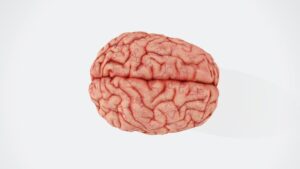
From a neurobiological perspective, analytical intelligence is closely associated with the functioning of the prefrontal cortex. This region of the brain is responsible for executive functions, including working memory, cognitive flexibility, and inhibitory control. Neuroimaging studies have shown that individuals performing analytical tasks, such as solving logic puzzles or mathematical problems, show increased activation in the dorsolateral prefrontal cortex and the parietal lobes. These areas work together to maintain attention and manipulate abstract symbols, which are the core activities of analytical thought.
The efficiency of neural pathways also plays a role in analytical ability. The “parieto-frontal integration theory” (P-FIT) suggests that intelligence is a result of how well different parts of the brain communicate with one another. In highly analytical individuals, the white matter tracts—the “cables” of the brain—are often more organized, allowing for faster and more accurate transmission of signals. This biological efficiency manifests as the ability to process information more rapidly and with fewer errors, which is a key component of what we measure as analytical intelligence.
Moreover, the role of neuroplasticity cannot be ignored. While there may be a genetic baseline for cognitive processing speed, the brain’s ability to reorganize itself in response to learning means that analytical skills can be sharpened. Engaging in cognitively demanding activities, such as learning a new language or mastering a musical instrument, strengthens the neural circuits involved in analysis and reasoning. This supports the idea that analytical intelligence is a dynamic quality that reflects both an individual’s innate potential and their environmental engagement.
Cognitive psychology also emphasizes the role of heuristics and biases in analytical thinking. While analytical intelligence aims for pure logic, the human brain often relies on mental shortcuts (heuristics) that can lead to errors. A highly analytically intelligent person is not someone who never uses heuristics, but someone who has the metacognitive awareness to recognize when those shortcuts are inappropriate. They use their analytical faculties to “override” impulsive or biased thinking, a process often referred to as System 2 thinking in Daniel Kahneman’s framework of cognitive processing.
Critical Perspectives and Evolutionary Context
Despite its importance, the construct of analytical intelligence has faced significant criticism. One major concern is cultural bias in the way analytical intelligence is measured. Most IQ tests and standardized assessments are developed within Western frameworks that value specific types of linear logic and decontextualized problem-solving. Critics argue that these tests may not accurately reflect the “intelligence” of individuals from cultures that prioritize holistic thinking, social harmony, or oral tradition. In this view, what we call “analytical intelligence” may be, in part, a culturally specific set of skills rather than a universal cognitive truth.
Another critique focuses on the ecological validity of analytical tasks. Solving a logic puzzle in a quiet testing center is very different from solving a high-stakes problem in a chaotic real-world environment. Some psychologists argue that analytical intelligence is “academic intelligence” and that it fails to account for the emotional and social complexities of human life. This has led to the rise of theories regarding emotional intelligence (EQ) and social intelligence, which suggest that the ability to analyze one’s own and others’ emotions is just as critical for survival and success as logical analysis.
From an evolutionary psychology perspective, analytical intelligence likely evolved as a tool for survival in increasingly complex environments. The ability to plan for the future, analyze the behavior of predators or prey, and develop tools required a high degree of componential processing. As human societies became more complex, the demands on our analytical faculties increased, leading to the development of formal logic, mathematics, and science. In this context, analytical intelligence is seen as an adaptive mechanism that allows humans to manipulate their environment through the power of abstract thought.
In conclusion, analytical intelligence remains a cornerstone of psychological theory and educational practice. While it is only one piece of the human intellectual puzzle, its role in critical thinking, academic achievement, and logical problem-solving is undeniable. By continuing to study the components and mechanisms of analytical thought, researchers can better understand how to foster these skills in learners and how to apply them to solve the increasingly complex problems facing the modern world. The future of the field likely lies in a more integrated approach that recognizes the biological, cultural, and practical dimensions of how we analyze the world around us.