Androgyny: Mastering the Balance of Human Traits
Scientifically Reviewed · Dr. Marwa Abd-Alazim · August 28, 2026
Review Criteria & Clinical Standards
This content undergoes rigorous scientific peer-review and medical editorial standards at Arab Psychology Network to ensure clinical accuracy, validity, and compliance with evidence-based guidelines from leading psychological and healthcare authorities (APA / WHO).
Introduction to Androgyny: Defining the Synthesis of Traits
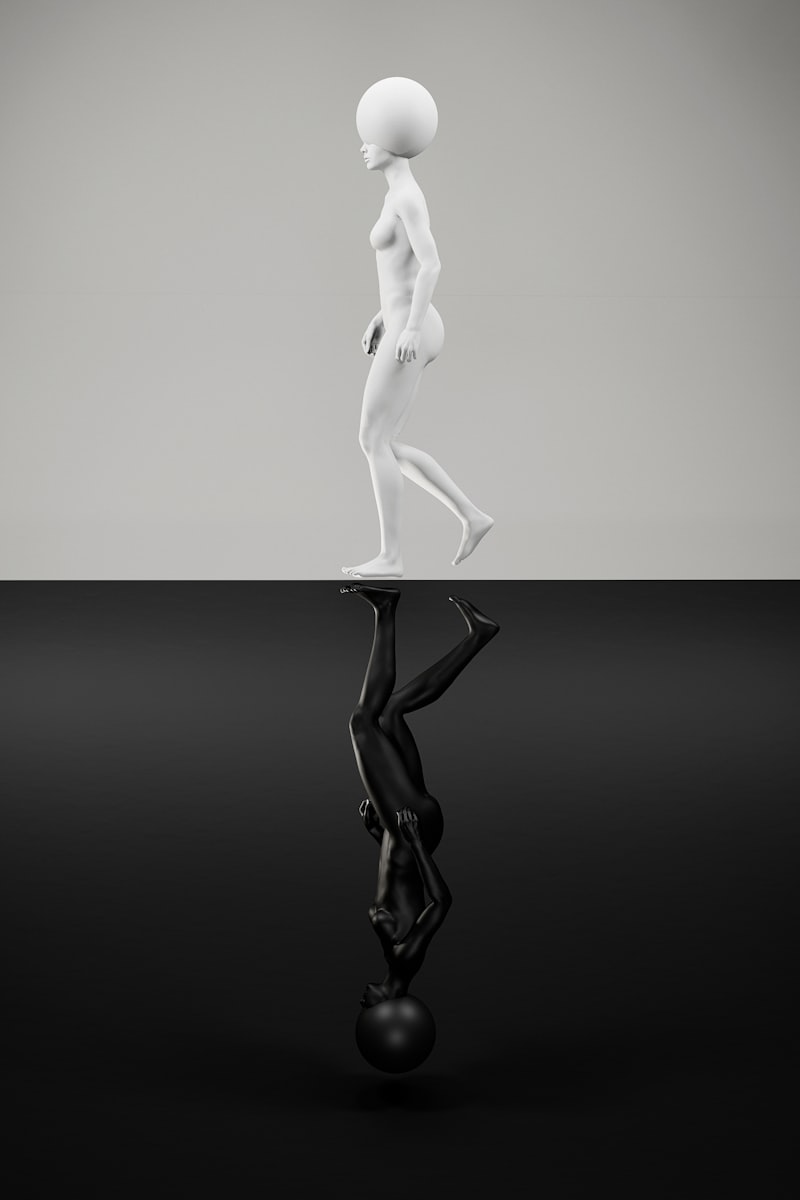
Androgyny is a fundamental concept in psychology and gender studies, referring to the presence of both traditionally male and traditionally female characteristics—whether physical, behavioral, or psychological—within the same individual. The term itself is derived from the Greek words andros (man) and gyne (woman), literally signifying the blend of genders. Historically, androgyny challenges the rigid adherence to binary gender roles, suggesting that human personality and expression are not mutually exclusive along masculine or feminine lines. The defining feature of androgynous presentation, as noted in the original definition, is the resulting ambiguity: the individual’s appearance or personality traits may lead others to be unsure of the person’s gender, necessitating a temporary suspension of immediate categorical judgment by observers.
This blend is critical because it moves beyond the traditional view of gender traits existing on a simple bipolar spectrum where high masculinity necessitates low femininity, and vice versa. Instead, androgyny posits that these dimensions are independent variables that can coexist simultaneously at high levels. Psychologically, this implies that an individual is capable of exhibiting both instrumental traits, often associated with masculinity (e.g., assertiveness, independence, decision-making), and expressive traits, commonly associated with femininity (e.g., nurturance, empathy, sensitivity). The capacity to integrate these diverse attributes results in a highly flexible and adaptive behavioral repertoire, allowing the individual to respond effectively to a wider variety of situational demands without being constrained by societal expectations linked to their assigned sex or gender.
The concept of androgyny is not limited merely to appearance or behavior; it encompasses a deep internal integration. While an individual may possess ambiguous physical characteristics or choose to dress in a gender-neutral manner, the psychological dimension often holds greater import in academic analysis. Psychological androgyny denotes a personality structure that is rich in qualities traditionally segregated by gender norms, providing a holistic and expanded sense of self. It is this internal versatility that often manifests externally as an ambiguous presence, where the observer finds it difficult to utilize standard social schemas to categorize the person neatly. This intentional or unintentional blurring of typical gender markers is central to understanding both the social perception and the lived experience of the androgynous individual.
Historical and Philosophical Roots
The exploration of combined male and female essence is not a modern invention but spans millennia of philosophical and mythological inquiry. Ancient Greek thought, particularly the writings of Plato in his dialogue Symposium, introduced the concept of primal spherical beings who were split into male and female halves by Zeus, suggesting that humanity’s fundamental state was originally androgynous. This mythological root underscores a yearning for wholeness and the reunification of complementary opposites. Similarly, in many esoteric and spiritual traditions, the concept of the divine often incorporates androgynous imagery, symbolizing completeness, perfection, and the transcendence of duality.
In mythology, the figure of Hermaphroditus, the offspring of Hermes and Aphrodite, serves as a prominent example of physical androgyny. After being fused with the nymph Salmacis, Hermaphroditus possessed the characteristics of both sexes. While this figure often served as a cautionary tale or a representation of biological anomaly in some historical interpretations, it cemented the idea of a physical synthesis of male and female features. These early cultural narratives established a framework for viewing androgyny not just as a set of traits, but as a liminal state that exists outside of established norms, often provoking both fascination and discomfort within societies predicated on clear gender differentiation.
Moving into the 20th century, psychoanalytic theory engaged with the concept of internal androgyny through the work of Carl Jung. Jung introduced the archetypes of the animus (the unconscious masculine principle present in women) and the anima (the unconscious feminine principle present in men). For Jung, psychological health and self-actualization required the integration and acknowledgment of these unconscious cross-gender elements. A fully realized self, according to Jungian theory, required a conscious effort to synthesize these internal masculine and feminine aspects, achieving a psychic balance that mirrors the philosophical notion of androgyny as completeness. This psychological lens provided a critical shift, moving the focus from purely physical manifestations to the internal architecture of the human psyche.
The Psychological Paradigm: The Role of Sandra Bem
The most influential modern psychological framework for understanding androgyny was developed in the 1970s by Dr. Sandra Bem. Bem fundamentally redefined gender measurement by asserting that masculinity and femininity should be treated as orthogonal (independent) dimensions, rather than opposite ends of a single continuum. Her work challenged the prevailing assumption that psychological adjustment relied on conforming to sex-typed roles—masculinity for men and femininity for women. Bem argued that a person who integrates high levels of both instrumental (masculine) and expressive (feminine) traits possesses superior behavioral flexibility.
To measure these traits, Bem developed the Bem Sex-Role Inventory (BSRI), a widely used psychological instrument that assesses how strongly individuals endorse personality characteristics considered desirable for both sexes within a given culture. The BSRI allowed researchers to categorize individuals into four distinct gender-role types based on their scores on separate scales for masculinity and femininity. The development of this tool formalized psychological androgyny as a measurable and desirable personality constellation, differentiating it rigorously from simple non-conformity.
Through the BSRI, Bem established that the androgynous individual is not simply “medium” in both categories, but is high in both. This high-high configuration signifies a behavioral readiness to exhibit assertiveness when necessary, while also being capable of displaying empathy and comfort when demanded by social context. The four resulting categories derived from the BSRI are crucial for modern psychological studies of gender role and adaptation:
- Androgynous: High masculinity and high femininity scores. These individuals possess a broad range of socially desirable traits.
- Masculine: High masculinity and low femininity scores. These individuals conform to traditional male stereotypes.
- Feminine: Low masculinity and high femininity scores. These individuals conform to traditional female stereotypes.
- Undifferentiated: Low masculinity and low femininity scores. These individuals possess neither a strong instrumental nor expressive behavioral repertoire.
Physical Presentation and Ambiguity
While psychological androgyny focuses on internal traits, the original definition of the term often highlights the external, physical characteristics that contribute to the perception of ambiguity. Physical androgyny refers to the presentation where secondary sex characteristics, body shape, or chosen modes of dress consciously or unconsciously obscure the viewer’s ability to immediately assign a binary gender label. This ambiguity arises when an individual adopts styles that deliberately mix cues traditionally associated with different genders, or when their natural physical characteristics fall outside the typical spectrum of dimorphism.
The choice of ambiguous dress is a powerful tool in creating an androgynous aesthetic. This might involve wearing clothing cut in ways that minimize the emphasis on typical masculine or feminine bodily contours, or integrating accessories and garments across traditional gender lines—for example, a person with highly masculine features wearing traditionally feminine jewelry, or a person with highly feminine features adopting tailored, sharp masculine silhouettes. Such presentation actively challenges social expectations, forcing the observer to confront the limitations of their own gender categorization systems. The result is often a temporary social uncertainty, exactly as described: others may be unsure of the person’s gender because the visual signals are conflicting or neutralized.
Beyond attire, physical androgyny can be influenced by natural traits such as facial structure, height, hair length, voice pitch, and body fat distribution. When these elements align in a way that avoids strong categorization, the effect of ambiguity is intensified. For example, a person with soft facial features but a very deep voice, or a person with a slight build who adopts highly angular, traditionally masculine grooming standards. This blending ensures that the individual’s physical presence resists immediate reduction to simple binary interpretation, making androgyny a potent form of self-expression and social commentary on the rigidity of gender norms.
The Cognitive Impact: Perceiving Ambiguity
The social reaction inherent in the definition of androgyny—that others are rendered uncertain of the person’s gender—is a fascinating study in cognitive processing. Humans rely heavily on rapid, schematic processing to navigate social interactions, and gender is one of the primary schemas used to categorize individuals and predict behavior. When an individual presents androgynously, these ingrained schemas are challenged, leading to a phenomenon known as cognitive dissonance or categorization difficulty among observers.
The immediate, subconscious impulse of the observer is to assign a gender based on the most salient visual cues. When these cues are contradictory or neutralized, the observer is forced to engage in more deliberate, resource-intensive processing. This momentary delay and uncertainty can manifest as discomfort, intense staring, or a direct questioning of the person’s identity. The observer’s frustration often stems from the necessity of choosing between two conflicting sets of social rules—how to address the person, what pronouns to use, and what behavioral expectations to apply—all of which are complicated by the lack of clear binary signals.
Studies on social perception indicate that androgyny can disrupt the smooth flow of social interaction precisely because it violates the established norm of gender clarity. In cultures where gender roles are highly differentiated and visible, the androgynous individual acts as a visible reminder that gender is not always neatly contained or easily identified. This resistance to categorization is powerful, forcing observers to acknowledge a broader spectrum of human presentation and identity than their existing social filters typically permit. The ambiguity thus serves a dual function: it is a core characteristic of the individual, and simultaneously, a powerful social perturbation.
Adaptive Functionality and Mental Health
A significant body of psychological research following Bem’s initial findings has focused on the functional advantages associated with psychological androgyny. The primary benefit is behavioral flexibility, the ability to adapt one’s response based on the situation rather than being restricted by rigid, sex-typed expectations. For instance, an androgynous individual is equally comfortable being assertive in a competitive work meeting (a traditionally masculine trait) and providing emotional support to a distressed colleague (a traditionally feminine trait). This versatility leads to increased efficacy across diverse domains of life.
Crucially, research has often linked psychological androgyny to superior mental health outcomes compared to individuals who are highly sex-typed. Androgynous individuals generally report higher levels of self-esteem, better coping mechanisms, and lower rates of anxiety and depression. This is attributed to the fact that they are less susceptible to the stress induced by the failure to meet narrow, culturally prescribed gender roles. When the sole expectation is to be “masculine” or “feminine,” failure to perform those roles can lead to significant psychological distress; the androgynous individual operates from a broader, more resilient base of behavioral options.
The adaptive benefits extend into interpersonal relationships. Because androgynous individuals possess strong capacities for both instrumentality and expressiveness, they are often perceived as more well-rounded and effective partners and parents. They can be decisive when required and nurturing when sensitivity is needed, fostering a balanced and responsive relational dynamic. The integration of traits allows them to manage complex life transitions and crises with greater emotional and strategic resources.
- Enhanced Problem Solving: Access to both task-oriented (masculine) and relational (feminine) approaches.
- Higher Self-Esteem: Not constrained by the limitations imposed by restrictive gender stereotypes.
- Emotional Resilience: Ability to express a full range of emotions without feeling restricted by gender norms.
- Improved Relationship Quality: Capacity for both empathetic connection and assertive communication.
Androgyny vs. Related Concepts
While androgyny is frequently used in contemporary language to describe gender expression, it is essential to distinguish it clearly from related concepts like gender neutrality, cross-dressing, and the broader category of non-binary identities. Historically, androgyny, particularly in the psychological context, refers specifically to the integration of gender-typed personality traits. It is a description of a characteristic configuration, not necessarily an identity category or a political statement, though it often intersects with both.
Gender neutrality primarily refers to external presentation or language designed to avoid gender specificity. A gender-neutral appearance aims to remove gender cues entirely, whereas androgyny often involves the deliberate combination or synthesis of male and female cues, creating a mixed or blended presentation rather than a neutral, absent one. Similarly, while a non-binary person identifies outside the male/female dichotomy, an androgynous person (psychologically defined) may identify as male or female while possessing a cross-gender personality structure. The androgynous individual synthesizes the binary traits; the non-binary individual transcends the binary framework entirely.
The term has evolved significantly since the 1970s. While Bem’s work focused on the advantages of psychological flexibility, contemporary usage often focuses on the visual aesthetics that deliberately defy binary categorization. However, the core psychological insight remains vital: androgyny represents a state of psychological completeness where the individual is free from the constraints of rigid sex roles, allowing for a multifaceted personality structure. Whether physical or psychological, androgyny fundamentally defines the presence of dual characteristics, leading to an experience of ambiguity for the external observer and increased adaptive capacity for the individual.