The Angular Gyrus: Decoding the Brain’s Hidden Genius
Scientifically Reviewed · Dr. Marwa Abd-Alazim · October 21, 2026
Review Criteria & Clinical Standards
This content undergoes rigorous scientific peer-review and medical editorial standards at Arab Psychology Network to ensure clinical accuracy, validity, and compliance with evidence-based guidelines from leading psychological and healthcare authorities (APA / WHO).
Introduction and Core Definition
The angular gyrus, often abbreviated as AG, is a highly significant region of the cerebral cortex fundamentally involved in the complex processes underlying human language, particularly reading, writing, and arithmetic. It is centrally defined as a crucial associative cortex—a brain area that integrates information from multiple sensory modalities—and acts as a pivotal node for converting visual language forms into meaningful, auditory representations. The simplest definition identifies the angular gyrus as the brain region responsible for mediating the transfer between visual input (such as recognizing the shape of a letter) and its associated semantic and phonetic meaning. This function is not merely about recognizing shapes; it is about providing the mechanism necessary for abstract thought and symbol manipulation, making it indispensable for advanced human communication and learning.
The core principle governing the angular gyrus’s function lies in its role as an interface between the posterior multimodal association areas. It receives visual input processed in the occipital lobe and auditory input processed in the temporal lobe, synthesizing them into a unified, conceptual structure. This integration is the fundamental mechanism that allows humans to read a word silently and understand its meaning, or to mentally manipulate numerical symbols. Without the proper functioning of the angular gyrus, the ability to smoothly transition from perceiving raw sensory data to engaging in abstract symbolic thought is severely compromised, highlighting its status as one of the most critical components of the brain’s literacy network.
Anatomical Location and Structural Characteristics
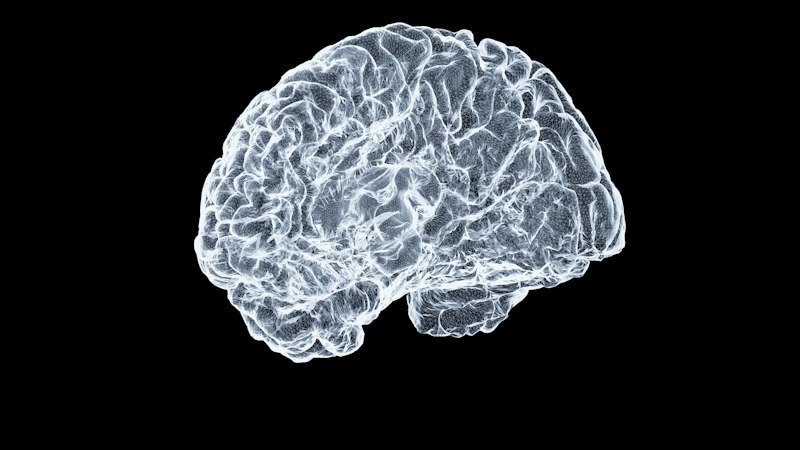
The angular gyrus is anatomically situated within the Inferior Parietal Lobule (IPL) in the parietal lobe of the brain, typically located in the dominant hemisphere (usually the left). Its position is unique, sitting at the geographical intersection of the three major lobes responsible for sensation and perception: the parietal lobe (somatosensory and spatial awareness), the temporal lobe (audition and memory), and the occipital lobe (vision). Specifically, the angular gyrus occupies the posterior section of the IPL, located immediately posterior to the supramarginal gyrus.
Structurally, the angular gyrus is a distinct ridge, or gyrus, that arches over the superior temporal sulcus (STS) and eventually becomes absorbed into the posterior end of the middle temporal gyrus. This anatomical convergence underscores its functional necessity for integrating disparate information streams. Its rich connectivity, facilitated by white matter tracts like the superior longitudinal fasciculus, allows it to communicate rapidly and efficiently with anterior language centers, such as Broca’s area, and posterior comprehension centers, such as Wernicke’s area. This intricate web of connections confirms its role not as a primary processing center, but as a high-level integration hub essential for cognitive operations that require simultaneous access to visual, auditory, and semantic data.
Historical Discovery and Early Localization Theories
The significance of the angular gyrus was first recognized through the study of acquired language disorders, a field that peaked in the late 19th and early 20th centuries, driven by the work of neurologists like Carl Wernicke and later elaborated upon by Norman Geschwind. While early localization theories focused heavily on Broca’s area (speech production) and Wernicke’s Area (speech comprehension), it became evident that specific deficits in reading ability, often referred to as “word blindness,” could occur independently of deficits in spoken language comprehension or production. This led researchers to hypothesize the existence of a distinct center dedicated to the visual processing of language.
The crucial link between the angular gyrus and reading was established through post-mortem analyses of patients who had suffered strokes or trauma resulting in pure alexia (the inability to read written text). These studies consistently identified lesions in the angular gyrus or the white matter tracts leading to it, particularly in the dominant hemisphere. This evidence firmly placed the angular gyrus within the classical language model, recognizing it as the critical relay station where visual information from the primary visual cortex is converted into a format interpretable by Wernicke’s comprehension center. This historical context cemented the angular gyrus’s role as the anatomical locus for cross-modal integration necessary for literacy.
Functional Roles in Cognitive Processing
While initially famous for its role in reading, modern neuroimaging studies have revealed that the angular gyrus participates in a much broader spectrum of cognitive functions. Its primary function remains the transformation of visual linguistic input into auditory/semantic code, a process known as grapheme-phoneme conversion, which is essential for translating letters into sounds. However, its integrative capacity extends beyond language into domains such as numerical cognition, spatial awareness, and episodic memory retrieval.
In the realm of arithmetic, the angular gyrus is highly active during complex calculations, particularly those involving symbol manipulation and the retrieval of mathematical facts. It is believed to host the spatial representations of numerical values, allowing us to conceptualize number lines and perform mental operations. Furthermore, its involvement in spatial attention is crucial for navigating complex visual fields and integrating self-location with external sensory data. Finally, its role in memory retrieval is significant; studies show that it contributes to reconstructing past experiences by binding together disparate sensory and contextual details associated with an episodic memory. Therefore, the angular gyrus functions as a dynamic convergence zone where abstract symbols (words, numbers) meet concrete meaning and spatial context.
Clinical Significance: Dyslexia and Alexia
The integrity of the angular gyrus is fundamentally linked to the ability to acquire and maintain reading skills, making it central to the understanding of certain developmental and acquired disorders. Poor or inefficient processing within this region is strongly implicated in developmental reading disorders, most notably Dyslexia. While dyslexia is a multifactorial disorder, a common neurobiological finding is reduced activation or structural anomalies in the left angular gyrus and the surrounding perisylvian language areas. This functional deficit hinders the automatic and rapid cross-referencing necessary to convert visual graphemes into corresponding phonemes, resulting in slow, laborious, and error-prone reading acquisition.
In contrast to developmental disorders, damage to the angular gyrus in adults, typically resulting from stroke or trauma, leads to acquired deficits, primarily Alexia (acquired word blindness) and often Gerstmann Syndrome, which includes agraphia (inability to write), acalculia (inability to perform arithmetic), finger agnosia, and left-right confusion. When the injury specifically affects the angular gyrus, the ability to understand written language is lost, even if the person retains the ability to speak, understand spoken language, and even see the words visually. This demonstrates that the angular gyrus is the specialized gateway for assigning meaning to the visual form of language, and its destruction leads to a breakdown in this vital symbolic linkage.
Practical Illustration of Function
To illustrate the pivotal role of the angular gyrus, consider the simple, everyday task of encountering and reading an entirely new or highly technical word, such as “epistemology.”
-
Visual Input Registration: The eyes perceive the sequence of letters, and this raw visual information is processed first in the primary visual cortex (occipital lobe). At this stage, the brain registers the shapes of the letters but does not yet assign meaning or sound.
-
Cross-Modal Conversion (The Angular Gyrus in Action): The information is then relayed to the angular gyrus. Here, the crucial transformation occurs: the visual form (the specific spelling and shape of “e-p-i-s-t-e-m-o-l-o-g-y”) is systematically converted into a sequence of phonemes (the sounds that constitute the word). The angular gyrus retrieves the associative links that connect the visual symbol ‘e’ with the sound /eh/, and so on, enabling the reader to mentally sound out the unfamiliar word.
-
Meaning and Comprehension: This newly converted auditory-phonetic representation is then passed along the arcuate fasciculus to Wernicke’s area, where the sound sequence is matched against the brain’s lexical inventory to retrieve the word’s meaning (“the theory of knowledge”).
If the angular gyrus is malfunctioning—as in cases of developmental dyslexia—the second step becomes incredibly slow and fragmented. The individual may see the letters perfectly well, but the automatic, instantaneous conversion from grapheme to phoneme is impaired, necessitating a laborious and conscious effort to sound out the word, significantly hindering reading fluency.
Broader Impact and Significance in Neuroscience
The angular gyrus holds profound significance in cognitive neuroscience, not just for language, but as a model for understanding how the brain manages multimodal integration and abstract thought. Its importance transcends mere anatomical location; it represents a critical evolutionary leap in human cognition—the ability to utilize symbols to represent concepts spatially and temporally. Understanding the angular gyrus is paramount to developing effective interventions for learning disabilities, as targeting the neural pathways that converge here could potentially enhance reading and mathematical abilities.
In applied fields like educational psychology and neurorehabilitation, research focusing on the functional connectivity of the angular gyrus informs therapeutic approaches. For example, neurofeedback training or targeted cognitive exercises designed to strengthen the connections between visual processing areas and the angular gyrus are often used in efforts to remediate reading deficits. Furthermore, the concept that a single, circumscribed brain area can integrate complex visual, spatial, and semantic information reinforces the localizationist perspective in neuroscience, while simultaneously acknowledging the complexity of distributed neural networks required for high-level cognition.
Connections to Related Psychological Concepts
The angular gyrus operates within a highly interconnected network, and its functioning is best understood in relation to several key psychological and neuroanatomical concepts. It is structurally and functionally linked to its neighbor, the Supramarginal Gyrus, which together form the Inferior Parietal Lobule. While the angular gyrus is primarily associated with semantic and cross-modal processing (reading meaning), the supramarginal gyrus is traditionally linked to phonological processing and short-term memory, particularly the auditory rehearsal component.
The angular gyrus is also a key component of the extensive language network connecting posterior comprehension areas (Wernicke’s Area) with anterior production areas (Broca’s Area) via the Arcuate Fasciculus. Disruptions to this connectivity, rather than just damage to the area itself, can result in conduction aphasia, where repetition of speech is impaired despite intact comprehension and production. Ultimately, the angular gyrus falls squarely within the subfield of Cognitive Neuropsychology and Biological Psychology, serving as a prime example of how specific cortical regions execute the complex, multi-stage processing required for abstract human skills like literacy and advanced mathematical reasoning.