Animal Cognition: Decoding the Secrets of Non-Human Minds
Scientifically Reviewed · Dr. Marwa Abd-Alazim · October 12, 2026
Review Criteria & Clinical Standards
This content undergoes rigorous scientific peer-review and medical editorial standards at Arab Psychology Network to ensure clinical accuracy, validity, and compliance with evidence-based guidelines from leading psychological and healthcare authorities (APA / WHO).
Defining Animal Intelligence: A Core Concept
Animal intelligence, often referred to synonymously with animal cognition, represents the intricate array of mental capacities that enable non-human animals to acquire, process, store, and utilize information and knowledge from their environment. This fundamental concept goes beyond simple reflexive actions or instinctual behaviors, encompassing a wide spectrum of cognitive abilities such as perception, learning, memory, problem-solving, decision-making, and even self-awareness. It fundamentally describes how animals think and reason, allowing them to adapt flexibly to changing circumstances, solve novel challenges, and interact effectively within their ecological niches. The precise mechanisms underpinning animal intelligence involve complex neural processing within the brain, integrating sensory inputs to form internal representations of the world, and subsequently generating adaptive, goal-directed responses that are crucial for survival and reproduction.
The core principle behind animal intelligence lies in the brain’s capacity for information processing and flexible behavior. Unlike fixed action patterns that are largely genetically programmed, intelligent behavior implies a degree of plasticity and the ability to modify responses based on individual experience and environmental feedback. This cognitive flexibility allows animals to learn from mistakes, anticipate future events, and even innovate new solutions to unprecedented problems. The manifestation of these abilities varies dramatically across species, reflecting their unique evolutionary histories, ecological demands, and neurobiological structures. For instance, the spatial memory required by a squirrel to cache thousands of nuts differs significantly from the social problem-solving skills demonstrated by a chimpanzee navigating group dynamics, yet both represent sophisticated forms of intelligence tailored to their specific survival needs.
Understanding animal intelligence necessitates a departure from purely anthropocentric perspectives, acknowledging that intelligence can manifest in myriad forms not always directly comparable to human cognition. It involves studying how animals perceive their worlds through their unique sensory modalities, how they form concepts, and how they utilize tools or communicate with conspecifics. This interspecies comparison allows researchers to uncover universal principles of cognition while also appreciating the specialized cognitive adaptations that have evolved to enable creatures to thrive in diverse habitats, from the intricate navigational abilities of migratory birds to the complex social structures maintained by wolf packs through sophisticated communication and cooperation.
Historical Roots of Animal Cognition Studies
The formal scientific inquiry into animal intelligence began to gain significant momentum in the late 19th and early 20th centuries, profoundly shaped by Charles Darwin’s revolutionary theory of evolution by natural selection. Darwin, in his influential work “The Descent of Man” (1871), posited a fundamental continuity of mental faculties between humans and other animals, suggesting that any differences were quantitative rather than qualitative. This groundbreaking idea challenged prevailing anthropocentric views, which often regarded human cognition as entirely distinct, and laid the intellectual foundation for systematic investigation into the mental lives of non-human species. It encouraged scientists to look for precursors of human intelligence in the animal kingdom, sparking a new wave of comparative research.
Following Darwin’s lead, George Romanes, one of his protégés, published “Animal Intelligence” in 1882, a landmark text that meticulously compiled extensive anecdotal evidence of animal thought, reasoning, and emotional life. While Romanes’ methodology was later criticized for its reliance on anthropomorphic interpretations and lack of rigorous experimental controls, his work was instrumental in legitimizing the study of animal minds and stimulating broader scientific interest. Shortly thereafter, pioneering experimental psychologists like Edward Thorndike introduced more systematic and controlled laboratory approaches. His famous puzzle boxes, used to study instrumental learning in cats and dogs in the 1890s, moved the field towards objective observation and quantitative data, laying essential groundwork for the development of behaviorism, a dominant paradigm in psychology for much of the 20th century.
The mid-20th century saw the rise of ethology, championed by figures such as Konrad Lorenz and Niko Tinbergen. These researchers emphasized naturalistic observation of animal behavior in their ecological contexts, providing rich, detailed insights into species-specific behaviors, instincts, and the adaptive functions of various cognitive abilities. Their work provided a crucial counterpoint to the more reductionist laboratory studies, highlighting the importance of ecological validity in understanding animal intelligence. This synthesis of experimental rigor and naturalistic observation ultimately paved the way for modern cognitive ethology, a field that combines the scientific methods of cognitive psychology with the ecological perspective of ethology to investigate the complex mental lives of animals in their natural habitats.
Diverse Manifestations: Types of Animal Intelligence
Animal intelligence is not a monolithic construct but rather manifests in various forms, each tailored to specific adaptive challenges. One significant type is emotional intelligence, which refers to an animal’s capacity to recognize, interpret, and respond appropriately to emotions in themselves and in others. This often involves intricate social cues, such as facial expressions, body language, and vocalizations, facilitating complex social interactions within groups. For instance, a dog might sense its owner’s distress and offer comfort, or a chimpanzee might empathize with a distressed group member and attempt to alleviate their discomfort. Such abilities are crucial for maintaining social cohesion, resolving conflicts, and forming strong bonds within social species, demonstrating a sophisticated understanding of internal states that extends beyond simple learned responses.
Another critical dimension is problem-solving intelligence, which encompasses an animal’s ability to understand and apply abstract concepts, rules, and strategies to overcome obstacles and achieve specific goals. This can range from navigating a complex maze to devising innovative methods for obtaining food. This type of intelligence often involves flexible thinking, trial-and-error learning, and the capacity to mentally represent and manipulate information about the environment. For example, an animal might learn that a particular lever yields a reward, and then generalize that understanding to a similar but novel lever in a different context. This demonstrates an ability to grasp underlying principles rather than just memorizing specific actions, showcasing a higher level of cognitive processing essential for survival in unpredictable environments where resources may be hidden or difficult to access.
Finally, creative intelligence involves the capacity to generate novel and effective solutions to complex problems, often in situations where prior experience offers no direct precedent. This is arguably one of the most advanced forms of intelligence, requiring flexible thinking and the ability to combine existing knowledge or actions in new ways. An animal demonstrating creative intelligence might invent a new tool or discover an unconventional strategy to bypass an obstruction. For example, a bird might use an object in its environment in an entirely new way to reach food, or a primate might spontaneously combine different actions to achieve a goal that it has never encountered before. This form of intelligence highlights an animal’s capacity for innovation and adaptation, allowing it to thrive even when faced with entirely unfamiliar challenges.
Empirical Evidence: Notable Examples of Animal Cognition
The animal kingdom abounds with compelling examples of intelligent behavior that underscore the diverse cognitive abilities present across species. One of the most frequently cited examples involves New Caledonian crows, which are renowned for their sophisticated tool-making and tool-using capabilities. These remarkable birds have been observed not only using pre-existing tools, such as sticks to extract insects from crevices, but also modifying natural materials, like bending a wire into a hook, to achieve a desired outcome. Furthermore, their cognitive prowess extends to episodic memory, as studies have shown they can remember human faces for years and recall specific contexts associated with those individuals, demonstrating complex social recognition and long-term memory.
Dolphins, particularly bottlenose dolphins, exhibit highly advanced forms of intelligence, especially in their social cognition and cooperative problem-solving. They are known to engage in intricate hunting strategies, such as “mud-ring feeding,” where a group of dolphins works together to create a circular wall of mud and bubbles to trap fish, which they then take turns consuming. This behavior requires precise coordination, communication, and an understanding of shared goals within the group. Their complex communication systems, self-recognition in mirrors, and demonstrated ability to learn abstract concepts through acoustic signals further highlight their considerable cognitive abilities, suggesting a rich internal mental life.
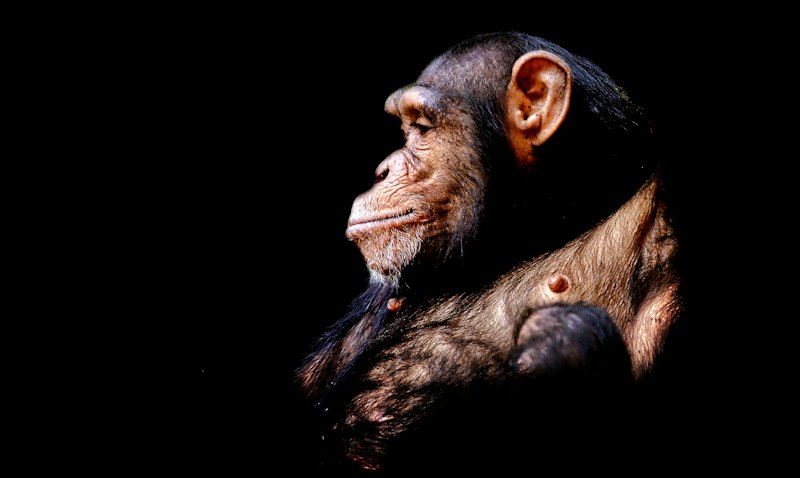
Perhaps one of the most extensively studied groups for intelligence are chimpanzees, our closest living relatives. Chimpanzees display a wide range of intelligent behaviors, including tool use (e.g., using stones to crack nuts, branches to fish for termites), sophisticated social learning, and even rudimentary forms of cultural transmission within their groups. Researchers have successfully taught chimpanzees to use various forms of symbolic communication, including sign language and lexigrams, enabling them to communicate complex requests, express desires, and even combine symbols to form novel meanings. Their capacity for self-recognition, tactical deception, and evidence of “theory of mind” in some contexts underscores their remarkable cognitive flexibility and depth.
Influential Factors in Cognitive Development
The development and expression of animal intelligence are not solely determined by inherent species-specific capabilities; rather, they are significantly shaped by a complex interplay of various factors, including genetics, environment, and life experience. Genetic predispositions provide the fundamental biological architecture for cognitive abilities, dictating brain size, neural connectivity, and the potential for learning. Different species, and even individuals within a species, are born with varying capacities for certain types of intelligence, such as innate problem-solving strategies or specialized memory systems adapted for their ecological roles, like the impressive spatial memory of food-caching birds.
The environment plays a profoundly influential role in shaping how genetic potential for intelligence is realized. Animals living in complex, stimulating environments that offer diverse challenges and opportunities for exploration often demonstrate higher levels of cognitive development compared to those in impoverished settings. For instance, studies have shown that some species of birds, when raised in enriched captive environments that provide novel puzzles and social interactions, can exhibit more advanced problem-solving skills than their wild counterparts. This suggests that a controlled environment, rich in cognitive demands and sensory input, can actively foster and enhance an animal’s inherent cognitive abilities, pushing them to develop capacities that might lie dormant in less challenging surroundings.
Furthermore, an animal’s individual life experience, encompassing learning, training, and social interactions, is a critical determinant of its cognitive development. Animals that frequently engage with novel situations, learn through observation, or are exposed to consistent and varied stimuli tend to develop more robust and flexible cognitive repertoires. Research consistently indicates that animals with extensive experience interacting with humans, such as domesticated dogs, often demonstrate superior understanding of human cues, problem-solving skills in human-designed tasks, and even a greater capacity for communication compared to their wild relatives or less socialized counterparts. This highlights the powerful impact of early development, ongoing learning opportunities, and cross-species interactions in sculpting the intricate landscape of animal intelligence.
Significance, Impact, and Ethical Considerations
The comprehensive study of animal intelligence holds immense significance for the broader field of psychology, fundamentally reshaping our understanding of cognition and challenging anthropocentric biases. It provides invaluable insights into the evolutionary continuity of mental processes, helping us trace the origins and development of intelligence across the tree of life. By examining the diverse cognitive strategies employed by different species, researchers can identify both universal principles of learning and problem-solving, as well as unique adaptations driven by specific ecological pressures. This comparative approach not only enriches our theoretical frameworks but also provides a deeper appreciation for the complexity and versatility of non-human minds, offering a mirror through which to better understand our own cognitive evolution.
The practical impact of animal intelligence research extends far beyond academic circles, influencing numerous real-world applications. In the realm of animal welfare and conservation, a nuanced understanding of animal cognition is crucial for designing appropriate living conditions, enrichment programs, and rehabilitation strategies for captive animals, from zoo inhabitants to laboratory subjects. Recognizing an animal’s capacity for complex thought, memory, and emotion informs ethical guidelines, advocating for environments that cater to their cognitive and psychological needs. Moreover, insights into animal learning and communication are directly applied in animal training, whether for service animals, assistance animals, or working animals, optimizing training methods to be more humane and effective.
Beyond direct animal applications, the principles derived from studying animal intelligence inspire advancements in fields such as artificial intelligence and robotics. Biomimicry, drawing inspiration from natural intelligence, informs the development of more adaptive, efficient, and robust AI systems capable of learning from complex environments and solving novel problems. Furthermore, the increasing recognition of animal sentience and cognitive abilities has profound ethical implications, fueling debates about animal rights, the moral status of non-human animals, and the responsible conduct of scientific research. It encourages a societal shift towards greater empathy and respect for the diverse forms of life with whom we share the planet, fostering a more informed and ethical approach to human-animal interactions.
Interconnections: Related Concepts and Broader Disciplines
Animal intelligence is not an isolated concept but is deeply interwoven with a rich tapestry of other psychological terms and theories, forming a cohesive framework for understanding animal minds. It serves as a cornerstone of comparative psychology, a discipline dedicated to systematically comparing the behavior and mental processes of different species, including humans, to uncover both evolutionary commonalities and unique adaptations. Within this broader field, animal intelligence studies often intersect with ethology, which focuses on animal behavior in natural environments, providing ecological context to observed cognitive feats. This interdisciplinary approach allows researchers to explore how cognitive abilities are shaped by natural selection to solve specific ecological problems.
Several specific cognitive concepts are frequently explored under the umbrella of animal intelligence. For instance, the investigation into theory of mind in animals, particularly primates and some birds, examines whether animals can attribute mental states—such as beliefs, intentions, and knowledge—to others. This is a critical area for understanding the complexity of social cognition and empathy. Similarly, learning theory, encompassing classical and operant conditioning, provides fundamental models for how animals acquire new information and modify their behaviors, forming the basic building blocks upon which more complex intelligent behaviors are built. Research into animal communication, ranging from sophisticated vocalizations to complex gestural systems, also directly contributes to understanding animal intelligence, as advanced communication often implies underlying cognitive complexity and the ability to process and convey symbolic information.
Beyond psychology, the study of animal intelligence extends its reach into various other scientific disciplines, enriching our understanding across multiple fronts. It has strong ties to neuroscience, which investigates the neural mechanisms and brain structures underpinning cognitive processes in animals, seeking to understand how biological hardware supports mental software. Evolutionary biology provides the essential framework for understanding how intelligence itself evolved as an adaptive trait, driven by environmental pressures and the need for survival. Furthermore, disciplines like anthropology and behavioral ecology often draw upon findings from animal intelligence research to contextualize human cognitive development and social structures, offering a holistic perspective on the origins and diversity of intelligence across the planet.