Animal Sexuality: The Evolutionary Drive Behind Desire
Scientifically Reviewed · Dr. Marwa Abd-Alazim · October 21, 2026
Review Criteria & Clinical Standards
This content undergoes rigorous scientific peer-review and medical editorial standards at Arab Psychology Network to ensure clinical accuracy, validity, and compliance with evidence-based guidelines from leading psychological and healthcare authorities (APA / WHO).
The Definition and Scope of Animal Sexual Behavior
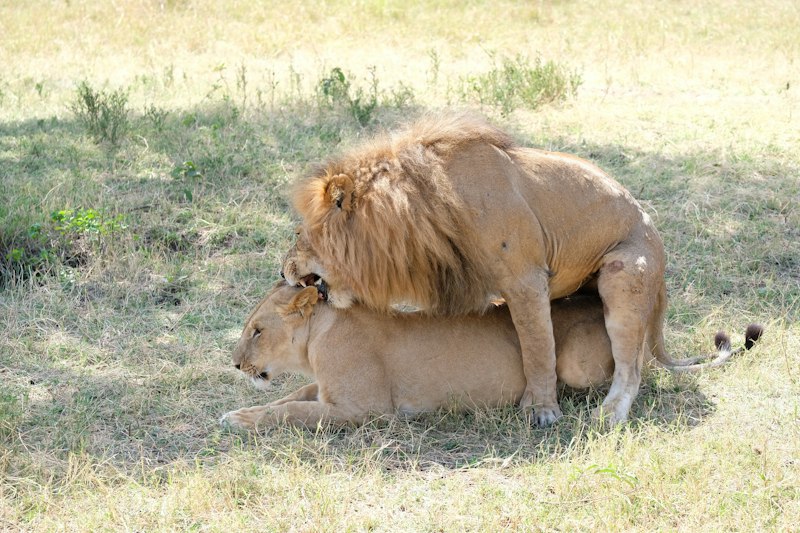
Animal sexual behavior refers to the complex and diverse spectrum of actions, interactions, and physiological processes that organisms undertake to facilitate reproduction. While the ultimate biological goal is the successful transmission of genetic material to the next generation, the behavioral manifestations encompass much more than simple copulation. This field of study, often central to ethology and behavioral ecology, examines everything from subtle chemical signaling and elaborate rituals to aggressive competition between rivals, all serving the critical function of ensuring evolutionary fitness. The behaviors are generally categorized into three distinct phases: the pre-copulatory phase, which includes mate searching, attraction, and courtship; the copulatory phase, involving the act of mating itself; and the post-copulatory phase, which may involve mate guarding, fertilization success, and different levels of parental investment.
The fundamental mechanism driving animal sexual behavior is the optimization of reproductive success. Every behavioral choice—from a brightly colored plumage display to the timing and location of breeding—is subject to the pressures of natural selection. Animals often face significant trade-offs, balancing the risks associated with attracting predators during conspicuous courtship against the rewards of securing a high-quality mate. Consequently, sexual behavior is highly context-dependent, varying drastically across species based on factors such as environmental stability, predation pressure, resource availability, and the specific physiological constraints of the organism. Understanding these complex trade-offs provides crucial insight into the extraordinary diversity of mating strategies observed throughout the animal kingdom.
The definition extends beyond simple physical acts to include crucial cognitive and social elements. Mate selection, for instance, often requires sophisticated assessment of potential partners based on criteria that signal genetic health, vigor, or resource acquisition abilities. Furthermore, social interactions surrounding mating, such as the establishment of dominance hierarchies or territorial defense, are integral components of the overall sexual behavioral repertoire. These behaviors are regulated by a complex interplay of genetic predisposition, hormonal cycles, and environmental cues, ensuring that reproductive effort is expended when the likelihood of producing viable offspring is maximized.
The Evolutionary Basis: Sexual Selection
The theoretical foundation for understanding the extravagant and often risky nature of animal sexual behavior lies in Charles Darwin’s concept of Sexual selection, introduced in The Descent of Man, and Selection in Relation to Sex (1871). Darwin recognized that certain traits that seemingly hindered survival—such as the massive antlers of a moose or the cumbersome tail of a peacock—must confer a reproductive advantage that outweighs their survival costs. Sexual selection operates via two primary mechanisms: intrasexual competition and intersexual choice.
Intrasexual competition involves direct competition, usually between males, for access to mates. This often leads to the evolution of weaponry (e.g., horns, tusks), large body size, and aggressive behaviors necessary to win contests for dominance or territory. The successful competitor gains preferential access to females, thereby passing on the genes responsible for competitive superiority. Conversely, intersexual choice, or mate choice, typically involves females selecting males based on specific traits or displays. This process drives the evolution of elaborate ornamentation, complex songs, or intricate dances, as males must actively persuade females of their quality. These chosen traits are often honest signals, meaning they are costly to produce and maintain, thus reliably indicating superior health or genetic quality.
The difference in reproductive investment between the sexes is a critical factor driving sexual selection dynamics. Since females typically invest more resources per gamete (eggs are larger than sperm) and often bear the burden of gestation and early offspring care, they become the limiting resource for male reproduction. This fundamental asymmetry leads to females being choosy (the selective sex) and males being competitive (the competing sex). However, this dynamic is reversed or modulated in species where males take on the majority of parental duties, highlighting the flexibility and powerful influence of reproductive roles on the resulting sexual behaviors. The study of sexual selection is paramount to understanding why some species exhibit extreme sexual dimorphism while others appear nearly identical.
Historical Roots in Ethology
The formal scientific study of animal sexual behavior was solidified in the mid-20th century with the rise of classical Ethology, pioneered by researchers such as Konrad Lorenz, Nikolaas Tinbergen, and Karl von Frisch. These scientists focused on observing and describing behavior in natural environments, shifting the focus from laboratory settings to the ecological context. They introduced concepts central to understanding behavioral fixedness and responsiveness, particularly concerning reproductive acts.
A key finding was the identification of releasers (or sign stimuli) and fixed action patterns (FAPs). Releasers are specific, simple stimuli—such as the red belly of a male stickleback fish—that trigger a complex, unlearned behavioral sequence (the FAP), such as a courtship dance or aggressive territorial display. Tinbergen’s meticulous studies of the three-spined stickleback’s breeding cycle provided a textbook example of how environmental cues and internal hormonal states interact to produce a highly ritualized and predictable sequence of sexual behaviors essential for successful mating. These early ethological approaches laid the groundwork for modern behavioral ecology by providing a rigorous methodology for classifying and analyzing behavioral sequences linked to reproductive success.
Later historical developments included the integration of evolutionary theory through the lens of Sociobiology, notably championed by E.O. Wilson in the 1970s. Sociobiology sought to explain social behaviors, including reproductive strategies, using the principles of genetics and evolutionary optimization. This perspective shifted the analysis from individual behavioral mechanisms (FAPs) to the costs and benefits of various strategies (e.g., monogamy versus polygamy) in terms of gene propagation. This synthesis bridged the gap between classical ethology and modern behavioral genetics, allowing researchers to explore the ultimate evolutionary causes of sexual behavior alongside its proximate physiological mechanisms.
Case Study: Costly Signals and Mate Choice
A compelling and widely studied practical example of animal sexual behavior is the elaborate courtship display of the Indian peacock (Pavo cristatus). The male peacock possesses an enormous, iridescent train of feathers, which is metabolically expensive to grow and maintain, and physically cumbersome, making the peacock more vulnerable to predators and less efficient at flight. This trait is a classic example of a “costly signal” driven by intersexual selection.
The following step-by-step process illustrates how the psychological principle of mate choice operates in this scenario:
-
Signal Initiation: During the breeding season, the male peacock fans out his massive train into a magnificent vertical display, vibrating the feathers (a technique known as ‘train rattling’) to create both visual spectacle and audible rustling, thereby attracting the attention of females (peahens).
-
Assessment by the Female: The peahen approaches the displaying male and meticulously assesses the quality of his train. Studies have shown that females prefer males with more eyespots (ocelli), greater symmetry, and brighter coloration. These visual cues serve as indicators of the male’s underlying genetic quality, low parasite load, and overall health—traits that are difficult for a weaker male to fake.
-
The Handicap Principle: The sheer metabolic cost of the large train functions as a reliable signal (Handicap Principle). Only the fittest males can survive while bearing such a significant burden. By choosing the male with the most impressive, costly display, the female ensures her offspring inherit genes for superior viability and resource acquisition.
-
Outcome: If the female accepts the male’s signal as satisfactory, she will choose to mate with him. This successful reproductive outcome reinforces the selective pressure for increasingly elaborate and costly male ornaments over generations, demonstrating the powerful feedback loop of sexual selection.
Diversity of Mating Systems and Relationships
Animal sexual behavior is intrinsically linked to the concept of mating systems, which are the social organizations defining how many mates individuals have and the pattern of sexual selection that results. The major categories include monogamy, polygyny, polyandry, and promiscuity, each reflecting different environmental pressures and resource distributions. Monogamy, where one male mates exclusively with one female, is often observed when biparental care is essential for offspring survival, such as in many bird species. This system typically results in less pronounced sexual dimorphism because reproductive variance is minimized between males.
The most common system in mammals is polygyny, where one male mates with multiple females. This system is heavily driven by intrasexual competition, leading to large, aggressive males and high levels of sexual dimorphism (e.g., elephant seals, gorillas). Conversely, polyandry, where one female mates with multiple males, is rare but notable, often occurring in species where females lay multiple clutches and males perform the majority of incubation or parental care (e.g., certain shorebirds). The diversity of these systems underscores that animal sexual behavior is not a fixed phenomenon but an adaptable strategy optimized for local ecological conditions.
Beyond the traditional systems, some species exhibit highly flexible or opportunistic mating behaviors, often classified as promiscuity or polygynandry. In these cases, both males and females have multiple partners, and mating may be decoupled from the formation of stable bonds. Understanding these systems requires careful analysis of genetic parentage, often revealing a discrepancy between social pairing (who raises the young) and genetic mating (who sired the young), a phenomenon known as extra-pair copulation. This complexity reveals that even in socially monogamous species, optimizing genetic diversity often drives sexual behavior beyond simple pair bonding.
Significance for Biology and Conservation
The study of animal sexual behavior holds profound significance across multiple biological disciplines. Primarily, it serves as the crucial link between genetics and ecology, explaining how evolutionary forces shape phenotypic traits and population dynamics. By understanding the specific cues and rituals required for successful mating, researchers gain insight into the mechanisms that maintain species integrity and reproductive isolation, preventing hybridization between closely related groups. The investigation of reproductive strategies is essential for modeling population growth, understanding energy allocation, and predicting responses to environmental change.
In the applied field of Conservation biology, knowledge of sexual behavior is absolutely critical. For endangered species, failure to reproduce successfully in captivity or in fragmented wild populations is a major hurdle to recovery. Conservation programs rely on ethological data to replicate the precise environmental and social conditions necessary to stimulate courtship, mate choice, and breeding. This includes mimicking natural social structures, ensuring the appropriate operational sex ratio, and providing specific sensory cues (e.g., pheromones or display territories) that trigger fixed action patterns related to successful reproduction. Without a deep understanding of the species-specific sexual repertoire, breeding efforts often fail.
Furthermore, analyzing deviations or abnormal sexual behaviors can provide early warnings about environmental stress or pollution. Endocrine-disrupting chemicals, for example, are known to interfere with hormonal regulation, leading to altered sexual characteristics, reduced fertility, or inappropriate behaviors, ultimately impacting population viability. Thus, monitoring the normalcy of Animal Sexual Behavior acts as a powerful ecological indicator of environmental health. The detailed mapping of these behaviors provides indispensable tools for managing threatened wildlife and maintaining biodiversity.
Connections to Related Psychological Concepts
Animal sexual behavior intersects with numerous other core concepts in psychology and biology, primarily falling under the umbrella of Behavioral Ecology and Evolutionary Psychology. One key relationship is with the concept of Parental investment, a term formalized by Robert Trivers. The amount of energy, time, and resources dedicated to raising offspring fundamentally dictates the intensity of Sexual selection and the resulting sexual behaviors of both sexes. High parental investment by one sex (typically female) leads to greater selectivity and competition among the low-investing sex (typically male).
The study also connects closely with the mechanisms of communication. Sexual displays and courtship rituals are highly specialized forms of communication, utilizing visual, acoustic, tactile, and chemical channels (pheromones). The effectiveness and reliability of these signals are paramount to reproductive success, linking sexual behavior directly to the study of sensory perception and communication theory within Ethology. Additionally, concepts like resource defense, territoriality, and hierarchy formation are often inextricable from sexual behavior, as securing resources or status directly translates into mating opportunities.
Finally, comparative studies of animal sexual behavior provide critical context for understanding human sexuality. Evolutionary psychologists often use the principles derived from animal mating systems—such as the trade-offs between short-term mating and long-term pair bonding, or the influence of hormonal cycles—to hypothesize about the ultimate origins and current functionality of human reproductive strategies, recognizing that human behavior, while highly complex, is rooted in the same fundamental evolutionary pressures that shape the sexual behavior of all animals. This comparative approach offers profound insights into the universal aspects of mate choice, competition, and reproductive motivation.