Anorthoscopic Perception: Seeing Through the Hidden Gap
Scientifically Reviewed · Dr. Marwa Abd-Alazim · September 6, 2026
Review Criteria & Clinical Standards
This content undergoes rigorous scientific peer-review and medical editorial standards at Arab Psychology Network to ensure clinical accuracy, validity, and compliance with evidence-based guidelines from leading psychological and healthcare authorities (APA / WHO).
Introduction and Definition of Anorthoscopic Perception
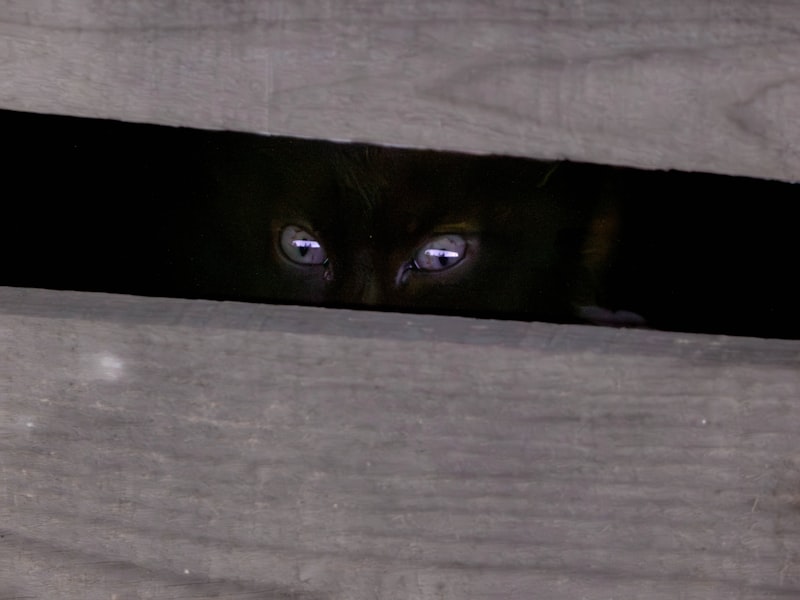
Anorthoscopic perception refers to a specific class of perceptual disturbances or visual illusions that arise when a moving stimulus is viewed through a mechanism that sporadically interrupts the visual input. This interruption is typically caused by an intervening structure, such as a narrow aperture, a slit, or a series of closely spaced opaque barriers, resulting in the viewer receiving only fragmented, sequential glimpses of the object in motion. The term encapsulates the phenomenon where the visual system, despite receiving only stilted or interrupted information, manages to reconstruct a complete, though frequently distorted, form of the moving object. The critical factor is the interplay between the speed of the stimulus and the frequency of the viewing interruptions, which forces the brain to rely heavily on temporal integration mechanisms to synthesize coherence from the disparate visual data.
The core manifestation of anorthoscopic perception is the natural distortion created when viewing conditions impose a mandatory break in visual continuity. A classic and highly illustrative example involves observing the spokes of a moving wagon wheel through a fence or palisade. While the spokes are physically straight, the viewer perceives them as curved, often exhibiting an S-shape or significant bowing. This distortion is not an artifact of the physical environment but a consequence of the visual processing lag, where the brain attempts to link sequential retinal images that are temporally and spatially displaced. The perceptual system incorrectly interprets this time difference as a physical deformation of the object itself, rather than recognizing it as a limitation imposed by the viewing conditions and the subsequent requirement for rapid visual reconstruction.
Fundamentally, anorthoscopic perception serves as a powerful demonstration of how the human visual system achieves object constancy under challenging conditions. When viewing is sporadically interrupted, the phenomenon highlights the reliance of perception on memory traces and predictive processing. The brain does not simply register the discrete fragments; instead, it utilizes mechanisms of temporal integration to bridge the gaps created by the occluding material. This active, reconstructive process ensures that the viewer experiences a continuous, if flawed, representation of reality, rather than a flickering sequence of unconnected images. The study of this illusion provides critical insight into the speed and efficiency with which the visual cortex integrates sequential information to deduce movement and form.
Historical Context and Early Investigations
The principles underlying anorthoscopic perception have roots extending back to the nineteenth century, a period marked by intense scientific curiosity regarding visual persistence and the creation of motion illusions. Early optical devices, such as the thaumatrope, the phenakistoscope, and the zoetrope, relied on the rapid sequential presentation of static images separated by brief periods of occlusion to generate the illusion of continuous movement. While these devices primarily demonstrated stroboscopic motion, they laid the conceptual groundwork by proving that the visual system could seamlessly integrate discrete inputs over short intervals. The formal study of interrupted viewing, specifically concerning the distortion of form, intensified with the development of specialized laboratory apparatus designed to isolate the variables involved in viewing through slits or narrow apertures.
The specific device used to study this phenomenon, sometimes referred to generically as an anorthoscope (derived from the Greek meaning “not correct viewing”), involves a mechanism that moves a complex pattern or image behind a stationary screen containing a narrow aperture or slit. Researchers in the late 19th and early 20th centuries utilized these setups to systematically vary parameters such as the velocity of the pattern, the width of the viewing slit, and the complexity of the underlying geometric shape. These early investigations established conclusively that the resulting perceived image—the anorthoscopic percept—was rarely identical to the physical reality of the stimulus. For instance, a simple square translating rapidly behind a narrow vertical slit often appears elongated, flattened, or otherwise smeared, demonstrating that the visual system prioritizes temporal continuity over instantaneous spatial accuracy.
These foundational experiments were crucial because they distinguished anorthoscopic perception from simple motion blur or afterimages. They revealed that the mechanism at work was an active, reconstructive process rather than a passive optical effect. By manipulating the frequency and duration of the interruptions, researchers could quantify the temporal window required for the visual system to successfully integrate the fragments into a single, albeit distorted, whole. This historical perspective underscores that anorthoscopic perception is not merely an occasional visual trick, but a fundamental characteristic of how the brain manages the inherent limitations of sampling the visual environment sequentially, forcing a reassessment of how we define the boundaries between sensory input and cognitive interpretation in real-time processing.
Mechanisms of Interruption and Occlusion
The generation of anorthoscopic perception requires a precise synchronization between the movement of the object and the pattern of visual interruption. The occluding structure, whether a fence, a grid, or a narrow slit, acts as a filter, allowing only limited segments of the stimulus to reach the retina at any given moment. The mechanism relies on the fact that the object is in continuous motion; thus, each subsequent glimpse received through the aperture or gap corresponds to a slightly different spatial location of the object, separated by a brief temporal delay during which the object is hidden by the occluder. This sequential sampling is the physical cause of the perceptual disturbance observed.
A key concept in understanding the mechanism is the relationship between the object’s velocity and the aperture’s characteristics. If the object moves too slowly, the viewer may perceive static, unconnected segments. Conversely, if the object moves too quickly, the fragments may blur into an undifferentiated smear, and the characteristic distortion associated with anorthoscopic perception may be lost. The ideal condition for the illusion involves a velocity that ensures that the temporal delay between successive views is short enough to permit visual integration—often within the span of 100 to 200 milliseconds—but long enough that the spatial displacement between views is substantial, thereby triggering the reconstructive distortion. This critical balance highlights the sensitivity of the visual system to minor variations in input timing.
Furthermore, the shape and orientation of the occluder significantly influence the perceived distortion. When a complex pattern is viewed through a narrow vertical slit, the horizontal dimension of the pattern is severely compressed or distorted, while the vertical dimension remains relatively intact. This is due to the fact that the horizontal extent of the pattern must be reconstructed temporally, piece by piece, as the pattern translates across the visual field. This reliance on temporal reconstruction for one axis, while the other axis is sampled simultaneously, illustrates the phenomenon’s connection to the ‘aperture problem’ in motion detection, where local motion signals viewed through a limited field provide ambiguous information about the global motion of the object. The brain must then apply assumptions about object rigidity and continuity to resolve this ambiguity, leading directly to the observed geometric distortions.
The Role of Temporal Integration and Persistence of Vision
Central to the successful creation of anorthoscopic perception is the physiological process known as persistence of vision, often understood as the function of iconic memory. Iconic memory is the fleeting, high-capacity sensory register that briefly holds a detailed copy of the visual information after the physical stimulus has ceased. This persistence is crucial because when the moving object is occluded—as when the wagon spoke passes behind a fence picket—the retinal image does not immediately vanish. The lingering trace of the previous glimpse remains available for a fraction of a second, providing the foundational material necessary for the brain to fuse it with the subsequent glimpse received through the next aperture. Without this temporal overlap, the viewer would merely see a series of flashing, unconnected fragments.
Building upon persistence of vision is the sophisticated cognitive process of temporal integration. This is the active mechanism by which the visual cortex takes the sequential, fragmented inputs from iconic memory and stitches them together into a coherent, continuous percept. In the context of anorthoscopic perception, the brain treats the sequence of brief, static views as a continuous sweep, thereby reconstructing the missing parts of the image. The distortion arises because the integration process attempts to reconcile the apparent spatial location of a feature (e.g., the spoke tip) at time T1 with its apparent location at time T2, separated by a brief delay. Because the object has moved during the period of occlusion, the spatial coordinates are mismatched, forcing the integrative process to create an illusory link, which manifests as a geometric distortion like curvature or elongation.
The time constant governing this temporal integration is highly restrictive, underscoring the delicate nature of the illusion. Studies have shown that the window for successful integration in anorthoscopic tasks typically ranges from around 50 to 200 milliseconds. If the interruptions occur too slowly, exceeding this threshold, the iconic trace fades before the next piece of information arrives, and the perception reverts to seeing separate, sequential images. Conversely, if the interruptions are extremely fast, the visual system may not distinguish the individual fragments, leading to a simple uniform blur. This strict temporal limit proves that anorthoscopic perception is a direct measure of the brain’s inherent capacity to reconstruct moving forms by interpolating data across short, ecologically relevant time delays, defining the limits of perceptual continuity.
Classic Demonstrations and Experimental Paradigms
Beyond the anecdotal observation of the wagon wheel, laboratory settings have developed specific experimental paradigms to quantify the variables influencing anorthoscopic perception, often relying on the rotating anorthoscope apparatus. One common setup involves a complex, usually asymmetrical, figure painted on a disk rotating behind a screen with a narrow radial or vertical slit. When the disk is rotated slowly, the observer sees only the small portion of the pattern visible through the slit, resulting in a blurred line. However, when the rotation speed is increased to the optimal range, the observer suddenly perceives the entire figure, though it appears distorted—typically stretched or compressed along the axis of movement. For instance, a circular figure often appears elongated into an ellipse, demonstrating the brain’s tendency to integrate the sequential spatial information along the temporal axis.
The classic example of the curved wagon spokes viewed through fence pickets provides a specific type of geometric distortion that merits detailed analysis. This effect, often studied in relation to the induced curvature of straight lines, occurs because the retinal image of the spoke is sampled sequentially as it passes behind the pickets. At any moment, the brain knows the position of the wheel’s center (the hub) and the local orientation of the spoke fragment. However, due to the temporal delay imposed by the occlusion, the brain integrates the position of the spoke’s outer tip at time T1 with the position of the inner part of the spoke at time T2, when the wheel has rotated slightly. This temporal mismatch is resolved by the visual system as a perceived spatial displacement, causing the straight line to be reconstructed as a curve that bends in the direction of motion, thus showcasing the powerful impact of misaligned temporal cues on perceived geometry.
Experimental research into anorthoscopic perception utilizes several controlled variables to isolate the contributing factors. Key parameters include the velocity of the stimulus, the spatial frequency of the occluding pattern (e.g., the width and spacing of the slits), and the inherent complexity of the figure being viewed. Researchers have found that the ability to correctly perceive the figure, even with distortion, is significantly higher for symmetrical or familiar shapes, suggesting a role for top-down processing and contextual knowledge in aiding the reconstruction process. The use of varied stimuli has allowed for the creation of precise psychometric functions detailing the relationship between physical parameters and the subjective experience of distortion, leading to critical findings summarized below:
- Velocity Dependence: An optimum range of velocity is required; too slow results in fragmentation, too fast results in undifferentiated blur.
- Aperture Size: Narrower slits require faster motion for successful integration but often result in greater distortion.
- Figure Complexity: Simple geometric figures are more easily reconstructed than highly complex, random patterns, indicating that the visual system utilizes assumptions about continuity and simplicity during integration.
Theoretical Explanations and Cognitive Processing
The theoretical understanding of anorthoscopic perception requires integrating knowledge from sensory processing, motion perception, and cognitive psychology. One primary explanation centers on the concept of perceptual filling-in. When the object is momentarily hidden by the occluder, the brain does not register a blank space. Instead, it actively extrapolates the path and form of the object, based on the information received immediately before and after the occluding event. This predictive mechanism assumes that the object maintains its structural rigidity and continuous motion, filling the gaps in sensory input with a synthesized visual representation. The distortion occurs precisely because this prediction is based on temporally delayed information, leading the reconstructed image to deviate from the object’s true form at any instantaneous moment.
Another key theoretical perspective focuses on the interpretation of motion signals. The visual system is highly attuned to tracking changes in position over time. When viewing an object anorthoscopically, the fragmented input provides misleading motion cues. Specifically, the perceived lateral movement necessary to connect the sequential fragments across the occluded gaps leads the visual system to incorrectly assign this apparent displacement to a physical curve or stretch in the object itself. This suggests that motion processing precedes form recognition in this context, and the distortion is a byproduct of the system attempting to generate a stable, continuous motion path from discontinuous samples. The final perceived form is therefore a solution to the underlying motion ambiguity.
Furthermore, anorthoscopic perception highlights the crucial interaction between bottom-up (sensory) processing and top-down (cognitive) influences. While the initial integration relies strictly on bottom-up mechanisms like iconic memory and temporal summation, the successful recognition and reconstruction of complex figures suggest a significant top-down component. The brain applies stored knowledge and contextual expectations—such as the knowledge that wagon spokes are usually straight, or that a presented figure is likely symmetrical—to constrain the possible interpretations of the fragmented input. This explains why an observer can often identify the underlying shape despite the profound distortion. The final coherent percept is thus a negotiated outcome, balancing the requirement to integrate the raw, fragmented retinal input with the cognitive demand for a meaningful and stable object representation.
Applications and Related Phenomena
The study of anorthoscopic perception has significant implications not only for fundamental theories of visual psychology but also for understanding applied visual technologies. Any technology that relies on scanning or sequential presentation to create a holistic image inherently utilizes the principles of temporal integration observed in anorthoscopic phenomena. Early television screens, radar displays, and even modern digital displays that refresh sequentially rely on the visual system’s ability to fuse rapid, discrete inputs into a continuous image. Understanding the temporal thresholds and distortion patterns associated with interrupted viewing is vital for optimizing display refresh rates and minimizing visual artifacts that might compromise the perceived quality or accuracy of the presented information.
Anorthoscopic perception is closely related to, yet distinct from, other temporal integration illusions. One such related phenomenon is stroboscopic motion, which is the perception of continuous movement generated by a rapid succession of slightly different static images (the basis of film and animation). While both rely on persistence of vision and temporal integration, anorthoscopic perception specifically involves viewing a continuously moving object that is being physically occluded, resulting in a distorted view of the object’s form, whereas stroboscopic motion involves viewing static images to create the illusion of motion itself. Another related concept is the phi phenomenon, where two static lights flashing sequentially appear to be a single light moving between the two locations. These related illusions collectively underscore the fact that the perception of motion and form is fundamentally a reconstructive process, highly dependent on precise temporal sequencing.
Ultimately, the enduring importance of studying anorthoscopic perception lies in its ability to reveal the underlying computational strategies employed by the visual system to achieve perceptual stability. By deliberately introducing fragmented and interrupted input, researchers gain a unique window into how the brain manages uncertainty, interpolates missing data, and resolves ambiguities related to object coherence and rigidity. It confirms that the perceived world is not a direct mirror of sensory input, but rather a dynamic, actively constructed hypothesis that prioritizes continuity and meaningful interpretation, even at the cost of geometric accuracy. This deep understanding of how the brain handles degraded visual information is crucial for advancing research in areas ranging from visual neuroscience to the development of artificial visual systems.