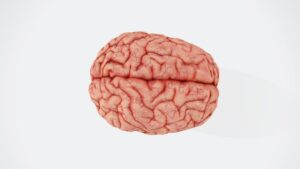
Anosognosia: When the Mind Cannot See Its Own Illness
Scientifically Reviewed · Dr. Marwa Abd-Alazim · August 31, 2026
Review Criteria & Clinical Standards
This content undergoes rigorous scientific peer-review and medical editorial standards at Arab Psychology Network to ensure clinical accuracy, validity, and compliance with evidence-based guidelines from leading psychological and healthcare authorities (APA / WHO).

Definition and Scope of Anosognosia
Anosognosia, derived from the Greek terms meaning ‘without knowledge of disease,’ is a clinical term describing the failure of a person to acknowledge or recognize the presence, severity, or implications of a disorder or defect affecting themselves. This profound lack of self-awareness is not merely a matter of denial in the common psychological sense, nor is it related to intellectual impairment; rather, it represents a specific neurological or neuropsychiatric deficit wherein the patient genuinely believes they are unimpaired. The condition can manifest across a wide spectrum of deficits, including motor, sensory, cognitive, and emotional functions. The hallmark of anosognosia is the sincere conviction that no disability exists, leading to behaviors that can range from confusing to dangerous, particularly when patients attempt tasks that their physical or cognitive limitations strictly prohibit. This lack of insight is fundamentally distinct from other forms of awareness deficits, positioning it as a critical area of study within both neurology and clinical psychology, especially concerning rehabilitation and patient safety.
The scope of anosognosia extends far beyond simple physical limitations. While historically recognized in severe motor deficits, such as the denial of paralysis (anosognosia for hemiplegia), it is frequently documented in cases involving visual impairments (e.g., cortical blindness, a condition related to Anton’s syndrome, which was mentioned in the original definition), hearing deficits, or complex cognitive dysfunctions like memory loss or aphasia. The patient exhibiting anosognosia does not simply minimize their deficit; they actively confabulate or produce elaborate rationalizations to explain away any objective evidence of the impairment presented to them. This phenomenon suggests a fundamental disruption in the neural mechanisms responsible for integrating sensory feedback and comparing current performance with pre-morbid abilities, highlighting the complexity of self-monitoring systems within the human brain.
Understanding anosognosia requires careful differentiation from volitional psychological denial. While a psychological defense mechanism involves conscious or subconscious suppression of painful reality, anosognosia is overwhelmingly non-volitional, resulting from underlying physiological changes, most commonly brain injury. The failure to acknowledge the defect is involuntary and intrinsic to the pathology itself. Consequently, attempts by caregivers or clinicians to directly confront the patient often fail, potentially leading to frustration and resistance, further solidifying the patient’s denial rather than generating insight. Therefore, clinical management hinges upon recognizing the neurological origin of the denial rather than viewing it purely as a psychological coping strategy.
Historical Context and Nomenclature
The formal concept of anosognosia has roots in early 20th-century neurology, though observations of patients denying severe deficits existed previously. The term itself was formally introduced by the French neurologist Joseph Babinski in 1914. Babinski specifically used the term to describe patients who exhibited hemiplegia (paralysis on one side of the body) yet denied their paralysis or claimed they could move the affected limb. Babinski noted the peculiar dissociation between the objective, observable deficit and the patient’s subjective, internal reality. His initial work focused heavily on lesions affecting the right hemisphere of the brain, establishing a foundational link between this specific neurological location and the resulting lack of insight.
Following Babinski’s initial descriptions, the clinical understanding of anosognosia broadened. Early investigations demonstrated that the condition was not exclusive to motor deficits. Researchers soon identified analogous phenomena in sensory modalities, such as anosognosia for blindness (where the patient denies cortical blindness, often confabulating visual experiences—a condition sometimes referred to as Anton’s Syndrome, though this involves both anosognosia and visual confabulation). The expansion of the concept underscored that the mechanism involved a failure in a generalized awareness and monitoring system, rather than a system dedicated solely to motor function. This historical progression shifted the focus from merely describing the symptom to investigating the underlying neural architecture responsible for self-monitoring and error detection.
Modern nomenclature utilizes the term anosognosia as an umbrella concept, often specifying the type of deficit being denied. For example, Anosognosia for Hemiplegia (AHP) remains the most studied form, but clinicians also recognize anosognosia for memory impairment (common in Alzheimer’s disease), anosognosia for aphasia, and even anosognosia for psychiatric illness (lack of insight often referred to as poor insight or impaired judgment in psychiatric contexts, though the neurological underpinnings may overlap). The evolution of the nomenclature reflects the understanding that the brain possesses specific, vulnerable systems necessary for maintaining an accurate, updated internal model of one’s physical and mental capabilities, and injury to these systems results in this profound denial.
Etiology: Neurological Basis and the Right Hemisphere
The primary etiology of anosognosia is usually damage to specific areas of the brain, most prominently within the right cerebral hemisphere. The right hemisphere is critically involved in non-verbal awareness, spatial processing, attention, and the maintenance of a coherent body schema. Specifically, damage often involves the temporoparietal junction, the insula, and parts of the frontal lobe that interact with these posterior regions. The parietal lobe, particularly the right superior parietal lobule, is hypothesized to be crucial for integrating sensory and motor feedback, allowing the individual to compare intended actions with actual performance and recognize discrepancies (errors). When this comparator mechanism is damaged, the brain fails to register the deficit, resulting in the patient’s unwavering belief in their intact function.
Damage to the right hemisphere often leads to deficits that affect the left side of the body (due to contralateral organization). In cases of Anosognosia for Hemiplegia (AHP), the patient, paralyzed on their left side, experiences a failure of the feedback loop. The motor command to move the left arm is generated, but the sensory feedback confirming the failure of movement (the arm remaining still) is either ignored or suppressed due to the lesion. Critically, because the right hemisphere is involved in broader attentional processes and the generation of the internal body map, injury here can impede the ability to allocate attention to the impaired side and update the internal representation of the body, thereby preserving a false sense of intactness. Research suggests that anosognosia is often correlated with the severity of neglect (a failure to attend to the contralateral space), although they are recognized as distinct phenomena.
Furthermore, the neurobiology of anosognosia may involve disconnectivity rather than localized damage alone. Disruption in the white matter pathways connecting the damaged parietal areas with the frontal executive regions (which are necessary for self-reflection and monitoring) can prevent the patient from accessing or processing information about their impairment. This disconnection hypothesis explains why patients might perform well on abstract cognitive tests but fail spectacularly when asked to assess their own current functional status. The lesion effectively shields the conscious awareness from the objective reality of the body’s impairment, creating a deeply entrenched, non-falsifiable reality for the patient where the defect simply does not exist.
Etiology: Psychological and Cognitive Factors
While anosognosia is fundamentally a neurological condition, cognitive and psychological factors play a crucial role in its manifestation and persistence. One significant cognitive aspect relates to monitoring and prediction. An intact brain uses a predictive coding mechanism, constantly comparing expected outcomes of actions with actual sensory inputs. In anosognosia, the injury seems to disrupt the ability to generate accurate predictions and, crucially, to register the prediction error. If the brain cannot register that an attempt to move failed, it assumes the movement occurred, leading to confabulation when prompted. This automatic cognitive failure underlies the patient’s genuine lack of awareness.
Psychological explanations, while secondary to the neurological damage, attempt to account for the content and persistence of the denial. Some theories propose that anosognosia serves as an extreme, albeit non-volitional, defense mechanism against the overwhelming psychological trauma of suddenly acquired, severe disability. This perspective suggests that the brain, having lost its ability to accurately monitor its own status, defaults to a pre-injury baseline to maintain psychological homeostasis. However, this view is often challenged because anosognosia does not typically correlate with measures of psychological distress or psychiatric history; patients often appear remarkably calm and unconcerned about their “supposed” deficit, which is inconsistent with profound emotional repression.
It is important to note the distinction between anosognosia and the general lack of insight seen in many psychiatric disorders. In conditions like schizophrenia, poor insight is often conceptualized as a cognitive deficit related to metacognition—the ability to think about one’s own thinking. While both involve a failure of self-awareness, the acute, focal nature of the denial in classical anosognosia (e.g., denying a specific paralysis) often points more directly to a compromised neural feedback system rather than a generalized failure of reflective thought, although overlap certainly exists, particularly in neurocognitive disorders like dementia, where insight into memory loss frequently declines due to structural brain changes.
Clinical Manifestations and Specific Types
Anosognosia is categorized based on the specific deficit being denied. The most commonly studied form is Anosognosia for Hemiplegia (AHP), where a patient denies paralysis of an entire side of the body, typically the left side. Patients with AHP may insist they can move the paralyzed limb, and when prompted to move it, they might fail and immediately rationalize the failure (e.g., “I just didn’t feel like moving it,” or “My shoulder is a little stiff today, but I moved it just fine yesterday”). In extreme cases, they may even deny ownership of the paralyzed limb, claiming it belongs to someone else in the bed.
Other significant clinical manifestations include sensory and cognitive forms. Anosognosia for Cortical Blindness (often associated with Anton’s Syndrome) involves the denial of visual impairment following damage to the visual cortex. These patients will confidently navigate spaces, often bumping into objects, yet insist they can see, frequently manufacturing vivid, yet entirely untrue, descriptions of their surroundings (confabulation). Similarly, patients with Anosognosia for Aphasia (speech deficit) may not recognize that their speech is incomprehensible or severely impaired, maintaining a fluent, yet meaningless, conversation pattern. This lack of awareness poses significant challenges to communication-focused rehabilitation efforts.
A particularly challenging type is anosognosia related to memory impairment, frequently observed in dementia, especially Alzheimer’s disease. Patients with anosognosia for memory impairment often score poorly on objective memory tests but rate their own memory as excellent or slightly impaired. This lack of insight severely impacts adherence to treatment plans and safety, as the patient may engage in risky behaviors, unaware of their inability to remember crucial information, such as turning off appliances or taking medication. The pervasive nature of anosognosia across motor, sensory, and cognitive domains underscores its status as a core disorder of self-monitoring and insight, rather than a mere secondary complication of the primary deficit.
Diagnostic Challenges and Assessment
Diagnosing anosognosia presents unique challenges because the assessment relies on the patient’s subjective reports, which are inherently unreliable due to the nature of the condition. Clinicians must distinguish true anosognosia (a non-volitional neural failure) from simple psychological denial or malingering (intentional deception). The key diagnostic feature is the patient’s sincere, unwavering conviction that they are functionally intact, even when faced with overwhelming objective evidence to the contrary. Direct confrontation is often counterproductive and rarely yields insight, necessitating subtle and structured assessment methods.
Assessment typically involves a combination of objective performance measures and subjective discrepancy scores. The patient is first asked to predict their performance on a specific task (e.g., “How well will you be able to move your left arm?”), and then their actual performance is measured. A large discrepancy between a high predicted score and a poor objective performance is a strong indicator of anosognosia. Standardized scales have been developed to quantify this discrepancy, often referred to as insight scales or self-awareness questionnaires, such as the Patient Competency Rating Scale (PCRS) or specific anosognosia screening tools designed for conditions like stroke.
Furthermore, the diagnostic process involves evaluating the consistency and quality of the patient’s rationalizations. Patients with anosognosia often use shifting, illogical, and sometimes bizarre explanations to account for their failures, a process known as confabulation. For example, a patient denying paralysis might state the limb is just “sleeping” one moment, and the next, claim they moved it while the examiner wasn’t looking. This pattern of inconsistent, yet firm, denial is crucial for diagnosis. A thorough neurological examination confirming the underlying lesion site is necessary to support the diagnosis of neurogenic anosognosia, separating it clearly from purely psychological phenomena.
Management and Therapeutic Approaches
The management of anosognosia is complex, focusing less on convincing the patient of their deficit and more on promoting safety and facilitating functional adaptation. Direct confrontation is generally avoided because it can provoke anxiety, resistance, or even aggressive behavior without resulting in genuine insight. Therapeutic strategies are therefore designed to work around the deficit, utilizing external feedback and metacognitive training to improve performance indirectly.
One effective approach is Errorless Learning, where tasks are structured so the patient succeeds repeatedly, preventing the opportunity for the patient to register failure. This technique aims to establish new, successful behavioral patterns without relying on the damaged internal monitoring system. Another core strategy involves external feedback mechanisms, where technological aids or structured verbal cues from therapists and family members serve as surrogate monitoring systems. For instance, video feedback showing the patient attempting and failing a task can sometimes be used, although this must be handled delicately to avoid distress.
Rehabilitation protocols emphasize metacognitive training, which involves teaching the patient methods to anticipate problems and compensate for deficits, even if they do not explicitly acknowledge the deficit itself. This includes:
- Pre-task planning: Encouraging the patient to think aloud about the necessary steps before starting a task.
- Anticipation training: Asking the patient to predict potential difficulties before starting an activity.
- Goal setting: Collaboratively establishing realistic, achievable goals that incorporate compensation strategies.
These strategies shift the focus from internal awareness (which is compromised) to external, observable behavioral regulation, improving safety and functional independence despite the persistent lack of insight. Environmental modifications, such as simplifying living spaces and increasing supervision, are also critical for minimizing risks associated with the patient’s impaired self-assessment.
Prognosis and Quality of Life Implications
The prognosis for anosognosia is highly variable, depending heavily on the size and location of the underlying brain lesion, as well as the etiology. Anosognosia resulting from acute conditions, such as stroke, may show some degree of spontaneous recovery over weeks or months as acute inflammation subsides and neural reorganization occurs. However, in cases stemming from degenerative diseases, such as advanced dementia, the anosognosia is likely to be progressive and permanent. Persistent anosognosia is consistently associated with poorer rehabilitation outcomes across all domains.
The implications for quality of life are severe, extending beyond the patient to affect caregivers and family members. Patients with anosognosia demonstrate significantly lower engagement in physical and occupational therapies because they do not see the need for intervention; they believe they are already capable. This poor compliance directly hinders functional recovery. Furthermore, the denial of impairment leads to significantly increased safety risks, including falls, medication errors, and dangerous attempts at independent living (e.g., driving or cooking despite severe physical or cognitive deficits), placing a heavy burden on the caregiving network.
Research indicates that the presence of anosognosia is one of the single best predictors of poor functional recovery after a stroke. Therefore, early identification and the implementation of compensatory and external monitoring strategies are paramount. While complete restoration of insight may be rare, especially in severe cases, effective management focuses on maximizing functional capacity and reducing risk. Future therapeutic directions involve targeted neuro-rehabilitation techniques, potentially utilizing non-invasive brain stimulation to modulate activity in the damaged right hemisphere networks, offering hope for improved insight and quality of life for individuals living with this complex disorder of self-awareness.