Anthropometry: The Science of Your Physical Identity
Scientifically Reviewed · Dr. Marwa Abd-Alazim · September 6, 2026
Review Criteria & Clinical Standards
This content undergoes rigorous scientific peer-review and medical editorial standards at Arab Psychology Network to ensure clinical accuracy, validity, and compliance with evidence-based guidelines from leading psychological and healthcare authorities (APA / WHO).

Definition and Scope of Anthropometry
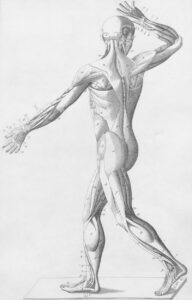
Anthropometry is fundamentally defined as the empirical study of human physical variation, specifically concerning the measurement of the size, proportions, and composition of the body. This scientific discipline systematically investigates how these dimensions tend to vary in conjunction with crucial demographic factors such as aging, sex, ethnicity, and culture. It serves as an essential bridge between biological anthropology, anatomy, and statistics, providing quantitative data necessary for understanding human growth, adaptation, and physical diversity across global populations. The core methodology involves the rigorous collection of measurements for the explicit purposes of comparative analysis, classification, and application across diverse fields ranging from clinical medicine to industrial design.
The scope of anthropometry extends far beyond simple height and weight measurements; it encompasses a comprehensive catalogue of physical parameters. These include linear measurements (stature, limb lengths), curvilinear measurements (circumferences of the head, chest, or limbs), and volume measurements (body composition analysis, particularly fat and muscle mass). By quantifying these variables, anthropometry allows researchers to track developmental trajectories throughout the lifespan—from fetal growth and childhood maturation to adult senescence—and to establish population norms. Understanding these norms is critical for identifying deviations indicative of clinical conditions or adapting environments to human physical capabilities.
A central tenet of modern anthropometry is the recognition that human physical characteristics are highly plastic and influenced by complex interactions between genetics and environment. While genetics establishes the potential range for size and proportion, factors such as nutrition, climate, workload, and public health infrastructure significantly modify the realized phenotype. Therefore, anthropometric studies often focus on identifying and documenting these population-specific variations, ensuring that data sets are contextually relevant and up-to-date, a need amplified by phenomena like the secular trend, which describes generational changes in average height and weight observed in many industrialized nations over the last century.
Historical Development and Key Figures
The conceptual roots of anthropometry trace back to antiquity, particularly in Greek and Egyptian attempts to define ideal human proportions for artistic and architectural purposes, exemplified by concepts like the Golden Ratio and Leonardo da Vinci’s Vitruvian Man. However, anthropometry did not emerge as a systematic scientific field until the mid-19th century. The critical shift occurred with the work of Belgian statistician Adolphe Quetelet, who applied statistical methods to biological data, introducing the concept of the “Average Man” (l’homme moyen). Quetelet’s pioneering efforts established the framework for analyzing distributions of human traits, standardizing the use of mean and variance in describing human size.
The late 19th and early 20th centuries saw anthropometry integrated heavily into both physical anthropology and the burgeoning, often controversial, field of eugenics. Figures like Sir Francis Galton utilized anthropometric measurements—including head circumference and stature—to attempt correlations between physical traits and intelligence or criminality, methodologies that are now largely discredited but highlight the historical misuse of the data. Simultaneously, French criminologist Alphonse Bertillon developed Bertillonage, a comprehensive system of body measurements used for criminal identification prior to the widespread adoption of fingerprinting, underscoring the early application of these techniques in forensic science.
A pivotal turning point arrived with the work of anthropologist Franz Boas, who demonstrated empirically that anthropometric measurements, particularly head shape, were not fixed racial markers but were highly susceptible to environmental factors, especially among immigrant populations in the United States. This research undermined essentialist views of race based on morphology. Following World War II, the discipline shifted decisively towards practical, applied uses, driven by the need to design military equipment, uniforms, and cockpit controls for large, diverse populations, cementing anthropometry’s crucial role in the development of ergonomics and human factors engineering.
Core Measurement Techniques
The foundational methodology of anthropometry relies on precise, standardized measurement protocols to ensure data comparability across studies and populations. Measurements are typically categorized as either static or dynamic. Static measurements, or structural measurements, are taken when the subject is stationary, such as stature, sitting height, and various limb segment lengths. Dynamic measurements, or functional measurements, assess dimensions relevant to movement or reach, such as the range of motion of joints, maximal grip strength, or functional reach envelope, which are vital for ergonomic design. The strict adherence to established landmarks on the body (e.g., acromion, stylion, trochanter) using standardized tools is paramount to measurement validity.
The specialized tools utilized in anthropometry are designed for high accuracy and minimal intrusiveness. The primary instruments include the stadiometer for measuring standing height, the anthropometer for measuring large body segments like limb lengths, and various types of calipers (such as sliding calipers and spreading calipers) used for measuring breadths and depths, including head dimensions and joint widths. Furthermore, specialized tape measures are employed for circumferences. Data collection often involves meticulously recording measurements to the nearest millimeter, requiring extensive training for the measurers to minimize inter-observer error and ensure reliability across different researchers.
In recent decades, traditional manual measurement techniques have been significantly supplemented, and in some applications replaced, by advanced non-contact methods. Techniques such as 3D body scanning (using structured light, laser scanning, or photogrammetry) allow for the rapid acquisition of hundreds of thousands of data points, creating highly accurate digital models of the human form. This technological shift provides unprecedented detail regarding body contours and volumes, allowing for more sophisticated analysis of body shape and posture. These digital techniques are particularly valuable in industries like apparel manufacturing and virtual ergonomic modeling, where precise three-dimensional data is required.
Factors Influencing Anthropometric Variation
Human dimensions are subject to profound variation driven by intrinsic biological factors and external environmental pressures. Sex is a primary determinant, manifesting as sexual dimorphism where, on average, males tend to exhibit greater overall stature and upper body muscle mass, while females typically possess a higher percentage of subcutaneous fat, wider pelvic structures, and distinct fat distribution patterns. These differences emerge most prominently after puberty, reflecting differential hormonal influences on growth plates and adipose tissue deposition, necessitating separate design standards and clinical reference ranges for male and female populations.
The process of aging introduces continuous change throughout the lifespan. Childhood and adolescence are characterized by rapid growth, marked by predictable changes in cephalocaudal ratio (head-to-body proportion) and limb length relative to the torso. In adulthood, stability is reached, followed by senescence, where common anthropometric changes include loss of stature due to vertebral compression, changes in posture (kyphosis), redistribution of body fat, and muscle mass loss (sarcopenia). These age-related changes are critical in designing living spaces, furniture, and tools that maintain accessibility and functionality for the elderly population.
Furthermore, ethnicity and geography contribute significantly to anthropometric variation, though these differences are complex and often confounded by environmental factors, particularly nutrition. While certain populations may exhibit statistically different average dimensions (e.g., average sitting height to standing height ratios), these differences are not static. Cultural factors, such as traditional diets, lifestyle (sedentary versus active), and climate adaptation over millennia, interact with genetic predisposition to shape the final physique. Anthropometric studies must therefore employ robust sampling strategies that account for the diversity within and between populations to avoid generalizing results based on limited or non-representative data sets.
Applications in Ergonomics and Design
The most pervasive and practical modern application of anthropometry lies within the field of ergonomics, or human factors engineering. Ergonomists use anthropometric data to optimize the interaction between humans and their environment, ensuring that products, systems, and workspaces are safe, comfortable, and efficient. This application is crucial because designing for the physical capabilities and limitations of the user directly impacts productivity, reduces injury risk, and enhances overall well-being.
In design, the primary challenge is overcoming the fallacy of the “average man.” Since very few individuals possess measurements that fall exactly at the mean for all dimensions, designers must utilize percentile data. They typically design for the 5th percentile female (representing smaller users) to ensure adequate reach and clearance, and for the 95th percentile male (representing larger users) to ensure sufficient space, strength, and load capacity. This approach ensures that the vast majority (90%) of the target user population can safely and comfortably use the designed item, whether it is an automobile cockpit, a chair, an industrial control panel, or protective equipment.
Specific examples of ergonomic applications include determining the appropriate height of countertops and desks to prevent strain, setting the optimal dimensions and placement of controls in vehicle dashboards, and developing standardized sizing for protective clothing and military gear. Failure to incorporate accurate anthropometric data can lead to disastrous consequences; for instance, improperly sized safety harnesses or respiratory masks compromise safety, while workstations designed without consideration for sitting height and leg clearance lead directly to musculoskeletal disorders and chronic pain. The continuous refinement of anthropometric databases is therefore essential for mitigating occupational hazards and improving universal design principles.
Forensic and Clinical Applications
In the forensic sciences, anthropometry plays a critical role in the identification and analysis of human remains. Forensic anthropologists apply standardized measurement techniques to skeletal fragments to estimate key biological parameters of the deceased, including stature, sex, and age at death. By measuring specific long bones (e.g., femur, tibia, humerus) and applying population-specific regression formulas derived from extensive anthropometric databases, investigators can reconstruct the physical profile of an individual, aiding in the identification process when other methods are unavailable or inconclusive.
Clinically, anthropometry is indispensable in nutritional assessment and monitoring growth and development. Measurements such as weight, height, head circumference (in infants), and skinfold thickness are routinely used to calculate indices like Body Mass Index (BMI), Waist-to-Hip Ratio (WHR), and growth percentiles. These indices are vital screening tools for identifying malnutrition, obesity, and risk factors for chronic diseases such as diabetes and cardiovascular conditions. For children, tracking anthropometric measurements against established growth charts helps pediatricians detect growth abnormalities, such as failure to thrive or endocrine disorders that affect skeletal maturation.
Furthermore, clinical anthropometry is employed in specialized medical fields, including orthopedics and plastic surgery, where precise measurements are required for pre-operative planning and assessing outcomes. For example, quantifying limb length discrepancies or facial asymmetry requires high-precision anthropometric methods. The systematic measurement of body segments aids in the custom fitting of prosthetics and orthotics, ensuring optimal function and comfort for the patient by matching the device dimensions precisely to the residual limb or affected area.
Integration with Psychology and Behavioral Science
While anthropometry is primarily a physical science, its findings are highly relevant to psychology, particularly in areas concerning perception, body image, and the historical study of temperament. One historical, albeit controversial, application involved somatotyping, popularized by psychologist William Sheldon in the mid-20th century. Sheldon classified body types into three categories—endomorph (round and soft), mesomorph (muscular and athletic), and ectomorph (lean and fragile)—and attempted to correlate these physical dimensions with specific personality traits and temperaments. Although Sheldon’s direct links between physique and personality are now largely rejected due to methodological flaws and oversimplification, the concept highlights the historical psychological interest in quantifying the relationship between body structure and behavior.
Modern psychology utilizes anthropometric data primarily to study body image and self-perception. An individual’s perception of their own size, proportions, and symmetry—often measured against cultural or media-driven anthropometric ideals—significantly influences self-esteem, mental health, and the prevalence of eating disorders like anorexia nervosa and bulimia. Anthropometric measurements provide objective data points that can be compared against subjective self-assessments, revealing discrepancies that require psychological intervention, particularly in clinical settings dealing with body dysmorphia.
Anthropometry also informs social psychology by studying the influence of physical dimensions on social interactions and perceptions of competence or power. For instance, studies have explored how factors like height influence occupational attainment, leadership perception, and even salary levels, demonstrating that physical attributes, even if unconsciously perceived, modulate social dynamics. Behavioral anthropologists use these measurements to assess physical workload, energy expenditure, and the physical constraints on daily activities within different cultural contexts, linking physical form directly to cultural practices and behavioral adaptations required by the environment.
Critiques and Ethical Considerations
Despite its scientific utility, anthropometry has been subject to significant critique, primarily concerning the ethical misuse of data historically. During the late 19th and early 20th centuries, anthropometric measurements were frequently employed to categorize human populations in hierarchical ways, fueling pseudoscientific racial theories and justifying discriminatory practices such as eugenics. Measurements like the cephalic index (ratio of head breadth to length) were used inappropriately as fixed markers of racial inferiority or superiority. Contemporary practitioners emphasize the critical responsibility to interpret variation as population-level statistical differences rather than inherent, immutable biological mandates, actively rejecting essentialist interpretations.
A persistent methodological challenge is the issue of data bias and relevance. Many established anthropometric databases, particularly those used in military and industrial design, have historically relied heavily on samples from specific populations (e.g., young, healthy, white males from industrialized nations). This lack of representation means that design solutions based on these limited data sets often fail to accommodate diverse global populations, creating systemic accessibility issues for women, minorities, the elderly, and individuals with disabilities. Addressing this requires continuous, large-scale data collection efforts that prioritize global and demographic diversity.
Furthermore, the practical application of anthropometry must adhere to strict data privacy and consent guidelines, particularly with the rise of sensitive 3D scanning technologies that generate highly detailed biometric identifiers. Ethical practice dictates that researchers must clearly define how measurements will be stored, anonymized, and used. Modern anthropometry, therefore, operates under a mandate to ensure that its powerful tools for quantifying human variation are used responsibly to promote health, safety, and equitable design for all populations, consciously mitigating the risks of data misapplication that plagued its historical development.