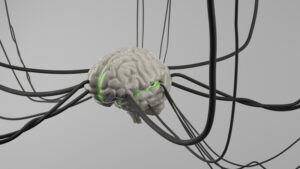
Archicortex: Unlocking the Ancient Roots of Human Emotion
Scientifically Reviewed · Dr. Marwa Abd-Alazim · August 29, 2026
Review Criteria & Clinical Standards
This content undergoes rigorous scientific peer-review and medical editorial standards at Arab Psychology Network to ensure clinical accuracy, validity, and compliance with evidence-based guidelines from leading psychological and healthcare authorities (APA / WHO).

Definition and Phylogenetic Context
The concept of the archicortex refers to the phylogenetically oldest component of the cerebral cortex, forming a crucial subdivision within the broader category known as the allocortex. This ancient neural structure is fundamentally distinct from the evolutionarily newer six-layered neocortex, which constitutes the vast majority of the human cerebral hemisphere. Specifically, the archicortex is characterized by its relatively simple, yet profoundly functional, organization consisting of precisely three distinct layers of neuronal cells and associated processes. This foundational structure reflects an early evolutionary blueprint for cortical computation, primarily dedicated to processing essential survival and memory functions before the massive expansion of associative and motor processing handled by the neocortex. Understanding the archicortex requires acknowledging its place at the very root of complex vertebrate brain development, serving as the interface between deep subcortical structures and emerging cortical integration, thereby establishing pathways critical for learning and emotional responses that persist across species boundaries. Its preservation and specialized function underscore the enduring importance of basic memory encoding and spatial orientation mechanisms.
The designation of the archicortex as the “oldest” cortex is based on comparative anatomy across various vertebrate species, suggesting that this three-layered organization was the initial form of pallial tissue responsible for higher processing. While the neocortex rapidly expanded in mammals, particularly primates, the archicortex maintained its structure and function, primarily represented by the hippocampal formation. This persistence highlights the crucial role of the archicortex in core limbic system operations, which govern fundamental aspects of survival, encompassing the emotional evaluation of stimuli and the consolidation of experiences into long-term memory. Therefore, when discussing the archicortex, one is addressing the foundational substrate upon which all subsequent, complex cortical elaborations have been built, providing a necessary context for spatial awareness and episodic recall.
Classification of the cerebral cortex generally divides the pallium into three main types based on lamination: the six-layered isocortex (neocortex), the three-layered allocortex, and the transitional periallocortex or proisocortex. The archicortex is specifically the dorsal and medial portion of the allocortex, contrasting slightly with the ventrolateral paleocortex (olfactory structures). The structural simplicity, however, belies its functional complexity. The archicortex employs sophisticated circuitry to manage input from numerous association areas, filtering and transforming this information into durable memory traces. This highly efficient, compact processing system necessitates a detailed examination of its component structures and the specific functions enabled by its three-layered architecture, which stands as an evolutionary testament to effective neural organization.
Anatomical Location and Primary Structures
The principal anatomical manifestation of the archicortex in the mammalian brain is the hippocampal formation, a C-shaped structure deeply embedded within the medial aspect of the temporal lobe. This formation is not a monolithic entity but rather a complex system comprising several interconnected components, all adhering to the three-layered architectural rule. These key components include the hippocampus proper (often referred to as Ammon’s horn, subdivided into fields CA1 through CA4), the dentate gyrus, and the subiculum. The archicortex’s strategic location places it at the nexus of major informational pathways, receiving extensive input from the entorhinal cortex, which acts as the main gateway from the neocortical association areas, allowing the archicortex to integrate diverse sensory and cognitive data necessary for memory consolidation and spatial mapping.
The topographical arrangement of the archicortex is highly specific and critical to its function. The dentate gyrus, characterized by its tightly packed granule cells, serves as the initial cortical processing stage, receiving input primarily from the entorhinal cortex via the perforant pathway. Its output then projects to the CA3 field of the hippocampus proper, forming a powerful, recurrent collateral network crucial for pattern completion and associative memory. The subsequent projection from CA3 to CA1, often called the Schaeffer collateral pathway, is one of the most studied synapses in neurobiology due to its role in Long-Term Potentiation (LTP), the cellular mechanism believed to underlie learning and memory storage. Finally, the CA1 field projects out to the subiculum, which, in turn, serves as the main output stage, relaying processed information back to the entorhinal cortex and other subcortical structures.
The archicortex’s intimate connection with the rest of the limbic system further underscores its functional importance. It maintains strong reciprocal connections with the mammillary bodies, the anterior thalamic nucleus, and the cingulate cortex, forming the pivotal neural circuit often referred to as the Papez circuit. This circuit is fundamental to emotional processing and memory retrieval, emphasizing that the archicortex is not merely a passive memory storage unit but an active integrator of emotional context and spatial information. The precise, laminar organization of the neurons within these archicortical structures ensures a directional flow of information, enabling the sequential processing necessary for transforming transient experiences into enduring memories, thereby solidifying its role as the central processing unit for episodic memory.
The Three-Layered Structure
The defining structural feature of the archicortex, distinguishing it sharply from the six-layered neocortex, is its organization into just three primary layers. This laminar simplicity is characteristic of the hippocampal formation and reflects an ancient, highly optimized organizational strategy for rapid information processing. While the naming conventions might vary slightly depending on whether one is referring to the hippocampus proper or the dentate gyrus, the fundamental organizational principle remains consistent. The three layers are typically described as the molecular layer (superficial), the pyramidal or granular layer (middle), and the polymorphic layer (deepest), each housing distinct cell types and serving specialized roles in the archicortical circuit.
The most superficial layer, the Stratum Moleculare, is analogous to Layer I of the neocortex. It is predominantly acellular, rich in dendritic arborizations, axonal projections, and glial cells. This layer is the primary recipient of afferent input from external sources, most notably the perforant path fibers originating in the entorhinal cortex. Synaptic transmission and integration of incoming signals occur extensively here, providing the initial context for the information stream. Below this lies the critical middle layer, which is the principal source of output and computation. In the hippocampus proper, this layer is the Stratum Pyramidale, densely packed with the large, characteristic pyramidal neurons—the primary projection cells. In the dentate gyrus, this middle layer is known as the Stratum Granulare, composed of tightly packed granule cells. These cells are the engines of the archicortex, initiating the internal processing sequence and exhibiting high plasticity essential for memory encoding.
The deepest layer is the Stratum Oriens or Stratum Polymorphe (also called the Stratum Multiforme). This layer is adjacent to the ventricular surface and contains a diverse population of neurons, including interneurons, GABAergic inhibitory cells, and some efferent fibers projecting out of the hippocampus. Its heterogeneity reflects its role in modulating the activity of the overlying pyramidal or granule cells, ensuring regulated and synchronous firing patterns necessary for efficient information transfer. The strict adherence to this three-layered configuration—input layer (molecular), processing/output layer (pyramidal/granular), and modulation layer (polymorphic)—provides the structural framework for the highly directional and temporally precise signal processing that characterizes archicortical function, particularly the rapid induction of LTP and subsequent memory consolidation.
Functional Significance in Memory and Emotion
The archicortex, primarily through the hippocampal formation, holds unparalleled significance in mammalian cognitive function, particularly concerning declarative memory (the memory of facts and events) and spatial navigation. Damage to archicortical structures, famously demonstrated in patients with bilateral hippocampal lesions, results in profound anterograde amnesia—the inability to form new long-term memories—underscoring its indispensable role in the initial stages of memory consolidation. It acts as a temporary buffer and integrator, transforming short-term experiences into stabilized neural representations that are later distributed and stored more permanently throughout the neocortex. This critical function involves complex interactions between the dentate gyrus, which may facilitate pattern separation (distinguishing similar experiences), and the CA3 region, which excels at pattern completion (retrieving a whole memory from a partial cue).
Beyond declarative memory, the archicortex plays a pivotal role in spatial cognition. Research has identified specialized neurons within the archicortex, known as place cells, which fire selectively when an animal occupies a specific location in its environment. These cells collectively form a cognitive map, allowing for flexible navigation and spatial memory retrieval. This spatial mapping ability is often intertwined with episodic memory, as memories of events are typically tagged with the spatial context in which they occurred. The robust and plastic synaptic connections within the three layers of the archicortex facilitate the rapid updating and maintenance of these complex spatial representations, making it a critical structure for wayfinding and environmental recognition across species.
Furthermore, the archicortex is a vital component of the limbic system, deeply implicated in the regulation of emotional states and the integration of emotion into memory formation. Stress hormones, such as glucocorticoids, have numerous receptors within the archicortex, making these structures highly sensitive to stress and emotional arousal. This sensitivity explains why highly charged emotional events are often remembered vividly—the archicortex works in concert with the amygdala to tag memories with affective valence. Chronic stress, however, can lead to structural changes, including dendritic atrophy in the CA3 region, demonstrating the vulnerability of this ancient cortex to environmental factors and its direct link to affective disorders such as depression and anxiety.
Distinction from Neocortex and Paleocortex
The classification of cortical tissue requires a clear differentiation between the archicortex, the paleocortex, and the neocortex, primarily based on their evolutionary age (phylogeny) and the number of cellular layers (cytoarchitecture). The neocortex (isocortex), which covers the majority of the cerebral hemispheres, is defined by its six distinct horizontal layers (I through VI) and is primarily responsible for higher-order sensory processing, motor control, language, and abstract thought. In stark contrast, the archicortex, as part of the allocortex, maintains its primitive three-layered structure. This architectural difference reflects divergent evolutionary pressures: the neocortex evolved for massive parallel processing and association, while the archicortex maintained a highly specialized, serial processing function dedicated to memory consolidation and spatial mapping.
The distinction between the two components of the allocortex—the archicortex and the paleocortex—is based primarily on location and function. The paleocortex is generally associated with olfactory functions and occupies the ventrolateral aspect of the telencephalon (e.g., the piriform cortex). Like the archicortex, the paleocortex typically exhibits three to four layers, classifying it as allocortical tissue. However, the archicortex’s primary involvement in the limbic system (hippocampus) dictates its specialization toward memory and emotion, whereas the paleocortex is fundamentally wired for processing primary olfactory information. Both structures represent evolutionarily old forms of cortex, but their functional domains are clearly partitioned, reflecting the necessity for highly dedicated neural machinery for processing critical sensory input (smell) and for encoding crucial survival information (memory).
The border zones between these different cortical types are occupied by transitional areas known as the periallocortex or proisocortex (e.g., the parahippocampal gyrus and the cingulate cortex). These regions exhibit intermediate characteristics, often displaying four or five layers, representing a gradual shift in cytoarchitecture from the simple allocortex to the complex six-layered isocortex. These transitional areas are highly significant because they facilitate the essential communication and information transfer between the ancient memory system of the archicortex and the extensive association areas of the neocortex. This structural gradation ensures that the highly processed information consolidated within the archicortex can be successfully integrated and stored across the vast expanse of the neocortical mantle.
Development and Ontogeny
The development, or ontogeny, of the archicortex provides further evidence of its ancient status. Archicortical structures are among the earliest to form within the developing telencephalon, preceding the complex lamination and expansion of the neocortex. During early fetal development, the neurons destined for the archicortex arise from specific proliferative zones and migrate along pathways that establish the characteristic three-layered arrangement. The formation of the hippocampal fissure and the subsequent folding of the dentate gyrus and hippocampus proper are intricate developmental processes that result in the characteristic tightly packed cellular fields seen in the mature brain.
A particularly noteworthy aspect of archicortical development is adult neurogenesis, which, in mammals, is largely confined to the subgranular zone of the dentate gyrus—a key archicortical structure. Unlike the neocortex, which generally ceases significant neuronal production shortly after birth, the dentate gyrus retains a population of neural stem cells that continuously generate new granule neurons throughout the lifespan. These newly generated neurons integrate into the existing archicortical circuitry, a process believed to be essential for certain forms of learning, mood regulation, and pattern separation. The persistence of neurogenesis in the archicortex underscores its exceptional plasticity and adaptability, mechanisms crucial for maintaining the dynamic nature of memory and spatial mapping.
Disruptions during the formation of the archicortex can have profound and lasting effects on cognitive function. Errors in neuronal migration or proliferation, often linked to genetic or environmental factors, may lead to structural abnormalities in the hippocampus that are associated with neurological disorders. For instance, subtle defects in the layering or connectivity of the archicortex have been implicated in the genesis of developmental disorders and certain forms of epilepsy. The precise temporal and spatial regulation of archicortical development is thus fundamental to establishing a healthy limbic circuit capable of supporting complex memory and emotional regulation in the adult organism.
Clinical Implications and Related Pathologies
Given its central role in memory consolidation and its high sensitivity to various biological stressors, the archicortex is frequently implicated in a range of significant neurological and psychiatric pathologies. One of the most common and devastating associations is with Alzheimer’s disease (AD). Hippocampal atrophy is one of the earliest and most consistent structural markers of AD, correlating strongly with the progressive loss of episodic memory that defines the disease. The archicortex is vulnerable to the accumulation of amyloid-beta plaques and neurofibrillary tangles, leading to widespread neuronal death, particularly in the CA1 region, which profoundly disrupts the capacity for new memory formation.
The archicortex is also centrally involved in epilepsy, particularly medial temporal lobe epilepsy (MTLE), which is the most common form of focal epilepsy in adults. A key pathological feature often observed in MTLE patients is hippocampal sclerosis, characterized by severe neuronal loss and gliosis (scarring) primarily affecting the CA1 and CA3 fields of the hippocampus. This structural abnormality disrupts the inhibitory/excitatory balance within the three-layered circuit, leading to hyperexcitability and the generation of recurrent, uncontrolled seizures. Surgical removal or ablation of the sclerotic archicortical tissue is often a highly effective treatment for intractable MTLE, further demonstrating the structure’s role as an epileptogenic focus.
Furthermore, conditions related to chronic stress, such as Post-Traumatic Stress Disorder (PTSD) and major depressive disorder, often show functional and structural changes in the archicortex. Prolonged exposure to high levels of stress hormones can lead to volume reduction in the hippocampus, impairing cognitive flexibility and enhancing emotional reactivity. This vulnerability underscores the archicortex’s role as a biological barometer of emotional well-being. Therapeutic interventions targeting these disorders often aim to restore normal archicortical function, whether through pharmacological modulation of neurotransmitters or through cognitive therapies designed to enhance the integration and processing capabilities of this ancient, three-layered memory system.