Art Therapy: Healing Through Creative Expression
Scientifically Reviewed · Dr. Marwa Abd-Alazim · August 26, 2026
Review Criteria & Clinical Standards
This content undergoes rigorous scientific peer-review and medical editorial standards at Arab Psychology Network to ensure clinical accuracy, validity, and compliance with evidence-based guidelines from leading psychological and healthcare authorities (APA / WHO).
Introduction to Arts and Crafts in Psychological Contexts
Arts and crafts refer collectively to a vast array of creative activities centered on the skillful manipulation of materials to produce tangible or aesthetic objects. These activities, which commonly involve disciplines such as painting, weaving, woodworking, pottery, and textile design, extend far beyond mere recreational pastime. Within psychological and therapeutic frameworks, engagement in arts and crafts is recognized as a powerful non-verbal medium for self-expression, emotional processing, and the enhancement of personal well-being. Unlike fine art, which often prioritizes exhibition and conceptual uniqueness, arts and crafts typically emphasize the process of creation, the utility of the resulting object, and the meditative state achieved through repetitive or focused manual labor. The therapeutic efficacy of these practices is rooted in their ability to provide structure, foster a sense of mastery, and offer a controlled outlet for emotional energy, particularly for individuals navigating states of stress, anxiety, or emotional dysregulation following significant life challenges or trauma.
Historically, the integration of manual and creative pursuits into therapeutic settings began to formalize in the early 20th century, particularly within occupational therapy programs designed to rehabilitate injured soldiers and institutionalized patients. These early applications demonstrated that purposeful activity could restore physical function and, critically, improve mental outlook and self-efficacy. Modern psychological research has confirmed these anecdotal observations, positing that the act of engaging the hands and mind simultaneously facilitates a beneficial shift in attentional focus, redirecting cognitive resources away from distressing internal narratives toward immediate, solvable, and sensory-rich tasks. This redirection is fundamental to increasing emotional functioning, as it provides a necessary temporal and psychological distance from overwhelming psychological states, allowing for stabilization and eventual integration of difficult experiences.
The definition provided in clinical settings—that of “A person engaged in arts and crafts activities in order to increase emotional functioning after a trauma”—highlights the intentional, restorative nature of these pursuits. This engagement is often self-directed or facilitated within supportive non-clinical environments, focusing on the intrinsic rewards derived from creation rather than external validation. The tangible nature of the work—the feel of clay, the resistance of wood, the patterning of thread—serves as a grounding mechanism, anchoring the individual to the present moment. This grounding is a critical intervention for trauma survivors who often experience dissociation or hyperarousal, helping them restore a sense of safety and predictability in their environment through the reliable feedback provided by the materials they manipulate.
Historical Context and Therapeutic Evolution
The formal recognition of creative manual labor as a therapeutic modality has deep roots, preceding modern psychology. Ancient cultures often incorporated rhythmic, repetitive crafts—such as weaving or basketry—into communal life, recognizing their ability to foster social cohesion and mental tranquility. However, the scientific integration of arts and crafts into health care truly began with the rise of Occupational Therapy (OT) in the wake of World War I. OT pioneers strongly advocated for the “work cure,” believing that purposeful tasks were essential for rebuilding identity and restoring dignity lost due to injury or psychological shock. Activities like carpentry, bookbinding, and mosaic work were not chosen arbitrarily; they were selected for their graded complexity and potential to structure time and provide measurable progress. This historical foundation establishes arts and crafts not just as a distraction, but as a structured pathway back toward functional independence and psychological coherence.
During the mid-20th century, as psychoanalytic and humanistic theories gained prominence, the focus shifted slightly from purely functional restoration to the expressive potential of creative activities. Humanistic psychologists, particularly figures like Carl Rogers, emphasized the inherent human drive toward self-actualization. Arts and crafts provided a concrete means for individuals to externalize internal conflicts or emotions that were too complex or painful to articulate verbally. This shift recognized that the materials themselves could become symbols, and the act of shaping them mirrored the individual’s process of shaping their own self and narrative. This theoretical framework supports the use of arts and crafts for individuals suffering from depression, anxiety disorders, and difficulties with interpersonal communication, offering a safer, less threatening space for emotional exploration than direct confrontation.
Furthermore, the development of the concept of Flow State by Mihaly Csikszentmihalyi provided a robust psychological explanation for the profound satisfaction derived from these activities. Flow, characterized by deep immersion, enjoyment, and a merging of action and awareness, is frequently achieved during complex, goal-directed craft work. The challenge inherent in a project must balance precisely with the individual’s skill level; if the task is too easy, boredom results; if too difficult, anxiety arises. Arts and crafts provide this optimal balance, encouraging focused concentration that temporarily suspends self-critical thoughts and worries, leading to a measurable reduction in physiological markers of stress, such as decreased cortisol levels and regulated heart rate variability.
The Psychological Mechanisms of Engagement
The therapeutic effectiveness of arts and crafts is underwritten by several interlocking psychological mechanisms, primarily involving attentional modulation, sensory regulation, and projective identification. A primary mechanism is the process of Attentional Shifting. Trauma and chronic stress often lead to rumination—a repetitive, intrusive focus on negative thoughts or past events. Arts and crafts demand external focus; success requires attention to texture, color, measurement, and fine motor movement. This external demand acts as a powerful interrupt for ruminative cycles, compelling the cognitive system to engage with the immediate, tangible environment. By focusing on the precise placement of a stitch or the smooth sanding of wood, the individual is effectively practicing mindful presence, a core component of many modern therapeutic approaches designed to combat anxiety and intrusive thoughts.
Another crucial mechanism is the establishment of Control and Mastery. Many psychological difficulties, especially those stemming from trauma, are characterized by a profound loss of control. Craft activities inherently provide a contained environment where the individual dictates the rules and outcomes. They choose the material, the design, and the pace. Successfully completing a complex project, even a small one, provides concrete evidence of competence and agency. This restoration of efficacy is vital for rebuilding self-esteem and challenging the helplessness often associated with psychological distress. Furthermore, the ability to physically contain and organize materials—to turn chaos into order (e.g., raw yarn into a woven pattern, disparate pieces of wood into a functional object)—can psychologically mirror the internal process of organizing and integrating fragmented emotional experiences.
Finally, arts and crafts facilitate Symbolic Expression and Externalization. For emotions that are too complex, deeply buried, or socially unacceptable to express verbally, the creative process allows for indirect communication. An individual might use dark, heavy clay to represent feelings of grief or use violent, rapid brushstrokes to express anger without causing actual harm. The resulting creation becomes a projection of the internal state, allowing the creator and, if applicable, a facilitator, to observe and process the emotion safely from a distance. This externalization is often the first step toward gaining insight into internal conflicts, providing a visual map of the psychological landscape that can then be discussed or modified through subsequent creative acts.
Therapeutic Applications: Trauma and Emotional Regulation
The application of arts and crafts is particularly salient in the treatment of individuals recovering from complex trauma and those struggling with severe emotional dysregulation, such as Borderline Personality Disorder (BPD) or Post-Traumatic Stress Disorder (PTSD). In these populations, the nervous system is often stuck in states of hyperarousal (fight/flight) or hypoarousal (freeze/dissociation). Arts and crafts serve as effective distress tolerance skills and grounding techniques. For instance, working with strongly textured materials or engaging in activities that require significant bilateral hand coordination (like knitting or pottery) stimulates the sensory system in a controlled, predictable way. This regulated sensory input helps to bring the nervous system back into the “window of tolerance,” a state where emotional processing and cognitive function are optimized.
Specific crafts are chosen based on the desired emotional outcome. Repetitive crafts, such as crocheting, beading, or intricate drawing, are highly effective for managing anxiety and hypervigilance. The predictability of the pattern and the rhythmic movement of the hands engage the parasympathetic nervous system, promoting calm. The focus required by these tasks prevents the mind from drifting back to traumatic memories or catastrophic worries. Conversely, for individuals experiencing emotional numbness or hypoarousal, crafts that require more forceful engagement or physical exertion, such as carving or large-scale sculpting, can help activate the system and connect the individual back to their physical body and immediate environment, combating feelings of depersonalization.
Moreover, arts and crafts offer a non-verbal method for narrative repair. Trauma often fragments memory and narrative continuity. By creating a physical object or image that symbolizes their journey—a piece of jewelry representing resilience, a quilt telling a fragmented story—survivors can begin to impose sequence and meaning onto chaotic experiences. The permanence of the object stands as evidence of their ability to endure and create something new, solidifying the transition from victim to survivor. This tangible product serves as a constant, positive anchor, reinforcing new, constructive self-perceptions and aiding the gradual integration of traumatic memories into a cohesive life narrative.
Classification of Arts and Crafts Modalities
The scope of arts and crafts is vast, and different modalities offer distinct therapeutic benefits based on the sensory input they provide, the cognitive demands they impose, and the motor skills they require. Understanding these classifications allows facilitators to tailor activities precisely to a client’s specific psychological needs.
- Fiber and Textile Arts (Weaving, Knitting, Quilting): These modalities are characterized by repetitive, rhythmic motion and sequencing. They are exceptionally effective for reducing anxiety, managing impulse control, and enhancing patience. The tactile sensation of the fibers is inherently grounding. Furthermore, the structure of patterns (e.g., counting stitches) provides a safe, low-stakes cognitive challenge that occupies the prefrontal cortex, diverting resources from emotional centers.
- Dimensional and Sculptural Arts (Pottery, Woodworking, Metalwork): These activities involve significant haptic feedback and physical manipulation, emphasizing the relationship between force and material response. Working with clay or wood requires resistance and physical effort, which can be cathartic for expressing internalized aggression or frustration in a controlled manner. The creation of a three-dimensional object intrinsically addresses spatial reasoning and provides a strong sense of reality testing, appealing to individuals who struggle with grounding or body awareness.
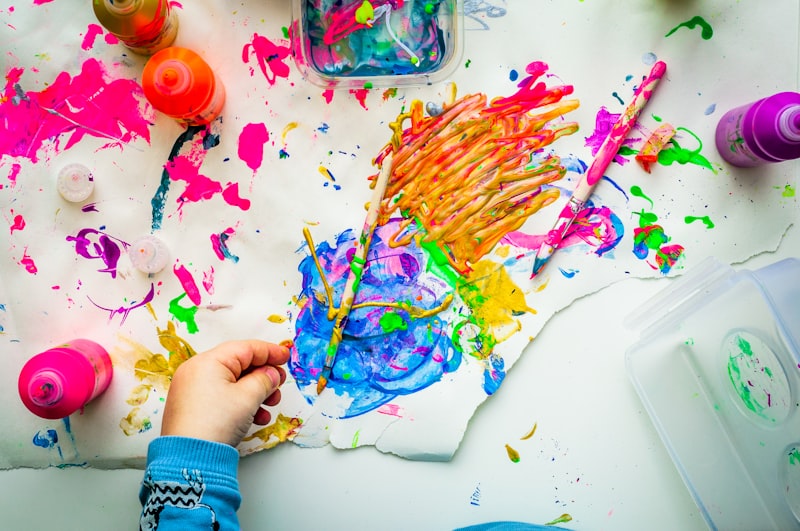
- Two-Dimensional Visual Arts (Drawing, Painting, Collage): While often associated with formal Art Therapy, drawing and painting, when used as a craft, focus on the process of color mixing, material application, and pattern creation. These are highly effective for externalizing emotions quickly and non-verbally. Collage, specifically, allows for the rearrangement of existing imagery, which is therapeutic in restructuring personal narratives or dealing with overwhelming visual information.
- Functional and Applied Crafts (Jewelry Making, Bookbinding): These activities focus on utility and precision. They are particularly beneficial for individuals needing to rebuild fine motor skills, focus on detail, and experience immediate, practical success. Creating an object that can be used or worn reinforces self-worth and provides a tangible connection to the external world.
The choice of modality is critical. For a person struggling with severe depression and low energy, a complex, physically demanding woodworking project might be overwhelming. Instead, a simple, repetitive beading task offers achievable success with minimal physical and cognitive load. Conversely, an individual experiencing intense anxiety might benefit from a craft requiring deep focus and precision, like intricate paper folding or calligraphy, forcing a high level of concentration that blocks out external worry.
Cognitive, Motor, and Neurobiological Benefits
Beyond emotional processing, engagement in arts and crafts yields measurable benefits across cognitive function, motor skills, and neurobiology, making it a holistic restorative practice. Cognitively, many crafts enhance executive functions. Tasks like following a complex pattern in knitting or planning the construction of a wooden box require sequential thinking, problem-solving, working memory, and inhibition control. These activities essentially provide a workout for the prefrontal cortex, leading to improvements in organizational skills and overall cognitive flexibility, benefits that generalize to daily life activities.
Motor benefits are equally significant, particularly in the restoration of fine motor skills and bilateral coordination. Crafts such as detailed needlework, sculpting small objects, or intricate assembly work demand precise hand-eye coordination. For individuals recovering from physical injury or those experiencing age-related decline, these activities maintain dexterity and neuroplasticity. The rhythmic, bilateral use of the hands, common in activities like weaving or kneading dough, also engages both hemispheres of the brain symmetrically, promoting interhemispheric communication and often leading to increased feelings of calm and integration.
Neurobiologically, the creative process is linked to the release of beneficial neurotransmitters. The feeling of anticipation and reward associated with progress and completion stimulates the release of dopamine, contributing to improved mood and motivation. Furthermore, studies utilizing physiological monitoring have shown that engaging in absorbing creative tasks significantly lowers levels of the stress hormone cortisol. This measurable biological stress reduction is a key factor in the long-term therapeutic utility of arts and crafts, confirming their role as a powerful tool for physiological self-regulation, particularly crucial for those suffering from chronic stress syndromes.
Differentiating Arts and Crafts from Registered Art Therapy
While arts and crafts activities are frequently utilized for therapeutic purposes, it is essential in a psychological context to draw a clear distinction between self-directed or facilitator-led arts and crafts and the clinical discipline of Registered Art Therapy. This distinction relates to training, context, and the primary purpose of the intervention.
- Training and Accreditation: Art Therapy is a distinct mental health profession requiring a Master’s degree, supervised clinical hours, and state licensure or registration (ATR). A Registered Art Therapist is trained to interpret symbolic imagery, utilize various psychological theories (e.g., psychodynamic, cognitive-behavioral), and manage complex clinical dynamics. Conversely, arts and crafts facilitators or occupational therapists utilizing crafts may have specialized training in the techniques themselves, but they are generally not trained in the deep psychological interpretation of the resulting artwork or the management of clinical symptoms arising during the creation process.
- Context and Intent: Arts and crafts activities, as discussed here, are primarily focused on skill-building, grounding, distraction, and the experience of mastery. The outcome often emphasizes the finished product or the process’s ability to regulate emotion. In contrast, Art Therapy uses the creative process and the artwork itself as the primary vehicle for psychological assessment, diagnosis, and treatment within a strict clinical relationship. The focus is less on the quality of the craft and more on the emotional content, materials choice, and narrative revealed during the session.
- Scope of Practice: Arts and crafts are highly effective as complementary, self-soothing, or occupational tools used in settings ranging from community centers to rehabilitation hospitals. Art Therapy, however, involves the clinical application of art creation to address specific, diagnosed mental, emotional, or developmental disorders under the guidance of a licensed clinician. It is a form of psychotherapy, whereas therapeutic arts and crafts are structured activities supporting mental wellness.
Misidentifying therapeutic arts and crafts as formal Art Therapy can lead to inappropriate expectations regarding clinical outcomes and can overlook the need for professional psychiatric or psychological intervention when severe symptoms are present. However, arts and crafts serve as an invaluable adjunct to formal therapy, providing clients with practical, self-administered tools for emotional management outside of the clinical hour.
Conclusion and Future Directions
Arts and crafts represent a powerful, accessible, and multifaceted approach to enhancing psychological well-being and increasing emotional functioning, particularly in the aftermath of trauma or during periods of chronic stress. These activities leverage fundamental human needs for purposeful activity, mastery, and creative expression, translating complex internal states into manageable, externalized forms. The consistent benefits—including reduced anxiety, increased feelings of control, enhanced cognitive function, and measurable neurobiological stress reduction—validate their continued use across various therapeutic and rehabilitative settings.
Future research in this area should continue to utilize neuroimaging and physiological measures (e.g., heart rate variability, fMRI) to further pinpoint the precise neural mechanisms activated during different craft modalities. Investigations into specific material properties—for instance, how the thermal or textural qualities of clay versus wood differentially impact sensory processing in populations with Autism Spectrum Disorder or sensory integration difficulties—will help refine the prescriptive application of these activities. Furthermore, expanding research into the efficacy of digital crafts (e.g., digital painting, 3D modeling) will be necessary to understand how the therapeutic benefits of traditional manual labor translate into the virtual domain, ensuring that these vital restorative practices remain relevant and accessible in an increasingly technological world.
In summary, whether the activity involves the rhythmic structure of weaving, the precision of woodworking, or the expressive freedom of painting, arts and crafts provide a fundamental pathway for individuals to reconnect with their sense of agency, regulate overwhelming emotions, and ultimately, restore balance to their psychological lives.