Associative Learning: How Your Brain Connects Your World
Scientifically Reviewed · Dr. Marwa Abd-Alazim · September 28, 2026
Review Criteria & Clinical Standards
This content undergoes rigorous scientific peer-review and medical editorial standards at Arab Psychology Network to ensure clinical accuracy, validity, and compliance with evidence-based guidelines from leading psychological and healthcare authorities (APA / WHO).
The Conceptual Foundations of Associative Learning
Associative learning represents a fundamental process in behavioral psychology through which an organism develops a connection between two disparate stimuli or between a specific behavior and a subsequent consequence. This mechanism is considered a cornerstone of adaptive behavior, allowing humans and non-human animals alike to predict future events based on past experiences and adjust their actions to optimize survival and well-being. At its core, the process involves the modification of behavior through the acquisition of new information regarding the relationships within an environment. By identifying patterns and contingencies, organisms can navigate complex ecological niches with greater efficiency, demonstrating the profound evolutionary significance of this cognitive faculty.
Historically, the study of associative learning emerged as a dominant theme within the behaviorist school of thought during the early 20th century. Pioneers in the field sought to move away from introspective methods, focusing instead on observable phenomena that could be measured and replicated under controlled laboratory conditions. The premise was that internal mental states were either non-existent or irrelevant compared to the external environmental triggers that shape an individual’s repertoire of actions. This shift toward empirical observation led to the formulation of rigorous laws governing how associations are formed, maintained, and eventually extinguished, providing a scientific framework for understanding the complexities of human and animal habits.
The significance of associative learning extends far beyond simple habit formation; it is integral to cognitive development, language acquisition, and social interaction. For instance, a child learns to associate the sound of a parent’s voice with comfort, or the sight of a hot stove with the physical sensation of pain. These associations form a mental map of the world, guiding decision-making processes and emotional responses. Furthermore, the ability to form these links is not a static trait but a dynamic capability that varies across species and developmental stages, influenced by both genetic predispositions and the richness of the surrounding environment. As such, it remains a central topic of inquiry in both psychology and neuroscience.
Classical Conditioning: The Pavlovian Paradigm
The most recognizable form of associative learning is classical conditioning, a process first detailed by the Russian physiologist Ivan Pavlov. Through his famous experiments with canine subjects, Pavlov demonstrated that a neutral stimulus could elicit a reflexive response if it was repeatedly paired with a stimulus that naturally produced that response. This discovery shifted the understanding of reflexive behavior from purely biological to include psychological influences. Classical conditioning emphasizes the predictive value of signals in the environment, where the organism learns that one event serves as a precursor to another, thereby preparing the body for the upcoming stimulus.
In this paradigm, several key components are essential for the formation of an association. The unconditioned stimulus (UCS) is a trigger that naturally and automatically evokes a response without prior learning, such as food. The unconditioned response (UCR) is the innate reaction to that stimulus, such as salivation. When a neutral stimulus (NS), such as the sound of a bell, is consistently presented immediately before the unconditioned stimulus, it eventually becomes a conditioned stimulus (CS). Consequently, the organism begins to exhibit a conditioned response (CR) to the bell alone, demonstrating that a new associative link has been successfully forged in the brain.
The nuances of classical conditioning involve processes such as stimulus generalization and stimulus discrimination. Generalization occurs when an organism responds to stimuli that are similar to the conditioned stimulus, such as reacting to a buzzer that sounds like the original bell. Conversely, discrimination is the ability to differentiate between the conditioned stimulus and other irrelevant stimuli, ensuring that the response is only triggered by the specific predictor. Another critical concept is extinction, which happens when the conditioned stimulus is repeatedly presented without the unconditioned stimulus, leading to a gradual weakening and eventual disappearance of the conditioned response, though spontaneous recovery may occur after a period of rest.
Classical conditioning plays a vital role in emotional development and the formation of conditioned emotional responses. Many human fears and phobias are believed to be the result of accidental classical conditioning, where a previously neutral object becomes associated with a traumatic or frightening event. This principle also explains why certain scents or sounds can trigger intense nostalgia or anxiety. By understanding these mechanisms, researchers have developed therapeutic techniques to “unlearn” harmful associations, highlighting the practical utility of Pavlovian principles in clinical psychology and behavioral therapy.
Operant Conditioning: The Influence of Consequences
While classical conditioning deals with involuntary reflexes, operant conditioning focuses on voluntary behaviors and how they are influenced by their consequences. Formulated largely by B.F. Skinner, this theory posits that the likelihood of a behavior being repeated is determined by whether it is followed by reinforcement or punishment. Skinner utilized specialized environments known as “Skinner Boxes” to observe how animals learned to perform specific actions, such as pressing a lever, to obtain rewards. This approach emphasizes the active role of the organism in “operating” on its environment to produce desired outcomes, making it a cornerstone of behavioral modification.
The primary mechanisms of operant conditioning are reinforcement and punishment, each of which can be positive or negative. Positive reinforcement involves the addition of a desirable stimulus following a behavior, which increases the frequency of that behavior. Negative reinforcement, often misunderstood, involves the removal of an aversive stimulus to achieve the same goal of increasing a behavior’s frequency. On the other hand, punishment aims to decrease the likelihood of a behavior. Positive punishment adds an unpleasant consequence, while negative punishment removes a preferred stimulus. The effectiveness of these interventions depends heavily on their timing and consistency.
Skinner also identified the importance of schedules of reinforcement, which dictate how and when a behavior is rewarded. These include:
- Fixed-ratio schedules: Reinforcement is provided after a specific number of responses.
- Variable-ratio schedules: Reinforcement is provided after an unpredictable number of responses, creating high rates of steady behavior.
- Fixed-interval schedules: Reinforcement is provided for the first response after a specific duration of time has passed.
- Variable-interval schedules: Reinforcement is provided after unpredictable time periods, resulting in a slow but steady rate of response.
These schedules explain various human phenomena, such as the addictive nature of gambling (variable-ratio) or the tendency to work harder just before a deadline (fixed-interval).
Through a process known as shaping, operant conditioning can be used to teach complex sequences of behavior that would unlikely occur naturally. Shaping involves reinforcing successive approximations of a target behavior, gradually requiring the subject to perform actions that more closely resemble the final goal. This technique is widely used in animal training, education, and the treatment of developmental disorders. By breaking down complex tasks into manageable associative steps, operant conditioning provides a powerful tool for behavior change and skill acquisition in diverse settings.
Cognitive Mediators and the Rescorla-Wagner Model
As the field of psychology evolved, researchers began to realize that a purely behaviorist view of associative learning was incomplete. The cognitive revolution introduced the idea that internal mental processes, such as expectation and prediction, play a crucial role in how associations are formed. Robert Rescorla and Allan Wagner proposed a mathematical model that shifted the focus from simple contiguity (events happening close together in time) to contingency (the reliability of one event predicting another). Their model suggests that learning only occurs when there is a “surprise” or a discrepancy between what is expected and what actually happens.
The Rescorla-Wagner Model explains several phenomena that traditional behaviorism could not, such as the blocking effect. Blocking occurs when a previously learned association prevents the learning of a new association for the same outcome. For example, if a dog has already learned that a light predicts food, adding a bell alongside the light will not result in the dog learning the bell-food association, because the food is already fully predicted by the light. This demonstrates that the brain is not simply recording all co-occurring events but is actively trying to identify the most informative and predictive signals in the environment.
Furthermore, latent learning—a concept pioneered by Edward Tolman—demonstrated that organisms can learn without immediate reinforcement. In his experiments with rats in mazes, Tolman showed that the animals developed a cognitive map of their environment even when no rewards were present. When a reward was finally introduced, the rats were able to navigate the maze instantly, proving that the association between locations had been stored mentally despite the lack of outward behavioral change. This highlights the distinction between learning (the internal acquisition of knowledge) and performance (the outward expression of that knowledge).
Neurobiological Underpinnings and Synaptic Plasticity
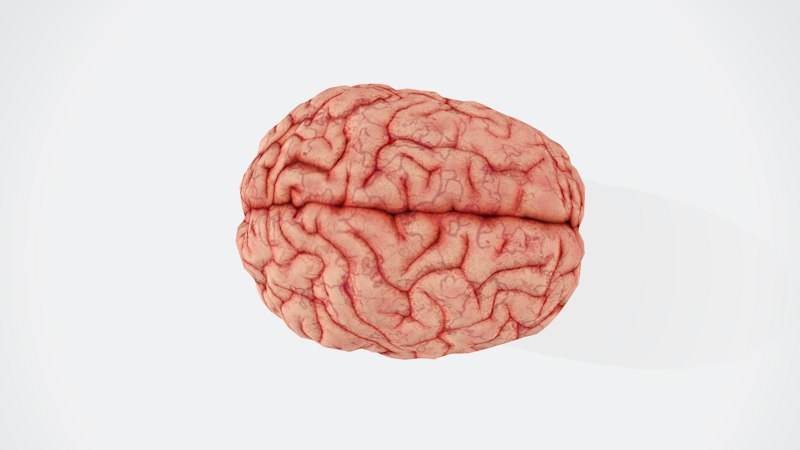
The biological basis of associative learning lies in the brain’s remarkable ability to change its structure and function in response to experience, a property known as neuroplasticity. The most influential theory in this area is Hebbian theory, summarized by the phrase “neurons that fire together, wire together.” When two neurons are repeatedly activated at the same time, the chemical and structural connection between them is strengthened. This process, known as Long-Term Potentiation (LTP), is widely considered the cellular mechanism for learning and memory storage within the hippocampus and other cortical regions.
During the formation of an association, specific neurotransmitters, most notably glutamate, play a central role. Glutamate acts on NMDA receptors, which serve as molecular coincidence detectors. For these receptors to open, they require both the release of glutamate from the presynaptic neuron and a sufficient level of depolarization in the postsynaptic neuron. This dual requirement ensures that the synaptic strength only increases when both neurons are active simultaneously, providing a physical manifestation of the associative link. Over time, these changes lead to the growth of new dendritic spines and an increase in the number of receptors, making the pathway more efficient.
Different types of associative learning involve different brain structures. While the hippocampus is critical for complex, context-dependent associations, the amygdala is the primary site for conditioned fear responses. Research has shown that damage to the amygdala can prevent an organism from learning to fear a stimulus that is paired with an electric shock, even if the organism can still remember the facts of the event. Similarly, the cerebellum is essential for motor-based classical conditioning, such as the eye-blink reflex. This localization of function underscores that associative learning is not a monolithic process but a collection of specialized systems working in concert.
Biological Constraints and Evolutionary Preparedness
Despite the versatility of associative learning, it is not an infinite process; it is constrained by the biological and evolutionary history of the species. Biological preparedness refers to the innate tendency of some organisms to learn certain associations more easily than others. This concept was famously illustrated by John Garcia through his research on conditioned taste aversion. Garcia found that rats were highly predisposed to associate a novel taste with subsequent nausea, even if the sickness occurred hours later. However, they struggled to associate the same nausea with visual or auditory stimuli, suggesting that the brain is “hard-wired” to link certain types of cues based on their ecological relevance.
These constraints ensure that learning is efficient and protective. From an evolutionary perspective, an animal that can quickly learn to avoid poisonous food after a single experience has a significant survival advantage over one that requires multiple trials. This contradicts the early behaviorist assumption of equipotentiality, which held that any stimulus could be associated with any response. Instead, we now understand that the laws of learning are filtered through the lens of natural selection, prioritizing associations that have historically contributed to the fitness of the species.
Another example of biological influence is instinctive drift, a phenomenon where an animal’s innate behaviors interfere with learned operant responses. For instance, trainers attempting to teach a raccoon to drop coins into a piggy bank found that the raccoon would instead begin to rub the coins together, a behavior related to its natural food-washing instinct. These observations serve as a reminder that associative mechanisms do not operate in a vacuum; they must compete with and integrate into the pre-existing behavioral architecture of the organism.
Clinical Interventions and Behavioral Modification
The principles of associative learning have profound implications for the treatment of psychological disorders. Behavior therapy utilizes these concepts to help patients overcome maladaptive patterns of thought and action. One of the most successful applications is exposure therapy, which is used to treat phobias and Post-Traumatic Stress Disorder (PTSD). By repeatedly exposing the patient to the feared stimulus in a safe environment without the expected negative outcome, therapists facilitate the extinction of the conditioned fear response, allowing the patient to reclaim their quality of life.
In addition to extinction-based therapies, counterconditioning is often employed to replace a negative association with a positive one. For example, systematic desensitization involves pairing a relaxation response with increasingly intense versions of a feared stimulus. This “reciprocal inhibition” prevents the anxiety response from occurring, effectively rewriting the associative link. Similarly, aversion therapy has been used to treat substance abuse by pairing the addictive substance with an unpleasant stimulus, though this method is often controversial and typically used in conjunction with other cognitive-behavioral strategies.
Operant conditioning is also widely used in institutional settings through token economies. In these systems, individuals are rewarded with tokens (secondary reinforcers) for exhibiting prosocial or desired behaviors. These tokens can later be exchanged for tangible rewards or privileges. This approach has proven effective in psychiatric hospitals, schools, and correctional facilities for managing behavior and encouraging the development of life skills. By carefully managing the contingencies of reinforcement, clinicians can foster significant and lasting behavioral change in populations that may not respond to traditional talk therapy.
Social Learning and Observational Dynamics
A significant extension of associative learning theory is social learning theory, primarily developed by Albert Bandura. Bandura argued that humans do not always need to experience consequences directly to learn; instead, they can learn through observation and imitation of others. This process, known as modeling, involves observing the associations that others form and the consequences of their actions. This type of learning acts as a bridge between behaviorism and cognitive psychology, acknowledging that we use our cognitive faculties to process social information and decide which behaviors to emulate.
Key requirements for successful social learning include:
- Attention: The learner must focus on the model’s behavior and its consequences.
- Retention: The learner must store a mental representation of the observed behavior.
- Reproduction: The learner must have the physical and cognitive ability to perform the action.
- Motivation: The learner must have a reason to perform the behavior, often driven by vicarious reinforcement.
Vicarious reinforcement occurs when a person sees a model being rewarded for a behavior, which increases the likelihood that the observer will also perform that behavior to achieve a similar reward.
The implications of social associative learning are vast, particularly regarding the impact of media, parenting, and peer groups. Bandura’s famous Bobo Doll experiment demonstrated that children who observed an adult acting aggressively toward an inflatable doll were significantly more likely to act aggressively themselves, especially if the adult was not punished. This research highlights the power of the environment in shaping normative behaviors and emphasizes the responsibility of society in providing positive models. Ultimately, associative learning is a multifaceted phenomenon that encompasses everything from the simplest cellular changes to the most complex social structures, remaining a vital area of study for understanding the essence of adaptive intelligence.