Associative Memory: How Your Brain Connects Your World
Scientifically Reviewed · Dr. Marwa Abd-Alazim · September 4, 2026
Review Criteria & Clinical Standards
This content undergoes rigorous scientific peer-review and medical editorial standards at Arab Psychology Network to ensure clinical accuracy, validity, and compliance with evidence-based guidelines from leading psychological and healthcare authorities (APA / WHO).
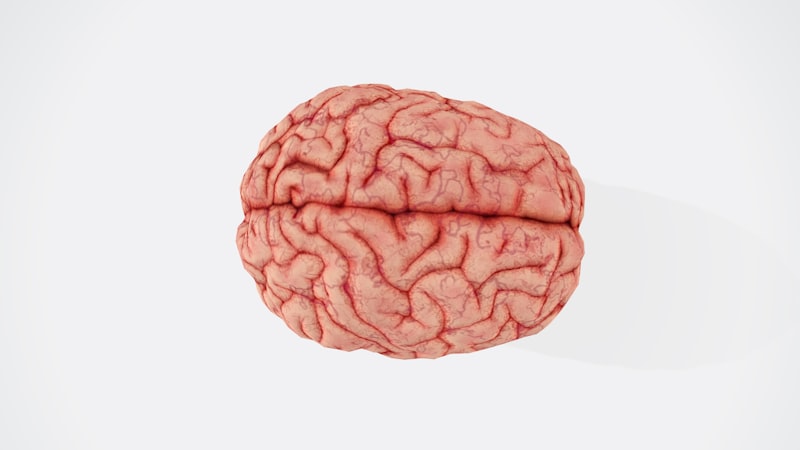
Introduction and Core Definitions of Associative Memory
Associative memory represents a foundational concept within cognitive psychology, describing the ability to mentally link two or more previously unrelated items, events, or concepts. It is the sophisticated mechanism by which the recollection of one element automatically triggers the recall of the other, forming a coherent and interconnected network of stored information within the cognitive architecture. Fundamentally, associative memory allows for the efficient organization and retrieval of complex experiences. The initial definition posits that associative memory is specifically the memory of a past event or place that may occur solely by the act of recalling something strongly associated with it. This process highlights the dynamic interplay between current sensory input and long-term memory stores, where a simple cue acts as the gateway to a rich, multifaceted recollection, ensuring the continuity and accessibility of personal history.
The conceptual framework of associative memory extends beyond simple event recall to encompass stimulus-response relationships and complex behavioral conditioning. A more technically precise definition describes associative memory as the retrieval of a memory concerning a specific stimulus or behavior in direct relation to the presentation of an associated stimulus or response. This implies a learned relationship, often established through repeated co-occurrence, where the brain establishes a robust neural pathway connecting the distinct pieces of information. For instance, if one consistently encounters a specific fragrance simultaneously with a particular location, the fragrance alone eventually gains the power to evoke the memory of that location, illustrating the powerful efficiency of associative recall and predictive coding within the memory system.
The inherent strength of these associations dictates the speed, accuracy, and completeness of memory retrieval. Weak associations typically require multiple cues or effortful, strategic processing, whereas strong, well-established links result in immediate and often involuntary recall, sometimes bordering on automaticity. This phenomenon underpins the majority of human learning, ranging from basic language acquisition, where a word (stimulus) is consistently associated with a specific meaning (response/concept), to complex social interactions, where a person’s face (stimulus) is rapidly and seamlessly associated with their name, personality traits, and shared history (memory). Understanding the precise processes governing associative memory is crucial for comprehending how individuals build comprehensive mental models of the world, navigate novel environments, and predict future events based on synthesized past experiences.
The Psychological Mechanism of Association
The underlying psychological mechanism for the formation of associative memory is deeply rooted in principles derived from classical learning theories, particularly those emphasizing contiguity and frequency. Association fundamentally requires contiguity—the close temporal or spatial proximity of the linked elements—and typically, sufficient repetition or intensity of the co-occurrence. When two stimuli, or a stimulus and a response, occur together repeatedly across time, the cognitive system begins to merge them, treating them as belonging to a unified or interconnected memory trace. This process is not merely passive storage; rather, it involves the active restructuring and strengthening of specific neural pathways. The establishment of a durable association relies heavily on the principle known as ‘Hebb’s Rule,’ often succinctly summarized as “neurons that fire together, wire together,” proposing that simultaneous activation strengthens the synaptic connection between the populations of neurons representing the associated items.
In terms of cognitive processing, associative memory relies significantly on the principle of encoding specificity. When information is initially learned and encoded into long-term memory, it is not stored in isolation but is inextricably linked with the context, mood, or other environmental details present at the time of learning. These contextual details become powerful, latent associative cues. When an individual later encounters one of these cues—such as a specific background noise, a particular lighting condition, or even an internal emotional state—the memory that was originally encoded alongside that cue is significantly more likely to be successfully retrieved. This intricate dependency on the initial encoding context explains the common experience of memories feeling inaccessible until the perfect environmental trigger is encountered, enabling the complete memory trace to surface effortlessly and completely.
Furthermore, the successful formation of strong associative memories requires deliberate cognitive engagement, involving selective attention and elaborative rehearsal. To create a durable association, the individual must allocate sufficient attentional resources to the relationship between the items being linked, filtering out irrelevant stimuli. Elaborative rehearsal, which involves actively connecting new information to existing, well-established knowledge structures, significantly enhances the strength and complexity of the association compared to simple maintenance rehearsal (rote repetition). When a person actively seeks to understand the causal or thematic relationship between item A and item B, they are effectively creating richer, multi-layered associative pathways. This elaboration increases the redundancy of potential retrieval routes and structurally safeguards the memory against common issues such as decay or interference from competing memory traces.
Types of Associative Learning
The empirical investigation into associative memory formation is inextricably linked to the study of associative learning, which is primarily categorized through two major behavioral forms: Classical Conditioning and Operant (or Instrumental) Conditioning. Classical conditioning, famously demonstrated through Ivan Pavlov’s physiological experiments, involves linking a neutral stimulus (CS, Conditioned Stimulus) with an unconditioned stimulus (UCS) that naturally and automatically elicits a response (UCR, Unconditioned Response). Through repeated, contiguous pairing, the neutral stimulus progressively acquires the power to elicit a conditioned response (CR) that mimics or anticipates the original unconditioned response. This represents a fundamental, often implicit, form of associative memory, where the core memory formed is purely predictive—the organism learns that the CS reliably predicts the imminent arrival of the UCS. For example, associating the specific sight of a dentist’s drill (CS) with past pain (UCS) leads to anticipatory muscle tension or anxiety (CR), even before the drill makes contact.
Operant Conditioning, conversely, involves learning the association between a voluntary behavior or action (response) and its subsequent environmental consequences (whether reinforcement or punishment). In this paradigm, the organism learns that performing a specific action yields a predictable outcome. This type of associative memory is focused heavily on behavioral modification, enabling the prediction of outcomes based on environmental feedback. If pressing a lever (behavior) consistently results in the delivery of a food pellet (positive consequence/reinforcement), the association between the behavior and the positive outcome is significantly strengthened, making the specific behavior far more likely to occur in similar future contexts. Both classical and operant conditioning rely completely on the formation and subsequent robust retrieval of these predictive associative memories to drive adaptive, goal-oriented behavior and ensure survival.
Beyond these primary behavioral classifications, associative memory is also critically important in the formation and retrieval of declarative memory, specifically encompassing episodic and semantic associations. Episodic associations involve binding together multiple, distinct elements of a personal event—such as the identity of participants (who), the action performed (what), the location (where), and the time (when)—into a cohesive, narrative memory trace. Semantic associations, conversely, involve linking concepts based on shared meaning, categorization, or logical relationship, such as associating the word “apple” with concepts like “fruit,” “red,” “tree,” and “healthy.” These declarative forms of association typically require higher-order, explicit cognitive processing and are consciously accessible, differentiating them from the more automatic, implicit associations formed through reflexive conditioning.
Neurobiological Basis of Associative Memory
The biological substrate responsible for encoding, consolidating, and retrieving associative memory is primarily localized within key structures of the medial temporal lobe, particularly involving the hippocampus and the amygdala, and fundamentally relies on enduring modifications at the synaptic level. The hippocampus is unequivocally critical for the formation of new declarative associations, especially those involving complex relational binding, context, and spatial information. Extensive research indicates that damage or dysfunction to this structure severely impairs the ability to link new, arbitrary pieces of information together (e.g., a name and a face), resulting in profound anterograde amnesia. However, the fact that previously formed remote associations often remain intact suggests that the hippocampus is chiefly involved in the initial rapid encoding and subsequent consolidation phases, rather than the long-term storage of the fully consolidated association.
The cellular mechanism most widely accepted as the physical foundation for associative memory storage is Long-Term Potentiation (LTP). LTP describes a persistent, long-lasting increase in the efficacy or strength of synaptic transmission following a brief period of high-frequency stimulation of that synapse. This sustained potentiation is widely believed to be the physical manifestation of Hebbian learning, where the simultaneous and repeated activation of pre- and post-synaptic neurons leads to biochemical and structural changes that render the transmission across that specific synapse permanently more efficient in the future. The biological capability of neurons to maintain this dramatically enhanced connectivity allows the brain to physically store the newly formed association between two separate informational inputs for extended periods.
Furthermore, the amygdala plays a specialized and crucial role specifically in forming associations involving intense emotional valence, particularly those related to fear and threat assessment. In fear conditioning paradigms, the amygdala rapidly and robustly links a neutral stimulus with an aversive or painful outcome, creating exceptionally powerful, long-lasting emotional associative memories. This emotional tagging mechanism ensures that potentially harmful cues are prioritized for rapid and involuntary retrieval, demonstrating how distinct brain regions specialize in processing and associating specific types of information (e.g., emotional vs. contextual) to optimize survival and adaptive response capabilities in dynamic environments.
Role in Cognitive Functions and Retrieval Cues
Associative memory is not merely a specialized function but acts as the fundamental bedrock for nearly all higher-order cognitive capabilities, including fluent language processing, deductive reasoning, and complex problem-solving. Language comprehension, for instance, requires the lightning-fast and fluid association between phonetic sounds, abstract written symbols, and underlying semantic meanings. When an individual encounters the word “dog,” the associative network instantly retrieves the associated image, sound, taxonomic category (“mammal”), and related concepts (“leash,” “bark,” “pet”). Any significant breakdown in this underlying associative ability severely impairs communication, reading, and general comprehension, underscoring its absolutely central role in human intellect.
The practical efficacy of associative memory is profoundly dependent on the quality and potency of retrieval cues. A retrieval cue is defined as any sensory input or cognitive element that helps access a specific target memory. These cues can be entirely internal (such as a specific mood, a transient thought, or a somatic sensation) or entirely external (such as a sight, a distinctive sound, or a specific smell). The classic example illustrating the power of a strong association is when a person associates the sight of a given restaurant with the profound memory of his first girlfriend, thus immediately recollecting an associative memory. In this highly effective scenario, the visual stimulus of the restaurant serves as an exceptionally potent external cue, bypassing the need for an exhaustive, slow memory search and instantly activating the complex, multi-faceted memory trace related to the past relationship.
The psychological principle of cue-dependent forgetting highlights the critical reliance on these associations; in these instances, the memory content itself may not be permanently lost, but the neural pathway or access route to retrieve it (the association) is temporarily inaccessible because the appropriate cue is absent from the current environment. Techniques specifically designed to improve memory performance, such as various mnemonic devices and the Method of Loci, often work by deliberately creating bizarre, vivid, or novel associations between items. This intentional strategy ensures that the initial encoding provides multiple, robust, and often unusual retrieval pathways, dramatically increasing the likelihood of successful and effortless future recall across varying contexts.
The Influence of Context and Emotional Valence
Context serves as a pervasive, powerful, and often implicit associative cue, greatly influencing both the initial encoding and the subsequent retrieval efficiency of memories. Context can manifest in many forms: it can be environmental (the specific room or lighting where studying occurred), physiological (the state of alertness or fatigue during learning), or even pharmacological. The well-documented phenomenon known as context-dependent memory illustrates empirically that memories encoded in a highly specific environment are often retrieved significantly more effectively when the individual is returned to that exact or similar environment. The peripheral environmental features become automatically and implicitly associated with the learned material, forming a massive, integrated associative cue that substantially facilitates recall.
Similarly, the degree of emotional valence deeply modulates the formation and longevity of associative memory. Highly emotional events, regardless of whether they are positive (joy) or negative (fear/trauma), are typically remembered with far greater clarity, vividness, and detailed precision than neutral events. This enhancement is attributed to the release of stress hormones (like cortisol and adrenaline), which, working synergistically with the amygdala, significantly enhance the synaptic consolidation process within the hippocampus. Memories associated with strong emotional arousal therefore form exceptionally robust, often seemingly indelible, traces. This mechanism explains the existence and characteristic vividness of flashbulb memories—highly detailed, quasi-photographic memories of emotionally catastrophic public or personal events—where the acute emotional shock acts as an unusually powerful and pervasive associative tag.
However, the existence of strong emotional associations can also lead to significant clinical challenges. In conditions such as Post-Traumatic Stress Disorder (PTSD), seemingly innocuous or neutral stimuli (e.g., a car backfiring, a specific cologne, or a certain texture) become pathologically over-associated with the original traumatic event, acting as overwhelming, involuntary retrieval cues that trigger intense distress, hyperarousal, and the re-experiencing of the trauma. The primary therapeutic goal in these clinical situations often involves weakening or extinguishing these maladaptive emotional associations through controlled exposure and systematic re-learning, aiming to replace the fearful association with a neutral or safe one.
Challenges and Failures in Associative Recall
While associative memory is highly efficient and adaptive, its processes are not infallible and are subject to several common types of failure, primarily resulting from interference or the natural process of memory decay. Interference occurs when multiple, competing associations are linked to the same retrieval cue, making it difficult to isolate the target memory. Proactive interference arises when previously learned associations hinder the successful retrieval of newer ones, while retroactive interference occurs when recently acquired associations disrupt the retrieval of older, established ones. For instance, trying to recall an old, rarely used phone number (the target memory) might be exceedingly difficult because the cue (the concept of ‘phone number’) is strongly and habitually linked to the currently used number (a powerfully competing association).
A particularly challenging failure mode in associative recall is the phenomenon of source monitoring errors, which occurs when the association between the memory content itself and its original source (where, when, or from whom the information was learned) is weak, degraded, or entirely misplaced. This cognitive error results in misattributing a memory, such as accurately recalling a piece of information but mistakenly believing it was learned from a trusted friend when it was actually learned from a sensationalist newspaper headline. Source memory is generally considered more fragile and highly susceptible to decay, as it relies on complex, contextual, and often fleeting associations that can easily degrade over the passage of time or under conditions of high cognitive load during encoding.
Furthermore, associative memory demonstrates a specific vulnerability to age-related decline. Research consistently shows that as individuals age, the ability to rapidly form and accurately retrieve associations between arbitrary, unrelated items (e.g., specifically linking a new person’s name to their face) often diminishes earlier and more significantly than the ability to simply recall the individual items themselves (e.g., recalling the name or recalling the face in isolation). This specific vulnerability highlights the computational complexity required to bind distinct pieces of information together into a unified, coherent associative trace, a binding process that is critically dependent upon the efficient integrity and optimal functioning of the hippocampal circuit.
Clinical and Practical Applications
The fundamental principles governing associative memory have profound and wide-ranging implications across various applied fields, notably in education, commercial marketing, and clinical psychology. In educational settings, effective instruction relies fundamentally on creating strong, meaningful associations between new, unfamiliar concepts and existing, well-established knowledge structures, utilizing pedagogical techniques such as concept mapping, analogy, and illustrative examples to build durable cognitive networks. Effective teaching strategies maximize the opportunity for students to encode information associatively, thus ensuring multiple, robust, and diverse pathways for successful future retrieval, moving beyond simple rote memorization.
In the highly competitive fields of marketing and advertising, the core goal is almost invariably to establish powerful, positive associative links between a specific product (the conditioned stimulus) and highly desired emotional states or aspirational concepts (the conditioned response). Advertisers skillfully utilize evocative music, recognizable imagery, and celebrity endorsements to deliberately create conditioned associations, ensuring that the mere, fleeting sight of the product logo or brand name instantly triggers the intended positive consumer response or purchasing impulse. This strategic manipulation of implicit associative memory is a powerful driver of purchasing behavior, brand recognition, and long-term brand loyalty among consumer populations.
Clinically, addressing and restructuring dysfunctional associative memories is central to the efficacy of contemporary behavioral therapy. Cognitive Behavioral Therapy (CBT) and targeted exposure therapies aim explicitly to modify or restructure maladaptive associations. For instance, in the systematic treatment of phobias, exposure therapy repeatedly presents the feared stimulus (the cue) in a safe, controlled environment without the anticipated negative outcome, allowing the brain to learn a new, non-fearful association—a process known as extinction learning. By thoroughly understanding and strategically manipulating the rules governing how memories are linked and retrieved, psychologists can effectively treat conditions ranging from debilitating anxiety disorders and complex phobias to various forms of addiction, underscoring the vital, pervasive importance of associative memory in both normative and pathological psychological functioning.