Associative Thinking: Unlock Your Mind’s Hidden Potential
Scientifically Reviewed · Dr. Marwa Abd-Alazim · October 4, 2026
Review Criteria & Clinical Standards
This content undergoes rigorous scientific peer-review and medical editorial standards at Arab Psychology Network to ensure clinical accuracy, validity, and compliance with evidence-based guidelines from leading psychological and healthcare authorities (APA / WHO).
Introduction to Associative Thinking
Associative thinking is a fundamental cognitive process that underpins much of human thought, learning, and creativity. At its core, it refers to the mind’s inherent ability to mentally form connections or links between seemingly disparate events, objects, concepts, or ideas. This capacity allows individuals to move beyond isolated pieces of information, integrating them into a coherent network of understanding. It is not merely about recalling related facts but actively constructing new relationships and insights, enabling the synthesis of existing knowledge to form novel understandings or solutions. This intricate mental activity is widely regarded as an indispensable precursor and facilitator for the development of more complex higher-order thinking skills, which are crucial for navigating a complex world and engaging in abstract reasoning.
The importance of associative thinking extends across virtually every facet of cognitive function, from basic perception and memory to sophisticated problem-solving and artistic expression. It allows us to infer, predict, and innovate by drawing upon past experiences and knowledge, connecting them to present circumstances. Without the ability to form associations, our understanding of the world would remain fragmented, limited to the immediate sensory input rather than building a rich, interconnected mental model. This entry will delve into the mechanisms, historical context, practical implications, and broader significance of associative thinking, illustrating its profound impact on individual development and societal progress.
The Fundamental Mechanism of Association
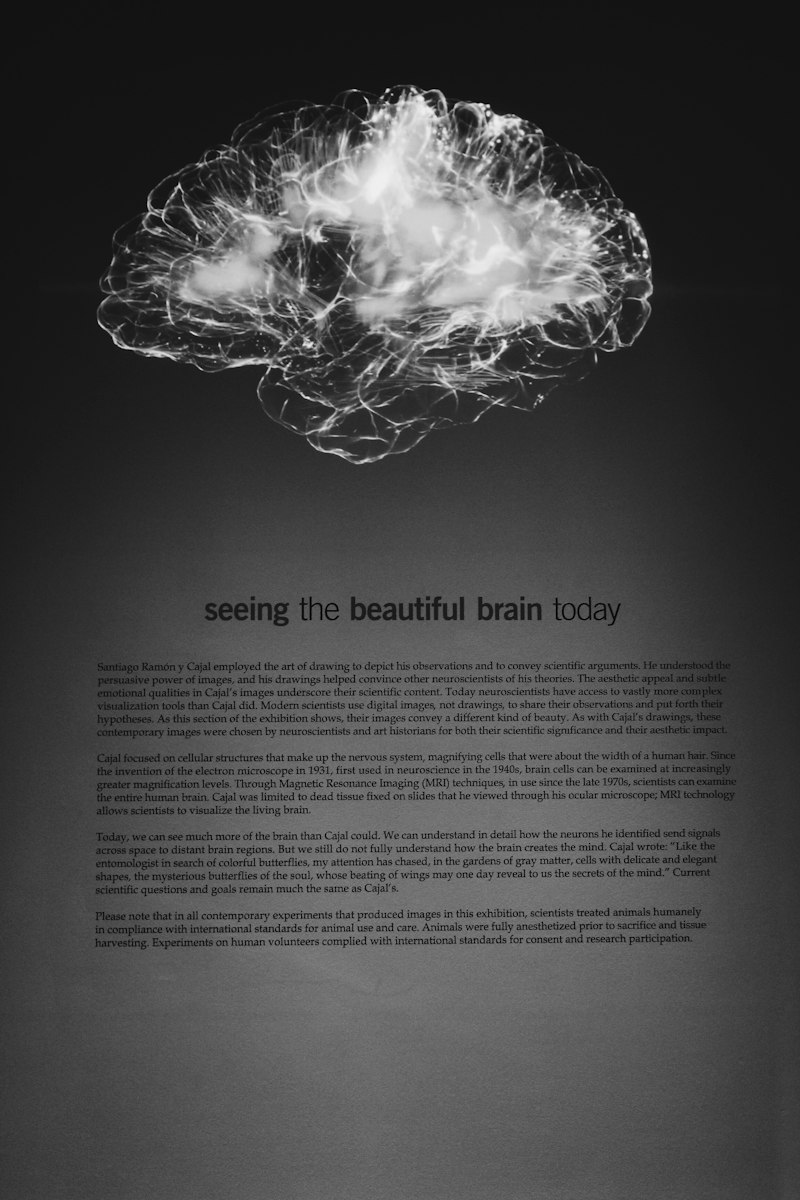
The fundamental mechanism behind associative thinking involves the brain’s capacity to create and strengthen neural pathways between different pieces of information. When two ideas, sensations, or experiences occur together repeatedly, or when they share salient features, a mental link is forged. This link allows the activation of one element to automatically or semi-automatically bring forth the other into conscious awareness. For instance, the smell of fresh bread might evoke memories of a grandmother’s kitchen, or seeing a specific color might trigger a particular emotion. These connections are not always logical or direct; they can be based on contiguity (occurring together in time or space), similarity (sharing common attributes), or even contrast (being opposite but related).
This process enables concept formation, where individual experiences coalesce into broader categories, and abstract reasoning, where ideas are connected based on underlying principles rather than concrete observations. The brain’s architecture, particularly the intricate web of neural networks, is naturally predisposed to forming these associations, constantly updating and refining them based on new learning and experiences. Through this dynamic process, our mental landscape becomes a vast, interconnected web where every piece of information has the potential to be linked to countless others, forming the basis for flexible and adaptive thought.
The strength and accessibility of these associations can vary, influenced by factors such as the emotional salience of the experience, the frequency of co-occurrence, and the depth of processing during initial encoding. Strong associations lead to rapid and effortless retrieval of related information, while weaker ones may require more deliberate effort. This intricate interplay of mental connections allows for both the efficiency of habitual thought and the novelty of creative insights, making associative thinking a cornerstone of human cognition.
Historical Roots and Early Concepts
The concept of association has a rich history, tracing its origins back to ancient Greek philosophy, particularly with Aristotle, who proposed laws of association based on contiguity, similarity, and contrast. However, it was during the 17th and 18th centuries, with the rise of empiricism, that associationism truly began to take shape as a philosophical and psychological doctrine. Thinkers like John Locke and David Hume argued that all knowledge is derived from sensory experience, and complex ideas are formed by associating simple ideas. This foundational view posited that the mind, initially a “tabula rasa” or blank slate, accumulates knowledge through the formation of connections between various sensory inputs.
In the 18th century, David Hartley further developed associationism, suggesting a physiological basis for associations in the brain through vibrations. Later, in the 19th century, James Mill and his son John Stuart Mill articulated a more detailed theory of association, with John Stuart Mill introducing the idea of “mental chemistry,” where complex ideas are not just sums of simple ideas but new entities formed from their association, much like chemical compounds. This period saw associationism become a dominant paradigm in early psychology, laying the groundwork for experimental investigations into learning and memory.
The influence of associationism extended into the 20th century, profoundly impacting the development of behaviorism. Researchers like Ivan Pavlov, with his work on classical conditioning, and B.F. Skinner, with operant conditioning, demonstrated how behaviors are learned through the association of stimuli and responses, or responses and consequences. Although cognitive psychology later challenged the purely behavioral focus, the core principle of association remained central to understanding how information is organized, stored, and retrieved in the mind, evolving into contemporary theories of semantic networks and connectionism.
Associative Thinking and Cognitive Development
Associative thinking plays a profoundly beneficial role in various aspects of cognitive development, acting as a catalyst for growth in critical intellectual domains. One of its most significant contributions is to the enhancement of problem-solving skills. Individuals with a robust capacity for forming associations between seemingly unrelated ideas are better equipped to approach challenges from multiple perspectives, generate innovative hypotheses, and ultimately devise creative solutions. Research indicates that the ability to connect diverse concepts allows for a more flexible mental search space, enabling the identification of non-obvious pathways to resolution, a key characteristic of expert problem solvers.
Furthermore, associative thinking is instrumental in fostering creativity. The essence of creative thought often lies in the novel combination of existing elements. By effortlessly linking disparate concepts, individuals can generate original ideas, metaphors, and insights that might otherwise remain inaccessible. This involves both divergent thinking, where many different ideas are explored from a single starting point, and the subsequent convergence to select the most promising associations. Studies consistently show a strong correlation between an individual’s associative fluency and their creative output across various domains, from artistic expression to scientific discovery.
Another crucial area where associative thinking demonstrates immense benefit is in language acquisition. Learning a language involves much more than memorizing individual words; it requires understanding the intricate relationships between words, concepts, grammatical structures, and their contexts. Strong associative thinking skills enable learners to grasp how words relate to objects, actions, and other words, forming a rich semantic network that facilitates comprehension and expression. This ability to form connections helps in discerning patterns in syntax, semantics, and pragmatics, accelerating the process of becoming proficient in a new language and deepening understanding of one’s native tongue.
Practical Applications and Everyday Examples
The pervasive influence of associative thinking is evident in numerous practical applications and everyday scenarios, illustrating its role in our daily lives. Consider the simple act of remembering a grocery list without writing it down. Instead of rote memorization, one might associate each item with a vivid image or link it to a specific part of their house. For instance, associating “milk” with the bathtub overflowing, “bread” with a pillow on the couch, and “eggs” with a lightbulb in the kitchen. This deliberate creation of unusual and memorable associations significantly enhances recall, demonstrating how we leverage our associative capacity for practical memory tasks.
In a more complex scenario, imagine a product designer tasked with creating a novel solution for urban commuting. Instead of focusing solely on existing vehicles, an individual employing strong associative thinking might link concepts from seemingly unrelated fields. They might associate the flexibility of a bicycle with the stability of a scooter, the energy efficiency of an electric motor with the compact design of folding furniture, and the data-driven insights of smart technology with user navigation. This process of drawing connections across diverse domains allows for the synthesis of new ideas, potentially leading to an innovative, multi-modal personal transport system that addresses contemporary urban challenges.
Even in social interactions, associative thinking is at play. When encountering a new person, we unconsciously associate their mannerisms, appearance, or speech patterns with past experiences or known individuals, which influences our initial impressions and conversational flow. Similarly, when trying to understand a complex news story, we connect new information to our existing knowledge base, forming associations that help us grasp the broader context and implications. These examples highlight how associative thinking is not just a high-level cognitive skill but a constant, underlying process that helps us make sense of the world and interact effectively within it.
Significance, Impact, and Contemporary Relevance
The significance of associative thinking within the field of psychology and beyond cannot be overstated, as it forms a bedrock for understanding how individuals learn, adapt, and innovate. Its importance stems from its role in facilitating the construction of coherent mental models, allowing individuals to integrate new information into existing knowledge structures. This adaptability is critical for navigating an ever-changing environment, enabling flexible responses to novel situations and fostering continuous learning throughout the lifespan. Without the ability to form and utilize associations, our cognitive systems would struggle to make predictions, infer relationships, or generalize knowledge from one context to another, severely limiting our capacity for intelligent behavior.
In contemporary society, the impact of associative thinking is evident in numerous applied fields. In the realm of therapy, particularly in approaches like Cognitive Behavioral Therapy (CBT), understanding maladaptive associations between thoughts, emotions, and behaviors is crucial. Therapeutic interventions often aim to help clients identify these unhelpful links and develop new, healthier associations. In marketing and advertising, the strategic creation of positive associations between a product and desirable attributes, lifestyles, or emotions is a key driver of consumer behavior and brand loyalty. Marketers meticulously craft campaigns that link their offerings to concepts like happiness, success, or social status, leveraging the power of associative thought to influence purchasing decisions.
Furthermore, associative thinking is a core principle in education, where teaching methods often encourage students to make connections between new material and their prior knowledge, or between different subjects, to deepen understanding and enhance retention. Techniques like analogies, metaphors, and cross-curricular projects are designed to stimulate associative thought. Beyond human cognition, the principles of association are fundamental to the development of Artificial Intelligence and machine learning, where algorithms are designed to identify patterns and form associations within vast datasets, enabling systems to learn, predict, and perform complex tasks, from image recognition to natural language processing.
Related Concepts and Broader Psychological Fields
Associative thinking is intricately linked to several other key psychological concepts and forms a foundational element within various subfields of psychology. It is often discussed in conjunction with divergent thinking, which involves generating multiple unique ideas from a single prompt, a process heavily reliant on the ability to make broad and varied associations. Its counterpart, convergent thinking, which focuses on arriving at a single, best solution, often utilizes associative links to narrow down options based on relevance and effectiveness. The cognitive structures that organize these associations are often conceptualized as schema theory or semantic networks, which are mental frameworks that categorize and interlink related concepts, allowing for efficient information processing and retrieval.
The phenomenon of priming is another closely related concept, where exposure to one stimulus influences the response to a subsequent stimulus, often due to pre-existing associations. For example, hearing the word “doctor” might prime you to respond more quickly to the word “nurse” than to “bread.” Moreover, the entire field of conditioning, encompassing both classical and operant conditioning, is essentially built upon the principles of association, demonstrating how organisms learn to link stimuli with responses or behaviors with consequences. These mechanisms highlight the automatic and often unconscious ways associations shape our perceptions, thoughts, and actions.
Broadly, associative thinking is a central topic in Cognitive Psychology, which investigates mental processes such as memory, perception, problem-solving, and language. However, its relevance extends to Developmental Psychology, examining how associative abilities emerge and evolve throughout the lifespan; Educational Psychology, informing strategies for effective teaching and learning; and Social Psychology, where associations contribute to the formation of attitudes, stereotypes, and social judgments. Furthermore, the underlying neural mechanisms of association are a key area of study in Neuroscience, exploring how synaptic connections in the brain facilitate these fundamental cognitive links.
Strategies for Enhancing Associative Thinking
Given the profound impact of associative thinking on cognitive development and daily functioning, various strategies have been identified and developed to enhance this crucial skill. One of the most widely recognized and effective techniques is brainstorming. This method encourages individuals or groups to generate a large quantity of ideas in a free-flowing, non-judgmental manner, typically in response to a specific problem or topic. By suspending criticism and encouraging wild ideas, brainstorming naturally fosters the creation of numerous associations, often leading to unexpected connections and innovative solutions. The emphasis is on quantity, as a greater number of ideas increases the likelihood of stumbling upon novel and valuable associations.
Concept mapping is another powerful visual strategy for improving associative thinking. This technique involves creating graphical representations of knowledge, where ideas, concepts, and facts are arranged hierarchically or networked, and relationships between them are indicated by labeled lines or arrows. By visually mapping out connections, individuals are able to identify existing associations, uncover new ones, and restructure their understanding of a topic in a more integrated and meaningful way. This process helps to clarify complex information, reveal underlying structures, and strengthen the neural pathways associated with these linked concepts, thereby enhancing both recall and deeper comprehension.
Finally, mental imagery serves as an effective tool for bolstering associative abilities. This involves consciously creating vivid mental pictures or scenarios to link different pieces of information. For instance, when trying to remember a new vocabulary word, one might form a mental image that connects the word’s sound or meaning to an already familiar concept. Similarly, using visualization during problem-solving can help in exploring different possibilities and identifying connections that might not be apparent through purely verbal reasoning. The act of creating a strong, multi-sensory mental image helps to solidify the association, making it more robust and accessible for future retrieval, thereby enriching one’s associative capacity. Other related techniques include free association, journaling, and engaging in diverse experiences that expose one to varied stimuli, all of which encourage the brain to forge new connections.
Conclusion
In conclusion, associative thinking stands as a cornerstone of human cognition, an indispensable ability that empowers individuals to forge meaningful connections between diverse concepts, events, and objects. This fundamental process is not merely about recalling related information but actively constructing new insights and understandings, proving essential for the development of higher-order cognitive skills such as problem-solving, creativity, and language acquisition. From its philosophical roots in ancient Greece and its emergence in empiricism, through its influence on behaviorism, to its central role in modern cognitive psychology, the concept of association has consistently provided a framework for understanding how knowledge is acquired, organized, and utilized.
The pervasive impact of associative thinking is evident in numerous aspects of daily life, from memory recall and learning to complex decision-making and innovation. Its principles are actively applied in fields as varied as therapy, marketing, education, and artificial intelligence, demonstrating its profound relevance in shaping individual behavior and societal progress. Furthermore, understanding its mechanisms illuminates connections to other critical psychological concepts such as schema theory, priming, and divergent thinking, placing it squarely within the broader landscape of cognitive, developmental, and social psychology, as well as neuroscience.
Fortunately, this vital cognitive skill is not static but can be actively cultivated and enhanced through deliberate strategies. Techniques like brainstorming, concept mapping, and mental imagery provide tangible pathways for individuals to strengthen their associative networks, thereby fostering greater intellectual flexibility, creative output, and adaptive problem-solving abilities. Ultimately, recognizing and nurturing associative thinking is paramount for optimizing human potential, enabling continuous learning, and driving innovation in an increasingly complex and interconnected world.