Visual Fatigue: Why Your Eyes Tire and How to Reset
Scientifically Reviewed · Dr. Marwa Abd-Alazim · October 19, 2026
Review Criteria & Clinical Standards
This content undergoes rigorous scientific peer-review and medical editorial standards at Arab Psychology Network to ensure clinical accuracy, validity, and compliance with evidence-based guidelines from leading psychological and healthcare authorities (APA / WHO).
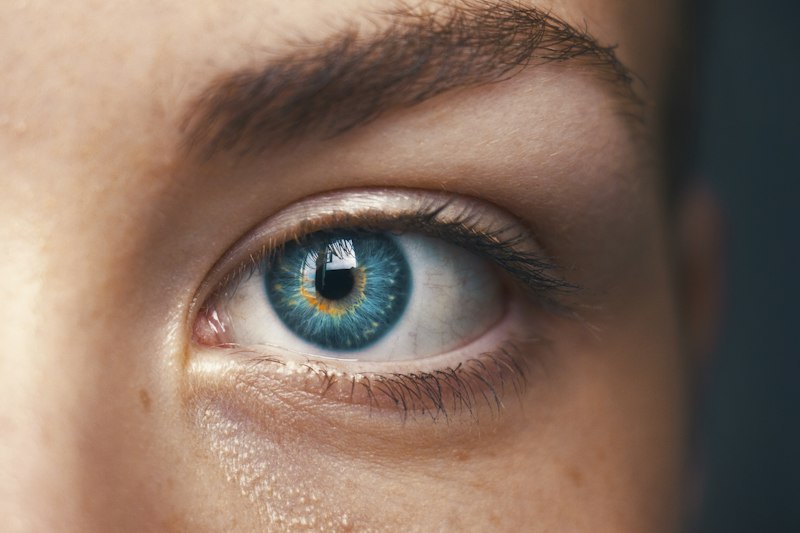
Asthenopia, commonly known as eye strain or visual fatigue, is defined as a constellation of uncomfortable ocular symptoms resulting from intense or prolonged use of the eyes, particularly during demanding visual tasks. It is not a disease in itself, but rather a set of symptomatic complaints related to the effort required by the visual system to maintain clear and comfortable sight. These symptoms typically include eyestrain, generalized headaches, transient blurred vision, and occasionally, diplopia (double vision). The fundamental mechanism underlying Asthenopia is the disparity between the visual demands placed upon an individual and the physiological capacity of their visual system to meet those demands comfortably over an extended period.
The core idea behind this concept is the physiological overload of the accommodative and vergence systems of the eye. When focusing on near objects—such as a book or a digital screen—the eye muscles, specifically the ciliary muscles responsible for changing the lens shape (accommodation) and the extraocular muscles responsible for coordinating eye movement (vergence), must continuously contract. If these muscles are stressed for too long, they fatigue, similar to how any skeletal muscle would after intense, sustained effort. This constant muscular effort leads directly to the symptomatic experience of visual fatigue, manifesting as pain, dryness, and difficulty maintaining focus, which often prompts the user to cease the task.
Furthermore, the characteristics of modern visual tasks exacerbate this strain. Unlike reading printed material where the contrast is stable and the eye movements are sweeping, digital screens present unique challenges. These challenges include fixed viewing distances, reduced blink rates leading to increased ocular surface dryness, and the inherent flicker or brightness variations of the display. Understanding this mechanism is crucial for both diagnosis and effective management, emphasizing that asthenopia is primarily a functional problem related to ergonomic and behavioral factors rather than a primary pathological condition of the eye structure.
Historical Understanding and Context
While the term Asthenopia and the symptoms of eye strain have become highly associated with digital device usage in the 21st century, the concept of visual fatigue has roots stretching back well before the invention of computers. Early ophthalmologists and optometrists recognized the condition in the 19th and early 20th centuries, primarily among individuals engaged in tasks requiring fine, sustained near-vision work, such as drafting, typesetting, fine sewing, or intense reading under inadequate lighting. Figures like Hermann von Helmholtz, who studied the physiology of accommodation, laid the groundwork for understanding the muscular mechanics involved in visual focusing, which are central to asthenopia.
The early clinical understanding focused heavily on uncorrected refractive errors—such as hyperopia (farsightedness) or mild astigmatism—as the primary cause of strain, necessitating excessive accommodative effort even for distant vision. Researchers discovered that even small, uncorrected vision deficiencies could lead to significant symptoms when compounded by hours of continuous near work. This historical context demonstrates that asthenopia is an ancient problem, but its prevalence and specific triggers have shifted profoundly with technological advancement, moving the focus from purely refractive causes to environmental and ergonomic contributors.
The true explosion in asthenopia research and public awareness occurred following the widespread adoption of Cathode Ray Tube (CRT) monitors in office environments in the 1980s, and accelerated dramatically with the proliferation of personal computers, laptops, and later, smartphones and tablets. This shift necessitated the creation of new clinical classifications and research areas, leading to the coining of terms like Computer Vision Syndrome (CVS) or, more recently, Digital Eye Strain, to specifically address the unique challenges posed by screen-based tasks. The historical trajectory of asthenopia illustrates a clear link between societal visual demands and the evolution of occupational health and optometric practice.
Primary Causes and Etiology
The etiology of asthenopia is multifactorial, generally categorized into refractive, muscular (accommodative/vergence), and environmental factors. As highlighted in current research, the most common trigger today is the prolonged use of digital devices, including computers and mobile phones. This sustained near-work demands constant focusing effort. Crucially, the amount of time spent engaging with these devices is a significant factor; prolonged, uninterrupted screen time dramatically increases the likelihood of symptom onset. Furthermore, the distance of the device from the user’s eyes is critical; maintaining a very close viewing distance forces the accommodative system to work harder, accelerating muscle fatigue.
Beyond the devices themselves, several environmental and behavioral factors contribute significantly to the development and severity of asthenopia. Incorrect viewing angles—such as looking up at a screen—can widen the palpebral fissure, increasing tear evaporation and leading to associated dry eye symptoms, which often mimic or worsen asthenopia. Similarly, improper posture, where the neck and shoulders are strained, can contribute to tension-type headaches that are frequently reported alongside eye pain. Perhaps most overlooked are incorrect lighting levels; glare from bright windows or harsh overhead lighting reflecting off the screen, or conversely, working in a dimly lit room where the screen is the dominant light source, forces the pupil to constrict or dilate excessively, adding further strain to the visual system.
A key underlying physiological component involves the suppression of the natural human blink reflex during concentrated screen time. A normal blink rate is approximately 15 to 20 blinks per minute; however, studies show that during tasks requiring high cognitive load, such as reading text on a screen, the blink rate can drop by 50% or more. This reduction in blinking leads to inadequate lubrication of the cornea, resulting in ocular surface irritation, burning, and the sensation of foreign bodies in the eye. Thus, asthenopia is often not just muscle fatigue, but a combined syndrome involving accommodative strain, vergence dysfunction, and ocular surface disease.
Manifestation and Symptomology
The symptoms of asthenopia can be highly varied in intensity and presentation, but they generally fall into three categories: ocular discomfort, visual disturbance, and extraocular symptoms. Ocular discomfort often includes pain or aching in or around the eyes, a feeling of burning or grittiness, and redness. Many individuals report a specific sensation of “heaviness” or fatigue, particularly noticeable when attempting to shift focus from the screen to a distant object. These symptoms tend to worsen progressively throughout the day, often peaking late in the afternoon or evening after several hours of continuous visual work.
Visual disturbances represent the functional breakdown of the visual system under stress. The most common disturbance is transient blurred vision, where the ability to maintain sharp focus wavers, requiring the individual to momentarily close their eyes or look away to “reset” their focus. In more severe cases, often associated with vergence control issues, patients may experience diplopia (double vision) or difficulty tracking moving objects. Furthermore, some individuals report photophobia (light sensitivity), especially when attempting to return to the demanding task after a brief rest period.
Extraocular symptoms are those experienced outside the immediate eye structure but directly related to the visual effort. The most prominent of these are headaches, which are typically frontal or periocular (around the eyes) and are often described as a dull ache or pressure sensation. These are frequently tension-type headaches resulting from the constant muscle contraction of the ciliary and extraocular muscles, compounded by poor neck and shoulder posture adopted during intense screen focus. Other non-ocular symptoms can include dizziness, nausea (in cases of significant vergence disparity), and generalized fatigue, demonstrating the systemic impact of sustained visual effort.
Diagnostic Procedures
The diagnosis of asthenopia is primarily clinical, focusing on a detailed patient history regarding symptoms, work environment, and digital device usage patterns. However, it is typically confirmed through a comprehensive eye exam designed to rule out underlying pathological causes and identify subtle refractive or muscular imbalances that could predispose the patient to strain. This examination is critical because true asthenopia is a diagnosis of exclusion; structural eye diseases must first be ruled out.
Key diagnostic tests include Visual Acuity Testing, which assesses the sharpness of vision at various distances to confirm that any blurring is functional (related to strain) rather than structural (related to disease). Another essential component is Ocular Motility Testing, which evaluates the coordination and movement of the extraocular muscles. Dysfunctions here, such as slight convergence insufficiency (difficulty turning both eyes inward to focus on a near object), are frequently primary drivers of asthenopia symptoms, particularly headaches and double vision.
The examination also involves refraction, the process of determining the exact lens power required to correct vision, which is vital for identifying even minor hyperopic or astigmatic errors that demand continuous accommodative compensation. An eye doctor may also use a slit lamp to microscopically examine the eyes, specifically checking the health of the tear film and the ocular surface for signs of associated dry eye syndrome, which, as noted, is intrinsically linked to asthenopia in digital users. A thorough diagnosis ensures that management strategies are tailored to the specific functional deficit found, whether it be refractive, accommodative, or environmental.
Practical Management and Prevention
The management of asthenopia revolves heavily around lifestyle modifications, ergonomic adjustments, and supportive optical interventions. The primary intervention derived from the etiological understanding is the reduction of sustained visual load. This involves minimizing the amount of continuous time spent using digital devices and, crucially, ensuring that the distance between the device and the eyes is adequate, typically 20 to 28 inches for a desktop screen.
A powerful and easily implemented practical intervention is the adoption of the 20-20-20 Rule. This structured “How-To” approach dictates that for every 20 minutes spent focusing on a near screen, the user should take a 20-second break and look at something 20 feet away. This action forces the ciliary muscle to relax its accommodative effort and allows the vergence system to reset, significantly reducing cumulative fatigue. Furthermore, deliberately taking frequent breaks encourages a more regular and complete blink pattern, helping to restore the natural tear film and mitigate dry eye symptoms.
- Set up the Environment: Ensure that the top of the monitor is at or slightly below eye level, encouraging a slight downward gaze, which naturally reduces the size of the eyelid opening.
- Adjust Lighting and Glare: Eliminate direct glare from windows or harsh overhead lights by using matte screen protectors or adjusting ambient lighting.
- Optimize Device Settings: Increase text size and contrast, and adjust the screen brightness to match the surrounding ambient light levels.
- Optical Aids: The use of eyeglasses specifically prescribed for computer distance, or lenses with an anti-reflective coating, may reduce symptoms by minimizing reflections and improving contrast, thereby reducing the workload on the visual system.
- Lubrication: If dry eye is a component, the use of preservative-free artificial tears is recommended to maintain ocular surface moisture during demanding tasks.
Significance in Modern Health Psychology
Asthenopia holds significant importance in both occupational health and modern health psychology due to its direct impact on productivity, quality of life, and general well-being in the highly digitized modern workplace. As vast segments of the global workforce rely on screens for up to eight hours a day, untreated or chronic eye strain can lead to substantial reductions in work efficiency, increased errors, and higher rates of absenteeism. The fatigue and discomfort associated with asthenopia often translate into reduced cognitive performance, demonstrating a clear link between visual comfort and mental acuity.
The concept has driven major advancements in the field of ergonomics and human factors engineering. Recognition of asthenopia has mandated better design standards for visual display units (VDUs), including requirements for adjustable brightness, flicker-free technology, and blue light reduction features. Furthermore, it has influenced corporate health policies, pushing companies to implement ergonomic assessments, provide vision breaks, and fund specialized VDU spectacles for employees, transforming asthenopia from a simple clinical complaint into a recognized public health concern in industrialized nations.
Psychologically, chronic asthenopia can contribute to general stress and anxiety, particularly among students or professionals who feel pressure to maintain high levels of screen performance despite mounting physical discomfort. Understanding and validating these visual symptoms helps practitioners address the full biopsychosocial impact, recognizing that physical discomfort stemming from eye strain is often intertwined with feelings of burnout and technological overload, making it a critical area for intersection between optometry, occupational therapy, and clinical health psychology.
Related Conditions and Broader Context
Asthenopia exists within a broader category of visual and musculoskeletal disorders related to repetitive tasks and poor ergonomics. It is fundamentally categorized within the fields of Optometry and Occupational Health, often studied alongside other functional visual disturbances. The most closely related and often overlapping condition is Digital Eye Strain (DES), also known as Computer Vision Syndrome (CVS). While asthenopia refers generally to visual fatigue, DES/CVS specifically denotes the complex of symptoms experienced during or related to computer use, encompassing not only eyestrain but also dry eyes, neck pain, and shoulder aches.
Another critical connection lies with the mechanism of visual focusing, specifically the concept of Accommodation. Asthenopia is frequently a symptom of accommodative dysfunction—either spasm (the ciliary muscle locks up) or insufficiency (the muscle cannot sustain the required focus). This links asthenopia directly to pediatric and geriatric optometry, where accommodative problems are common developmental or age-related concerns, respectively. In the elderly, asthenopia often accelerates the need for reading glasses due to presbyopia, the age-related hardening of the lens that makes accommodation increasingly difficult.
Finally, asthenopia is often comorbid with Dry Eye Disease (DED). The environmental factors and behavioral changes (reduced blink rate) that cause asthenopia symptoms simultaneously trigger or aggravate DED. Therefore, management often requires a dual approach, addressing both the muscular fatigue (via breaks and corrections) and the ocular surface health (via lubricants and humidity control). Recognizing these connections ensures that practitioners treat the entire symptom complex rather than isolating the symptom of “tired eyes.”