Auditory Processing: Master How Your Brain Interprets Sound
Scientifically Reviewed · Dr. Marwa Abd-Alazim · October 19, 2026
Review Criteria & Clinical Standards
This content undergoes rigorous scientific peer-review and medical editorial standards at Arab Psychology Network to ensure clinical accuracy, validity, and compliance with evidence-based guidelines from leading psychological and healthcare authorities (APA / WHO).
The Core Definition of Auditory Skills
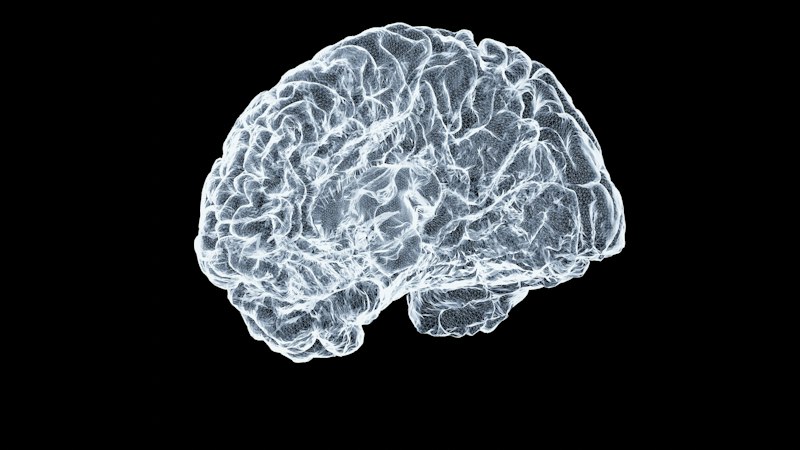
Auditory skills refer fundamentally to the complex ability of the central nervous system to process and accurately interpret acoustic information that is received by the ears. This sophisticated function goes far beyond simple hearing acuity; it involves the brain’s capacity to analyze, organize, and utilize sound signals effectively. At its core, an effective auditory system enables an individual to recognize and discriminate subtle differences between speech sounds, to understand verbal communication even when presented in a distracting or noisy environment, and crucially, to retain and recall sequences of sounds that have been heard, a function known as auditory memory.
The fundamental mechanism underlying auditory skills involves a hierarchy of neural events, beginning with the transduction of sound waves into electrical signals by the cochlea, followed by the transmission of these signals through the auditory nerve to the brainstem, and finally, their complex analysis within the auditory cortex and associated cortical areas. This processing chain allows the listener to perform essential tasks such as temporal processing (perceiving the timing of sounds) and binaural processing (using information from both ears to localize sound). The proficiency in these skills is a critical pillar for successful communication and academic achievement, forming the essential foundation for phonological awareness and ultimately, reading comprehension.
The development of strong auditory skills is not passive but can be actively fostered through various forms of stimulation and training. Studies have consistently demonstrated that targeted activities, ranging from structured auditory training programs to exposure to complex musical patterns and sound-based games, can significantly enhance an individual’s processing capabilities. This improved ability to process and interpret sound has been shown to yield a positive and measurable effect on other crucial aspects of cognitive and linguistic development, underscoring its vital role in human learning.
Components and Mechanisms of Auditive Processing
Auditory processing is not a monolithic skill but rather a collection of distinct yet interrelated abilities that work synergistically to decode the acoustic world. These core components include Auditory Discrimination, which is the ability to recognize subtle differences between phonemes (such as distinguishing ‘pin’ from ‘pen’); Auditory Figure-Ground, which allows the listener to focus on a primary sound source (like a teacher’s voice) while effectively filtering out competing background noise; and Auditory Memory, which is the capacity to recall spoken information immediately or after a short delay. These complex mechanisms often rely heavily on the efficient functioning of the central auditory nervous system (CANS).
Another critical component is Auditory Sequencing, the ability to understand and recall the correct order of sounds or words in a message, which is indispensable for following multi-step instructions or understanding the syntax of a sentence. Furthermore, Auditory Closure is the skill that allows the brain to fill in missing or distorted acoustic information, enabling comprehension even when speech is muffled or incomplete. The integrity of these sub-skills dictates the overall efficiency of an individual’s listening comprehension, especially in challenging environments where acoustic fidelity is compromised.
These mechanisms are supported by extensive neural networks that involve not only the primary auditory cortex but also areas associated with working memory, attention, and executive functions located primarily in the frontal and temporal lobes. When these components function optimally, the rapid, automatic interpretation of spoken language frees up cognitive resources, allowing the listener to concentrate on the meaning and intent of the message rather than expending excessive effort merely on decoding the sound stream itself. This streamlined process is essential for higher-level cognitive tasks and successful academic engagement.
Historical Perspective and Key Researchers
The systematic study of central auditory processing gained significant momentum in the mid-20th century, particularly driven by the realization among audiologists and speech-language pathologists that some individuals exhibited profound listening difficulties despite having normal peripheral hearing thresholds. Early research, often stemming from clinical observations, began to differentiate between hearing loss (a sensory deficit) and processing disorders (a neural deficit). This distinction marked a pivotal shift in understanding how the brain manages sound information.
Pioneering work by researchers such as Frank E. Musiek, D. E. Bamiou, and L. M. Luxon, whose findings were foundational to the field, helped establish the diagnostic criteria and theoretical framework for what is now commonly referred to as Central Auditory Processing Disorder (CAPD) or Auditory Processing Disorder (APD). Their research emphasized that auditory skills are developmental and subject to deficits residing in the central nervous system, thereby necessitating specialized assessment tools designed to test specific auditory functions like temporal resolution and binaural integration, rather than just sensitivity to sound volume.
This historical evolution cemented auditory skills as an essential area within both audiology and clinical psychology. By the late 1990s and early 2000s, authoritative bodies like the American Speech-Language-Hearing Association (ASHA) began formalizing guidelines for the identification and management of APD, solidifying the importance of these skills in the trajectory of language development. This context allowed clinicians to move beyond simple psychoacoustic testing toward a more comprehensive, neurobiological understanding of listening deficits.
Auditory Processing Difficulties and Consequences
When auditory skills are underdeveloped or impaired, the result is often a constellation of symptoms classified as Auditory Processing Disorder (APD). As highlighted by clinical literature, children and adults with APD frequently struggle significantly with understanding, processing, and retaining verbal information, especially in non-ideal listening environments. These processing difficulties are not attributable to intelligence deficits or peripheral hearing loss, but rather to a breakdown in the neural efficiency required for sound analysis.
The consequences of poor auditory skills are often far-reaching, extending beyond academic performance. These difficulties frequently lead to delayed language development, as the core ability to discriminate and sequence phonemes is compromised, making the acquisition of vocabulary and grammatical structure challenging. In educational settings, students may exhibit decreased school performance because they struggle to accurately process verbal instructions, follow classroom discussions, or take notes during lectures. Furthermore, the constant effort required to listen and comprehend can lead to significant cognitive fatigue, often manifesting as increased behavioral problems, frustration, or withdrawal from social interactions due to difficulty participating in conversations.
Furthermore, auditory processing difficulties can profoundly affect how children respond to their environment, creating a disconnect between the acoustic world and their internal interpretation. For instance, a child struggling with Auditory Figure-Ground might be overwhelmed by the cafeteria noise and become unable to process a simple verbal request from a peer or teacher. This inability to accurately and consistently process verbal input or conversations can lead to misunderstandings, social isolation, and chronic difficulties in mastering complex concepts that rely on spoken instruction, reinforcing the need for early identification and intervention.
Practical Application and Real-World Example
To illustrate the integrated nature of auditory skills, consider the common real-world scenario of a parent teaching their young child how to follow a two-step direction in a busy public library, such as: “First, put the red book on the shelf, and then bring me the blue pencil.” This seemingly simple instruction requires the child to utilize several critical auditory skills simultaneously to ensure compliance.
The application of auditory skills in this scenario can be broken down into a precise sequence of mental operations.
- Auditory Discrimination and Figure-Ground: The child must first employ Auditory Figure-Ground skills to filter out the extraneous noise—the rustling of pages, distant conversations, and footsteps—to isolate the parent’s voice. Simultaneously, Auditory Discrimination is used to differentiate the target words, such as “red” versus “blue” and “book” versus “pencil.”
- Auditory Memory and Sequencing: The child must engage Auditory Memory to hold the entire instruction in their short-term working memory while they begin the task. Crucially, they must apply Auditory Sequencing to remember the correct order of the actions: the “red book” step must precede the “blue pencil” step.
- Auditory Closure (if needed): If the parent’s voice momentarily drops or is interrupted by a cough, the child must employ Auditory Closure to subconsciously fill in the missing phonemes to reconstruct the complete instruction without needing repetition.
A child with robust auditory skills will execute these steps seamlessly, demonstrating comprehension and successful completion of the task. Conversely, a child struggling with Auditory processing may only remember the last part of the instruction (the blue pencil), become confused by the noise, or attempt the steps in the wrong order, illustrating the direct link between listening proficiency and functional cognitive behavior.
Therapeutic Significance and Educational Impact
The recognition of auditory skills as trainable and malleable has profound significance for both clinical therapy and educational practice. Interventions focused on strengthening these skills are now integral to addressing language delays, reading difficulties, and attention issues. The primary application is often found within speech-language pathology and educational audiology, where specialized auditory training (AT) programs are employed.
These focused auditory training activities can range from highly structured, computerized programs designed to improve temporal processing and pitch discrimination, to less formal methods such as engaging in sound-based games and listening to music. Research has demonstrated that training strategies focused on identifying and responding to varied sound inputs, especially speech sounds, can improve a child’s ability to understand and process acoustic information, leading to improved language skills overall. For example, listening to music helps children become familiar with rhythm, pitch changes, and the distinction between different sound characteristics, which directly supports the development of phonological awareness, a prerequisite for literacy.
The educational impact of improved auditory skills is substantial. Studies have shown that enhanced processing capabilities lead to better academic performance across subjects, not just language arts. When a student can efficiently filter distractions and accurately process verbal material, their cognitive load is reduced, freeing up mental capacity for higher-level reasoning and problem-solving. Furthermore, improved auditory processing and communication skills often correlate with improved behavior in children, as they become less frustrated and more capable of engaging positively with classroom demands and social structures.
Connections to Related Psychological Concepts
Auditory skills operate at the intersection of several major psychological subfields, primarily falling under the umbrella of Cognitive psychology and Neuropsychology. Cognitive psychology examines how the brain processes information, and auditory processing is a foundational aspect of this, particularly concerning language comprehension and memory encoding. The efficiency of auditory processing directly influences the capacity of working memory, as information must be temporarily held and manipulated to make meaning of complex sentences.
The relationship between auditory skills and Phonological Awareness is particularly strong. Phonological awareness, the understanding of the sound structure of language, relies entirely on the underlying auditory ability to segment words into syllables and phonemes. Deficits in auditory skills often manifest directly as difficulties in phonological awareness, which is the single strongest predictor of early reading success. Furthermore, auditory processing interacts closely with Executive Functions, specifically selective attention, as the brain must actively choose which sounds to prioritize and which to inhibit, a skill critical for Auditory Figure-Ground ability.
In a broader context, deficits in auditory skills are frequently studied alongside conditions such as Attention-Deficit/Hyperactivity Disorder (ADHD) and Autism Spectrum Disorder (ASD), as difficulties in filtering noise and interpreting social cues often share common neurological underpinnings with language development challenges. Understanding these connections allows researchers and clinicians to develop integrated intervention strategies that address both the sensory processing issues and the resulting cognitive or behavioral outcomes.