Cognitive Dissonance: Why Your Mind Fights Your Reality
Scientifically Reviewed · Dr. Marwa Abd-Alazim · October 20, 2026
Review Criteria & Clinical Standards
This content undergoes rigorous scientific peer-review and medical editorial standards at Arab Psychology Network to ensure clinical accuracy, validity, and compliance with evidence-based guidelines from leading psychological and healthcare authorities (APA / WHO).
The Core Definition of Cognitive Dissonance
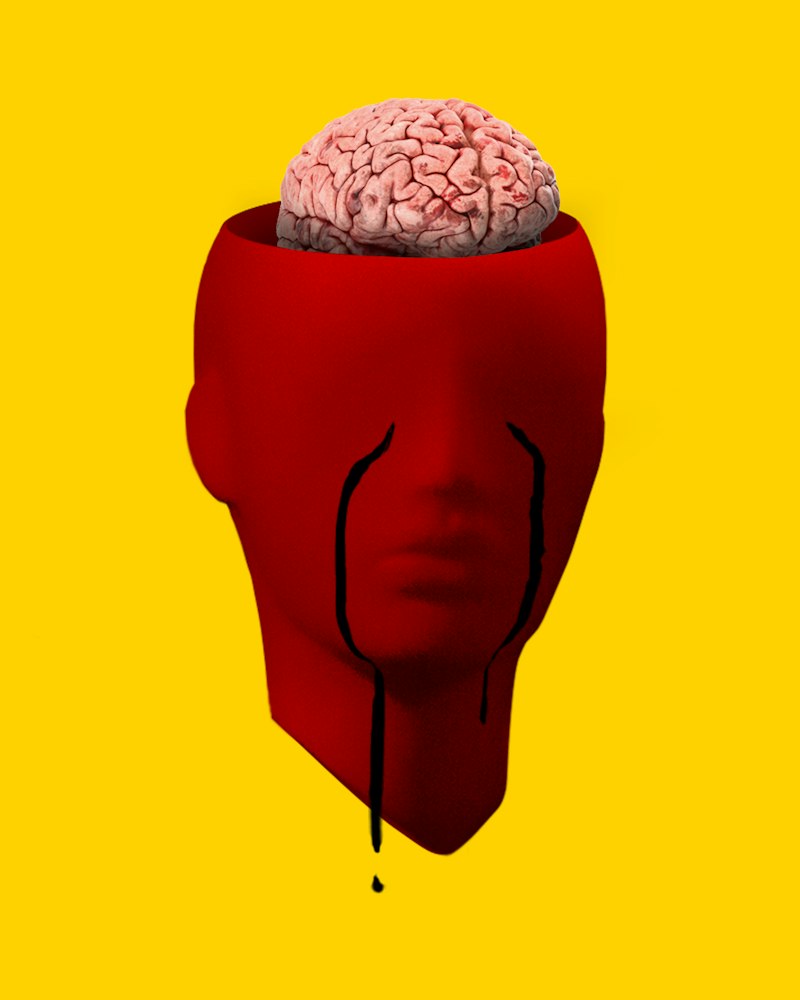
The psychological theory of Cognitive Dissonance is a foundational concept in social psychology, positing that individuals experience mental stress or discomfort when they hold two or more conflicting beliefs, ideas, values, or when their actions contradict their beliefs. This feeling of tension is highly motivating, driving the individual to seek psychological consistency to reduce the discomfort. Essentially, the theory suggests that humans are not purely rational beings, but rather rationalizing beings; we prioritize maintaining coherence within our own belief systems, even if it requires altering our perception of reality or engaging in irrational behaviors.
The fundamental mechanism behind this concept rests on the premise that when two cognitions—any knowledge, opinion, or belief about the environment, oneself, or one’s behavior—are in conflict, a state of dissonance is created. For instance, the cognition “I am a healthy person” is dissonant with the cognition “I smoke cigarettes daily.” The intensity of the resulting dissonance is determined by two factors: the proportion of dissonant to consonant cognitions, and the personal importance of the cognitions involved. The greater the dissonance, the stronger the psychological pressure to restore harmony through various defensive and rationalizing strategies.
It is crucial to understand that dissonance is not merely logical inconsistency; it is a profound psychological state of discomfort. People are often aware of logical flaws in their reasoning, but when that flaw relates to personal values or self-image, the resulting tension requires active resolution. This resolution can involve changing behavior, changing one of the cognitions, or, most commonly, adding new, consonant cognitions that justify the inconsistency. The theory provides a powerful explanation for phenomena like self-justification, buyer’s remorse, and the stubborn persistence of ideologies in the face of contradictory evidence.
Historical Foundations and Key Researchers
The concept of cognitive dissonance was formally introduced into the field of Social Psychology by Dr. Leon Festinger in his seminal 1957 book, A Theory of Cognitive Dissonance. Festinger was a prominent figure who had previously worked alongside Kurt Lewin at MIT, inheriting the focus on dynamic, motivating forces within the individual. Prior to Festinger’s work, psychological models often assumed that changes in behavior followed changes in attitude; however, dissonance theory proposed the revolutionary idea that the reverse is often true: people change their attitudes to justify behaviors they have already committed.
Festinger’s initial inspiration derived from observing a small doomsday cult in Chicago known as “The Seekers,” led by Dorothy Martin (known pseudonymously as Marian Keech). The cult members believed an apocalyptic flood would destroy the world on a specific date, and many had sacrificed their homes, jobs, and relationships in preparation. When the prophecy failed, instead of abandoning their belief system entirely, the members engaged in massive rationalization. They claimed that their unwavering faith had successfully saved the world, leading to an immediate and intense increase in proselytization efforts. This dramatic observation highlighted the intense human drive to reduce the psychological discomfort caused by the contradiction between the prediction and the reality.
Following the 1957 publication, Festinger and his colleagues conducted numerous highly influential experiments to test the boundaries of the theory. The most famous was the “20 Dollars for a Lie” study, which cemented dissonance theory’s place in psychological history. This research provided the empirical evidence needed to challenge the prevailing behaviorist models of the time, which struggled to explain why smaller rewards sometimes produced greater changes in internal Attitude than larger rewards, a phenomenon dissonance theory easily accounted for.
The Mechanism of Dissonance Reduction
When dissonance is experienced, the individual is immediately motivated to reduce it, seeking an equilibrium between their thoughts and actions. There are generally three primary routes an individual can take to achieve this cognitive balance. Firstly, they can change their behavior, which is often the most direct but also the most difficult path, as habits and commitments are hard to break. For example, a smoker could simply quit smoking to align their actions with their belief that smoking is unhealthy.
Secondly, the individual can change one of the conflicting cognitions. In the case of the smoker, instead of quitting, they might change the belief that smoking is harmful by convincing themselves that the scientific evidence is inconclusive or exaggerated, thereby reducing the dissonance between action and belief. This requires less effort than changing the behavior itself and is a very common defense mechanism.
The third and arguably most frequent strategy is to add new, consonant cognitions that support the dissonant behavior, thereby lowering the overall ratio of conflicting thoughts. The smoker might introduce the cognition, “Smoking helps me manage my stress, and reducing stress is more important for my health than avoiding lung risks.” These newly introduced rationalizations serve as justification, effectively insulating the behavior from the conflicting belief and restoring a sense of internal consistency without requiring genuine change.
Practical Application: The Effort Justification Paradigm
One of the clearest and most relatable real-world applications of cognitive dissonance theory is the principle of effort justification. This mechanism describes the phenomenon where people increase their liking for something that they have worked hard or suffered to achieve, regardless of its objective merit. The dissonance arises from the conflict between the cognition of “I exerted immense effort and possibly endured suffering” and the cognition of “The reward or outcome is mediocre or disappointing.”
Consider a person who pays a very high price for a concert ticket only to find the performance dull and the sound quality poor. The initial dissonance is strong: high cost/effort versus low enjoyment/reward. If they were to admit the concert was terrible, they would have to face the unpleasant cognition that they wasted a significant amount of money and time. To reduce this discomfort, they will mentally re-evaluate the experience, focusing intensely on minor positive aspects, exaggerating the performer’s talent, or emphasizing the unique atmosphere. They are, in effect, convincing themselves that the concert was actually fantastic, thereby justifying the high effort and expense.
The “How-To” of effort justification follows a predictable pattern of cognitive maneuvering. When a negative outcome threatens the self-perception of having made a smart choice (the original positive cognition), the individual takes the following steps:
- The individual calculates the severity of the investment (time, money, pain).
- They identify the discrepancy between the investment and the resulting value.
- To avoid the self-blame inherent in admitting a mistake, they selectively filter information, emphasizing positive attributes of the outcome while minimizing or ignoring negative attributes.
- They construct new cognitions (“I learned a valuable lesson,” or “It was an important networking opportunity”) that retrospectively justify the initial investment.
Significance and Impact in Psychology and Behavioral Science
Cognitive dissonance theory represents a major paradigm shift in psychology because it provided a robust and counter-intuitive explanation for attitude change. Before Festinger, many researchers relied on reinforcement theory, which suggested that rewards directly influence attitude. Dissonance theory demonstrated that internal consistency needs are often more powerful drivers of change than external rewards. The theory successfully explained why minimal justification—receiving a small reward for counter-attitudinal behavior—often leads to greater internal attitude shift than receiving a large reward. The small reward is insufficient justification for the behavior, forcing the individual to change their internal attitude to resolve the inconsistency.
The impact of this theory extends far beyond academic research, influencing fields from therapy to public health campaigns. In psychotherapy, understanding dissonance helps clinicians recognize why clients resist change even when it is clearly beneficial; the effort required to change behavior often conflicts with the desire to maintain a consistent self-image. In public health, campaigns focusing on inducing mild guilt or hypocrisy (e.g., highlighting that someone claims to value environmental protection but refuses to recycle) can create dissonance, which is then often resolved by changing the behavior to align with the stated value.
Furthermore, cognitive dissonance provides critical insights into decision-making and post-decision rationalization, often termed “buyer’s remorse.” After making a difficult choice between two equally attractive options, people inevitably experience dissonance because the chosen option has flaws and the rejected option has appealing qualities. To alleviate this stress, people tend to enhance the attractiveness of the chosen option and degrade the attractiveness of the rejected one, confirming that the decision made was the correct one. This cognitive bias ensures psychological peace following commitment.
Related Concepts and Theoretical Connections
Cognitive dissonance belongs firmly to the subfield of Social Psychology, specifically within the realm of attitude formation and change. It is often discussed alongside several related concepts that describe how individuals manage their self-concept and internal consistency. One prominent theory is Self-Perception Theory, proposed by Daryl Bem. Self-Perception Theory argues that people do not experience internal tension (dissonance) but rather infer their Attitude by observing their own behavior, particularly when their initial attitudes are weak or ambiguous.
While Self-Perception Theory offers a simpler, non-motivational explanation for many of the same experimental results, decades of research have supported the idea that genuine physiological arousal (the feeling of discomfort) accompanies counter-attitudinal behavior, lending strong credence to Festinger’s original motivational interpretation. Most modern psychologists view dissonance theory as primarily applicable when a person’s behavior violates a deeply held belief or value, leading to high internal conflict, whereas Self-Perception Theory better explains situations involving minor or ambiguous choices.
Other closely linked concepts include Balance Theory (Fritz Heider), which addresses consistency within relationships between three elements (a person, another person, and an object/idea), and Arousal Theory, which links the feeling of dissonance to measurable physiological states. Fundamentally, all these consistency theories underscore the human need for psychological coherence. Dissonance theory, however, remains the most comprehensive and influential framework for explaining how individuals actively manipulate their beliefs and perceptions to cope with contradictions arising from their own actions, making it central to understanding motivation and behavioral persistence.