Automatic Activation: Why Your Brain Acts Before You Think
Scientifically Reviewed · Dr. Marwa Abd-Alazim · September 1, 2026
Review Criteria & Clinical Standards
This content undergoes rigorous scientific peer-review and medical editorial standards at Arab Psychology Network to ensure clinical accuracy, validity, and compliance with evidence-based guidelines from leading psychological and healthcare authorities (APA / WHO).
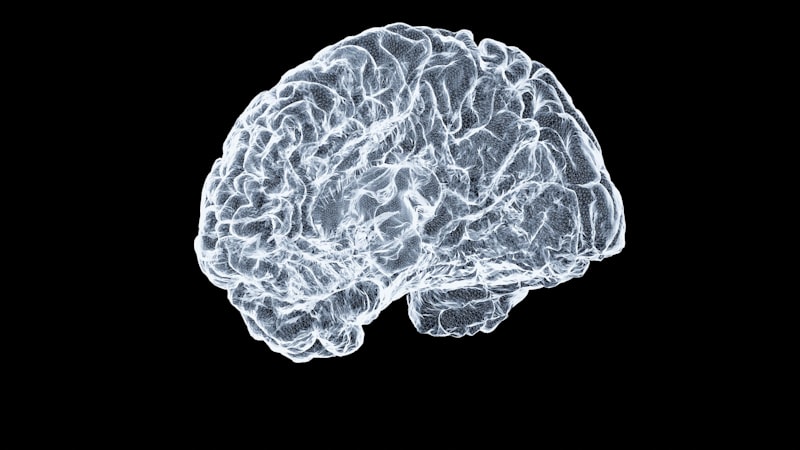
Defining Automatic Activation: Core Principles
Automatic activation refers fundamentally to the involuntary processing of external or internal stimuli, initiating preparation for associated behavioral or cognitive responses without requiring conscious intent or attentional resources. This mechanism represents a crucial cornerstone of cognitive efficiency, allowing the organism to react swiftly and conserve limited mental capacity for complex, intentional tasks. Unlike controlled processing, which is characterized by effort, flexibility, and conscious monitoring, automatic activation is highly efficient, unavoidable once the stimulus is encountered, and typically inflexible in its execution. The utility of this process lies in its ability to prime the cognitive system immediately upon stimulus detection, ensuring that the necessary conceptual frameworks, emotional states, or motor programs are ready for deployment.
The essence of automaticity rests on the concept of established associations. Through extensive practice, repetition, or evolutionary salience, certain stimuli become reliably linked to specific responses or internal states. When the stimulus is presented, whether subliminally or consciously, this strong association triggers a cascade of activation across the relevant neural network. This involuntary spread of activation, often discussed within the context of spreading activation models, is what enables the system to transition smoothly from perception to preliminary action planning. Psychologically, this involuntary nature means that an individual cannot choose to suppress the initial activation, even if they consciously deem the response inappropriate or irrelevant in a given context; the subsequent controlled stage is then required to override or modulate the automatically generated response.
From the perspective of cognitive architecture, automatic activation serves as a necessary filtering and resource-management system. If every piece of incoming sensory data required conscious deliberation, the organism would be paralyzed by cognitive overload. By automating the processing of frequent, predictable, or highly threatening stimuli, the brain allocates resources optimally. This foundational principle underlies phenomena such as semantic priming, where the exposure to one word (e.g., “doctor”) rapidly and automatically activates related concepts (e.g., “nurse,” “hospital”) in preparation for processing subsequent related information. This preparatory state, generated automatically and rapidly, is the defining feature distinguishing it from slower, resource-intensive processing that requires explicit intention.
Distinguishing Automatic Activation from Intentional Processing
A key area of research in cognitive psychology focuses on clearly delineating automatic activation from processing that results from an explicit intention. The distinction is typically grounded in four criteria: awareness, intention, efficiency, and controllability. Automatic activation occurs without conscious awareness of the process or the goal it serves; it is initiated without explicit intention; it requires negligible cognitive resources (high efficiency); and once triggered, it is difficult or impossible to stop or modify (low controllability). In stark contrast, intentional processing demands significant working memory capacity, is initiated deliberately to achieve a specific goal, and can be flexibly adjusted based on ongoing feedback and environmental demands.
The temporal characteristic is perhaps the most obvious difference, directly aligning with the core definition: automatic activation tends to occur more rapidly than that resulting from an intention. This speed difference stems from the neurobiological pathways involved; automatic processes often rely on fast, dedicated neural circuits that bypass the slower, more deliberative cortical structures necessary for intentional decision-making. For example, recognizing a word that has been practiced thousands of times (an automatic process) requires milliseconds, whereas solving a novel mathematical problem (an intentional process) requires sequential steps of conscious manipulation and verification, resulting in a significantly longer latency.
Furthermore, the concept of automaticity is rarely purely binary; rather, cognitive processes exist along a continuum. Highly practiced skills, such as driving a familiar route or typing, begin as intentional, effortful processes but, through consistent and repeated mapping of stimuli to responses, gradually migrate towards the automatic end of the spectrum. This process of skill acquisition highlights that while automatic activation is defined by its lack of intention, many complex automatic behaviors are the result of prior deliberate practice. However, even these highly learned sequences retain the characteristics of true automaticity—they are executed quickly, efficiently, and often outside the focus of explicit attention, freeing up cognitive capacity for concurrent tasks.
Neurobiological Mechanisms and Speed of Processing
The striking speed advantage of automatic processing is rooted in distinct neurobiological architecture designed for rapid signal transmission. Research indicates that stimuli that elicit automatic activation often utilize subcortical pathways, particularly those involving the thalamus, basal ganglia, and the amygdala, allowing for immediate emotional or motor preparation before the signal has fully reached and been analyzed by the slower, evolutionarily newer regions of the prefrontal cortex responsible for conscious thought and executive control. This dual-route processing mechanism ensures that critical information, especially pertaining to survival, is acted upon with minimal delay.
Specifically, in the context of threat perception, the sensory signal splits: the “low road” is a fast, coarse transmission directly to the amygdala, triggering immediate emotional and physiological readiness (e.g., fear response). The “high road” is a slower, detailed transmission routed through the sensory cortex and then to the prefrontal areas for detailed analysis and controlled assessment. Automatic activation is heavily reliant on the efficacy of the low road, which permits involuntary processing and preparation for associated responses, such as freezing or fleeing, significantly faster than the time required for conscious evaluation. This rapid, automatic response system is essential for minimizing reaction time in critical situations.
Electrophysiological studies, utilizing event-related potentials (ERPs), provide temporal evidence supporting this speed differential. Researchers consistently observe early negative or positive deflections in the ERP waveform (e.g., P300 or N400 components, or earlier pre-attentive components) that reflect the brain’s initial, involuntary response to a stimulus, occurring within the first few hundred milliseconds after presentation. These early components indicate that the stimulus has been processed sufficiently to activate associated semantic or affective representations, confirming that the activation of relevant cognitive schemata is truly automatic and precedes the time points typically associated with conscious decision-making or controlled evaluation.
The Role of Automatic Activation in Threat Response
The most compelling evolutionary justification for automatic activation lies in its critical role in survival and threat response. The ability to involuntarily process threatening stimuli and prepare an immediate defense mechanism is paramount. This concept is beautifully summarized by the observation: “Automatic activation of the central nervous system in response to stimuli that has been processed outside of awareness prepares the body to flee if necessary.” This preparation is instantaneous, robust, and designed to bypass the latency inherent in conscious deliberation, maximizing the chances of survival when immediate action is required.
When a potential threat is detected, even if only fleetingly or subliminally, the central nervous system (CNS) initiates a rapid cascade of physiological changes orchestrated by the autonomic nervous system (ANS), specifically the sympathetic branch. This involves the immediate release of stress hormones, acceleration of heart rate and respiration, redirection of blood flow to major muscle groups, and increased muscle tension—all preparatory actions for the “fight or flight” response. This pre-attentive mobilization is a perfect example of automatic activation because it is involuntary, highly rapid, and prepares the physical system for a specific, associated response (fleeing or confrontation) before the individual has consciously registered the source of the threat or formed an intentional plan.
Furthermore, the involuntary nature of this preparation ensures reliability. If the detection of danger relied solely on intentional processing, the organism might hesitate or engage in prolonged evaluation, potentially proving fatal. Research utilizing measures like the acoustic startle reflex or skin conductance response (SCR) demonstrates that even very subtle, non-conscious cues associated with previous negative experiences can trigger significant physiological arousal, illustrating that the body’s defensive mechanisms are highly sensitive and automatically primed. This rapid, involuntary processing of danger ensures that the body is already half-way toward executing a survival response before the conscious mind has fully grasped the gravity of the situation.
Historical Context and Theoretical Foundations
The roots of understanding automatic activation can be traced back to early psychological research on reaction time and the study of skill acquisition, although the modern terminology emerged significantly later. Early behaviorists, particularly through classical conditioning paradigms, demonstrated that repeated pairings of stimuli could result in involuntary, automatic responses (conditioned responses) that occurred without the subject’s explicit volition, laying the groundwork for understanding learned automaticity. However, the theoretical framework that formally defined and differentiated automatic from controlled processing arrived with the cognitive revolution.
The seminal work by Richard Shiffrin and Walter Schneider (1977) provided the robust theoretical foundation for the concept of automaticity. They proposed that automatic processing develops through consistent practice and is characterized by four key features: it occurs without intention, is not accessible to consciousness, utilizes minimal cognitive resources, and is difficult to modify. Their experimental paradigms, often involving visual search tasks under conditions of consistent mapping (where targets and distractors never switch roles), demonstrated how prolonged practice leads to the development of highly efficient, automatic detection processes, contrasting sharply with the effortful processing required under varied mapping conditions.
Modern theoretical interpretations often integrate automatic activation within dual-process models of cognition, such as the differentiation between System 1 (fast, intuitive, emotional, and automatic) and System 2 (slow, deliberative, logical, and controlled). In this framework, automatic activation is the core engine of System 1 functioning. It handles high-frequency tasks and provides immediate, contextually appropriate judgments or behavioral urges based on pre-existing associations and heuristics. This model highlights that while System 2 is responsible for intentional processing and overriding System 1 outputs, the foundation of rapid response and initial perception is always rooted in the immediate, involuntary mechanisms of automatic activation.
Measurement and Experimental Paradigms
Measuring processes that are involuntary and outside of awareness presents a significant methodological challenge, necessitating the reliance on implicit measures rather than self-report. Researchers have developed several robust experimental paradigms designed to capture the output of automatic activation by observing its influence on subsequent behavior, attention, or cognitive performance, even when the subject is consciously focused on a different, intentional task.
A prime example is the priming paradigm, which exploits the concept of spreading activation. In semantic priming, exposure to a prime word (presented too quickly to be consciously registered or as an irrelevant context cue) automatically activates related concepts. The speed with which the participant subsequently processes a related target word, compared to an unrelated target word, serves as the measure of automatic activation. The Implicit Association Test (IAT) further extends this principle, measuring the strength of automatic associations between concepts (e.g., race and valence) by analyzing response latency when subjects are required to categorize stimuli rapidly, revealing automatic cognitive links that may contradict their explicit, intentional beliefs.
Other crucial measures include interference tasks, such as the classic Stroop task, where the automatic processing of word meaning interferes with the intentional task of naming the ink color. The resulting delay in response time (the Stroop effect) is a direct quantification of the uncontrollable nature of semantic automatic activation. Furthermore, neurophysiological tools are increasingly employed: functional Magnetic Resonance Imaging (fMRI) reveals activity in brain regions associated with automatic processing (like the amygdala or ventral striatum) during stimulus presentation outside of conscious report, providing direct evidence of involuntary processing even without a measurable behavioral output.
Implications for Social Cognition and Behavior
The principles of automatic activation have profound implications for social psychology, particularly in understanding phenomena such as prejudice, stereotype formation, and rapid social categorization. Stereotypes, once learned and reinforced through cultural or personal experience, function as highly accessible cognitive schemas. When an individual encounters a member of a stereotyped group, the associated attributes (positive or negative) are often automatically activated, involuntarily priming judgments and behaviors, even if the individual consciously attempts to remain egalitarian.
This involuntary process means that social behavior is frequently initiated by associations that are beyond the immediate control of the individual’s intention. For example, studies show that exposure to certain social cues (e.g., a photograph of a gun) can automatically activate concepts related to aggression or threat, leading to biased visual perception or reaction times in subsequent tasks. The dissociation often observed between implicit measures (which capture automatic activation) and explicit measures (which capture intentional, consciously controlled beliefs) underscores the pervasive influence of automatic processes in shaping initial social reactions and decision-making.
Beyond prejudice, automatic activation influences everyday social interaction, from non-verbal communication to consumer behavior. Environmental cues in a shopping aisle can automatically activate associations related to trust, value, or familiarity, guiding the consumer’s attention and potentially influencing choice before a deliberate cost-benefit analysis occurs. Similarly, in communication, an interlocutor’s tone of voice may automatically activate an emotional valence, preparing the listener for a corresponding affective response faster than the conscious processing of the semantic content of the words being spoken. The study of these automatic social pathways is essential for understanding the speed and often irrational nature of human interaction.
Limitations and Future Directions in Research
Despite the robust evidence supporting the existence and efficiency of automatic activation, the conceptualization remains subject to ongoing debate and refinement within cognitive science. A primary limitation is the difficulty in establishing a definitive boundary between processes that are truly automatic (requiring zero attention) and those that are merely pre-attentive or highly practiced to the point of appearing automatic but still requiring some minimal, residual cognitive resource. The debate centers on whether attention is absolutely necessary for activation to occur, or if some forms of processing can proceed entirely without it, a distinction that is challenging to isolate empirically.
Methodological challenges also persist, particularly in the interpretation of implicit measures. While tests like the IAT effectively measure associative strength, critics argue that these measures may capture rapid, low-level controlled processing rather than pure automaticity. Future research must increasingly rely on advanced neuroimaging techniques—such as Magnetoencephalography (MEG), which offers superior temporal resolution—to pinpoint the exact timing and neural location of activation onset, ensuring that the measured response truly precedes the window of time associated with even the fastest intentional engagement.
Future directions in the study of automatic activation are moving toward investigating individual differences and the mechanisms of de-automatization. Researchers are increasingly exploring how factors like genetic predispositions, cultural background, and emotional state modulate the strength and speed of automatic associations. Furthermore, significant effort is being directed toward developing interventions—such as cognitive bias modification (CBM) training—designed to intentionally weaken maladaptive automatic associations (e.g., in anxiety or addiction) and foster the development of new, more adaptive automatic responses, thereby leveraging the power of involuntary processing for therapeutic benefit.