Automatic Speech: Why Your Brain Runs on Autopilot
Scientifically Reviewed · Dr. Marwa Abd-Alazim · October 19, 2026
Review Criteria & Clinical Standards
This content undergoes rigorous scientific peer-review and medical editorial standards at Arab Psychology Network to ensure clinical accuracy, validity, and compliance with evidence-based guidelines from leading psychological and healthcare authorities (APA / WHO).
The Core Definition and Conceptual Framework
Automatic speech refers to linguistic outputs—verbalizations, phrases, or sequences—that are generated with minimal conscious effort, attention, or executive control. It is characterized by its speed, efficiency, and resistance to interference, standing in stark contrast to controlled or effortful speech production, which requires active semantic planning and syntactic construction. This form of communication is fundamental to daily human interaction, enabling speakers to navigate routine social exchanges without monopolizing their attentional resources. The hallmark of automatic speech is its reliance on highly practiced, routinized neural pathways, allowing for the rapid retrieval and articulation of predictable material.
The core principle underlying automatic speech is automaticity, a psychological phenomenon where extensive repetition transforms originally effortful cognitive tasks into streamlined, unconscious processes. In the context of language, this means that sequences of phonemes, words, and even entire short sentences become chunked and stored as single units rather than being assembled piece-by-piece. This consolidation drastically reduces the demand on working memory and frees the prefrontal cortex, which is typically responsible for planning and inhibition, to handle novel or complex concurrent tasks.
Functionally, automatic speech serves a crucial adaptive role in minimizing cognitive load. If every single utterance, such as a greeting or a formulaic phrase, required the same level of mental energy as composing a complex argument, human communication would be severely inefficient. Instead, the brain leverages these pre-packaged linguistic units to maintain fluency and allow the speaker to allocate their limited conscious resources toward monitoring the environment, formulating future thoughts, or engaging in non-verbal activities simultaneously. This mechanism is critical for understanding the limits and capabilities of human parallel processing.
Historical Roots and Early Research
The conceptual distinction between automatic and controlled behavior, including speech, finds its roots in early psychological and philosophical investigations of consciousness and habit formation during the late 19th century. Researchers like William James explored the power of habit to mechanize behavior, suggesting that repeated actions eventually fall outside the realm of voluntary choice. However, the specific study of automatic speech truly gained prominence in the 20th century, particularly through clinical neuropsychological studies focusing on language breakdown following brain injury.
A pivotal insight came from observing patients suffering from various forms of aphasia. Often, individuals who had lost the ability to produce spontaneous, propositional speech (i.e., generating new ideas or sentences) retained the capacity to utter highly automatic sequences. For example, a patient with severe expressive deficits might be unable to name an object but could still flawlessly recite the days of the week, count from one to ten, or sing a familiar song. This clinical dissociation strongly implied that the neural pathways supporting automatic, overlearned verbal output were structurally or functionally separate from those governing novel, volitional linguistic production.
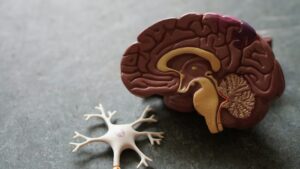
This body of research led to the neurological hypothesis that controlled, novel speech relies heavily on cortical areas, notably Broca’s area and the prefrontal cortex, whereas automatic sequences are mediated by more primitive, subcortical structures, including the basal ganglia. These subcortical circuits are well-established as coordinators of sequential, motor-based tasks, lending credence to the idea that automatic speech is essentially a highly refined motor program, rather than a purely semantic one. The resilience of these “canned” phrases even after significant cortical damage provided compelling evidence for the multi-system nature of the human language faculty.
The Cognitive Mechanism of Automaticity
At a cognitive level, the generation of automatic speech is intimately linked to the function of procedural memory. This type of long-term memory stores knowledge related to skills and actions, such as riding a bicycle or tying a shoe, often operating below the threshold of conscious awareness. When applied to language, procedural memory allows for the storage and retrieval of entire linguistic routines, encompassing not only the lexical items but also the necessary motor commands for articulation and prosody, treated as a single, indivisible unit.
The transition from controlled to automatic speech involves a significant neural reorganization. Initially, learning a new phrase or sequence requires intense monitoring by the prefrontal cortex—the system responsible for error detection and strategic planning. As the sequence is repeated, the neural activation shifts away from these executive centers. The brain begins to bypass the slow, iterative process of selecting individual words, conjugating verbs, and monitoring grammatical structure, favoring a direct, high-speed route that executes the entire known script upon receiving the initial cue. This process is highly efficient and minimizes the possibility of errors related to retrieval or grammatical slips, provided the context is appropriate for the stored script.
Examples of highly automatic speech include serial utterances (like counting or reciting the alphabet), formulaic expressions (such as “Have a nice day” or “I am fine, thank you”), interjections, and curses. These linguistic elements are often produced involuntarily under conditions of high emotion or low attention. Furthermore, even within complex, controlled discourse, the usage of common filler words, conjunctions, and certain frequently used grammatical templates often maintains a level of automaticity, serving as linguistic glue that ensures the overall flow of conversation remains smooth and unbroken.
Real-World Manifestations and Examples
To illustrate the power and utility of automatic speech, consider the common scenario of an individual arriving at a grocery store checkout line while simultaneously fielding a text message and calculating the cost of their items mentally. This situation demands significant divided attention and highlights the necessity of linguistic automaticity.
The interaction unfolds as a predictable social script, where automatic speech is crucial for efficiency. The cashier initiates the transaction, and the customer’s response is largely mechanized.
- The cashier says, “Hello, did you find everything okay?” This serves as the cue for the automatic script.
- The customer, whose conscious attention is partially occupied by their mental calculation or text message, replies, “Yes, thank you,” followed by a formulaic response like, “Just this, please.” This exchange utilizes linguistic units that require virtually zero cognitive construction. The customer does not have to consciously decide on the grammar or appropriate tone; the entire phrase is retrieved as a functional unit.
- When the cashier asks, “Paper or plastic?” the customer automatically replies with their habitual preference, “Plastic is fine.” This response is immediate and effortless, demonstrating the characteristic speed and lack of monitoring associated with automatic speech.
- If, however, the cashier introduced an unexpected, novel topic—such as asking for the customer’s opinion on a new store policy—the customer would be forced to interrupt their secondary tasks, shift their full conscious attention to the linguistic domain, and construct a thoughtful, controlled response. This shift from automatic to controlled speech clearly illustrates the differing cognitive costs.
Significance in Cognitive Psychology and Linguistics
The study of automatic speech holds immense significance across various subfields of psychology, offering critical insights into cognitive architecture, language acquisition, and neurological organization. In cognitive psychology, it supports dual-process theories, arguing that the mind operates via two distinct pathways: a fast, unconscious, and automatic System 1, and a slow, effortful, and conscious System 2. Automatic speech is a perfect example of System 1 operation in the linguistic domain.
For neuro- and psycholinguistics, automatic speech is vital for mapping the brain’s language centers. The ability to isolate and test these automatic functions allows researchers and clinicians to understand how language processing is distributed. For instance, in therapeutic settings, speech-language pathologists often utilize preserved automatic functions—such as singing, which involves rhythmic, sequential output—to help patients with severe expressive language loss (non-fluent aphasia) regain some verbal communication capacity, essentially exploiting the intact subcortical motor pathways.
Furthermore, understanding automaticity is essential for second language acquisition theory. Fluency is achieved not merely by mastering grammar and vocabulary (declarative knowledge) but by developing the ability to produce and comprehend language quickly and effortlessly (procedural knowledge). The goal of advanced language instruction is to shift linguistic processing from slow, resource-intensive controlled speech to rapid, automatic production. This highlights that true mastery of a language involves the internalization of common structures and scripts until they become automatic.
Connections to Related Psychological Concepts
Automatic speech is positioned within the broader field of Cognitive Psychology, drawing heavy connections to the study of memory, attention, and executive function. It interacts closely with several other foundational concepts that explore the relationship between conscious control and practiced behavior.
- The Stroop Effect: This classic phenomenon, where identifying the color of ink used to print a conflicting color word is difficult (e.g., the word “BLUE” printed in red ink), demonstrates the compelling power of automatic processing. The highly automatized process of reading the word interferes involuntarily with the controlled task of naming the color, mirroring how automatic speech can sometimes “leak out” or compete for resources in dual-task settings.
- Schema Theory and Scripts: Automatic speech often manifests as the verbal component of a larger cognitive script or schema—a structured mental framework for understanding and executing predictable sequences of events (e.g., ordering food at a restaurant, checking into a hotel). The formulaic language used in these contexts is automatic because the entire social script is deeply internalized, minimizing the need for novel planning.
- Motor Skill Learning: Psychologically, the acquisition of automatic speech mirrors the acquisition of any complex motor skill, such as typing or playing a musical instrument. In both cases, conscious oversight is gradually replaced by dedicated, efficient neural circuits, underscoring the view that speech production is fundamentally a complex, highly specialized motor skill.