Articles

Pathological Inertia: Why Your Mind Refuses to Move
PATHOLOGICAL INERTIA Pathological inertia represents a complex neuropsychological phenomenon characterized by a profound and debilitating...
PATHOLOGICAL INERTIA Pathological inertia represents a complex neuropsychological phenomenon characterized by a profound and debilitating...

Introduction and Definitional Scope of Paternal Behavior Paternal behavior encompasses the complex constellation of actions...

Introduction and Definition of Passive Recreation Passive recreation, within the context of psychological and recreational...

Introduction and Definitional Context of the Part-Object The concept of the part-object stands as a...
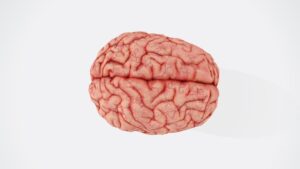
Definition and Etiology of Partial Seizures A partial seizure, also commonly referred to as a...

Introduction and Definition of Paroxysm The term paroxysm, derived from the Greek meaning “to sharpen”...

Paresis: Definition and Scope Paresis is formally defined within clinical neurology and medicine as the...

Defining the Parent Teachers Association (PTA) The Parent Teachers Association (PTA) stands as a foundational...

Introduction to Parataxis: Definition and Dual Meanings The term parataxis designates a structural relationship characterized...

Introduction and Definitional Scope The act of paraphrasing is fundamentally a communicative and cognitive process...

Defining Paranoid Delusion and Its Core Characteristics A paranoid delusion, at its core, represents a...

Definition and Developmental Context Parallel play represents a critical, transitional phase in early childhood development,...