Echographia: The Mystery of Writing Without Meaning
Scientifically Reviewed · Dr. Marwa Abd-Alazim · August 19, 2026
Review Criteria & Clinical Standards
This content undergoes rigorous scientific peer-review and medical editorial standards at Arab Psychology Network to ensure clinical accuracy, validity, and compliance with evidence-based guidelines from leading psychological and healthcare authorities (APA / WHO).
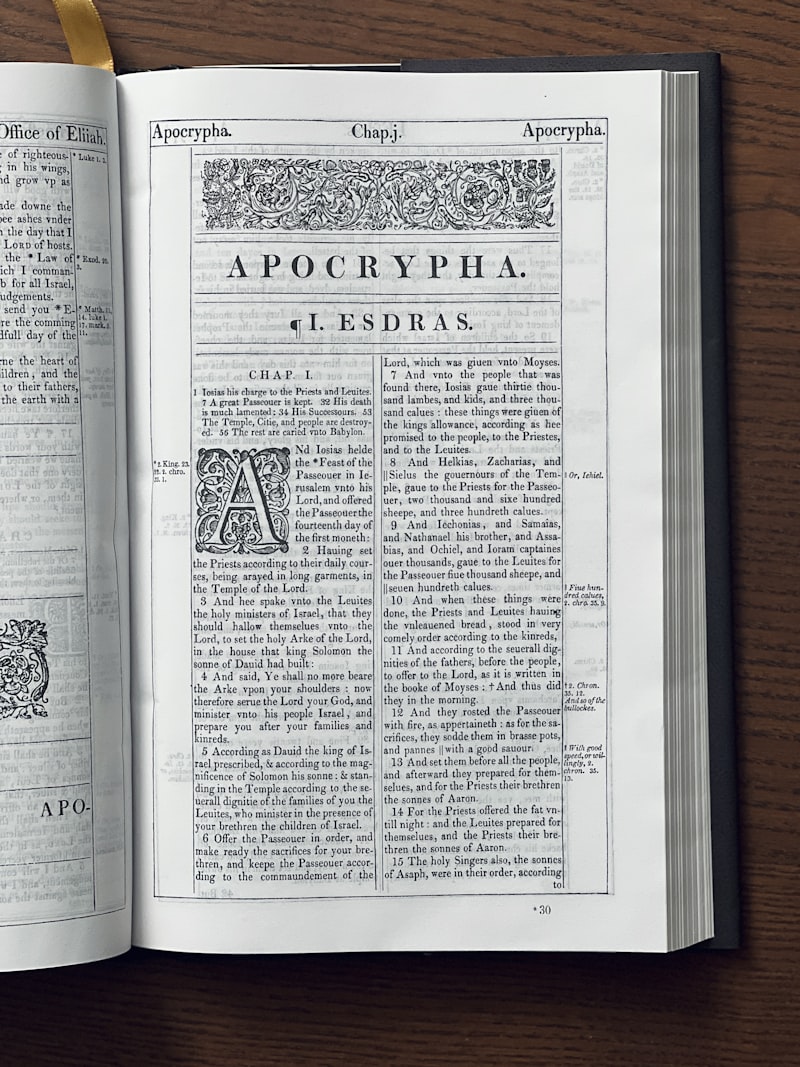
Echographia, in the context of neuropsychology and clinical linguistics, refers to a specific and intriguing form of pathological writing characterized by the ability of an individual to visually copy written material accurately, while simultaneously demonstrating a profound lack of comprehension regarding the words or phrases they are reproducing. This phenomenon isolates the motor and visual-perceptual components of writing from the crucial semantic and lexical processes, highlighting a disconnection within the complex network that governs language production and understanding. The core idea underpinning echographia is that the visual input is successfully mapped onto the motor output system—often referred to as the graphomotor buffer—without requiring the intervention of the internal semantic system or the phonological assembly processes that typically enable meaning extraction.
This condition is often observed in patients suffering from specific types of brain damage, particularly those involving the posterior language areas or the white matter tracts connecting visual recognition centers to the writing execution centers, bypassing the comprehension centers. The resulting writing is meticulously accurate in form, line spacing, and spelling, resembling a perfect visual transcription rather than a meaningful linguistic act. Consequently, when asked to read back the copied text, the patient may be unable to do so, or may demonstrate errors that reveal a lack of underlying meaning, confirming that the process utilized was purely mechanical and visual, devoid of linguistic processing.
The Core Definition of Echographia
At its simplest, echographia is defined as the involuntary or habitual copying of text without the attendant semantic processing necessary for comprehension. While the term itself sometimes causes confusion due to its similarity to “echoencephalogram,” which is an unrelated medical imaging technique, within the field of cognitive neuropsychology, it clearly designates this specific writing deficit. This deficit stands in stark contrast to writing impairments where the physical execution of letters is difficult (motor agraphia) or where spelling rules are violated (dysgraphia), as the primary failure here lies in linking the visual representation of the word to its internal meaning store.
The fundamental mechanism driving echographia relates directly to the modular nature of the brain’s language system, specifically the proposed dual-route model of writing. When a non-impaired individual copies text, they typically engage both the semantic route (reading the word, accessing its meaning, and then formulating the motor plan) and the non-semantic, or orthographic, route (visual analysis translating directly to graphemic output). In echographia, the semantic route is effectively blocked or damaged, forcing the individual to rely exclusively on the orthographic route. This allows for perfect visual reproduction but bypasses all necessary steps for understanding the text being copied, making the task purely visuomotor.
This disconnection implies that the neural pathway responsible for converting perceived visual linguistic stimuli into motor commands for writing remains functional, but its interaction with the deep lexical and conceptual centers is compromised. Therefore, the written output is merely an echo of the visual input, executed without the intervention of higher-level cognitive processes. This precise isolation of function makes echographia a valuable tool for researchers aiming to map the specific components of the writing system in the brain.
Historical Context and Early Observations
The study of pathological writing, or agraphia, gained significant traction in the late 19th and early 20th centuries, following the foundational work on aphasia by figures such as Paul Broca and Carl Wernicke. However, the precise delineation of deficits like echographia—where copying is preserved but comprehension is lost—required the refinement of models of language processing. Early researchers observed that not all writing deficits were uniform; some patients could speak but not write, others could write only non-words, and still others showed this peculiar ability to copy text they could not understand.
The clinical identification of specific, isolated writing components accelerated with the rise of cognitive neuropsychology in the 1970s and 1980s. Researchers began utilizing detailed lesion studies to connect specific brain areas to specific linguistic functions, leading to the classification of various forms of agraphia based on which components of the writing process (lexical retrieval, phonological assembly, or graphemic buffering) were impaired. Echographia falls under the umbrella of agraphias that preserve the peripheral output components while damaging central semantic access, often being discussed alongside deep agraphia, which shares some features but typically involves more severe semantic errors and inability to write non-words.
While a single inventor or moment cannot be pinpointed for the formal naming of echographia, its conceptual origin lies in the understanding developed by researchers like Henry Head and later Norman Geschwind, who mapped out the disconnection syndromes—pathologies resulting not from damage to functional centers themselves, but to the tracts connecting them. Echographia represents a classic disconnection, where the visual language center is disconnected from the semantic system, but remains connected to the motor execution system, thereby facilitating the ’empty’ copying behavior observed in clinical settings.
Differentiating Echographia from Other Agraphias
Echographia must be carefully distinguished from other writing disorders, as its diagnostic utility relies on the specificity of its presentation. The primary contrast is with motor agraphia, where the patient understands the text and knows what they want to write, but struggles with the physical execution of letters due to damage to motor pathways (e.g., the cerebellum or basal ganglia). In contrast, the patient with echographia exhibits perfect motor control during copying.
Furthermore, echographia differs significantly from surface and phonological agraphias. Patients with surface agraphia typically rely heavily on sound-to-spelling rules (the phonological route), leading to frequent errors with irregular words (e.g., writing “yacht” as “yot”). Patients with phonological agraphia struggle to write non-words or unfamiliar vocabulary, relying mostly on their stored lexicon. Echographia, however, is defined by the *preservation* of the visual-to-motor transcription mechanism, which often allows for the perfect copying of even non-words and irregular words, provided they are visually present for the patient to replicate. The defining feature is the absence of semantic understanding during the copying process itself.
A Practical Clinical Example
Consider a patient, Mr. J, who recently suffered a stroke resulting in localized damage to the posterior parietal lobe, affecting the connections between the visual cortex and the dominant hemisphere’s language areas. During a clinical assessment, the neuropsychologist presents Mr. J with a sentence: “The quick brown fox jumps over the lazy dog.”
- The neuropsychologist asks Mr. J to copy the sentence exactly as he sees it. Mr. J meticulously copies the sentence, producing a perfect, legible reproduction that mirrors the original in every detail, including capitalization and punctuation.
- The “How-To” of Echographia: When Mr. J copies the sentence, the visual information (the shape of the letters ‘T’, ‘h’, ‘e’, etc.) travels directly from the visual recognition areas to the graphemic buffer, bypassing the Wernicke’s area and other regions crucial for semantic interpretation. This direct visuomotor conduit enables the accurate transcription.
- The Test of Comprehension: Immediately after copying the sentence, the neuropsychologist removes the original text and asks Mr. J, “What did you just write?” Mr. J replies that he cannot recall, or perhaps attempts to read the text but makes significant reading errors, suggesting that the copied words hold no meaning for him. If asked to define the word “quick” or “jumps” from the text he just produced, he may be unable to do so, confirming the copying was a purely mechanical, non-semantic act.
This scenario vividly illustrates the dissociation: the motor act of writing is intact, but the cognitive link to meaning has been severed, which is the hallmark of echographia.
Significance in Cognitive Neuroscience
The existence of echographia is highly significant to the field of Neuropsychology because it provides compelling evidence for the modular organization of the writing system. It strongly supports the concept that writing is not a single unitary skill but rather a collection of separable sub-components, each localized in distinct areas of the brain and connected by specific pathways. When a patient presents with echographia, it allows clinicians and researchers to precisely localize the functional breakdown to the semantic-lexical route, confirming that the visual-motor route can operate independently.
This ability to isolate function is crucial for advancing brain mapping research, particularly through the use of functional magnetic resonance imaging (fMRI) and detailed lesion analyses. By studying patients who exhibit this phenomenon, scientists can refine models of normal language processing, determining exactly which neural structures are responsible for mediating the transfer of visual linguistic information into conceptual meaning before it is written down. This deepens our understanding of how literacy is instantiated in the human brain.
Broader Relations to Imitation and Echolalia
Echographia is closely related to a broader category of automatic, imitative behaviors known as “echo phenomena,” which are typically associated with frontal lobe dysfunction or specific neurological conditions. The most recognized of these are echolalia, which is the involuntary repetition of vocalizations made by another person, and echopraxia, the involuntary imitation of another person’s movements. Echographia is essentially the graphemic (written) manifestation of this imitative impulse.
In all these echo phenomena, the immediate perceptual input triggers an immediate motor output without the filtering, processing, or intentional control typically provided by the frontal executive functions. This suggests that the pathway from perception (auditory, visual, or written) to action (speech, movement, or writing) operates on a lower, more automatic level that is normally inhibited by higher cognitive control. Therefore, echographia contributes to the understanding of automatism in behavior and the role of executive control in suppressing immediate imitative responses.
Therapeutic Approaches and Rehabilitation
The treatment and rehabilitation of patients presenting with echographia fall primarily under the domain of speech and language pathology, guided by neuropsychological assessments. Since the primary deficit is the lack of connection to the semantic system, therapeutic strategies focus on rebuilding or compensating for this lost link, rather than on improving motor skills, which are already preserved.
Therapies often employ multimodal stimulation techniques designed to force the patient to engage semantic processing during writing tasks.
- Semantic Cueing: Instead of simple copying, the patient might be asked to copy a word while simultaneously defining it aloud or identifying a corresponding image. This forces the engagement of the semantic system alongside the visual-motor act.
- Delayed Copying Tasks: The patient views the word, the word is removed, and then they are asked to write it from memory. This prevents the immediate, mechanical visual-to-motor transcription pathway from dominating and necessitates the retrieval of the word from the internal lexicon, thereby engaging meaning.
- Functional Relevance: Tasks are structured around highly functional, personally relevant vocabulary (names, addresses, common objects) to increase the motivational and emotional saliency of the words, which can sometimes bypass damaged generalized semantic networks by utilizing preserved personal or episodic memories.
Ultimately, the prognosis for overcoming echographia depends heavily on the extent and location of the underlying neurological damage, but targeted rehabilitation aims to maximize the patient’s capacity for meaningful, intentional communication through writing.