Elaborative Rehearsal: Unlock Your Brain’s Memory Power
Scientifically Reviewed · Dr. Marwa Abd-Alazim · September 2, 2026
Review Criteria & Clinical Standards
This content undergoes rigorous scientific peer-review and medical editorial standards at Arab Psychology Network to ensure clinical accuracy, validity, and compliance with evidence-based guidelines from leading psychological and healthcare authorities (APA / WHO).
Introduction to Elaborative Rehearsal
Elaborative rehearsal constitutes a critical cognitive strategy employed to facilitate the durable encoding and subsequent retrieval of information within the human memory system. Defined fundamentally as an active encoding process, it involves the sophisticated linking of novel information to existing knowledge structures already consolidated within long-term memory. This powerful technique moves beyond simple repetition, demanding that the learner actively process and assign semantic meaning to the material. Whereas passive exposure often results in transient memory traces, elaborative rehearsal ensures that the new data is integrated into a rich, interconnected network of schemas and concepts, thereby significantly increasing the probability of long-term retention. This process is essential for meaningful learning, transforming raw, isolated facts into coherent, usable knowledge.
The concept of elaborative rehearsal is central to modern theories of memory, particularly those concerned with the transition of data from working memory into the enduring storage capacity of the long-term memory banks. When an individual engages in elaboration, they are essentially creating multiple retrieval paths or cues associated with the target information. Instead of relying on a single, fragile association, the memory trace becomes robust, supported by connections to personal experiences, logical inferences, visual imagery, and prior knowledge. This strategic approach highlights the constructive nature of memory, emphasizing that successful remembering is not merely a passive storage mechanism but an active reorganization and interpretation of incoming stimuli based on pre-existing cognitive frameworks.
Psychological research consistently demonstrates that the depth and quality of processing applied during encoding are directly correlated with retrieval success. Elaborative rehearsal, by its very nature, promotes a deep level of processing, focusing the cognitive resources on the semantic content and contextual relevance of the material rather than superficial characteristics such as sound or appearance. The fundamental principle governing this strategy is that we use ideas we already know—well-established cognitive anchors—to help remember and stabilize new ideas. This strategic integration is what distinguishes effective learning from rote memorization, laying the groundwork for complex understanding and application of knowledge.
The Cognitive Mechanism and Function
The core cognitive mechanism underlying elaborative rehearsal involves the active manipulation and transformation of incoming stimuli within working memory before its transfer to long-term storage. When new information enters the cognitive system, the elaborative process activates relevant pre-existing knowledge structures, often referred to as schemas. The learner then attempts to find meaningful relationships, analogies, or causal links between the novel item and the activated schemas. This active comparison and integration process requires significant executive function involvement, including attention allocation and goal-directed processing, ensuring that the new information is not merely held temporarily but is truly understood within a broader context. For instance, learning a new historical date might involve linking it to concurrent political events, personal milestones, or geographical concepts already mastered.
Functionally, elaborative rehearsal serves to enhance the distinctiveness of the memory trace. In memory science, distinctiveness refers to how unique or differentiated a specific memory is from other similar memories. By linking the new information to a variety of unique personal, semantic, and contextual cues, the elaborative process minimizes interference from competing memories, making the target information easier to locate and isolate during recall. This complexity of encoding ensures a higher signal-to-noise ratio during retrieval. Furthermore, the act of actively generating these links and connections reinforces the neural pathways associated with the information, contributing directly to the physical consolidation of the memory trace in the brain. The functional outcome is a highly accessible, durable memory that resists decay and proactive or retroactive interference.
A key aspect of this mechanism is the utilization of organizational principles. Elaborative rehearsal frequently involves imposing structure on seemingly disparate pieces of information. This might take the form of hierarchical categorization, chronological sequencing, or thematic grouping. By organizing the material, the learner reduces the overall cognitive load required for storage and dramatically increases the number of access points for later retrieval. Psychologists refer to this phenomenon as chunking, where individual units of information are bound together into larger, meaningful clusters. The function of this cognitive restructuring is to transition information from the limited capacity of the phonological loop or visuospatial sketchpad (components of working memory) into the virtually limitless domain of long-term storage via meaningful semantic encoding.
Contrast with Maintenance Rehearsal
To fully appreciate the efficacy of elaborative rehearsal, it is crucial to differentiate it from its counterpart, maintenance rehearsal. Maintenance rehearsal is characterized by the simple, rote repetition of information, often relying on the phonological loop. Examples include repeating a phone number aloud several times or cycling through a list of vocabulary words without considering their meaning or context. This form of rehearsal is primarily concerned with keeping information active in working memory for a short duration, serving a temporary holding function. While effective for immediate recall, maintenance rehearsal typically fails to produce a stable, long-term memory trace because it does not engage in deep semantic processing or the creation of meaningful connections. It is a shallow, surface-level strategy that focuses on the acoustic or visual characteristics of the data.
In sharp contrast, elaborative rehearsal is inherently a deep processing strategy. The difference lies not in the amount of time spent rehearsing, but in the quality and complexity of the cognitive operations performed during that time. Maintenance rehearsal involves a constant recycling of the item, akin to refreshing the temporary buffer, whereas elaborative rehearsal involves active analysis, interpretation, comparison, and synthesis. The goal of maintenance rehearsal is preservation; the goal of elaborative rehearsal is integration. This fundamental difference explains why a student who merely repeats facts will struggle on an application-based exam, while a student who actively links those facts to real-world scenarios or established theories will achieve superior retention and comprehension.
The outcomes of these two rehearsal strategies demonstrate their differing impacts on memory duration. Maintenance rehearsal primarily affects the short-term or working memory system, with the memory trace typically dissipating quickly once the repetition ceases. This is why we forget a license plate number immediately after using it. Elaborative rehearsal, however, targets the long-term memory system. By embedding the new information within the existing semantic network, it guarantees a higher degree of structural change within the memory system, leading to knowledge that can persist for years or even a lifetime. Thus, elaborative rehearsal is the essential mechanism for converting transient experiences into permanent knowledge, highlighting its immense practical importance in educational and professional settings where durable learning is paramount.
Elaborative Rehearsal and Depth of Processing
The conceptual framework of elaborative rehearsal is intrinsically linked to the influential Depth of Processing Hypothesis, pioneered by Craik and Lockhart in 1972. This hypothesis posits that memory retention is not solely dependent on the amount of time spent processing information, but rather on the level or depth at which the information is encoded. Elaborative rehearsal is the quintessential embodiment of deep processing, specifically semantic processing. When processing occurs at a shallow level—such as focusing on the typeface of a word (visual processing) or the rhyme scheme of a sentence (phonological processing)—the resultant memory trace is weak and short-lived. Conversely, deep processing involves analyzing the meaning, implication, and relationships of the information, which is precisely what elaboration requires.
The semantic processing inherent in elaboration ensures that the information is analyzed for its meaning and integrated into the broader context of the individual’s knowledge base. Semantic analysis is considered the deepest level of processing because meaning provides the most robust and interconnected set of retrieval cues. For example, if a person is asked to remember the word “mountain,” shallow processing might involve noting that it is capitalized. Deeper, elaborative processing would involve recalling the last time they saw a mountain, linking it to geological concepts, imagining the difficulty of climbing it, or associating it with specific travel memories. This multifaceted engagement with the stimulus ensures maximum depth of processing, leading directly to the superior recall performance widely observed in memory experiments utilizing elaboration techniques.
The connection between elaborative rehearsal and the Depth of Processing framework underscores the principle of elaboration as a measure of memory strength. The more elaborate the initial encoding—meaning the greater the number of meaningful connections generated—the stronger the resulting memory trace. This phenomenon is often summarized by the concept of elaboration within the hypothesis itself. Successful elaboration requires the individual to generate connections actively, which demands greater cognitive effort than passive maintenance. This necessary cognitive investment during encoding pays significant dividends during retrieval, supporting the theoretical position that memory is fundamentally a byproduct of perceptual and cognitive analysis, rather than a separate storage system.
Types and Techniques of Elaboration
Elaborative rehearsal is not a single, monolithic process but encompasses a variety of specific, highly effective encoding techniques designed to create meaningful connections. One highly impactful technique is the use of visual imagery. By creating vivid, detailed mental images that represent the concepts being learned, the learner engages the visuospatial sketchpad and often links the new information to spatially organized memory structures. For instance, creating a mental picture of two interacting historical figures to remember their political relationship utilizes this powerful dual-coding mechanism, which combines both verbal and visual encoding for a stronger trace.
Another powerful form of elaboration is the Self-Reference Effect. This technique involves linking new information directly to one’s own personal experiences, goals, opinions, or emotions. Research consistently shows that information processed in relation to the self is remembered better than information processed in relation to others or through purely semantic means. When a student links a psychological concept, such as cognitive dissonance, to a personal experience where their beliefs clashed with their actions, the memory is imbued with emotional and autobiographical significance, making the retrieval highly efficient. The creation of complex narratives or stories that incorporate the target information also falls under this category, providing a highly organized and emotionally salient context.
Furthermore, effective elaborative rehearsal often involves organizational strategies and the application of mnemonics. Organizational strategies include outlining, summarizing, and creating hierarchical trees where concepts are grouped logically based on shared characteristics. Mnemonics, such as the method of loci (associating items with physical locations) or creating acronyms (e.g., ROYGBIV for the colors of the rainbow), are highly structured methods of elaboration that provide artificial but powerful retrieval cues. These techniques succeed because they force the learner to actively process the material beyond its surface form and establish complex, durable relationships, ensuring that multiple pathways lead back to the target memory during the retrieval phase.
Neural Correlates and Memory Consolidation
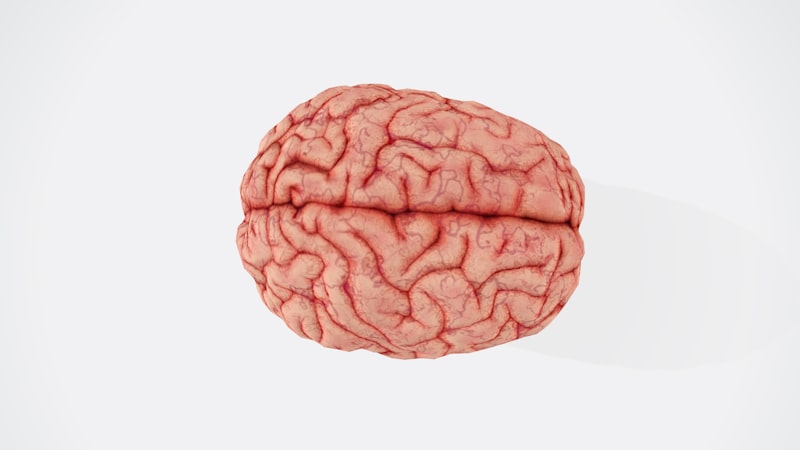
The successful execution of elaborative rehearsal is reflected in distinct patterns of neural activity, primarily involving structures within the medial temporal lobe and the prefrontal cortex. The hippocampus, a structure critical for the formation of new declarative memories, plays a central role. During elaborative encoding, the hippocampus is heavily involved in binding together the disparate elements of the new memory—the semantic information, the contextual details, and the associated pre-existing knowledge—into a unified trace. High levels of elaborative activity correlate with increased hippocampal activation, suggesting that the complexity of the processing directly translates into heightened neural engagement necessary for successful long-term storage.
Beyond the hippocampus, the prefrontal cortex (PFC), particularly the ventrolateral and dorsolateral areas, is essential for the executive control aspects of elaboration. The PFC is responsible for selecting, monitoring, and organizing the cognitive operations required to generate meaningful links. When an individual actively searches their memory for relevant prior knowledge or constructs a complex visual image, these executive functions are mediated by the PFC. Studies using functional magnetic resonance imaging (fMRI) often show greater activation in the left inferior prefrontal cortex during successful elaborative encoding compared to shallow, maintenance rehearsal, further cementing its role as the coordinating center for deep semantic processing. This frontal lobe activity reflects the strategic effort involved in structuring and contextualizing novel information.
The ultimate goal of elaborative rehearsal is memory consolidation, the process by which a fragile memory trace becomes stable and independent of the initial encoding context. Through repeated elaboration and successful retrieval attempts (which also function as elaborative acts), the memory trace is thought to be gradually transferred from the hippocampus to more permanent storage sites in the neocortex. This systems consolidation process is strengthened significantly by the quality of the initial encoding provided by elaborative rehearsal. A highly elaborated trace requires less subsequent effort for stabilization because it is already richly connected to existing cortical networks, facilitating its integration and permanence within the neural architecture.
Applications and Educational Implications
The principles of elaborative rehearsal have profound and immediate applications across pedagogy, educational design, and self-regulated learning. Educators leverage these principles by designing assignments that require students to go beyond rote memorization. Effective teaching strategies include asking students to relate textbook concepts to current events, formulate personal examples, teach the material to others (which forces structural organization), or engage in deep comparative analysis between theories. These activities are designed explicitly to prompt students away from shallow repetition and toward the active construction of meaningful semantic frameworks, thereby maximizing learning outcomes and promoting genuine understanding rather than temporary recall.
In the realm of self-regulated learning, the conscious application of elaborative rehearsal techniques is arguably the most powerful tool a student can possess. Students trained in these methods learn to transform passive reading into active engagement. Practical strategies include interrogative elaboration (asking “Why?” and “How?” questions about the material), comparative analysis (finding similarities and differences between new and old concepts), and predictive application (forecasting how the new knowledge could be applied in novel situations). These methods turn the student into an active constructor of knowledge rather than a passive recipient, leading to higher metacognitive awareness and improved study efficiency.
Furthermore, the implications of elaborative rehearsal extend into clinical and therapeutic settings, particularly in cognitive rehabilitation and memory training. Techniques used to help individuals with memory deficits often rely on strengthening encoding through structured elaboration. For example, helping a patient with amnesia remember new names or routines might involve creating highly personalized, multi-sensory associations for that information. By training individuals to systematically link new data to existing strong memories, clinicians can partially compensate for compromised hippocampal function, demonstrating that the systematic application of deep processing strategies remains essential for memory function even in cases of neurological compromise.