The Engram: Mapping Your Mind’s Hidden Blueprint
Scientifically Reviewed · Dr. Marwa Abd-Alazim · October 23, 2026
Review Criteria & Clinical Standards
This content undergoes rigorous scientific peer-review and medical editorial standards at Arab Psychology Network to ensure clinical accuracy, validity, and compliance with evidence-based guidelines from leading psychological and healthcare authorities (APA / WHO).
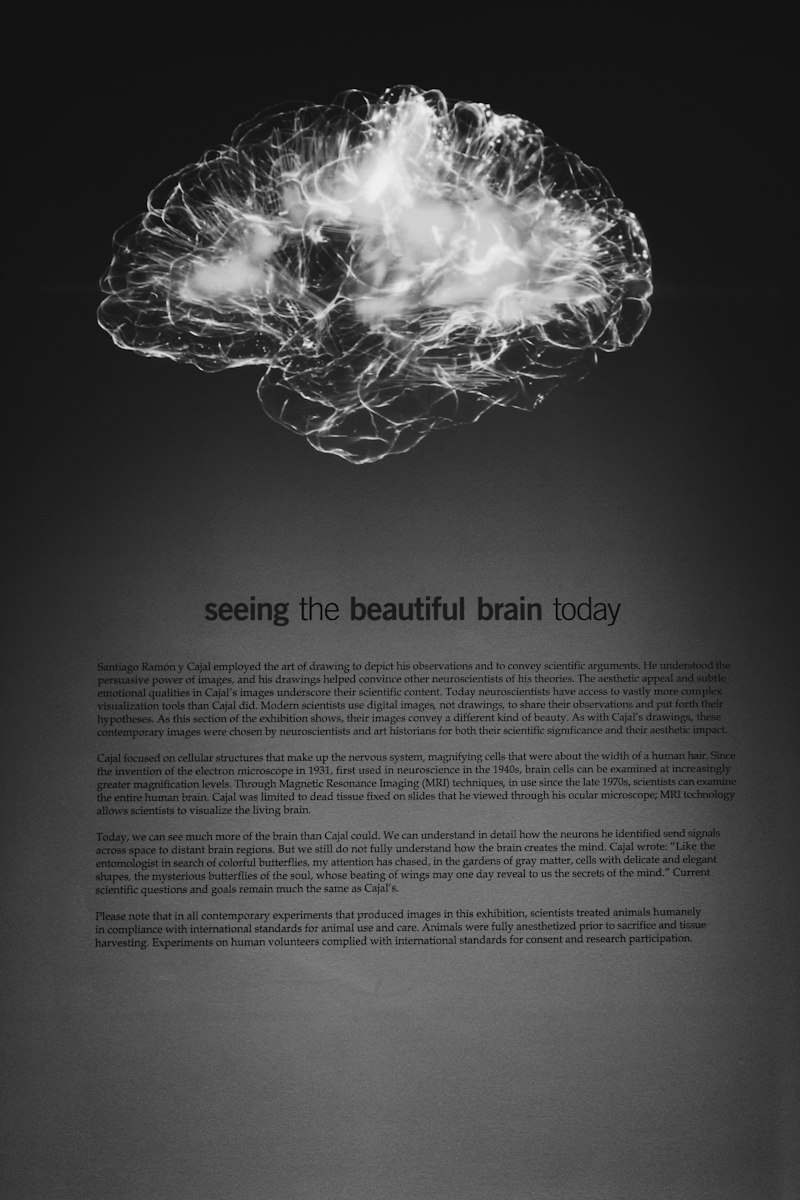
The Core Definition of the Engram
The concept of the engram stands as one of the most fundamental yet elusive ideas in neuroscience and cognitive psychology. In its simplest form, the engram is defined as the hypothetical physical or biochemical trace of a memory stored within the nervous system. Often referred to synonymously as the mnemonic trace, the engram represents the permanent change induced by an experience, which, when reactivated, results in the conscious or unconscious retrieval of that memory. Unlike abstract psychological concepts, the engram posits that every memory, whether it is a fact, a skill, or an emotional response, must correspond to a measurable, tangible alteration in the structure and function of the brain. This definition bridges the gap between the subjective experience of remembering and the objective reality of neurobiology, suggesting that memory is not just an ephemeral mental process but a physical inscription.
The core idea driving the search for the engram is the principle of neuroplasticity—the understanding that the nervous system is dynamic and capable of structural modification based on input and experience. When information is encoded, the brain must undergo a process known as engraphy, which involves a series of complex molecular and cellular events leading to the formation of the persistent trace. This trace is highly distributed and involves alterations in the strength of connections between neurons, rather than being confined to a single storage location. The engram, therefore, is not a static object but a highly dynamic network of neural ensembles that can be modified, strengthened, or weakened over time, explaining why memories can be vivid, distorted, or completely forgotten.
Understanding the engram is crucial because it provides the necessary biological substrate for all learning and memory processes. Without a physical mechanism to store and later access information, psychological theories of memory, such as the multi-store model or levels-of-processing theory, lack a complete foundation. The complexity of the engram lies in its multi-level existence; it involves changes at the molecular level (gene expression, protein synthesis), the cellular level (synaptic strength, neuronal morphology), and the systems level (coordination between different brain regions like the hippocampus and cortex). Identifying and manipulating these traces is the ultimate goal of memory research, offering potential treatments for memory disorders and enhancing human cognition.
Historical Origins and Conceptualization
The term engram was formally introduced into psychological and biological vocabulary by the German zoologist and memory researcher Richard Semon in the early 1900s, specifically in his work, “Die Mneme” (1904). Semon, a proponent of evolutionary biology, sought a non-Lamarckian explanation for the inheritance of acquired characteristics, although his primary contribution became the conceptual framework for memory storage. He proposed that every sensory input leaves a permanent impression, or engram, in the organism’s nervous tissue. Semon’s genius lay in his systematic terminology, defining the entire memory cycle through specialized terms: engraphy, the process of forming the engram; the engram itself, the dormant trace; and ecphory, the process of activating or retrieving the dormant engram.
Semon’s work, while highly influential conceptually, remained theoretical and largely overlooked by mainstream psychology for decades, partly due to the dominance of behaviorism in the mid-20th century, which prioritized observable behavior over internal mechanisms. However, his systematic approach provided the necessary vocabulary for future researchers, particularly neuroscientists, who would later attempt to locate and characterize these physical traces. Semon’s central hypothesis—that memory is fundamentally a property of matter that can be physically impressed and later retrieved—set the stage for modern biological investigations into memory. His conceptualization shifted the study of memory from a purely philosophical or introspective endeavor to a problem requiring empirical, physiological investigation.
Following Semon, the most rigorous and famous early attempt to locate the physical engram was conducted by the American psychologist Karl S. Lashley. Working primarily with rats and mazes in the 1920s through the 1950s, Lashley systematically made precise lesions—surgical removals—of various parts of the cerebral cortex to see if he could erase the memories (engrams) related to the learned maze routes. Lashley’s findings were revolutionary and initially perplexing. He could not pinpoint a single specific area where the memory resided. Instead, the loss of memory seemed proportional to the amount of tissue removed, regardless of the precise location.
The Search for the Physical Trace (Lashley’s Contribution)
Lashley’s decades-long search culminated in two powerful, though later refined, principles: equipotentiality and mass action. Equipotentiality suggested that all parts of the cortex contribute equally to complex functions like learning and memory, implying that if one area is damaged, other areas can take over the function. Mass action stated that the efficiency of learning is directly proportional to the total mass of cortical tissue remaining. These principles led Lashley to the famous, albeit premature, conclusion that the engram might not exist in a localized form, famously stating in 1950: “I sometimes feel that the necessary conclusion is that learning is just not possible.”
While Lashley was ultimately incorrect in his belief that the engram was wholly non-localized, his work was instrumental in shaping modern neuroscience. It demonstrated conclusively that simple, one-to-one localization of complex memories (like finding the specific neuron that stores the memory of a specific event) was impossible. Instead, his findings strongly implied that the engram must be distributed across vast networks of neurons, potentially involving multiple cortical and subcortical areas working in concert. This distribution explains why small, localized lesions often impair performance but rarely eliminate the entire memory, consistent with the idea of a widely dispersed mnemonic trace.
The subsequent breakthroughs in the late 20th century, spearheaded by researchers like Eric Kandel, shifted the focus from gross anatomical lesions to the cellular and molecular level. Kandel’s work on the sea slug Aplysia californica identified specific changes in synaptic strength associated with simple forms of learning, providing the first concrete biological evidence for the physical location of a memory trace at the level of the synapse. This validated the core premise of the engram—that memory involves a persistent change—but redefined its scale, moving the search from large brain regions to the microscopic junctions between neurons.
Modern Understanding: Molecular and Synaptic Mechanisms
Today, the engram is largely understood through the lens of cellular and molecular biology, particularly focusing on the processes of synaptic plasticity. The current consensus is that the engram is stored via changes in the efficacy of synaptic transmission—the process by which neurons communicate. The most prominent cellular mechanism thought to underlie the formation and maintenance of the engram is Long-Term Potentiation (LTP). LTP is a persistent strengthening of synapses based on recent patterns of activity; when two neurons fire together repeatedly, the connection between them becomes stronger, making it easier for the signal to pass in the future. This strengthened connection is a physical manifestation of the learned association.
The formation of a stable, long-lasting engram requires more than just temporary strengthening; it necessitates structural changes. This involves complex molecular cascades within the neuron, including the activation of specific genes, the synthesis of new proteins, and the growth of new synaptic connections. These changes physically reshape the neuronal circuitry, ensuring that the memory trace is maintained over months or even decades. Research using advanced techniques like optogenetics has allowed scientists to specifically label, activate, and silence the precise populations of neurons that encode a specific memory, effectively demonstrating the existence of discrete, identifiable engrams in animal models. When these engram cells are artificially activated, the animal retrieves the corresponding memory, providing the strongest evidence yet for the physical reality of the mnemonic trace.
The modern view emphasizes that the engram is not monolithic but hierarchical. While initial encoding often relies heavily on the hippocampus, the memory trace eventually undergoes a process of consolidation, whereby it is transferred and integrated into widespread cortical networks for long-term storage. The complete engram for a complex memory, such as an autobiographical event, thus involves synchronized activity between cortical areas storing sensory details, the amygdala storing emotional valence, and the prefrontal cortex managing context and retrieval strategy. The engram is therefore a distributed circuit, defined by the specific pattern of strengthened synaptic weights across many brain regions.
A Practical Example: Skill Acquisition
To illustrate the engram in a relatable context, consider the process of learning a complex motor skill, such as driving a car with a manual transmission. Initially, this task requires intense conscious effort, attention, and cognitive processing. The steps are slow, clumsy, and prone to error, reflecting a poorly formed or immature engram. This initial stage involves rapid, but temporary, changes in neural activity.
- Initial Encoding (Engraphy): During the first attempts, the sensory input (the feel of the clutch, the sound of the engine) and the motor output (coordinating the feet and hands) create temporary neural circuits. These circuits fire repeatedly under conscious control, initiating the molecular events necessary for LTP in motor and somatosensory cortices.
- Consolidation and Stabilization: Through consistent practice and periods of rest (especially sleep), the temporary synaptic changes become permanent structural alterations. New proteins are synthesized, existing synapses are strengthened, and non-essential connections are pruned. This physical change—the new, efficient circuitry that allows for smooth shifting without thought—constitutes the engram for manual driving.
- Retrieval (Ecphory): Years later, when the driver enters the car, the sensory cues (the steering wheel, the pedal placement) activate the stored engram. Because the neural circuits are physically robust, the motor sequence is retrieved automatically, requiring minimal conscious effort. The driver is no longer thinking about the steps; the physical trace guides the behavior. The engram has transformed declarative knowledge (knowing the steps) into procedural knowledge (automatically executing the steps).
If the driver suffered an injury that disrupted the specific motor cortex circuits involved in that skill, they might lose the ability to perform the skill, illustrating how the physical integrity of the engram is tied directly to the expression of the memory. The strength of this skill’s engram determines the smoothness and efficiency of the driving, demonstrating the direct link between the physical trace and behavioral output.
Significance in Cognitive Psychology and Neuroscience
The search for and eventual partial identification of the engram represents one of the most significant achievements in modern psychology and neuroscience. Its importance lies in providing the necessary biological foundation for all theories of memory, moving the field away from purely abstract models toward empirically verifiable mechanisms. The engram concept validates the long-held assumption that psychological phenomena must have a neurobiological basis, making cognitive processes accessible to molecular and cellular investigation.
The understanding of the engram has profound implications for clinical and applied psychology. In the study of memory disorders, the engram framework helps researchers distinguish between problems of encoding (failure to form the trace), storage (degradation of the trace), and retrieval (failure of ecphory). For instance, in conditions like amnesia, specific brain damage may wipe out certain groups of engrams (as seen in retrograde amnesia) or prevent the formation of new ones (as seen in anterograde amnesia, often associated with hippocampal damage).
Furthermore, understanding the malleability of the engram is crucial for therapeutic interventions. In the context of Post-Traumatic Stress Disorder (PTSD), the traumatic memory is encoded as a pathologically robust and easily retrieved engram. Techniques like memory reconsolidation—where the retrieved memory is temporarily destabilized and then re-stored—are being explored as methods to modify the emotional or fear components of the engram, thereby reducing the painful impact of the memory without erasing the content entirely. This application highlights the power of manipulating the physical trace to achieve psychological healing, demonstrating the clinical relevance of Semon’s century-old concept.
Connections to Related Memory Concepts
The engram is not an isolated concept; it is the physical centerpiece connecting various processes and systems within the broader field of memory research. It belongs primarily to the subfields of Cognitive Neuroscience and Learning Theory. Several key concepts are inextricably linked to the engram:
- Memory Consolidation: This is the time-dependent process during which a temporary, labile memory trace is transformed into a stable, long-lasting engram. Consolidation involves the structural changes (protein synthesis and synaptic growth) required to stabilize the physical trace, often occurring during sleep and periods of low interference.
- Long-Term Potentiation (LTP): As mentioned, LTP is the leading molecular candidate for the cellular mechanism of engram formation. It represents the physical strengthening of the synaptic connection that contributes to the overall distributed engram network. LTP is the “how” of engraphy.
- Schema Theory: Schemas are organized, generalized knowledge structures that help an individual understand the world. From a neurobiological perspective, schemas can be viewed as highly robust, interconnected mega-engrams—massive networks of stored information that allow for efficient encoding and retrieval of related memories. The integration of new engrams into existing schemas is a key feature of long-term memory organization.
- Working Memory: Unlike the permanent trace of the engram, working memory involves the temporary, active maintenance and manipulation of information. While not an engram itself, the process of transferring information from working memory into long-term storage is the initial trigger for engram formation.
The study of the engram continues to evolve, pushing the boundaries of what is possible in memory manipulation. Future research focuses heavily on identifying the precise cellular and molecular markers that distinguish an engram cell from a non-engram cell, with the ultimate goal of selectively enhancing or suppressing specific memories to treat psychological disorders or improve learning capabilities. The engram remains the central metaphor and the definitive physical objective of all memory research.