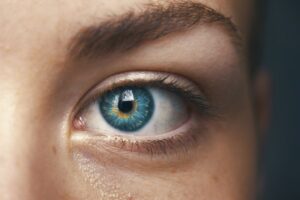
Entoptic Phenomena: Decoding Your Inner Visual Reality
Scientifically Reviewed · Dr. Marwa Abd-Alazim · October 19, 2026
Review Criteria & Clinical Standards
This content undergoes rigorous scientific peer-review and medical editorial standards at Arab Psychology Network to ensure clinical accuracy, validity, and compliance with evidence-based guidelines from leading psychological and healthcare authorities (APA / WHO).

The Core Definition of Entoptic Phenomena
Entoptic phenomena represent a specialized class of visual perception where the stimuli that give rise to the visual experience originate entirely within the observer’s own eye, rather than from external light sources or objects. The term itself is derived from the Greek roots entos (meaning within) and optikos (meaning relating to sight or the eye). These internal stimuli are often the result of structures inherent to the ocular system, such as cells, blood vessels, opacities in the ocular media, or structural components of the retina itself. Understanding entoptic phenomena is crucial because they highlight the fact that vision is not merely a passive recording of external light, but rather an active, constructive process influenced significantly by the biological mechanisms and imperfections of the sensory organ.
The fundamental mechanism underlying these experiences is the interaction of light with the tissues that compose the eye. For a phenomenon to be classified as truly entoptic, the perception must be generated by light striking internal structures that cast shadows or stimulate neural responses on the retina. These phenomena are universally experienced, though often unnoticed due to the brain’s incredible ability to filter out constant, non-essential internal noise—a process known as sensory adaptation. When the contrast or movement of the internal stimulus exceeds the threshold of this adaptive filtering, the phenomena become visible. This category of experience spans a wide range, from the common, benign presence of floaters to subtle indicators of retinal function, providing ophthalmologists and vision scientists with unique, non-invasive tools for observing physiological processes.
Entoptic experiences can be broadly categorized into two groups based on their origin. The first group includes phenomena that are physiological, arising from the normal, healthy functioning or structure of the eye, such as the Purkinje tree (shadows of retinal blood vessels) or the Blue Field Entoptic Phenomenon. The second group involves phenomena linked to minor structural changes or degenerations within the eye’s transparent media, such as muscae volitantes (floaters), which are caused by opacities in the vitreous humour. Although most entoptic perceptions are benign, sudden changes in their presentation, especially the appearance of bright flashes (photopsia), necessitate immediate clinical investigation as they may signal serious conditions like a retinal detachment.
Historical Context and Early Observation
The recognition of vision originating from within the eye is not a modern discovery; rather, observations of entoptic experiences date back centuries to the earliest systematic studies of human sensation. The ancient Greek philosopher Aristotle, for instance, described the persistent visual images, now known as afterimages, that remain visible after staring intently at a bright light source. However, the systematic scientific investigation and classification of these internal visual effects began in earnest during the 19th century, a period marked by rapid advancements in optics and physiological psychology.
A pivotal figure in formalizing the study of entoptic phenomena was the Bohemian physiologist Jan Evangelista Purkinje (1787–1869). Purkinje meticulously documented several phenomena that now bear his name, most famously the Purkinje images (reflections from the various layers of the eye) and the Purkinje tree, which is the visual perception of the shadows cast by the retinal blood vessels onto the light-sensitive photoreceptors. His work provided concrete evidence that the structures within the eye actively mediate the visual experience, demonstrating that light must pass through a complex vascular network before reaching the sensory layer. This challenged the then-prevailing simplistic view of the eye as merely a camera obscura.
Later in the 19th century, German polymath Hermann von Helmholtz further solidified the understanding of these phenomena in his monumental work, Handbook of Physiological Optics (1856–1866). Helmholtz recognized the utility of entoptic observations as a means of mapping and inspecting the internal optics and physical condition of the eye in vivo, without the need for sophisticated instruments. He described various methods for maximizing the visibility of these otherwise subtle internal structures, often involving intense, focused light sources directed at the eye’s periphery. This historical context illustrates that entoptic phenomena were crucial early tools for understanding the physiological limitations and constructive nature of human sight, paving the way for modern ophthalmology and vision science.
Classification of Entoptic Phenomena
Entoptic phenomena can be classified based on the specific ocular structure responsible for creating the perceived image. This classification helps differentiate between harmless physiological occurrences and those that signal underlying pathology. Generally, these events fall into three major categories: those caused by opacities or structures within the ocular media (the clear parts of the eye), those caused by the structure of the retina and its vasculature, and those caused by neurological or electrical stimulation of the retina.
The first major category involves structures anterior to the retina, primarily within the lens or the vitreous humour. The vitreous, a clear, gel-like substance that fills the main cavity of the eye, naturally undergoes degenerative changes over time, a process called syneresis. As the vitreous liquefies and collagen fibers aggregate, these clumps cast shadows on the retina, resulting in the perception of “floaters” (muscae volitantes). Similarly, mechanical disturbances, such as the separation of the vitreous from the retina (vitreous detachment), can stimulate the retina and produce the perception of flashes, known as photopsia. These media-based phenomena are dynamic and often change location or intensity with eye movement.
The second category pertains directly to the internal architecture of the retina itself. Phenomena like the Blue Field Entoptic Phenomenon and the Purkinje Tree are reflections of normal retinal physiology. The Blue Field phenomenon, for example, allows an observer to perceive the movement of their own white blood cells (leukocytes) flowing through the macular capillaries. This is a unique instance where a physiological process—blood flow—becomes visible. The Purkinje Tree, conversely, is the perceived shadow of the retinal blood vessels. The reason we do not see these shadows constantly is due to the brain’s rapid adaptation to stationary images on the retina; the phenomenon is usually made visible only when the light source is moving or rapidly changing its angle of entry.
Muscae Volitantes (Floaters)
Muscae volitantes, commonly known as floaters, are perhaps the most frequently reported and studied entoptic phenomenon. They appear as small, subtle, transparent or semi-transparent spots, threads, cobwebs, or complex amorphous shapes that seem to drift lazily across the visual field, especially when looking at a bright, uniform surface like a blue sky or a white wall. These perceptions are not external objects; they are shadows cast upon the retina by microscopic debris or structural changes within the vitreous humour.
The formation of floaters is a natural consequence of aging. The vitreous humour is primarily composed of water, collagen, and hyaluronic acid. Over time, the hyaluronic acid molecules break down, causing the vitreous gel to shrink and liquefy—a process termed vitreous syneresis. The previously scattered collagen fibers clump together into larger bundles. When light enters the eye, these bundled fibers intercept the light, casting distinct, fuzzy shadows onto the sensitive retinal surface. Because these vitreous opacities are suspended in a fluid medium, they follow the inertia of the eye’s movement, appearing to lag behind when the eye shifts focus and then slowly drift back into the center of vision when the eye stops.
While floaters are generally considered harmless and a normal part of ocular aging, a sudden, dramatic increase in their number or size warrants immediate medical attention. A sudden shower of new floaters, particularly if accompanied by flashes of light, can be symptomatic of posterior vitreous detachment (PVD). PVD occurs when the shrinking vitreous pulls away from the back wall of the eye. In rare cases, the vitreous gel may pull strongly enough to tear the retina, which is a medical emergency requiring swift intervention to prevent vision loss resulting from a retinal detachment.
Photopsia (Flashes of Light)
Photopsia, or the experience of flashes of light, is another critical entoptic phenomenon. Unlike light originating from the external environment, these flashes are internally generated and perceived as brief streaks, sparks, or arcs of light in the peripheral visual field, often lasting only a fraction of a second. Photopsia is usually a consequence of mechanical stimulation of the retina’s photoreceptors and associated neurons.
The primary cause of photopsia is the physical traction or rubbing action exerted on the retina, most commonly during the process of posterior vitreous detachment (PVD). The retina interprets any stimulation, whether light or mechanical pressure, as light. As the shrinking vitreous humour pulls away from the retina, the mechanical stress on the light-sensitive tissue triggers neural signals that the brain processes as luminous events. These flashes are typically most noticeable in low-light conditions or when the eyes are moved rapidly. The precise location and nature of the flashes can often help an ophthalmologist determine the area of the retina under stress.
It is crucial to distinguish PVD-related photopsia from light sensations caused by other conditions. For instance, flashes can be a prodromal symptom of an ocular migraine, where the visual disturbances (scintillating scotomas) are often complex, geometric, and spread across the central visual field, typically lasting 20–30 minutes. Conversely, flashes associated with retinal tears or detachments are generally perceived as brief, peripheral streaks. Because photopsia signals mechanical stress on the retina, it is never considered purely benign and should always be evaluated promptly to rule out the possibility of a sight-threatening retinal detachment.
The Blue Field Entoptic Phenomenon
The Blue Field Entoptic Phenomenon (BFEP), sometimes referred to as Scheerer’s phenomenon, is a fascinating physiological event that allows an observer to visualize the movement of their own blood through the minute capillaries of the retina. The phenomenon is best observed when looking at a uniformly bright blue field, such as a clear sky, or a pure monochromatic blue light source. Under these conditions, the observer perceives a multitude of tiny, bright, rapidly moving dots or specks following erratic paths across the visual field.
The mechanism relies on the unique properties of blue light and the structure of the macula. Blue light is absorbed less efficiently by the red blood cells traveling through the retinal capillaries, meaning that light penetrates further toward the photoreceptors. The perceived bright dots are not the blood cells themselves, but rather the gaps between them—specifically, the relatively larger, transparent leukocytes (white blood cells) that travel through the capillaries. When a leukocyte passes through a capillary in the macula, it temporarily creates a relatively transparent “window” that allows a burst of blue light to strike the photoreceptors directly beneath it. This momentary surge of light is perceived as a bright, mobile speck.
The BFEP is particularly important in vision science because it offers a non-invasive, objective measure of macular capillary blood flow. The speed and density of the perceived dots are directly proportional to the velocity and concentration of leukocytes within the retinal microcirculation. This principle has been formalized into clinical devices, such as the Blue Field Entoptoscope, which can be used to monitor vascular health in patients with conditions like diabetic retinopathy or macular degeneration, where changes in retinal blood flow are key pathological indicators.
Chromatic Aberration and Colour Fringes
Colour fringes, or halos of colour surrounding high-contrast objects, are a type of entoptic phenomenon arising from the inherent optical imperfections of the eye’s lens system, specifically chromatic aberration. Chromatic aberration is an optical defect that occurs because the refractive index of glass (or the human lens) varies with the wavelength of light. Simply put, the eye cannot focus all colours of light onto the same focal plane simultaneously.
Short-wavelength light (blue/violet) is refracted more strongly than long-wavelength light (red). Consequently, when viewing a sharp, high-contrast edge, the blue components of the light may focus slightly in front of the retina, while the red components focus slightly behind it. The brain attempts to fuse this information, but the slight defocus results in a noticeable coloured border or fringe around the edges of objects, particularly when the pupil is dilated and the light source is intense. This effect is subtle in daily life but becomes pronounced in specialized viewing conditions or in individuals with uncorrected vision problems.
While chromatic aberration is an unavoidable physiological reality, its effects are usually minimized by the eye’s natural architecture and the brain’s filtering processes. The central part of the visual field (the fovea) is adapted to reduce this effect, and the brain preferentially focuses on yellow-green light (the center of the visible spectrum) where visual acuity is highest. However, excessive or sudden changes in colour fringing can sometimes indicate pathological conditions that affect the crystalline lens, such as cataracts, which alter the refractive properties of the eye and exacerbate the inherent optical distortion.
Practical Application and Real-World Scenarios
To illustrate the simultaneous presence and differentiation of entoptic phenomena, consider a common scenario: an individual is sitting outside on a bright summer day, reading a book with large, crisp, black text on a glossy white page. As they intermittently glance up at the clear, blue sky, several entoptic phenomena come into play.
-
The Floaters (Muscae Volitantes): While focusing on the white page, the observer notices small, drifting specks that appear to move sluggishly. These are the shadows of aggregated collagen fibers in the vitreous humour. When the reader rapidly shifts their gaze to a new line of text, the floaters briefly dart across the field of vision due to inertia, then slowly settle back into position. This simple observation confirms the presence of opacities within the ocular media anterior to the retina.
-
The Blue Field Entoptic Phenomenon (BFEP): When the reader looks up at the uniform blue sky, the rapid motion of tiny, bright dots becomes apparent. These are the leukocytes in the retinal capillaries being highlighted by the monochromatic blue light. The phenomenon demonstrates the active, continuous blood flow within the retina and confirms the functional integrity of the macula’s microcirculation, which is essential for central vision.
-
Chromatic Fringes: As the reader returns their focus to the sharp black edges of the text against the white background, they may perceive a faint, subtle coloured halo, particularly at the highest contrast edges. This is the physiological effect of chromatic aberration, demonstrating the eye’s inability to focus the blue and red wavelengths of the light reflected from the page onto the exact same plane.
This step-by-step example shows that entoptic phenomena are not rare occurrences; they are constant features of human vision. The brain is typically successful at filtering them out, treating them as irrelevant background noise, but under conditions of high contrast, uniform illumination, or rapid eye movement, these internal visual events become easily discernible and demonstrate the physical constraints and mechanisms of the visual apparatus.
Clinical Significance and Ophthalmic Implications
The study of entoptic phenomena holds immense significance for both clinical ophthalmology and theoretical psychology. Clinically, entoptic experiences serve as important diagnostic indicators, often acting as the only subjective symptoms reported by patients regarding the health of their internal ocular structures. They provide a vital bridge between subjective patient reporting and objective physiological assessment.
Perhaps the most crucial clinical application lies in the differential diagnosis of acute visual changes. While chronic floaters are benign, the acute onset of photopsia (flashes) and a sudden increase in floaters is the hallmark symptom complex of an impending or existing retinal detachment. Because a detachment requires urgent surgical intervention, a patient’s description of these entoptic events guides the ophthalmologist to perform immediate, thorough peripheral retinal examination. Furthermore, entoptic tests, such as those utilizing the Purkinje Tree or the Blue Field Entoptoscope, are used to assess the functional status of the retina when the external media (like the lens or cornea) are opaque due to cataracts or trauma, allowing doctors to estimate potential vision recovery after surgical correction.
Theoretically, entoptic phenomena are fundamental to the field of visual perception. They confirm that the retina is not just a passive sensor but an active, integral part of the visual experience. The fact that the brain continuously suppresses the visual image of our own blood vessels (the Purkinje tree) demonstrates the complex mechanisms of sensory adaptation and neural filtering. Researchers use these phenomena to study how the visual system stabilizes the world despite constant movement and internal noise, contributing deeply to our understanding of how the brain constructs a coherent, stable reality from inherently imperfect sensory input.
Connections to Visual Perception and Related Concepts
Entoptic phenomena primarily fall within the subfield of Sensation and Perception, which bridges experimental psychology with physiological optics. They are intrinsically linked to several core psychological concepts, offering empirical evidence for how the visual system functions under normal and pathological conditions.
One key relationship is with Sensory Adaptation. If the retinal structures responsible for casting shadows (like blood vessels or fixed floaters) remained perfectly stationary relative to the photoreceptors, the visual system would quickly adapt, and the perception would fade entirely. The fact that floaters move and the Purkinje tree requires moving light to be seen highlights the brain’s specialized mechanism for ignoring constant, unchanging stimuli. This ensures that our attention remains focused on dynamic external information, which is usually more critical for survival.
Entoptic experiences also connect strongly with the principles of Gestalt Psychology, particularly the concept that the whole is greater than the sum of its parts. Although the eye is constantly bombarded by internal shadows, distortions from chromatic aberration, and the movement of blood cells, the perceptual outcome is usually a clear, stable, and unified view of the external world. The brain actively edits, smooths, and interprets the raw sensory data, effectively prioritizing external stimuli over the internal noise generated by the visual apparatus itself. In essence, entoptic phenomena represent the physical “noise floor” that the brain must continuously overcome to achieve coherent visual perception.