Entoptic Phenomena: How Your Eyes Craft Your Reality
Scientifically Reviewed · Dr. Marwa Abd-Alazim · October 14, 2026
Review Criteria & Clinical Standards
This content undergoes rigorous scientific peer-review and medical editorial standards at Arab Psychology Network to ensure clinical accuracy, validity, and compliance with evidence-based guidelines from leading psychological and healthcare authorities (APA / WHO).
The Core Definition of Entoptic Phenomena
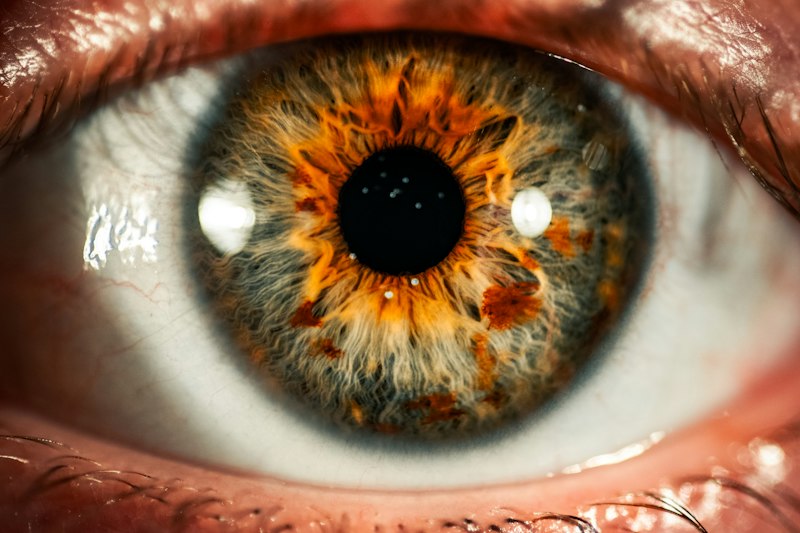
Entoptic phenomena, often referred to simply as entoptics, are visual experiences whose source lies within the eye itself, rather than being generated by external stimuli originating in the environment. Unlike normal vision, where photons pass through the cornea and lens to stimulate the retina, entoptic images arise from structures, materials, or processes inherent to the eye’s optical system or neural pathways. This fundamental distinction means that entoptic perceptions are highly personal and subjective, varying significantly from one individual to the next, depending on the unique physiological structure of their ocular apparatus.
The fundamental mechanism behind these perceptions involves some form of internal obstruction, manipulation, or stimulation of the light path or the neural tissue. For instance, tiny physical debris floating in the vitreous humor casts shadows on the retina, or mechanical pressure on the eyeball stimulates the photoreceptors directly. These internal sources create perceptions—often described as geometric patterns of dots, lines, or forms—that the brain interprets as visual input, even though no external object corresponding to the image exists. The resulting visual artifacts are a direct manifestation of the eye’s anatomy and function, providing a fascinating, albeit sometimes frustrating, window into the living optics of the human visual system.
While some entoptic images, such as the common floaters (muscae volitantes), are benign and universally experienced, others can be associated with underlying medical conditions, including migraine auras, seizure activity, or retinal disorders. Understanding the precise physiological origin of a specific entoptic phenomenon is crucial for both ophthalmology and psychology, as it helps differentiate normal ocular function from pathological states. These phenomena emphasize that the act of “seeing” is not merely passive reception of light, but an active, complex interpretation process heavily influenced by the biological medium transmitting the signal.
Historical Context and Early Study
The observation and documentation of visual artifacts originating within the eye date back centuries, predating modern psychological and ophthalmological study. However, formal scientific investigation into entoptic phenomena gained significant momentum during the 19th century. One of the most significant early contributors was the Bohemian physiologist Johannes Purkinje, who meticulously described several types of internal visual perceptions. His work, particularly his description of the visual effect of light shining on the eye’s vascular structure—now known as the Purkinje images or the Purkinje Tree—laid the groundwork for classifying these internal experiences.
Purkinje’s findings demonstrated that simply observing the world was insufficient; researchers needed methods to isolate and amplify the internal workings of the eye. His research involved specific techniques, such as applying localized pressure or using focused light sources, to deliberately induce and study phenomena like phosphenes. This systematic approach transitioned the topic from anecdotal observation into a measurable physiological phenomenon, establishing entoptics as a legitimate area of study within early sensory physiology.
Following Purkinje, subsequent researchers continued to categorize and theorize about the mechanisms. The early context of this study was tightly intertwined with the emerging field of experimental psychology and the study of sensation and perception. Scientists were keen to understand the limits of sensory input and how internal noise might contaminate or influence external perception. This era of research was vital because it provided foundational evidence that visual perception is often a blend of external reality and internal physiological processing noise, a concept essential to modern understanding of both sensory psychology and neurology.
Classification of Entoptic Phenomena
Entoptic phenomena are typically categorized based on their physiological origin and the characteristics of the resulting visual experience. While the specific manifestations are diverse, researchers generally group them into three major categories: those caused by internal mechanical or electrical stimulation (Phosphenes), those resulting from photoreceptor adaptation (Afterimages), and those caused by physical structures casting shadows within the eyeball (Floaters). This classification scheme allows clinicians and researchers to approach diagnosis and study with greater precision, linking the perceived image directly back to a known physiological mechanism within the ocular structure.
Understanding these classifications is critical because the perceived quality of the phenomenon—whether it is a flashing light, a persistent shadow, or a moving smudge—often indicates the specific part of the visual system involved. For example, phenomena originating in the anterior structures, such as the lens or vitreous humor, tend to be perceived as moving shadows, whereas phenomena originating closer to the retina or optic nerve typically involve flashes of light or geometric patterns due to direct neural stimulation.
The variability of entoptic experiences underscores the need for clear classification. Some phenomena are highly dependent on external lighting conditions (like the Blue Field Entoptic Phenomenon, where white blood cells are seen moving in capillaries), while others are entirely self-generated (like pressure phosphenes). The comprehensive study of these categories informs us not only about normal visual physiology but also about the potential early indicators of eye pathology or systemic neurological issues, such as those associated with the visual cortex.
Detailed Exploration of Key Entoptic Types
The three primary types of entoptic phenomena offer distinct insights into ocular function. Phosphenes represent the perception of light without actual light entering the eye. These are the most commonly reported type of entoptic experience and are characterized by the perception of bright flashes, streaks, or geometric patterns of light. Phosphenes can be induced mechanically (e.g., rubbing or applying pressure to the eyelid, stimulating the retina directly), electrically (e.g., using transcranial magnetic stimulation), or spontaneously (e.g., due to sudden movements of the head or vitreous traction). Their origin is typically traced to the direct stimulation of the photoreceptor cells or the neural pathways leading from the retina to the visual cortex.
Afterimages, conversely, are perceptions that persist after the cessation of exposure to a bright or highly contrasting visual stimulus. These images are faint, monochromatic, and typically persist for a few seconds or minutes, demonstrating the adaptation and subsequent fatigue of the photoreceptor pigments. If a person stares intensely at a bright red object and then looks away at a white wall, the resulting afterimage will appear cyan (the complementary color). This phenomenon is crucial in illustrating the opponent-process theory of color vision and the temporary saturation of retinal cones, highlighting the dynamic, rather than static, nature of sensory processing.
The third major category includes Floaters, scientifically termed muscae volitantes (Latin for “flying flies”). Floaters appear as small, moving shapes, specks, or threads that seem to drift within the field of vision, particularly when viewing a bright, uniform surface like a blue sky or a white wall. They are caused by microscopic fragments of cellular debris, protein clumps, or collagen fibers suspended within the vitreous humor—the gel-like substance that fills the eyeball. These particles cast faint shadows onto the sensitive retina, and because they are suspended in a fluid, they lag slightly behind eye movements, giving them their characteristic drifting quality. While usually harmless, a sudden increase in floaters can signal a serious condition, such as a retinal tear or detachment, necessitating immediate medical attention.
Underlying Theories of Origin
While the physical location of many entoptic phenomena (like floaters in the vitreous) is understood, the exact physiological mechanism that triggers the perception in the brain for all types remains a subject of ongoing research and theoretical debate. Historically, several key theories have been proposed to explain the generation of these internal images, often overlapping depending on the specific phenomenon being studied. These theories attempt to bridge the gap between a physical event within the eye and the conscious, subjective experience of seeing light or shapes.
The Mechanical Theory posits that entoptic images, particularly phosphenes, are caused by the physical deformation or stimulation of the retina. Any pressure applied to the external structure of the eye mechanically stretches or compresses the light-sensitive cells, causing them to fire neural signals identical to those produced by actual light. This theory is robust in explaining phenomena such as pressure phosphenes or those induced by sudden acceleration or deceleration, where vitreous tugging causes brief stimulation of the retinal surface. The mechanical stress momentarily disrupts the resting potential of the photoreceptors, leading to an interpretation of light by the visual centers of the brain.
Complementing the mechanical view is the Electrical Theory, which suggests that entoptic images are caused by aberrant electrical activity within the visual system, either at the retinal level or further along the visual pathway, possibly involving the optic nerve or the visual cortex. This theory is particularly relevant to spontaneous phosphenes associated with neurological events, such as those experienced during a migraine aura or certain forms of epilepsy. In these cases, waves of electrical depolarization spread across neural tissue, resulting in visual perceptions (scintillating scotomas or geometric flashes) that have no external light source. Finally, the Biochemical Theory suggests that the phenomena may be linked to the spontaneous release or imbalance of neurotransmitters within the eye or the brain, impacting the sensitivity or noise level of the visual processing chain.
A Practical, Relatable Example: The Floater Experience
To illustrate the mechanism of an entoptic phenomenon in everyday life, consider the common experience of viewing “floaters” while looking at a clear blue sky on a sunny day. This scenario perfectly demonstrates the interaction between internal ocular structure and external light conditions necessary for the perception of muscae volitantes. The clarity of the sky provides a uniform, high-contrast background that makes the faint shadows cast by internal debris easily visible, which would otherwise be masked by complex visual input.
The application of the psychological principle—that vision is influenced by internal noise—can be broken down into a clear sequence of steps:
- The Internal Source: Microscopic protein fibers, cells, or collagen fragments break away or clump together within the vitreous humor, the transparent gel filling the eyeball behind the lens. These particles are suspended in the fluid medium.
- Shadow Casting: As bright, parallel light rays enter the eye (e.g., sunlight from the clear sky), these suspended particles intercept the light. Because the particles are located some distance from the retina, they cast blurry but discernible shadows onto the light-sensitive photoreceptor layer.
- Perception and Movement: The retina detects these moving shadows as input, and the brain interprets them as small, moving specks or threads. When the eye moves, the fluid in the vitreous humor shifts, causing the debris to drift slightly behind the direction of the eye movement, creating the characteristic “floating” or “lagging” sensation.
- Interpretation as Visual Input: Crucially, the visual processing centers do not differentiate this internal shadow from an external visual object; they simply process the signal received from the retina, demonstrating how internal physiological structures fundamentally shape conscious perception.
This example highlights that while the debris is a physical reality within the eye, the perception of the floater is an entoptic phenomenon—a generated image dependent entirely on the internal state and structure of the observer’s own visual apparatus.
Significance, Clinical Applications, and Impact
The study of entoptic phenomena holds profound significance for both clinical ophthalmology and theoretical psychology. Psychologically, these experiences serve as compelling evidence that conscious perception is not a perfect mirror of external reality but is profoundly shaped by the biological hardware of the sensory system. They demonstrate the concept of sensory “noise” and how the brain attempts to filter or integrate endogenous signals with exogenous stimuli. Understanding these internal artifacts is essential for defining the baseline functionality of the human visual system.
In clinical settings, reports of entoptic phenomena are invaluable for diagnosis. While stable, unchanging floaters or occasional pressure phosphenes are usually benign, sudden changes in their quality, frequency, or type can signal serious medical issues. For example, an acute shower of new floaters accompanied by flashes of light (phosphenes) is a classic symptom complex indicating posterior vitreous detachment or, more seriously, a potential retinal tear or detachment. Clinicians rely heavily on patient reports of these internal visual events to assess the immediate health of the retina and the vitreous body.
Furthermore, specific entoptic tests have been developed to evaluate retinal health. For instance, the Blue Field Entoptic Phenomenon test can be used to assess capillary blood flow and macular function. By asking the patient to describe the movement of tiny luminous dots (which are actually the patient’s own leukocytes moving through retinal capillaries), ophthalmologists can gain insight into the health of the retinal circulation, especially in monitoring progressive eye diseases such as diabetic retinopathy or macular degeneration. Thus, these subjective internal experiences are transformed into objective diagnostic tools, cementing their importance in modern medical practice.
Connections to Broader Psychological Fields
Entoptic phenomena are primarily situated within the subfield of Sensory and Perceptual Psychology, offering critical insights into the transduction of physical energy into neural signals and the subsequent organization of that information by the brain. They directly relate to the study of sensory thresholds, demonstrating how minimal internal stimulation can cross the threshold of conscious awareness. They are often discussed alongside concepts like sensory adaptation, habituation, and noise filtering.
The phenomena share a conceptual border with the study of Hallucinations, though a critical distinction must be maintained. While both involve perceptions without corresponding external stimuli, hallucinations are typically associated with neurological or psychiatric conditions and involve complex, often meaningful, imagery (like faces or voices) originating from cortical processes. Entoptic phenomena, in contrast, are generally simple, geometric, and directly attributable to physiological events within the eyeball itself. However, the study of entoptic artifacts, particularly complex phosphenes seen during migraine aura, helps researchers understand the basic building blocks of internally generated visual experience.
Related concepts that benefit from the understanding of entoptics include Sensory Adaptation, which is clearly demonstrated by afterimages, and the neurobiological study of Visual Processing Pathways. Entoptics confirm that the visual system, from the receptor cells to the visual cortex, operates under continuous internal activity. This internal activity, usually ignored by the brain’s filtering mechanisms, only becomes perceptible when amplified or when specific viewing conditions make the internal artifacts visible against a uniform background, reinforcing the idea that perception is an active, interpretative process rather than a passive registration of the external world.