Entorhinal Cortex: Mapping the Architecture of Memory
Scientifically Reviewed · Dr. Marwa Abd-Alazim · October 20, 2026
Review Criteria & Clinical Standards
This content undergoes rigorous scientific peer-review and medical editorial standards at Arab Psychology Network to ensure clinical accuracy, validity, and compliance with evidence-based guidelines from leading psychological and healthcare authorities (APA / WHO).
The Core Definition of Entorhinal Cortex Lesion
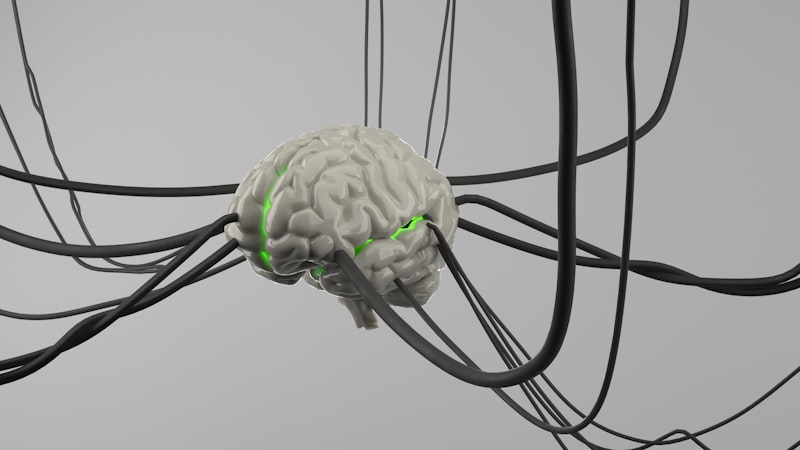
A lesion of the Entorhinal Cortex (EC) refers to damage, destruction, or functional impairment of this critical brain region located in the medial temporal lobe. The core definition centers on the fact that the EC serves as the principal gateway for communication between the vast neocortex—where sensory information is initially processed—and the hippocampus, the structure essential for the formation of new long-term memories. Consequently, the fundamental mechanism disrupted by an EC lesion is the successful transfer and encoding of new informational content, leading inevitably to profound memory deficits, primarily affecting the ability to recall recent events and facts.
The EC is not merely a relay station; it is a complex integrative hub responsible for processing high-level sensory input, particularly information related to spatial location and time. When this structure is compromised, the entire hippocampal-dependent memory circuit fails to operate coherently. The severity of the resulting impairment, often classified as a form of amnesia, is directly proportional to the extent and bilaterality of the damage. Bilateral lesions, affecting both hemispheres, result in the most severe and debilitating forms of memory loss, rendering the individual incapable of forming the episodic records that constitute daily life experiences.
Understanding the implications of an EC lesion requires appreciating its role as the final cortical processing stage before information enters the hippocampal circuit via the perforant path. This anatomical organization means that damage to the EC effectively isolates the hippocampus from its required input stream. While the hippocampus itself may remain structurally intact, it is rendered functionally inert regarding new memory encoding, demonstrating the EC’s critical, non-redundant role in the initial steps of memory consolidation and storage. This mechanism explains why even small, targeted lesions can produce disproportionately large cognitive deficits.
Anatomical and Functional Role of the Entorhinal Cortex
Anatomically situated within the medial temporal lobe, the Entorhinal Cortex is a phylogenetically ancient structure characterized by six distinct layers, each specialized for handling different types of input and output. Layer II and Layer III are particularly crucial for the memory function of the EC. Layer II contains the cell bodies that give rise to the perforant path, the major input pathway projecting to the dentate gyrus and CA3 region of the hippocampus. Layer III projects to the CA1 and subiculum regions. This layered organization underscores its function as a finely tuned filter and integrator of multimodal information originating from association areas across the frontal, parietal, and temporal lobes.
Functionally, the Entorhinal Cortex is celebrated in neuroscience for housing specialized neuronal populations crucial for spatial navigation. These include the famous “grid cells,” which fire when an animal occupies specific, periodically spaced locations within an environment, forming a hexagonal lattice-like representation of space. Additionally, the EC contains “border cells,” which fire when boundaries are encountered, and “head direction cells,” which signal the direction the head is facing. Damage to the EC, therefore, not only impairs memory encoding but also severely compromises an individual’s sense of location, direction, and spatial mapping abilities, suggesting an intimate link between spatial cognition and episodic memory formation.
The input-output dynamic of the EC is highly complex. It receives input concerning sensory modalities, contextual cues, and processed emotional information, synthesizing these disparate components into a unified representation suitable for hippocampal processing. A lesion interrupts this synthesis, meaning that the rich contextual fabric necessary for forming episodic memories—memories that include the “what,” “where,” and “when”—cannot be successfully constructed or transferred for long-term storage. The integrity of the EC is thus foundational to the brain’s ability to create a coherent, autobiographical narrative of experience.
Historical Discovery and Key Research
The understanding of the crucial role played by the medial temporal lobe structures, including the Entorhinal Cortex, crystallized in the mid-20th century, largely following the case study of Patient H.M. (Henry Molaison). While H.M.’s extensive lesion included the hippocampus, amygdala, and surrounding parahippocampal gyrus structures, his profound and permanent anterograde amnesia highlighted the indispensable nature of the medial temporal lobe for memory consolidation. Subsequent research, particularly using highly targeted animal models (rats and monkeys), sought to dissect the specific contributions of each sub-region, differentiating pure hippocampal damage from damage involving the EC.
Key experimental work in the late 20th century, involving precise excitotoxic lesions, demonstrated that destruction of the EC alone was sufficient to produce striking deficits in tasks dependent on spatial navigation and contextual memory, mirroring the deficits seen when the entire hippocampal formation was removed. This research cemented the EC’s status as the necessary intermediary. Furthermore, the discovery of grid cells in 2005 by May-Britt Moser and Edvard Moser further elevated the EC’s prominence, providing a cellular mechanism for how the brain constructs a cognitive map, which is intimately tied to the ability to form episodic memories. This work earned the researchers the Nobel Prize in Physiology or Medicine in 2014, solidifying the EC as a cornerstone of cognitive neuroscience research.
The historical trajectory moved from viewing the medial temporal lobe as a single memory unit to recognizing the precise, sequential flow of information starting at the EC. This historical shift allowed researchers to understand memory not as a monolithic function, but as a system comprising multiple, specialized subprocesses, where the failure of the EC represents a critical breakdown in the input stage required for the encoding of declarative memory. These historical findings continue to guide modern pharmacological and surgical approaches to treating memory disorders.
Clinical Manifestations and Symptomology
The primary and most devastating clinical manifestation of a bilateral Entorhinal Cortex lesion is severe anterograde amnesia. This condition is characterized by an inability to form new long-term memories following the onset of the damage. Patients cannot recall events that occurred minutes or hours ago, even though their immediate working memory and attentional capacities may remain largely intact. They are perpetually stuck in the moment of the injury, unable to lay down new episodic tracks.
Specific categories of memory are differentially affected. While the formation of new declarative memory—the memory for facts (semantic) and events (episodic)—is severely compromised, other memory systems are often spared. For instance, procedural memory (the memory for skills and habits, such as riding a bicycle or typing) remains functional because it relies on basal ganglia and cerebellar circuits rather than the medial temporal lobe. Similarly, remote memories consolidated long before the lesion typically remain accessible, as they are thought to be stored in the neocortex, independent of the hippocampal system.
Beyond memory loss, patients with EC lesions also exhibit profound spatial disorientation. Due to the destruction of the grid cells and place-related neural circuitry, they struggle intensely with navigation, map-reading, and finding their way even in familiar environments. This spatial deficit is often tightly coupled with the episodic memory deficit, reinforcing the theory that our memory for events is fundamentally structured around a spatial and temporal context. The combination of losing the capacity to remember new experiences and losing the capacity to navigate the physical world creates an isolating and highly dependent existence for affected individuals.
A Practical Illustration: The Case of Severe Amnesia
Consider the hypothetical case of Mr. J, a patient who suffered bilateral damage specifically limited to the Entorhinal Cortex following a severe lack of oxygen (hypoxia). Before the injury, Mr. J was a capable, independent individual. Following the lesion, he exhibits classic symptoms of dense anterograde amnesia, providing a clear illustration of the EC’s function.
The practical application of the EC lesion principle is demonstrated vividly in daily interactions with Mr. J. If a nurse introduces herself to him at 9:00 AM, Mr. J will interact normally, exhibiting intact working memory. However, if the nurse leaves the room for ten minutes and returns, Mr. J will greet her as a complete stranger, requiring a full re-introduction. The sensory information (the nurse’s face, voice, name) successfully reached the EC from the neocortex, but due to the lesion, the necessary relay of this complex integrated information into the hippocampus via the perforant path failed. The memory was never encoded into a long-term trace.
Furthermore, if Mr. J is taught a new motor skill, such as a complex puzzle or a sequence of movements, he will improve his performance over repeated trials, demonstrating successful learning through procedural memory pathways. Yet, when asked later, he will insist he has never seen the puzzle before and cannot consciously recall any of the training sessions. This scenario provides the most compelling evidence that the EC lesion selectively dismantles the apparatus responsible for forming conscious, explicit memories (declarative memory), while leaving the implicit, subconscious learning systems operational.
Significance to Cognitive Neuroscience
The study of Entorhinal Cortex lesions holds immense significance for cognitive neuroscience because it clearly demarcates the functional boundaries of the memory system. By analyzing the precise deficits resulting from EC damage, researchers have been able to confirm the multi-component model of memory—the understanding that memory is not a single entity but a collection of distinct processes involving specific brain regions. The EC is confirmed as the crucial bottleneck for transferring information from processing stages to consolidation stages.
Moreover, EC research has been fundamental in advancing our understanding of spatial cognition and navigation. The identification of grid cells within this area provided the neurobiological hardware underlying the cognitive map concept proposed decades earlier. Lesion studies specifically targeting the EC have confirmed that disrupting this structure completely dismantles the ability to navigate, proving that the EC is the primary locus for metric representations of space, a finding that has broad implications for robotics, virtual reality design, and understanding spatial learning in educational contexts.
The vulnerability of the EC also makes it a critical area of study in clinical settings. Because it is the earliest site of pathology in several neurodegenerative diseases, studying its function in detail provides potential biomarkers for early detection and intervention strategies. The integrity of the EC is now frequently assessed using high-resolution MRI and functional imaging techniques as a leading indicator of neurocognitive decline, cementing its position as one of the most important structures in human cognition.
Connections to Related Neurological Disorders
The Entorhinal Cortex is arguably the most critical structure linking fundamental cognitive research to clinical neurology, primarily due to its central role in the pathogenesis of Alzheimer’s Disease (AD). The EC is the first neocortical region to show significant accumulation of neurofibrillary tau tangles and amyloid-beta plaques, the pathological hallmarks of AD. This explains why the earliest and most reliable symptom of AD is progressive episodic memory loss—a functional lesion begins long before structural collapse.
The progression of AD pathology, known as Braak staging, begins in the transentorhinal and Entorhinal Cortex areas (Stages I and II) before spreading to the hippocampus and eventually the neocortex. Consequently, research into EC lesions provides an invaluable model for understanding the initial cognitive decline in AD. Unlike traumatic or vascular lesions, which are sudden, the AD pathology represents a slow, progressive lesion, allowing researchers to track the gradual erosion of memory function as specific neuronal populations (like the grid cells) are destroyed.
Furthermore, EC lesions are related to other forms of amnesia, particularly those resulting from Herpes Simplex Encephalitis or severe temporal lobe epilepsy requiring surgical resection. The study of these diverse etiologies confirms that regardless of the cause, the functional consequence of destroying the EC—the inability to transfer processed sensory information into the hippocampal formation for consolidation—remains the defining characteristic of the resulting cognitive impairment. The broader category of psychology this concept belongs to is Cognitive Neuroscience and Neuropsychology.
Therapeutic Outlook and Future Research
Currently, treatment for memory deficits resulting from established Entorhinal Cortex lesions focuses primarily on cognitive rehabilitation and compensatory strategies, rather than structural repair. Rehabilitation utilizes the spared memory systems, such as procedural and implicit memory, to teach patients routines and skills that minimize the impact of their declarative memory deficit. For example, relying on environmental cues or habit formation to guide daily tasks rather than relying on conscious recall.
Future research holds promising avenues, particularly in the realm of deep brain stimulation (DBS) and regenerative medicine. Initial trials using DBS targeting circuits related to the EC and hippocampus have shown potential in modulating memory function, offering hope for enhancing the remaining functional capacity of the circuit. Furthermore, research focused on neurogenesis—the growth of new neurons—in the dentate gyrus (which receives input from the EC) aims to explore whether stimulating new cell growth can partially compensate for the lost input pathway, although successful clinical application remains highly challenging due to the complexity of integrating new neurons into existing functional circuits.
The most urgent area of research involves protecting the EC in its vulnerable early stages of neurodegeneration, especially in genetic predispositions to Alzheimer’s Disease. Scientists are actively searching for pharmacological agents that can prevent the initial accumulation of tau pathology specifically in the EC, effectively halting the disease before it spreads to the rest of the memory system. Success in this area would fundamentally change the prognosis for millions of individuals at risk of developing severe amnesia.