Psychological Entropy: Why Your Mind Craves Order
Scientifically Reviewed · Dr. Marwa Abd-Alazim · October 23, 2026
Review Criteria & Clinical Standards
This content undergoes rigorous scientific peer-review and medical editorial standards at Arab Psychology Network to ensure clinical accuracy, validity, and compliance with evidence-based guidelines from leading psychological and healthcare authorities (APA / WHO).
The Core Definition of Entropy
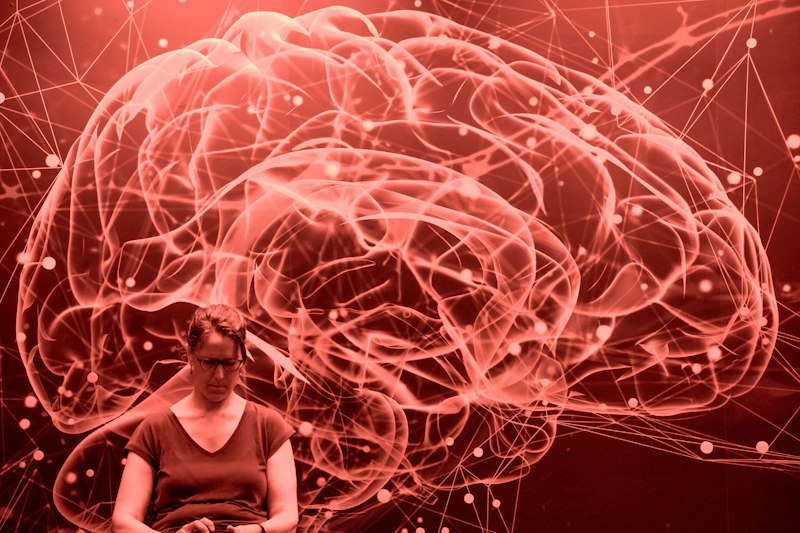
The concept of Entropy, originally derived from the field of Thermodynamics, measures the degree of disorder, randomness, or uncertainty within a system. In its physical sense, it quantifies the amount of thermal energy unavailable for doing mechanical work, often described as the tendency of closed systems to degrade toward a state of uniform equilibrium, where all energy is evenly distributed and disorder is maximized. When translated into the psychological domain, entropy shifts from a physical measure to a theoretical construct, primarily representing uncertainty, unpredictability, or cognitive noise within the brain and complex behavioral systems. Psychologically, high entropy corresponds to a state where an organism has difficulty making accurate predictions about its environment, leading to increased cognitive effort and potential systemic stress.
The fundamental mechanism underlying the application of entropy in psychology lies in the brain’s function as a complex, self-organizing system that must actively resist the natural tendency toward increased disorder. Unlike a closed physical system, the human organism is an open system that constantly exchanges energy and information with its environment. The core principle suggests that biological and cognitive processes are fundamentally driven toward minimizing internal entropy—that is, seeking states of reduced uncertainty and greater predictability. This drive is essential for survival, as minimizing surprise allows the organism to maintain internal homeostasis and effectively interact with the outside world.
Furthermore, entropy is crucial when considering information processing. In this context, as defined by Claude Shannon, entropy measures the efficiency or complexity of transmitting information. High informational entropy means the message is highly unpredictable and contains maximal uncertainty, requiring more cognitive resources to decode. Conversely, low informational entropy indicates high redundancy and predictability, making the information easy to process but potentially less novel. Psychologists utilize this framework to understand how the mind prioritizes, filters, and organizes the immense stream of sensory data it receives daily, constantly balancing the need for efficient information processing against the necessity of responding accurately to novel stimuli.
Historical Foundations and Cross-Disciplinary Roots
The psychological application of entropy developed primarily in the latter half of the 20th century, following foundational work in physics and mathematics. The thermodynamic concept was formalized by physicists like Rudolf Clausius and Ludwig Boltzmann in the 19th century, establishing the irreversible nature of time and the universal tendency toward disorder. However, the direct bridge to cognitive science was forged through the development of Information Theory by engineer Claude Shannon in the late 1940s. Shannon successfully applied the mathematical structure of entropy to quantify uncertainty in communication channels, providing cognitive scientists with a robust, quantitative tool to model the brain’s input and output functions.
Early researchers in psychology and cybernetics, such as W. Ross Ashby, recognized that the complexity of biological regulation could be understood through the lens of entropy minimization. They proposed that the brain operates under the principle of requisite variety, suggesting that to control a complex system (the environment), the regulating system (the brain) must possess an equal or greater degree of variety or complexity. This historical shift marked the departure from purely mechanistic models of behavior toward dynamic systems theory, which views the mind as a continually adjusting, self-regulating entity aiming to stabilize its internal state amidst environmental fluctuations.
The most significant modern development came with the formalization of the Free Energy Principle (FEP) by neuroscientist Karl Friston in the early 2000s. The FEP provided a grand, unifying theoretical framework, proposing that any self-organizing biological system existing in a volatile environment must minimize the variational free energy associated with its sensory input. This “free energy” is a mathematical proxy for minimizing surprise or prediction error, thereby minimizing the system’s long-term average entropy. Friston’s work successfully integrated concepts from statistics, physics, and neuroscience, offering a deep theoretical basis for why brains behave the way they do—always striving to reduce the mismatch between their internal models and external reality.
Entropy in Information Theory and Cognitive Load
In the context of cognitive psychology, entropy is most often applied to the study of information flow and Cognitive Load. When an individual is faced with a high-entropy environment—one characterized by high uncertainty, many equally probable outcomes, and significant sensory ambiguity—the cognitive system experiences a strain. For example, trying to understand someone speaking a heavily accented, complicated language in a loud room represents a high-entropy input, forcing the brain to expend vast resources to reduce the uncertainty and extract meaningful information. This expenditure is what we perceive as mental effort or cognitive load.
The brain actively utilizes existing knowledge, schemata, and past experience to reduce the entropy of incoming sensory data. By generating predictions about what it expects to perceive, the brain effectively lowers the range of possible outcomes, transforming high-entropy signals into manageable, low-entropy information. When the brain’s predictions are successful, processing efficiency is high, and cognitive load remains low. However, when the environment continually violates expectations, prediction errors accumulate, resulting in an increase in internal entropy, which can manifest as stress, confusion, or difficulty in decision-making.
This dynamic tension between environmental entropy and cognitive processing efficiency highlights the adaptive role of attention and working memory. Attention acts as a critical filter, selectively reducing the volume of incoming data to focus resources on the most relevant information, thereby managing the overall entropy burden. Working memory capacity determines the system’s ability to hold and manipulate uncertain variables simultaneously. When this capacity is exceeded by high-entropy input, the system becomes disordered, leading to errors, forgetfulness, and a temporary breakdown in coherent thought processes, illustrating the psychological reality of thermodynamic tendencies within the cognitive architecture.
The Application of the Free Energy Principle (FEP)
The Free Energy Principle (FEP) is arguably the most profound application of entropy in modern theoretical neuroscience and psychology. The FEP posits that all biological systems, in order to maintain their boundaries and survive, must minimize their exposure to “surprise,” where surprise is mathematically defined as the negative log-likelihood of a sensory outcome, closely related to entropy. Essentially, the system must constantly act to make its world as predictable as possible, thus minimizing the chances of encountering unexpected, life-threatening states.
This minimization is achieved through two primary mechanisms: perception and action. During perception, the brain minimizes free energy by updating its internal models (beliefs) to better explain the sensory data it receives. If a sensory input deviates from the expected input, the brain updates its model to reduce the resulting prediction error. Simultaneously, during action, the organism can minimize free energy by actively changing the environment to match its predictions. For example, if I predict I will see a cup of coffee on the table, and I don’t, I can either update my belief (perception) or move my hand to find the cup and confirm my prediction (action). Both processes serve the ultimate goal of reducing uncertainty and maintaining a low-entropy internal state.
The FEP thus provides a unifying, mathematical account for complex psychological phenomena ranging from basic reflexes to complex social cognition. It suggests that seemingly disparate functions—like attention, learning, motor control, and even interoception (sensing internal bodily states)—are all manifestations of the same underlying imperative: minimizing surprise and resisting the inevitable increase in disorder that characterizes non-living systems. This framework positions the brain not as a passive receiver of information, but as a proactive prediction machine, constantly testing hypotheses against reality to ensure its survival within a narrow band of viable, low-entropy states.
A Practical Example: Navigating Cognitive Uncertainty
A highly relatable, real-world scenario illustrating the principle of entropy minimization is learning to navigate a new, complex environment, such as starting a new job in a large, unfamiliar office building or moving to a dense, foreign city. Initially, the system is in a state of high entropy: every hallway looks the same, the sequence of tasks is unclear, and social cues are ambiguous. The individual experiences maximal uncertainty, resulting in stress and high cognitive load.
The “how-to” of reducing this entropy involves a step-by-step process of learning and prediction refinement:
- High Initial Entropy (Surprise): On the first day, the individual is bombarded with unpredictable stimuli (new faces, complex software interfaces, unknown routes). The internal model has poor predictive power; every turn is a surprise, and every interaction requires maximal attention, resulting in high internal entropy.
- Active Exploration and Prediction Generation: The individual begins to actively sample the environment (e.g., walking the same route repeatedly, asking clarifying questions). They start generating simple hypotheses: “After the third cubicle, the break room should be on the left.”
- Prediction Error Minimization: When the prediction is confirmed (the break room is indeed there), the prediction error is low, and the internal model is strengthened. The path becomes low-entropy. When the prediction is violated (the break room moved), prediction error is high, forcing a rapid model update.
- Routinization and Low Entropy: Over weeks, successful predictions accumulate. Navigating the office becomes automatic and unconscious. The environment is now low-entropy because the internal cognitive model accurately matches the external reality. The individual can now devote cognitive resources to high-level tasks rather than basic navigation, illustrating the efficiency gained by successfully minimizing surprise.
Significance and Therapeutic Implications
The concept of entropy holds immense significance for the field of psychology because it offers a foundational principle—a first law, so to speak—for understanding cognitive function. By framing the brain’s primary task as minimizing prediction error, entropy provides a unified explanation for phenomena ranging from attention and perception to motivation and learning. Its importance lies in moving psychological theory beyond descriptive models toward mathematically precise, generative models that can explain observed behaviors from fundamental physical principles.
In applied settings, particularly clinical psychology and psychiatry, entropic concepts are beginning to reshape how mental health disorders are conceptualized. Many psychiatric conditions can be viewed as failures of the brain’s system to effectively minimize free energy or manage internal entropy. For instance, in conditions like schizophrenia, the system is theorized to be overly susceptible to prediction errors, either due to faulty sensory processing or an inability to update internal models effectively. This inability leads to a chronic state of high uncertainty and surprise, which may manifest as delusions (attempts to impose order on a chaotic, high-entropy world) or hallucinations (where internal predictions are weighted more heavily than actual sensory input).
Therapeutic applications stemming from this view focus on enhancing the individual’s capacity for prediction and model updating. Cognitive Behavioral Therapy (CBT), for example, can be reinterpreted as a structured process designed to help patients test and revise maladaptive internal models that generate excessive prediction error and uncertainty. By systematically exposing the patient to controlled situations and challenging rigid beliefs, the therapeutic process effectively helps the cognitive system minimize its entropy and establish more stable, adaptive, and low-surprise interactions with the world.
Connections to Related Psychological Concepts
Entropy is deeply interwoven with several key concepts in cognitive science and theoretical neuroscience, notably Predictive Coding and Bayesian Inference. Predictive Coding is the proposed neurobiological mechanism by which the brain minimizes entropy. It suggests that the brain continuously generates a hierarchy of predictions about the sensory inputs it expects to receive. Error signals (the difference between prediction and reality) are then sent up the hierarchy to refine the models, while predictions are sent down to suppress expected sensory inputs. This ongoing, cyclical process is the engine of entropy minimization.
Furthermore, the entire mathematical framework supporting the FEP and predictive coding is rooted in Bayesian Inference, a statistical method for updating the probability of a hypothesis as more evidence becomes available. The brain is effectively behaving like a Bayesian statistician, constantly updating its “prior” beliefs (internal models) based on “likelihoods” (sensory evidence) to arrive at a “posterior” belief (the updated, less uncertain model). The minimization of free energy is mathematically equivalent to maximizing the model evidence within a Bayesian framework, linking the probabilistic nature of cognition directly to the physical imperatives of minimizing disorder.
The broader category of psychology to which entropy primarily belongs is **Theoretical Neuroscience** and **Computational Cognitive Science**. These subfields move beyond traditional, descriptive psychological methods to employ mathematical and computational models to understand brain function. Entropy, as a measure of disorder and uncertainty, serves as a powerful unifying concept across these domains, linking fundamental physics to the complex, adaptive behaviors observed in human and animal cognition. It provides a formal language for discussing the efficiency, robustness, and stability of psychological processes.
Criticism and Future Directions
While the entropic view, particularly via the FEP, offers a powerful, unifying theory, it is not without criticism. One major challenge is the principle’s high level of mathematical complexity and abstraction, which can make it difficult to translate directly into empirically testable hypotheses using traditional psychological methods. Critics argue that the FEP is so broad and encompassing that it risks becoming unfalsifiable—a theory that explains everything but predicts nothing specific in a tractable manner. Furthermore, empirically measuring “free energy” or “surprise” in a living human brain remains technologically challenging, often requiring highly specialized neuroimaging and computational modeling techniques.
Despite these methodological hurdles, the future direction of entropic principles in psychology looks promising. Research is increasingly focusing on applying these models to atypical development and machine learning. For instance, understanding how entropy is managed could lead to more nuanced models of developmental disorders like autism, which may involve altered precision weighting of sensory information. In artificial intelligence, entropic concepts are driving the design of sophisticated, self-organizing agents that learn by minimizing prediction error, suggesting a convergence between theoretical psychology and the development of truly adaptive, general intelligence systems. The continuing effort to simplify the mathematical core while increasing empirical rigor will be essential for entropy to solidify its place as a cornerstone of psychological theory.