Environmental Psychology: How Your Space Shapes Your Mind
Scientifically Reviewed · Dr. Marwa Abd-Alazim · October 14, 2026
Review Criteria & Clinical Standards
This content undergoes rigorous scientific peer-review and medical editorial standards at Arab Psychology Network to ensure clinical accuracy, validity, and compliance with evidence-based guidelines from leading psychological and healthcare authorities (APA / WHO).
The Core Definition and Fundamental Principles
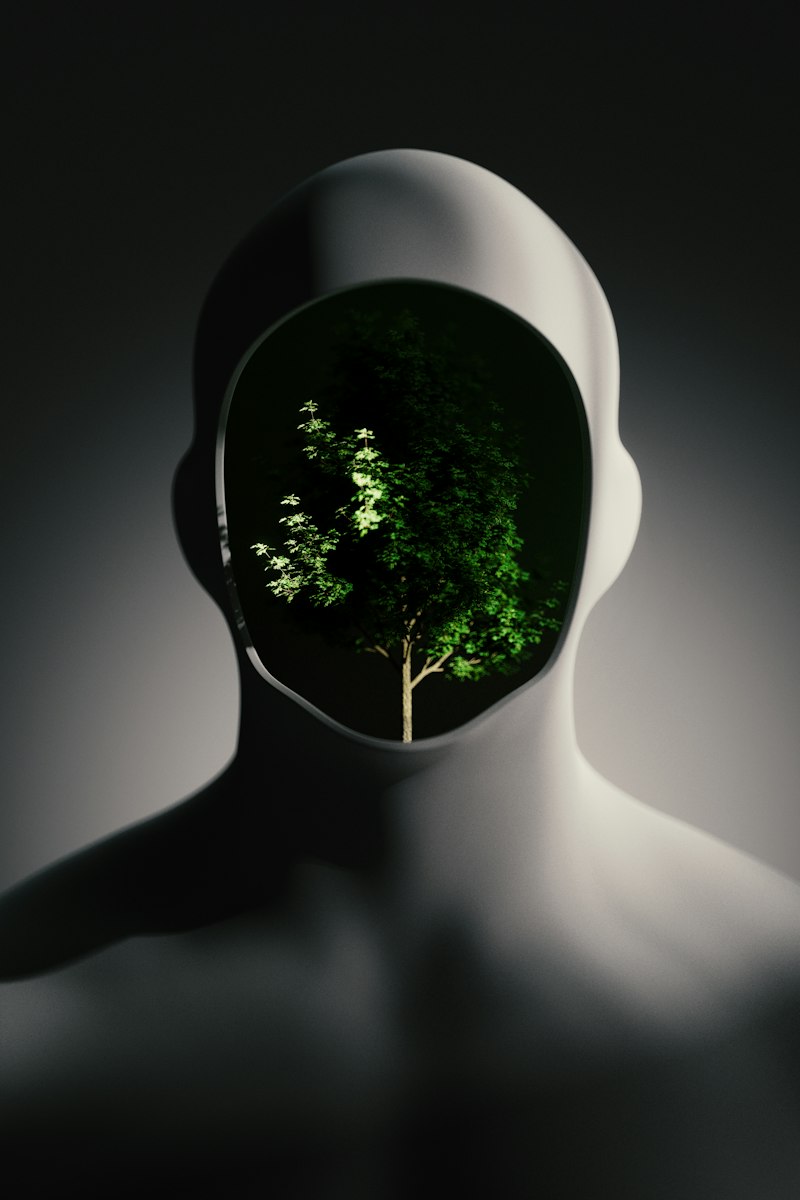
Environmental Psychology is defined as an interdisciplinary field dedicated to exploring the complex, dynamic, and transactional relationship between individuals and their surroundings. It moves beyond simply observing behavior within a setting; rather, it seeks to understand how the physical environment shapes psychological processes, including perception, cognition, emotion, and behavior, while simultaneously examining how human actions alter and influence the environment itself. This field emerged from the recognition that human experience is inseparable from context, meaning that variables such as architecture, soundscapes, climate, and density are not merely backgrounds but active participants in human mental life. The fundamental mechanism underpinning this discipline is the concept of the person-environment fit, which posits that optimal human functioning occurs when the characteristics and needs of an individual are congruent with the affordances and constraints provided by the environment, highlighting the necessity of designing spaces that support, rather than hinder, human well-being and performance.
The core principle driving environmental psychological research is the acknowledgment of the environment as a holistic entity, encompassing both the natural world and the vast network of human-made structures. This includes micro-environments, such as a single room or office cubicle, and macro-environments, like entire cities or wilderness areas. Environmental psychologists utilize a wide range of methodologies, including naturalistic observation, experimental manipulation of settings, surveys, and physiological measures, to capture the multifaceted ways in which external stimuli are processed internally. A key focus is on defining environmental stressors—factors like chronic noise pollution, overcrowding, or poor lighting—and understanding the psychological and physiological costs associated with coping with these stressors, such as increased levels of stress, reduced cognitive capacity, and elevated aggression.
Furthermore, environmental psychology distinguishes itself by adopting a systems approach, viewing the relationship between people and place as continuous and reciprocal. It rejects simplistic, unidirectional models where the environment merely acts upon the person. Instead, it emphasizes that people actively shape, modify, and interpret their environments based on cultural background, personal history, and current goals. For example, the way an urban space is designed might influence social interaction, but the inhabitants’ subsequent use and personalization of that space will, in turn, modify its social meaning and psychological impact on future users. This transactional perspective ensures that the field addresses crucial contemporary issues related to sustainability, conservation, and the design of healthier, more functional human habitats.
Historical Roots and Foundational Theories
The intellectual origins of Environmental Psychology can be traced back primarily to the mid-20th century, a period marked by rapid urbanization and increasing awareness of environmental degradation. Although philosophers and early psychologists had long speculated on the influence of place, it was the pioneering work of figures such as Kurt Lewin in the 1930s that laid the foundational theoretical groundwork. Lewin, a key proponent of Gestalt psychology, introduced the concept of the psychological field, famously summarized by the equation B = f(P, E), meaning behavior (B) is a function (f) of the person (P) and the environment (E). This formula necessitated the inclusion of objective environmental factors in psychological analysis, moving the discipline beyond purely internal mental states.
Following Lewin, Roger Barker and his colleagues developed the field of ecological psychology in the 1940s and 1950s. Barker’s research focused intensely on observing behavior in its natural setting, leading to the development of the crucial concept of the behavior setting. Behavior settings are defined as self-regulating, standing patterns of behavior and milieu (e.g., a high school basketball game, a dental office waiting room) that exert powerful influence over the individuals within them, often overriding individual personality differences. Barker demonstrated that the environment is not a passive container but an active, structured system that dictates the types of behaviors that are appropriate or likely to occur. This rigorous empirical approach provided the necessary tools to systematically study environmental influences outside of laboratory constraints.
The field officially coalesced as a distinct discipline in the late 1960s and early 1970s, largely driven by the work of psychologists like Harold Proshansky, William Ittelson, and Robert Sommer, often referred to as the founders of modern environmental psychology. Their motivation stemmed from societal crises, including the failure of massive public housing projects and the rise of the environmental movement. Proshansky, in particular, emphasized the importance of place identity, recognizing that people often define themselves partially through their connection to specific places. This period saw the establishment of dedicated academic programs and journals, solidifying the field’s focus on applied problems such as territoriality, privacy regulation, personal space, and the psychological effects of population density and crowding within increasingly complex urban landscapes.
Key Mechanisms: Perception, Cognition, and Place Attachment
Environmental Psychology delves into several key cognitive and emotional mechanisms that mediate the person-environment relationship. One crucial area is environmental perception and cognition, which involves how individuals acquire, store, organize, and recall information about spatial surroundings. This leads to the formation of cognitive maps—mental representations of physical space—which are essential for navigation, decision-making, and feeling secure in an environment. The legibility, complexity, and coherence of a physical setting directly influence the ease with which individuals can form these maps; poorly designed, confusing spaces can lead to stress and feelings of disorientation, a concept often explored in the context of wayfinding in large institutions like hospitals or airports.
Two major theoretical models specifically address the restorative capacity of the natural environment: the Stress Reduction Theory (SRT) proposed by Roger Ulrich, and the Attention Restoration Theory (ART) developed by Rachel and Stephen Kaplan. SRT suggests that exposure to nature scenes reduces physiological stress by triggering an immediate, involuntary positive emotional response rooted in evolutionary preference for environments that afford safety and resources. This response manifests as decreased heart rate, lower blood pressure, and reduction in negative emotions. Conversely, ART posits that directed attention, required for tasks like focusing on work or navigating traffic, causes mental fatigue. Natural environments, due to their inherent fascination and complexity, allow for effortless, involuntary attention (or ‘soft fascination’), thus permitting the directed attention mechanisms to rest and replenish, leading to improved cognitive performance and mood.
Furthermore, the concept of Place attachment is central to understanding the emotional bonds people form with specific settings. This is a profound emotional and cognitive link that gives meaning to a location, transforming a mere space into a ‘place.’ Place attachment encompasses both place identity (the extent to which a place contributes to one’s self-definition) and place dependence (the extent to which a place provides the necessary resources and settings for specific activities). Research shows that strong place attachment is correlated with greater psychological well-being, community engagement, and a willingness to protect that environment. Conversely, involuntary displacement or the degradation of a cherished place can lead to significant psychological distress, often termed solastalgia, or the grief experienced when one’s home environment is negatively transformed.
Applications in Urban Planning and Architectural Design
The most tangible application of environmental psychology lies in its profound influence on Urban planning and architectural design, fields collectively concerned with creating environments that optimize human potential and minimize environmental stress. Environmental psychologists consult on projects ranging from the design of therapeutic gardens and optimal classroom layouts to the development of sustainable, high-density housing. The core goal is to shift design practice from purely aesthetic or engineering-driven criteria to criteria rooted in empirical evidence concerning human behavior, health, and social interaction. For instance, research on proxemics (personal space) and territoriality directly informs the spacing and arrangement of furniture in waiting rooms or public plazas to promote comfort and reduce perceived crowding.
A powerful practical example of this application is the design of modern office spaces, specifically the debate surrounding the effectiveness of the open-plan office. Environmental psychology research has consistently highlighted the trade-offs inherent in this design choice. While open plans are intended to foster collaboration and communication, studies show that the lack of auditory and visual privacy often results in high levels of distraction, increased stress due to chronic noise and lack of control, and subsequently, reduced productivity on tasks requiring deep concentration. Environmental psychologists recommend design interventions such as incorporating designated quiet zones, utilizing sound-masking technology, and ensuring employees have control over micro-environmental variables (lighting, temperature) to mitigate these negative effects.
In healthcare architecture, environmental psychology has led to significant innovations in what is now known as evidence-based design. Studies demonstrating the restorative effects of nature (SRT and ART) have driven the inclusion of windows overlooking green spaces, the use of natural light, and the incorporation of interior plantings in hospitals. These changes are not merely cosmetic; research indicates that patients in rooms with nature views require less pain medication, experience shorter hospital stays, and report lower levels of anxiety compared to those in rooms lacking such features. Therefore, environmental psychology transforms design from a subjective art into a scientific tool for promoting healing and resilience across diverse institutional settings.
The Role of Natural Environments and Well-being
A significant sub-domain within environmental psychology focuses specifically on the critical relationship between humanity and the natural world, encompassing both the benefits derived from nature exposure and the psychological ramifications of environmental degradation. Research consistently supports the hypothesis that contact with natural environments—from large national parks to small urban green spaces—is indispensable for maintaining psychological health and vitality. This benefit extends beyond the basic reduction of stress; it also includes improvements in concentration, enhanced creativity, increased physical activity, and stronger social cohesion within neighborhoods that possess accessible parks and green infrastructure.
The investigation into the psychological impact of environmental issues is also a central theme. Environmental psychologists study factors contributing to unsustainable behaviors, the formation of pro-environmental attitudes, and the barriers to collective action against climate change. Concepts such as environmental risk perception—how individuals judge the likelihood and severity of environmental threats—are crucial for designing effective public policy and communication strategies. The field also addresses the emotional burden associated with global ecological crises, including eco-anxiety, which is the chronic fear of environmental doom, and the aforementioned solastalgia, providing therapeutic frameworks for coping with these profound sources of modern distress.
Furthermore, environmental psychology provides the empirical basis for developing and evaluating interventions aimed at promoting sustainability. This includes research into behavior modification techniques like nudges, which subtly alter the choice architecture to encourage eco-friendly actions (e.g., placing recycling bins prominently), and studies on the efficacy of conservation communication that appeals to deeply held values, rather than just economic incentives. By understanding the psychological drivers of consumption, waste, and energy use, the field offers essential insights for navigating the transition toward more sustainable and equitable ways of living, ensuring that environmental solutions are psychologically realistic and socially acceptable.
Significance, Impact, and Contemporary Challenges
The significance of environmental psychology lies in its commitment to addressing real-world problems that affect human quality of life on a massive scale. By bridging the gap between social science and design/policy, it offers essential tools for ensuring that human development is congruent with psychological needs. The impact is seen across various sectors: in education, where classroom design influences learning outcomes; in criminology, where defensible space concepts minimize crime and increase neighborhood security; and in public health, where noise and air pollution are recognized as significant psychological hazards requiring systemic intervention. The concept of restorative environments has moved from a theoretical construct to a mandated design principle in numerous architectural guidelines globally.
One of the most pressing contemporary challenges for the field is integrating its findings with policy responses to climate change. This requires environmental psychologists to move beyond studying the benefits of nature to actively researching how to motivate large-scale behavior change and how to mitigate the psychological fallout of climate disasters, such as displacement, trauma, and loss of livelihood. This involves developing new cross-cultural models for engagement, recognizing that environmental values and perceptions of risk are deeply context-dependent and vary significantly across different populations and socio-economic groups.
Additionally, the increasing complexity of the built environment presents ongoing challenges, particularly concerning the interaction of digital technology and physical space. The rise of smart cities and virtual reality environments demands that environmental psychology expands its scope to include the study of digitally mediated environments, investigating how augmented reality influences spatial cognition and how constant connectivity impacts privacy regulation and feelings of crowding. The future success of the discipline hinges on its ability to evolve alongside technological and ecological changes, continuing its foundational mission of creating supportive, meaningful, and sustainable habitats for all people.
Connections to Related Psychological Fields
Environmental Psychology is inherently interdisciplinary, drawing heavily from and contributing significantly to several other specialized areas within psychology. It maintains strong ties with Social Psychology, particularly in the study of group dynamics in public settings, territoriality, and the effects of crowding and density on social behavior and aggression. Concepts like social facilitation and social loafing take on a new spatial dimension when examined through the lens of environmental design, such as how the layout of a communal kitchen or a collaborative workspace impacts group productivity and conflict resolution.
Furthermore, it shares critical conceptual ground with Cognitive Psychology, especially concerning spatial orientation, memory, and information processing. The mechanisms underlying cognitive mapping and wayfinding are fundamentally cognitive processes, and research in environmental perception often overlaps with studies on attention, sensory gating, and pattern recognition. The investigation into how environmental stressors impair complex decision-making provides a clear example of the integration of these two subfields, examining how chronic noise or thermal discomfort depletes cognitive resources necessary for executive function.
The field of environmental psychology is broadly categorized under Applied Psychology, but it frequently intersects with emerging specialties like Conservation Psychology and Health Psychology. Conservation psychology specifically focuses on understanding the psychological roots of environmental problems and developing interventions to promote sustainability, often drawing directly on environmental psychological theories of place attachment and motivation. Health psychology utilizes environmental psychology findings to understand how environmental quality (e.g., housing conditions, urban sprawl) acts as a determinant of both physical and mental health outcomes, demonstrating that the design of our surroundings is a crucial, non-clinical factor in public health research and intervention.