Epigastric Reflex: Decoding Your Body’s Hidden Signals
Scientifically Reviewed · Dr. Marwa Abd-Alazim · October 25, 2026
Review Criteria & Clinical Standards
This content undergoes rigorous scientific peer-review and medical editorial standards at Arab Psychology Network to ensure clinical accuracy, validity, and compliance with evidence-based guidelines from leading psychological and healthcare authorities (APA / WHO).
Definition and Core Mechanism
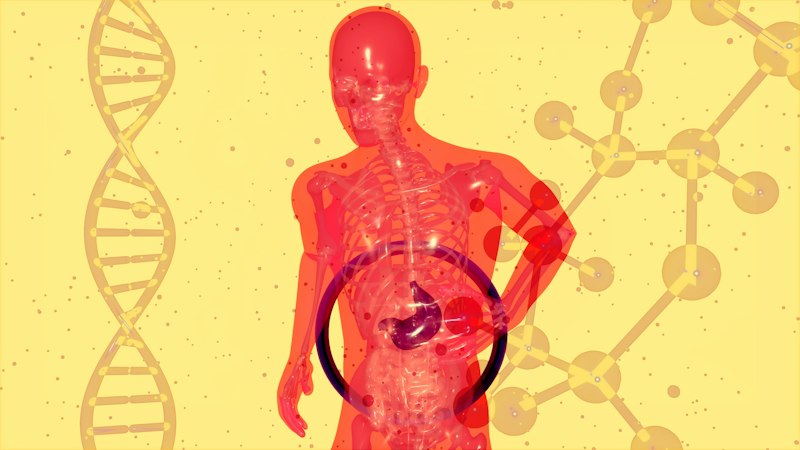
The Epigastric Reflex is fundamentally categorized as a superficial somatic reflex, characterized by the involuntary contraction of the musculature surrounding the upper central abdominal region upon specific external stimulation. This reflex is specifically defined as the Spinal Reflex that elicits a visible drawing-in or localized contraction of the upper central region of the abdominal wall, which corresponds roughly to the location of the upper stomach and associated structures, sometimes referred to clinically as the upper central region of the Gastrointestinal wall. The response is elicited by applying a quick, firm, and unilateral cutaneous stimulus, traditionally administered by a sharp, yet non-damaging, instrument such as a pin or the blunt tip of a neurological hammer, stroking downward from the nipple line toward the costal margin. This mechanism is a rapid, automatic neural response designed to protect the underlying viscera, although its primary clinical utility today lies in assessing the integrity of specific segments of the thoracolumbar spinal cord and associated descending motor pathways.
The fundamental principle behind the epigastric reflex, like all superficial reflexes, is the involvement of a simple reflex arc that does not necessitate conscious input from the brain’s higher centers for activation. This arc begins with afferent sensory input triggered by the Cutaneous stimulation of the skin covering the T7-T9 dermatomes. This sensory information rapidly travels along peripheral nerves, enters the spinal cord at the corresponding thoracic levels, where it synapses directly with interneurons and then with efferent motor neurons. This swift central processing facilitates an immediate motor response, causing the innervated muscles—primarily segments of the rectus abdominis muscle in the upper quadrant—to contract immediately beneath the area of stimulation. This localized muscular twitch or drawing-in is the observable sign of a normal, intact reflex pathway.
The reflex is distinct from deep tendon reflexes because the stimulus acts on the skin rather than stretching a muscle tendon. The integrity of this pathway is crucial, as the presence or absence of the reflex offers critical diagnostic information regarding potential lesions affecting the neural structures that modulate motor control. A healthy reflex indicates that both the peripheral nerves involved in the sensation and movement, and the central segments of the spinal cord (T7-T9) are functioning correctly. The ability of the central nervous system to quickly process and execute this localized motor command underscores the efficiency of these automatic protective mechanisms built into the human body.
Neuroanatomical Pathway of the Reflex
Understanding the specific neural route is essential for appreciating the clinical implications of the epigastric reflex. The afferent pathway begins with sensory nerve endings in the skin of the epigastric region, generally corresponding to the cutaneous distribution of the 7th, 8th, and 9th intercostal nerves. The specific stimulation of the skin generates an impulse that travels centrally via the dorsal roots into the spinal cord. Once within the spinal cord, the impulse ascends or descends minimally before synapsing with interneurons within the gray matter of the T7, T8, and T9 spinal segments. These segments represent the central integration center for this specific reflex.
The efferent pathway initiates when the motor signal is generated by anterior horn cells at these same thoracic levels. The motor impulses travel out of the spinal cord via the ventral roots and merge into the motor fibers of the intercostal nerves (T7-T9). These nerves then innervate the target muscles, which are the superior segments of the rectus abdominis and potentially the internal oblique muscles in the upper abdomen. The resulting motor response is a localized, momentary tightening or drawing-in of the abdominal wall. The strict segmentation of this reflex arc means that disruption at any point—whether the sensory nerve, the spinal segment, or the motor nerve—will lead to an altered or absent reflex response, providing a precise anatomical clue to neurologists.
Crucially, the entire reflex mechanism is heavily modulated by descending inhibitory and facilitatory pathways originating from the brain, primarily the corticospinal tracts, also known as the Pyramidal tracts. These upper motor neuron pathways continuously influence the excitability of the spinal cord interneurons. When these descending tracts are damaged (an upper motor neuron lesion), the inhibitory control is lost, leading to various changes in reflex behavior. While deep tendon reflexes typically become hyperactive in such lesions, superficial reflexes like the epigastric reflex often become diminished or completely absent, making their evaluation invaluable in differentiating the location and type of neurological injury.
Historical Discovery and Clinical Context
The systematic study and codification of the epigastric reflex occurred predominantly during the late 19th and early 20th centuries, a period marked by intensive efforts to standardize neurological examinations. While the reflex does not bear the name of a single originator, its inclusion in standard diagnostic batteries reflects the rigorous clinical work done by neurologists seeking reliable, non-invasive methods to assess the integrity of the spinal cord and the descending motor control systems. The development of this test emerged alongside the recognition of other superficial reflexes, such as the cremasteric and the plantar reflexes, all serving as indicators of central nervous system health.
The initial context for observing and defining the epigastric reflex was driven by the need to identify lesions of the suprasegmental motor system—that is, damage occurring above the level of the spinal cord segments that directly mediate the reflex. Physicians observed that patients with cerebral or upper spinal cord pathologies frequently exhibited an absence or asymmetry of these cutaneous reflexes, even before other motor symptoms became pronounced. This observation established the reflex as a useful, early marker for pyramidal tract involvement. The precise method of elicitation—using a quick stroke with a pin from the nipple downward—was standardized to ensure reproducible results across different clinical settings, solidifying its role as a consistent diagnostic tool.
Before advanced imaging techniques became commonplace, the reliable assessment of superficial reflexes provided neurologists with one of the most powerful means of topographical diagnosis. The absence of the epigastric reflex on one side, for example, could strongly suggest a unilateral lesion affecting the pyramidal pathway above the T7-T9 segments on that same side of the body, allowing clinicians to precisely map the location of neurological dysfunction in conditions like stroke, multiple sclerosis, or spinal cord compression. This historical reliance underscores the importance of simple, observable phenomena in the evolution of modern neurological medicine.
Clinical Elicitation and Diagnostic Value
The proper technique for eliciting the epigastric reflex is crucial for obtaining an accurate result. The patient must be lying supine (on their back) and completely relaxed, as muscle tension or voluntary contraction can easily mask the subtle reflex response. The examiner uses a relatively pointed, sterile object, such as a wooden applicator stick or the sharp edge of a reflex hammer handle, to administer a quick, linear stroke across the skin. The stimulus must travel from the superior aspect of the thorax, typically starting near the nipple line, and move downward toward the costal margin (the lower edge of the ribs) on one side of the abdomen. This specific path ensures stimulation of the relevant T7-T9 dermatomes.
A normal, or “present,” response is characterized by a quick, localized contraction or twitch of the upper abdominal muscles (rectus abdominis) directly beneath the area of stimulation. This contraction should be visible, causing the skin and underlying muscle to momentarily draw inward toward the midline. The key diagnostic assessment involves comparing the response on one side of the body to the response on the other side. Symmetry is the expectation in a healthy individual. If the reflex is present bilaterally and equally, it suggests that the spinal reflex arcs at the T7-T9 levels are intact and that the descending pyramidal tracts modulating these segments are also likely functional.
The primary diagnostic value of the epigastric reflex lies in interpreting its absence or asymmetry. An absent or significantly diminished reflex often points toward a pathological condition. If the reflex is absent unilaterally, it strongly suggests a lesion affecting the ipsilateral (same-side) descending motor pathways—an upper motor neuron lesion—above the level of the reflex center (T7-T9). However, if the reflex is absent bilaterally, it could indicate severe diffuse damage to the Central nervous system (CNS) or, less commonly, a localized lower motor neuron lesion at the T7-T9 segments themselves, though the latter would typically be accompanied by other signs of peripheral nerve damage. Furthermore, the reflex can be transiently absent in conditions like recent abdominal surgery or extreme obesity, requiring the clinician to integrate this finding with the complete clinical picture.
Practical Illustration of the Response
Consider a scenario involving a patient, Mr. Smith, who presents to the hospital following a minor accident but exhibits subtle signs of weakness on his left side, raising suspicion of a small stroke affecting the motor cortex. The neurologist employs the epigastric reflex as part of the initial neurological assessment to help localize the potential damage. The patient is asked to lie flat and relax fully, with the abdominal area exposed. The neurologist first takes a blunt instrument and gently strokes the skin on the right side of the abdomen, moving swiftly from the nipple line down toward the ribs. Immediately, a slight, visible twitch and retraction of the upper right abdominal muscles occur. This confirms a normal, intact reflex arc on the right side.
The neurologist then repeats the procedure on the patient’s affected side, the left abdomen. Despite applying the same firm, quick stimulus, the expected drawing-in of the muscle tissue does not occur, or the response is significantly attenuated compared to the right side. This asymmetrical absence of the epigastric reflex provides a powerful piece of evidence. The step-by-step application and observation leads to a crucial interpretation: because the peripheral components (sensory and motor nerves at T7-T9) are less likely to be damaged unilaterally without other symptoms, the likely cause of the absent reflex is damage to the descending pyramidal tracts originating from the brain, specifically those controlling the left side of the body (which originate in the right motor cortex).
This simple, non-invasive test thus helps to confirm the neurologist’s suspicion of a lesion higher up in the CNS, likely in the right cerebral hemisphere, affecting the upper motor neurons that normally modulate the spinal reflex. Without the inhibitory control provided by these descending pathways, the reflex should theoretically be hyperactive, but in the case of superficial reflexes like the epigastric reflex, the result is often abolition or reduction due to a complex interplay of neural circuitry disruption, reinforcing its importance as a localizing sign during a physical examination.
Significance in Neurological Assessment
The primary significance of the epigastric reflex in clinical medicine lies in its utility as a reliable marker for the functional status of the pyramidal system. Its inclusion in routine neurological exams allows for a quick, initial screening for upper motor neuron (UMN) lesions, which are often characterized by a loss of superficial reflexes. While deep tendon reflexes (DTRs) might be exaggerated in UMN lesions, the simultaneous loss of superficial reflexes provides a key differentiation point that helps distinguish pyramidal tract damage from other forms of neuromuscular disease.
Beyond general UMN assessment, the epigastric reflex holds specific anatomical significance due to its defined spinal cord segments (T7-T9). This specificity makes it a valuable tool for topographical diagnosis of spinal cord injuries or compressive lesions. For instance, if a patient presents with symptoms indicating a lesion in the thoracic spine, the presence or absence of the epigastric reflex, alongside the general Abdominal reflex (T9-T12), helps the clinician pinpoint whether the lesion is situated above, at, or below the T7 level. The loss of reflexes corresponding to a specific spinal level is a classic sign of localized damage to the reflex arc itself (a lower motor neuron lesion), whereas the loss of a superficial reflex above an intact arc points toward suprasegmental damage.
In modern clinical practice, while sophisticated imaging modalities like MRI have provided unparalleled detail, the physical examination remains the foundation of diagnosis. The epigastric reflex provides immediate, real-time physiological feedback regarding the nervous system’s function. Its quick performance and unambiguous results contribute significantly to the formation of an initial differential diagnosis, guiding subsequent, often costly, imaging and specialized testing. Therefore, its continued use underscores its efficiency and reliability as a fundamental tool in the neurological assessment toolkit.
Related Somatic and Visceral Reflexes
The epigastric reflex belongs to a broader category known as somatic superficial reflexes, which involve skeletal muscle contraction elicited by light touch or stroking of the skin. It is closely related to, and often tested in conjunction with, the general abdominal reflexes. The abdominal reflexes are typically divided into upper (T8-T10), middle (T9-T11), and lower (T10-T12) segments, based on the area of stimulation and the corresponding spinal cord level. The epigastric reflex, centered on T7-T9, essentially represents the most superior component of this reflex continuum. Unlike the general abdominal reflex, which typically involves a broader movement of the umbilicus toward the stimulus, the epigastric response is more localized and specific to the upper abdominal wall musculature.
Furthermore, the epigastric reflex is conceptually linked to other protective cutaneous reflexes, such as the plantar reflex (Babinski sign) and the cremasteric reflex. All these superficial responses share the characteristic of being mediated at the spinal cord level but modulated by descending cortical pathways. The observation of a pathological Babinski sign (extensor plantar response) often correlates with the absence of the epigastric and general abdominal reflexes, as all three indicate dysfunction of the pyramidal tracts. This interconnectedness allows neurologists to build a robust pattern of findings based on reflex testing.
In the broader context of Neurophysiology, the study of the epigastric reflex contributes to the understanding of the interactions between the sensory input, spinal cord processing, and cortical regulation of motor function. It highlights the complex role of the spinal cord not merely as a relay station, but as a sophisticated integration center capable of mediating rapid, localized responses that are nonetheless subject to modulation by higher brain centers. This understanding is vital not only in clinical diagnosis but also in research into spinal cord plasticity and rehabilitation following injury.