Epileptogenic Focus: Mapping the Roots of Brain Seizures
Scientifically Reviewed · Dr. Marwa Abd-Alazim · October 20, 2026
Review Criteria & Clinical Standards
This content undergoes rigorous scientific peer-review and medical editorial standards at Arab Psychology Network to ensure clinical accuracy, validity, and compliance with evidence-based guidelines from leading psychological and healthcare authorities (APA / WHO).
The Core Definition of an Epileptogenic Focus
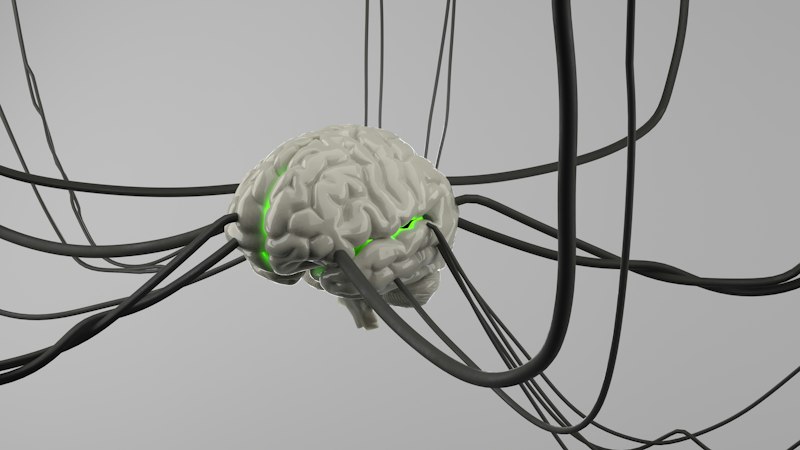
The term epileptogenic focus refers to a highly specific, localized region within the brain cortex or subcortex from which recurring epileptic seizures originate. This area is characterized by a persistent and inherent abnormal state of neuronal excitability, making it fundamentally different from surrounding healthy tissue. It is not merely a transient site of irritation, but rather a structurally or functionally altered zone that acts as the necessary and sufficient trigger for the initiation of focal seizures. Understanding the focus is paramount because its presence defines focal epilepsy, distinguishing it from generalized forms where the seizure activity rapidly involves both hemispheres simultaneously from the outset.
The fundamental principle behind the focus is the phenomenon known as epileptogenesis—the complex process by which a normal brain becomes epileptic. This process involves structural reorganization, molecular changes, and the establishment of pathological neural circuits following an initial insult, such as trauma, infection, or stroke. Once established, the epileptogenic focus serves as the pacemaker for paroxysmal depolarization shifts (PDS), which are hallmark cellular events leading to high-frequency, hypersynchronous firing of neurons. This localized hyperactivity then recruits adjacent neural tissue, propagating the electrical discharge outward and culminating in a clinically observable seizure.
It is crucial to differentiate the epileptogenic focus from the irritable zone or the symptomatogenic zone. While the epileptogenic focus is the necessary source of the seizures, the irritable zone refers to the area showing interictal (between seizures) abnormalities on an EEG, and the symptomatogenic zone is the area whose activation produces the initial clinical symptoms. Ideally, all three zones overlap perfectly, but in complex cases, the focus may be smaller or distinct from the area showing maximum interictal abnormality, posing significant challenges for precise localization and successful surgical treatment.
Neurophysiological Mechanisms and Pathology
At a cellular level, the epileptogenic focus is defined by a severe imbalance between excitatory and inhibitory neurotransmission. This imbalance typically involves a relative deficit in gamma-aminobutyric acid (GABA)-mediated inhibition and/or an excessive surge in glutamate-mediated excitation, leading to neuronal hyperexcitability. Furthermore, the structural changes often include neuronal loss, particularly of inhibitory interneurons, and reactive gliosis—the proliferation of glial cells, especially astrocytes, which can alter the extracellular environment and potassium buffering capacity, further destabilizing the neuronal membrane potential.
The abnormal firing within the focus is not simply random; it involves highly coordinated bursts. These bursts are generated by groups of pathologically interconnected neurons that fire together synchronously, creating massive electrical discharges. This synchronized firing is facilitated by mechanisms like gap junctions and ephaptic coupling, which allow electrical activity to jump between nearby cells, bypassing standard synaptic transmission. When this localized, high-amplitude electrical activity reaches a critical threshold, it breaks through the local boundaries and spreads, causing a clinical seizure. The specific anatomy and location of the focus determine the pathways of spread, which in turn dictate the symptoms experienced by the patient.
Research suggests that the formation of the focus is often linked to subtle developmental abnormalities or acquired lesions that create a permissive environment for aberrant circuitry. For instance, in mesial temporal lobe epilepsy (MTLE), the most common form of focal epilepsy, the focus is frequently associated with hippocampal sclerosis—a pattern of neuronal loss and gliosis specifically in the hippocampus. This structural damage sets the stage for the remaining neurons to become pathologically interconnected and hyperexcitable, forming a persistent, self-sustaining epileptogenic network that drives chronic seizure activity.
Historical Discovery and Early Localization Studies
The concept of a localized origin for seizure activity dates back to the late 19th century, primarily through the pioneering work of British neurologist John Hughlings Jackson. Jackson meticulously observed patients with focal seizures and proposed that certain types of epileptic events, which he termed “Jacksonian seizures,” originated from specific, localized areas of the motor cortex. His observations were purely clinical, correlating the sequence of motor movements (such as a twitch starting in the hand and spreading up the arm) with the underlying anatomy of the brain, thereby establishing the crucial link between focal symptoms and focal brain pathology.
However, definitive localization and intervention became possible only in the mid-20th century, largely due to advancements in neurosurgery and neurophysiology. Key figures like Canadian neurosurgeon Wilder Penfield and his colleagues at the Montreal Neurological Institute perfected techniques for mapping the human cortex during awake surgery. By stimulating the brain surface and observing patient responses, Penfield was able to precisely delineate functional areas and, critically, identify the irritative and epileptogenic zones using electrocorticography (ECoG) directly on the exposed brain. This allowed for the targeted resection of the focus while sparing vital functional tissue, revolutionizing the treatment of refractory focal epilepsy.
The widespread clinical adoption of Electroencephalography (EEG) provided the first major non-invasive tool for supporting the localization hypothesis. EEG allowed clinicians to record interictal spikes and sharp waves—signs of underlying neuronal hyperexcitability—and map their spatial distribution on the scalp. Though surface EEG provides limited spatial resolution compared to intracranial methods, its introduction solidified the understanding that epilepsy was an electrical disorder rooted in specific, identifiable locations, moving the field away from purely humoral or generalized theories of seizure generation.
A Practical Illustration: Temporal Lobe Epilepsy
To illustrate the concept of the epileptogenic focus, Mesial Temporal Lobe Epilepsy (MTLE) provides a clear and common example. MTLE is the most prevalent form of focal epilepsy in adults and is often resistant to standard pharmacological treatments, making focus identification essential. In a typical patient with MTLE, the epileptogenic focus is situated deep within the mesial structures of one temporal lobe, frequently involving the hippocampus and amygdala due to prior injury or developmental anomaly.
The seizure progression directly reflects the localized origin. Before the seizure generalizes, the patient often experiences a focal aware seizure (or aura), which is the initial discharge confined to the focus. Because the focus is in the limbic system, the aura commonly involves visceral sensations (rising stomach feeling), sudden intense emotions (fear or dread), or complex sensory phenomena (olfactory or gustatory hallucinations). These specific symptoms act as vital clues, pointing the clinician toward the temporal lobe as the site of seizure onset.
The subsequent steps involve mapping the focus using advanced imaging. If surface EEG suggests temporal lobe involvement, high-resolution MRI often reveals the structural damage—hippocampal atrophy or sclerosis—confirming the location of the likely focus. For surgical planning, intracranial EEG (iEEG) might be employed, placing depth electrodes directly into the hippocampus to record the earliest electrical activity. If these recordings consistently show the seizure initiating in the sclerotic hippocampus, that area is definitively identified as the epileptogenic focus, allowing surgeons to precisely target and remove that small section of tissue, offering a potential cure.
Clinical Significance and Therapeutic Intervention
The clinical significance of identifying the epileptogenic focus is immense, transforming epilepsy management from palliative care to potentially curative intervention. For patients whose seizures are refractory to anti-epileptic medications—meaning the drugs fail to control the seizures despite optimal dosing—surgical resection of the focus offers the best chance for long-term seizure freedom. Without precise localization, surgical treatment would be blind, ineffective, and highly dangerous due to the risk of removing essential brain tissue.
The comprehensive evaluation process required to localize the focus, known as the pre-surgical workup, is rigorous and multidisciplinary. It involves neurologists, neurosurgeons, neuropsychologists, and neuroradiologists working together to integrate data from various sources: long-term video-EEG monitoring to capture seizures, advanced structural and functional neuroimaging (fMRI, PET, SPECT), and detailed neuropsychological testing to assess cognitive function adjacent to the suspected focus. The ultimate goal is to define the extent of the focus and ensure its removal will not result in unacceptable functional deficits, such as severe memory loss or paralysis.
Beyond surgical planning, the concept of the focus influences pharmacological strategies and emerging treatments. Understanding the specific pathology of the focus (e.g., channelopathies or receptor abnormalities) guides the choice of anti-epileptic drugs that target those specific molecular mechanisms. Furthermore, non-resective approaches, such as responsive neurostimulation (RNS) systems, are designed specifically to detect the onset of abnormal electrical activity within the focus and deliver counter-stimulation to shut down the seizure before it can propagate, offering a focused, localized treatment without permanent tissue removal.
Connections and Relations to Other Psychological Concepts
The study of the epileptogenic focus connects directly to several broader fields of psychology and neuroscience. Primarily, it falls under Biological Psychology and Neuropsychology, as it deals fundamentally with the structural and functional basis of behavior and cognition that is disrupted by abnormal neural activity. The location of the focus often dictates associated cognitive or psychological comorbidities; for example, foci in the temporal lobe are frequently linked to memory impairments, mood disorders, or psychosis.
A key theoretical relationship exists between the epileptogenic focus and the laboratory phenomenon known as kindling. Kindling is an experimental model where repeated, sub-threshold electrical stimulation to a limbic structure (like the amygdala) eventually leads to a permanent state of heightened excitability, resulting in full-blown, generalized seizures in response to the same low-level stimulus. This model helps explain the process of epileptogenesis—how initial, localized damage can transform into a persistent, self-perpetuating focus that lowers the seizure threshold over time.
Finally, the concept of the focus contrasts sharply with Generalized Epilepsy Syndromes. While focal seizures originate in a specific point, generalized seizures (such as absence or tonic-clonic seizures) appear to arise from a widespread network involving both hemispheres simultaneously, often driven by thalamocortical circuit dysfunction rather than a localized lesion. However, the connection is sometimes blurred by secondary generalization, where a focal seizure originating in a small focus rapidly spreads to recruit the entire brain, resulting in a clinically generalized seizure, highlighting the dynamic nature of electrical propagation within the brain’s complex circuitry.