Extrastriate Vision: Unlocking How Your Brain Sees
Scientifically Reviewed · Dr. Marwa Abd-Alazim · September 2, 2026
Review Criteria & Clinical Standards
This content undergoes rigorous scientific peer-review and medical editorial standards at Arab Psychology Network to ensure clinical accuracy, validity, and compliance with evidence-based guidelines from leading psychological and healthcare authorities (APA / WHO).
Introduction to Extrastriate Visual Areas
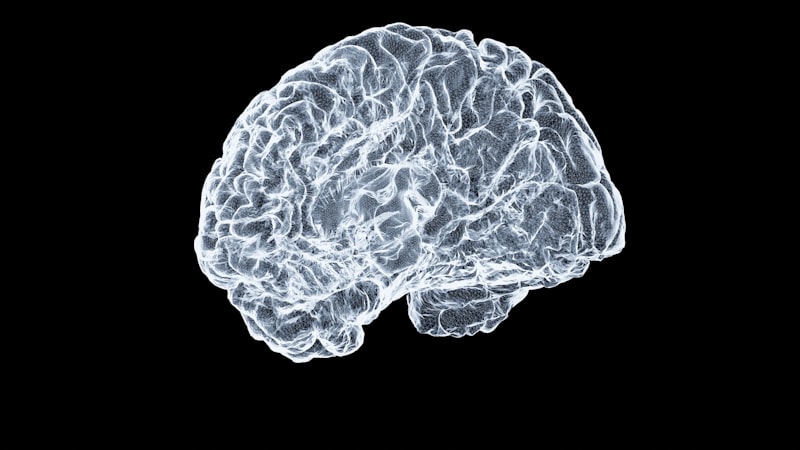
The extrastriate visual areas represent a complex network of cortical regions critical for advanced visual perception, residing functionally and anatomically outside the primary visual cortex, commonly designated as V1 or the striate cortex. These areas are fundamentally responsible for transforming the basic features extracted by V1—such as edges and orientations—into meaningful representations of the world, encompassing object recognition, spatial awareness, and motion detection. Historically, the region housing these specialized zones was often termed the pre-striate cortex, emphasizing its sequential position in the visual processing hierarchy immediately following V1. The visual information ascends from the retina through the lateral geniculate nucleus (LGN) to V1, and subsequently radiates out to the numerous extrastriate zones, each specialized for distinct visual attributes, thereby allowing for the comprehensive and holistic interpretation of the visual scene necessary for guiding behavior and cognitive processes.
These cortical regions are defined by their unique functional specializations and cytoarchitectonic characteristics, contrasting sharply with the uniform layered structure typical of the striate cortex. Researchers often identify extrastriate areas as visually responsive areas of the cerebral cortex due to their demonstrated ability to fire action potentials selectively in response to specific, high-level visual stimuli, such as complex patterns, faces, particular colors, or directed movement within the visual field. This specialized responsiveness is the key differentiator from the initial processing conducted in V1, which primarily handles elemental visual features. The organization of these areas is not random; rather, it follows sophisticated organizational principles, including retinotopy, where neighboring points in the visual field are mapped to neighboring points on the cortex, although this organization becomes progressively less precise as visual information moves higher up the processing stream, reflecting the integration of information over larger receptive fields.
Understanding the extrastriate network is essential for grasping how the brain constructs a coherent reality from light signals, involving a massive parallel processing system that simultaneously analyzes various features of the visual input. The collective function of these areas ensures that visual perception is not merely a passive reception of light but an active, constructive process, integrating current sensory input with prior knowledge and expectations. The sheer number and interconnectedness of these areas—estimated to be over 30 distinct visual areas in the human and primate cortex—underscore the computational complexity required to achieve tasks like figure-ground segregation, depth perception, and recognizing a familiar face regardless of viewing angle or lighting conditions, processes that are handled almost instantaneously outside of conscious effort.
Anatomical Location and Nomenclature of the Pre-Striate Cortex
Anatomically, the extrastriate visual areas occupy significant portions of the occipital, temporal, and parietal lobes, forming an expansive network that surrounds the primary visual cortex (V1). This surrounding territory is generally referred to as the pre-striate cortex, a term that emphasizes its immediate adjacency and functional dependence on V1 for initial visual data input. While V1 is concentrated at the very posterior pole of the occipital lobe, the extrastriate areas radiate outward, creating concentric rings or adjacent patches of cortical tissue that handle increasingly complex tasks. Early mapping studies relied heavily on cytoarchitecture—the study of cellular structure—to delineate these regions, identifying areas like V2 and V3 as distinct entities based on differences in their laminar organization and cellular density compared to V1. Modern neuroimaging techniques, such as functional Magnetic Resonance Imaging (fMRI) and magnetoencephalography (MEG), have refined these boundaries, often defining them based on functional responsiveness and precise retinotopic maps.
The nomenclature used to describe these areas is often based on sequential numbering (V2, V3, V4, V5/MT) reflecting the order in which they receive primary input, although this sequence is an oversimplification of the highly interconnected nature of the system. For instance, V2, the secondary visual cortex, is a crucial transitional zone that receives massive input from V1 and then projects to almost all other higher-order extrastriate areas. V2 is structurally characterized by stripes—thick, thin, and pale—which are thought to represent segregated processing channels for motion, color, and form, respectively, demonstrating the early stages of specialization that become highly segregated in subsequent areas. The complex and reciprocal connections between V1, V2, and V3 highlight that information flow is not strictly hierarchical but involves extensive feedback loops, where higher areas modulate the activity of lower areas based on contextual information or predictions.
The topographical organization within the pre-striate cortex is highly structured but differs significantly from the strict retinotopy observed in V1. While V2 and V3 still maintain a strong retinotopic organization, the receptive fields of individual neurons in these areas are substantially larger than those in V1, meaning they respond to stimuli covering a greater expanse of the visual field. This increase in receptive field size is a necessary mechanism for integrating local features into global percepts, allowing the brain to piece together the edges and lines processed by V1 into coherent forms. As processing moves further into the temporal and parietal lobes—areas responsible for object identification and spatial localization, respectively—the retinotopy largely dissolves, and neurons begin to respond to stimuli regardless of their exact location in the visual field, provided they are within the neuron’s massive receptive field, reflecting a necessary step toward spatial invariance in recognition tasks.
The Functional Hierarchy of Visual Processing (V1, V2, V3)
The visual system operates on a hierarchical principle, beginning with the most basic feature extraction in V1 and progressing through V2 and V3, where complexity rapidly increases. V1 serves as the crucial gateway, acting as a filter that decomposes the visual scene into elementary components like oriented lines, edges, and simple motion vectors. V2, receiving the largest input stream from V1, begins the critical process of combining these elements. V2 neurons exhibit more complex response properties than V1 cells, responding to illusory contours (shapes defined by implied edges rather than actual luminance differences), binocular disparity (essential for depth perception), and specific combinations of orientations. This combination of features marks the transition from simple feature detection to the construction of rudimentary visual shapes and surfaces, signifying V2’s role as the primary integrator of local information into more global representations.
Following V2, the information bifurcates, flowing primarily to V3, which is generally considered a transitional area between the early extrastriate regions and the highly specialized streams. V3 neurons show a strong preference for complex patterns, large moving stimuli, and contours related to object shape, playing a significant role in the perception of global form and motion. Some researchers distinguish between V3 and a separate area, VP (ventral posterior area), which may handle lower visual field representation and contribute heavily to form analysis. Functionally, V3 further enlarges receptive fields and reduces sensitivity to minor variations in texture or lighting, focusing instead on the invariant features necessary for stable object recognition. This integration process ensures that the fundamental definition of an object, such as its overall boundary or trajectory, remains constant despite changes in the retinal image caused by head movements or minor environmental shifts.
Crucially, the relationship between V1, V2, and V3 is defined by both feedforward projection and significant feedback modulation. The ascending (feedforward) pathways carry the progressively more complex visual data upward, while descending (feedback) pathways allow higher-level areas to influence and refine the processing occurring in V1 and V2. This feedback mechanism is thought to be vital for processes such as attention, predictive coding, and perceptual completion, where contextual information or expectations derived from higher cognitive areas can enhance the sensitivity of V1 neurons to relevant stimuli or suppress noise. The highly recurrent nature of these connections underscores that visual perception is not a simple linear assembly line but a dynamic, interactive process of hypothesis generation and confirmation across multiple cortical levels.
The Dorsal Stream: The “Where/How” Pathway
The Dorsal Stream, often termed the “Where” or “How” pathway, originates largely in V1, V2, and V3, and projects upward into the parietal lobe. This stream is fundamentally dedicated to the analysis of spatial location, motion, spatial relationships between objects, and the visual guidance of action. Because its primary function is to process dynamic information critical for interacting with the environment, it is highly sensitive to rapid changes in the visual field. Key areas within this stream include the Medial Temporal area (MT or V5) and the Medial Superior Temporal area (MST), which are specialized for motion detection and optic flow analysis, respectively. The integrity of the dorsal stream is paramount for tasks requiring visuomotor coordination, such as reaching for an object, navigating a complex environment, or tracking a moving target.
A defining characteristic of the dorsal stream is the responsiveness of its neurons to movement in the visual field, a specialization that makes areas like MT/V5 critical components. Neurons in MT are highly tuned to the direction and speed of motion, and electrical stimulation of this area can actually bias an animal’s perception of motion, demonstrating its causal role in this visual attribute. Furthermore, the dorsal stream incorporates information essential for depth perception and stereopsis, integrating binocular disparity cues to construct a three-dimensional map of the environment. Unlike the ventral stream, which focuses on invariant object identity, the dorsal stream maintains the spatial coordinates necessary for action, often referred to as the “How” stream, because it provides the moment-to-moment spatial information required to guide motor output, translating visual input directly into action plans.
The parietal lobe, the terminus of the dorsal stream, integrates these spatial and motion signals with input from the somatosensory and motor systems. This integration is crucial for generating body-centered maps of space and for planning complex, goal-directed movements. Damage to the dorsal stream, particularly in the parietal cortex, leads to distinct clinical deficits, most notably optic ataxia, an inability to accurately reach for or grasp objects even though the patient can clearly recognize them, or difficulties with spatial navigation. The fact that recognition remains intact while action guidance fails provides compelling evidence for the strict functional separation between the dorsal and ventral pathways, reinforcing the model that the brain uses fundamentally different computational mechanisms for identifying an object versus determining where it is located and how to interact with it.
The Ventral Stream: The “What” Pathway
The Ventral Stream, famously known as the “What” pathway, projects from V1, V2, and V3 downward into the temporal lobe and is dedicated primarily to object recognition, form analysis, color perception, and the linkage of visual input to memory and meaning. This pathway must solve the computationally difficult problem of achieving perceptual constancy, ensuring that an object—such as a chair or a face—is recognized regardless of changes in viewing angle, size, illumination, or occlusion. To accomplish this, neurons in the ventral stream, particularly in areas like V4 and the Inferotemporal Cortex (IT), possess extremely large receptive fields and respond selectively to highly complex features that are invariant to position or scale, demonstrating a significant departure from the strict retinotopy of the early visual areas.
A key stage in the ventral stream is the role of V4, which is critically involved in processing color constancy and complex form analysis. V4 neurons are tuned to color characteristics that remain stable despite changes in ambient lighting, allowing the brain to perceive surfaces as having the same color even under different light sources. Beyond color, V4 contributes significantly to the processing of moderately complex shapes and curvature, serving as an intermediary between the simple edge detection of V1/V2 and the holistic object recognition achieved in IT. The progression through the ventral stream culminates in the Inferotemporal Cortex, which contains areas specialized for extremely high-level recognition, such as the Fusiform Face Area (FFA) for face recognition and the Parahippocampal Place Area (PPA) for scene recognition, illustrating the profound specialization required for semantic visual identification.
The functional integrity of the ventral stream is vital for assigning meaning to visual input and linking perception with memory. Damage to the ventral stream can result in different forms of visual agnosia, where the patient retains the ability to see and navigate (dorsal stream function is intact) but loses the ability to recognize familiar objects, faces (prosopagnosia), or categories of items, despite being able to describe their elemental features. This powerful dissociation confirms the role of the ventral pathway as the definitive site for deriving identity and significance from visual stimuli. Furthermore, the temporal lobe terminus of this stream facilitates the rapid exchange of information with memory storage areas, allowing immediate recognition based on past experience and context.
Specific Extrastriate Areas: V4 and Color Perception
V4 is one of the most intensively studied extrastriate areas and is centrally positioned within the ventral stream, acting as a pivotal relay between V2/V3 and the high-level object recognition centers of the temporal lobe. Its most well-known functional characteristic is its involvement in color constancy. Color perception is computationally challenging because the wavelength composition of light reflected from an object changes drastically depending on the light source (e.g., sunlight versus fluorescent light). V4 neurons overcome this challenge by responding not merely to the absolute wavelength hitting the eye, but to the perceived color of a surface, requiring an integration of information about the surrounding illumination across the visual field. This ability allows humans to perceive a red apple as red regardless of whether it is viewed under bright midday sun or dim evening light, a feat known as chromatic adaptation.
Beyond color, V4 plays a significant role in the perception of complex form and shape. Neurons in V4 respond selectively to features of intermediate complexity, such as specific angles, radial patterns, and combinations of edges forming simple geometrical shapes. This capability makes V4 essential for the grouping and segmentation processes required to distinguish an object from its background. Receptive fields in V4 are substantially larger than those found in V2, allowing V4 neurons to integrate information over a greater spatial extent, thus enabling the analysis of larger parts of objects and contributing to the representation of object features that are independent of their exact retinal location, a crucial step toward spatial invariance.
Clinical evidence strongly supports V4’s role in color processing. Damage localized to V4, often due to stroke or trauma, can lead to cerebral achromatopsia, a condition where patients lose the ability to perceive color entirely, seeing the world only in shades of grey, despite the fact that their photoreceptors and V1 cortex remain functional. Importantly, patients with achromatopsia often retain the ability to match or discriminate wavelengths when the task does not require color perception, indicating that the deficit lies specifically in the cortical mechanisms responsible for constructing the experience of color, which resides primarily in V4 and its downstream connections.
Specific Extrastriate Areas: MT/V5 and Motion Processing
The Medial Temporal area, universally designated as MT or V5, is arguably the most specialized extrastriate visual area, devoted almost exclusively to the analysis of visual motion. Located at the junction of the occipital, parietal, and temporal lobes, MT receives heavy input directly from V1 and V2, as well as the superior colliculus, making it an extremely rapid motion detector. The hallmark of MT neurons is their highly selective tuning for the direction and speed of motion. These neurons possess large receptive fields and display a powerful correlation between their firing rate and the perceived velocity and trajectory of an object moving across the visual field, making MT the primary hub for the perception of global motion.
MT is critical for solving the “aperture problem,” which arises when a moving object is viewed through a small receptive field (the “aperture” of the neuron), leading to ambiguous motion signals. MT overcomes this by integrating local motion signals received from numerous V1 neurons to determine the true, global direction of movement of an entire object or pattern. Furthermore, the adjacent Medial Superior Temporal area (MST) builds upon MT’s output, specializing in the analysis of complex motion patterns, such as optic flow—the movement of the visual field generated by self-motion—which is essential for navigation, balance, and determining direction of travel. MST neurons are sensitive to expansion, contraction, and rotation of the visual scene, providing the necessary signals for spatial orientation.
The crucial functional role of MT/V5 is dramatically demonstrated by the clinical condition resulting from its bilateral damage: Akinetopsia, or motion blindness. Patients with akinetopsia cannot perceive continuous motion; instead, they see the world as a series of static snapshots. For example, pouring tea might appear as a frozen stream, and crossing a street becomes dangerous because they cannot track the continuous movement of approaching cars. This specific impairment, while other visual functions like color and form recognition remain intact, provides definitive evidence that MT/V5 is the necessary neural substrate for the conscious perception of visual movement.
Clinical Relevance and Lesion Effects
Lesions within the extrastriate visual areas produce highly specific and informative deficits that mirror the functional specialization of the damaged region, offering profound insight into the modular organization of the visual cortex. As previously noted, damage to the ventral stream, particularly in the temporal lobe, leads to various forms of agnosia, such as prosopagnosia (inability to recognize familiar faces), where the specific modules responsible for complex identity recognition are impaired. These deficits demonstrate a remarkable phenomenon: the ability to process basic visual elements is preserved (V1 is intact), but the ability to assign meaning or identity is lost, highlighting the critical role of the ventral extrastriate cortex in higher-order perception.
Conversely, lesions to the dorsal stream, particularly in the posterior parietal cortex, typically result in disorders affecting spatial awareness and action guidance. A common syndrome is Balint’s syndrome, a severe condition characterized by three primary components: optic ataxia (inability to guide movements by vision), ocular apraxia (inability to voluntarily shift gaze), and simultanagnosia (inability to perceive more than one object at a time, often described as tunnel vision). These collective deficits reveal that the parietal extrastriate areas are responsible for constructing a unified, actionable spatial map of the environment and integrating that map with motor commands.
The existence of such discrete, functional deficits—where damage to V4 causes achromatopsia (color blindness) but not motion blindness, and damage to MT/V5 causes akinetopsia (motion blindness) but not color blindness—provides the strongest evidence for the two-stream hypothesis. This hypothesis posits that the visual system is fundamentally divided into two parallel processing streams (Dorsal/Where/How and Ventral/What), which operate semi-independently to handle different classes of visual information, thereby supporting the modular view of cortical function. These clinical observations are foundational to modern cognitive neuroscience, linking specific perceptual experiences directly to localized cortical activity outside of the primary visual cortex.
Modern Mapping Techniques and Future Research
The detailed understanding of the extrastriate visual areas has been significantly propelled by modern neuroimaging and electrophysiological techniques. Functional Magnetic Resonance Imaging (fMRI) is crucial for mapping the precise retinotopic organization of V1, V2, and V3 in living human brains, allowing researchers to define the boundaries of these areas based on their response to rotating wedges or expanding rings in the visual field. This non-invasive mapping has revealed individual variability in the size and location of extrastriate areas, adding complexity to the traditional anatomical definitions derived from post-mortem studies. Furthermore, fMRI adaptation paradigms have been instrumental in identifying specialized areas, such as those that show reduced response only when a specific, invariant feature (like a face identity) is repeated, helping to pinpoint high-level recognition centers like the Fusiform Face Area.
Beyond large-scale mapping, single-unit electrophysiology in primates remains critical for understanding the computational properties of individual neurons within the extrastriate areas. By recording the firing patterns of single cells in V4 or MT, researchers can determine the exact tuning properties—such as the preferred direction of motion or the optimal curvature of a shape—providing mechanistic explanations for the perceptual capabilities observed in humans. The combination of high-resolution human imaging and detailed primate electrophysiology forms the cornerstone of current visual neuroscience research, allowing for the translation of fine-grained neuronal function to global perceptual experience.
Future research is increasingly focused on understanding the connectivity and dynamic interactions between the extrastriate areas, moving beyond the simple feedforward model. Techniques like diffusion tensor imaging (DTI) are used to map the white matter tracts connecting areas like V4 and IT, revealing the structural pathways that underpin the functional hierarchy. Furthermore, research into predictive coding models suggests that the extrastriate cortex is constantly generating predictions about incoming sensory data, with V1 primarily signaling the “prediction error.” Understanding how these complex feedback loops operate and how attention modulates activity across the dorsal and ventral streams represents the next frontier in unraveling the true complexity of the extrastriate visual areas and their role in conscious, adaptive perception.