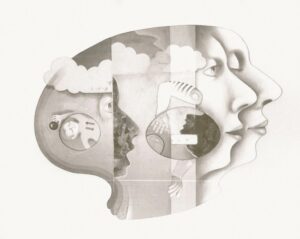
Facial Expressions: Decoding Your Hidden Social Cues
Scientifically Reviewed · Dr. Marwa Abd-Alazim · September 19, 2026
Review Criteria & Clinical Standards
This content undergoes rigorous scientific peer-review and medical editorial standards at Arab Psychology Network to ensure clinical accuracy, validity, and compliance with evidence-based guidelines from leading psychological and healthcare authorities (APA / WHO).

Introduction and Anatomical Overview
The facial muscles, known scientifically as the muscles of facial expression (mimetic muscles) and the muscles of mastication, constitute a highly specialized group of skeletal muscles critical for human communication, physiological function, and social interaction. Unlike most skeletal muscles that connect bone to bone via tendons, the defining characteristic of the facial expression muscles is their unique dermal attachment; they originate on the bone or fascia and insert directly into the skin or mucus membranes of the face, neck, and scalp. This anatomical arrangement allows for the subtle, intricate movements necessary to produce the vast repertoire of facial expressions that underpin nonverbal communication. Functionally, these muscles are organized into two distinct categories based on their primary roles: those dedicated to emotional expression and those primarily involved in mechanical movement, such as chewing and stabilization.
The comprehensive network of facial musculature is fundamentally responsible for controlling the orifices of the face—the eyes, nose, and mouth—thereby facilitating essential activities including speaking, eating, breathing, and protecting the sensory organs. This dual functional capacity highlights their importance not just in psychology and sociology, but also in basic physiological maintenance. The sheer density and complexity of innervation within the face allow for extraordinary precision; even minor contractions can convey profound emotional states or intentions. Furthermore, the structural integrity provided by these muscle groups influences facial contour and appearance, which often plays a significant role in individual identity and perception of age. Understanding the anatomy and coordinated function of these muscles is paramount to diagnosing and treating numerous neurological and cosmetic conditions.
The crucial distinction between the two major groups lies in their embryological origin and, consequently, their neurological control. The muscles of facial expression are derived from the second pharyngeal arch and are universally innervated by the Facial Nerve (Cranial Nerve VII). Conversely, the muscles of mastication, which handle the powerful movements of the jaw, arise from the first pharyngeal arch and receive their motor supply from the mandibular division of the Trigeminal Nerve (Cranial Nerve V). This clear separation in innervation pathways is essential for clinical assessment, as it allows clinicians to localize the site of neurological injury based on the specific pattern of muscular paralysis or weakness observed in a patient. The coordination between these two distinct neural systems ensures that complex actions, such as simultaneous speech articulation and emotional signaling, occur seamlessly.
The Muscles of Facial Expression (Innervation by CN VII)
The muscles of facial expression (MFE) are located in the subcutaneous tissue, forming thin, sheet-like structures beneath the skin. Their primary role is the modulation of facial features to convey emotion. The MFE can be functionally grouped around the facial orifices: the orbital group (around the eyes), the nasal group (around the nose), and the oral group (around the mouth). The entire group is controlled exclusively by the Facial Nerve (CN VII), which exits the skull and divides into five major branches—temporal, zygomatic, buccal, mandibular, and cervical—each supplying a specific topographical region of the face. Damage to the facial nerve often results in ipsilateral paralysis of the entire hemiface, leading to severe impairment in both communication and essential bodily functions.
The key muscles in the orbital region include the orbicularis oculi, which is critical for closing the eyelids (winking, blinking, and forced closure), and the frontalis muscle (part of the occipitofrontalis group), which elevates the eyebrows and wrinkles the forehead, often signaling surprise or attention. In the oral region, the complexity increases significantly due to the involvement of the mouth in speech and eating, alongside expression. Key depressors, such as the depressor anguli oris (pulls the corner of the mouth down, sadness/frowning) and the depressor labii inferioris (pulls the lower lip down), contrast with the powerful elevators, notably the zygomaticus major and minor, which are the primary muscles responsible for smiling and lifting the upper lip. The risorius pulls the corner of the mouth laterally, contributing to expressions of mirth or tension.
Furthermore, muscles like the mentalis, which wrinkles the chin and protrudes the lower lip, play an important role in pouting and expressions of doubt or contempt. The platysma, a broad, thin sheet of muscle extending from the chest and neck up to the jawline, is involved in drawing the corners of the mouth down and tensing the skin of the neck, often associated with fear or intense effort. The precise interaction of these dozens of small muscles creates the nuanced expressions critical for social interaction. Psychologists utilize systems like the Facial Action Coding System (FACS) to objectively categorize and measure the movement of these muscles, linking specific combinations of muscle contractions (Action Units) directly to universal emotional states, demonstrating the inherent biological basis of emotional signaling.
The Muscles of Mastication and Deep Movement (Innervation by CN V)
In contrast to the superficial muscles of expression, the muscles of mastication (FMM) are robust, powerful muscles situated in the deep layers of the face and skull, designed primarily for movement of the mandible (jaw). These muscles are absolutely essential for the mechanical processing of food, including biting and chewing, and they also play a vital supportive role in speech articulation. All four principal muscles of mastication are innervated by the motor root of the Trigeminal Nerve (CN V). Their coordinated action allows for the complex grinding motions required for efficient digestion, involving elevation, depression, protrusion, retraction, and lateral excursion of the jaw.
The primary elevators of the mandible are the masseter and the temporalis muscles. The masseter is a powerful, quadrilateral muscle located on the side of the jaw, easily palpable when the teeth are clenched, providing immense force for biting. The temporalis is a fan-shaped muscle covering the temporal bone, which not only elevates the jaw but also retracts it (pulls it backward). The combined strength of these muscles allows humans to exert significant pressure, enabling the breakdown of tough foods. Dysfunction or hypertrophy of these muscles can lead to conditions like temporomandibular joint disorder (TMJ) or bruxism (teeth grinding), often resulting in chronic facial pain and headaches.
The two pterygoid muscles (medial and lateral) are deeper structures located within the infratemporal fossa and are crucial for the lateral and protusive movements of the jaw. The medial pterygoid assists the masseter in elevation and protrusion, effectively forming a muscular sling that stabilizes the jaw joint. The lateral pterygoid is unique because it is the only major muscle that actively depresses the jaw (opening the mouth) and is critical for protrusion and side-to-side grinding motions. While strictly classified with mastication muscles, the buccinator muscle—a thin muscle forming the muscular wall of the cheek—is also critically important for deep movement, specifically in keeping the cheek tight against the teeth during chewing, preventing food from accumulating in the oral vestibule. It is also utilized powerfully by musicians (e.g., trumpet players) to compress air, hence its nickname, the “trumpeter’s muscle.”
The Neurophysiology of Facial Control
The control of facial muscles involves an intricate interplay between the central nervous system (CNS) and the peripheral nervous system (PNS), distinguishing between voluntary and involuntary (emotional) control. Voluntary facial movement, such as consciously smiling for a photograph or initiating speech, is primarily governed by the pyramidal tract, originating in the primary motor cortex. The neural signals cross over in the brainstem, meaning the motor cortex in the left hemisphere controls the voluntary movements of the right side of the face, and vice versa. This pathway ensures precise, intentional motor execution based on cognitive command. The complexity of this voluntary pathway means that lesions in the motor cortex or descending tracts often result in specific patterns of weakness or paralysis, particularly affecting the lower half of the contralateral face.
In contrast, spontaneous, genuine emotional expressions—like laughing at a joke or frowning out of genuine sadness—are mediated primarily by extrapyramidal and limbic pathways, which involve deeper brain structures such as the basal ganglia, thalamus, and hypothalamus. These subcortical structures process and generate genuine affective responses, bypassing the conscious control exerted by the motor cortex. A striking clinical phenomenon illustrating this separation is the difference between voluntary and emotional facial paralysis. Patients who suffer a cortical stroke (affecting the voluntary pathway) may be unable to voluntarily move one side of their mouth upon command, yet they might exhibit a perfectly symmetrical, spontaneous smile when genuinely amused, demonstrating the intact nature of their subcortical emotional circuitry.
The final common pathway for facial expression is the Facial Nerve (CN VII) nucleus in the pons. This nucleus receives input from both the voluntary (cortical) and emotional (limbic/subcortical) systems. A critical detail in the innervation pattern is that the upper face muscles (e.g., frontalis, orbicularis oculi) receive bilateral cortical innervation, meaning they are supplied by both the left and right motor cortices. The muscles of the lower face, however, receive only contralateral innervation. This anatomical redundancy explains why a central stroke (affecting the cortex) typically spares the ability to wrinkle the forehead and close the eye, while a peripheral lesion (like Bell’s Palsy, affecting the CN VII nerve trunk) results in complete paralysis of the entire ipsilateral face, top to bottom.
Facial Muscles in Nonverbal Communication and Social Cognition
The facial musculature serves as the most potent and immediate channel for nonverbal communication, acting as a crucial mediator of social interaction and emotional resonance. The ability to rapidly and accurately interpret facial expressions is fundamental to social cognition, allowing individuals to anticipate others’ intentions, assess emotional states, and regulate their own behavior accordingly. Psychological research, pioneered by figures like Paul Ekman, established that certain fundamental emotions—joy, sadness, anger, fear, surprise, and disgust—are associated with universal facial expressions, meaning the underlying muscular movements are recognized across diverse cultures, suggesting a hardwired evolutionary basis for emotional signaling.
Beyond conveying clear emotional states, facial muscles are instrumental in regulating conversation flow. Subtle movements, often referred to as microexpressions, lasting only a fraction of a second, can betray concealed emotions or cognitive processing, providing critical, often unconscious, data to the observer. Furthermore, facial movements are integral to the establishment of empathy and rapport. The phenomenon of facial mimicry—where an observer unconsciously mirrors the facial expressions of the person they are interacting with—is believed to facilitate emotional understanding and connection, enabling the observer to internally simulate and thus understand the perceived emotion. The speed and precision required for this continuous exchange underscore the necessity of a highly efficient and reactive facial neuromuscular system.
The role of facial muscles extends into the domain of self-perception through the Facial Feedback Hypothesis. This theory posits that the efferent signals sent from the facial muscles back to the brain not only reflect an internal emotional state but can also influence or intensify that emotion. For example, forcing a smile (contracting the zygomaticus major) can subtly improve mood, while holding a frown can deepen feelings of negativity. This highlights the bidirectional relationship between muscular activity and affective experience. Consequently, impairments in facial mobility, even minor ones, can profoundly impact an individual’s ability to engage in normal social feedback loops, leading to significant psychological distress and feelings of social isolation.
Clinical Implications: Facial Paralysis and Dysfunction
Dysfunction of the facial muscles, most commonly manifesting as facial paralysis (palsy), represents a significant clinical challenge with severe psychosocial consequences. Facial paralysis occurs when the nervous supply to the muscles is disrupted, preventing effective contraction. The etiology can range from infectious disease and autoimmune conditions to trauma, stroke, and tumors. The most common cause of unilateral facial paralysis is Bell’s Palsy, an idiopathic condition likely related to viral inflammation and swelling of the Facial Nerve (CN VII), resulting in temporary but often complete peripheral nerve damage.
Clinically, differentiating between the two types of nerve lesions—central (upper motor neuron, UMN) versus peripheral (lower motor neuron, LMN)—is critical for diagnosis and prognosis. An LMN lesion, such as Bell’s Palsy or damage to the nerve trunk after trauma, causes paralysis of all ipsilateral facial muscles, including the forehead (inability to wrinkle the brow) and the eye (inability to close the eyelid, leading to lagophthalmos). Conversely, an UMN lesion, typically resulting from a cortical stroke, primarily affects the voluntary movement of the lower contralateral face due to the preserved bilateral innervation of the upper face. This specific pattern of paralysis allows clinicians to quickly localize the site of neural damage, directing subsequent imaging and treatment strategies.
The functional consequences of facial muscle paralysis are far-reaching. Beyond the obvious aesthetic changes, patients often struggle with basic functions. Inability to properly close the eye can lead to chronic dryness, corneal damage, and vision loss. Paralysis of the oral muscles compromises chewing, resulting in food pooling in the cheek (pocketing), and difficulty speaking clearly (dysarthria). Furthermore, the loss of expressive capacity leads to significant psychological morbidity, including anxiety, depression, and social avoidance, as the individual loses the ability to effectively signal emotion and engage in crucial nonverbal communication with others. The face, being central to identity, means that any permanent impairment carries a heavy psychological burden.
Therapeutic Interventions and Rehabilitation
The management of facial muscle dysfunction is tailored to the underlying cause and the severity of the paralysis, aiming to restore both function and symmetry. For acute conditions like Bell’s Palsy, treatment often involves corticosteroid administration, sometimes combined with antiviral medications, to reduce inflammation and swelling of the Facial Nerve (CN VII), maximizing the potential for spontaneous recovery. However, in cases of severe or permanent nerve damage, rehabilitation strategies are necessary and can be complex, often requiring a multidisciplinary approach involving neurologists, physical therapists, and plastic surgeons.
Physical therapy is a cornerstone of rehabilitation, focusing on neuromuscular retraining. This involves specific exercises designed to maintain muscle tone, prevent atrophy, and re-educate the brain to control the weakened muscles once reinnervation begins. Techniques often include biofeedback and mirror therapy to help the patient consciously monitor and control subtle muscle movements. Electrical stimulation may be used, particularly in the early stages, to stimulate the denervated muscles directly, maintaining their responsiveness until nerve regeneration can occur, though the efficacy of this treatment remains a topic of ongoing research.
For patients suffering from synkinesis—an abnormal pattern of simultaneous muscle contraction resulting from misdirected nerve regeneration—or muscle spasticity, Botulinum Toxin (Botox) injections offer a highly effective symptomatic treatment. Botox temporarily paralyzes overactive or antagonistic muscles, allowing the weaker, desired muscles to move more freely, thereby improving facial symmetry and function, particularly around the eye and mouth. In cases of permanent paralysis where nerve recovery is impossible, surgical interventions are considered, including nerve grafting (transferring a healthy nerve segment to bridge the gap), muscle transfer procedures (transplanting muscle tissue from the leg or chest to the face), or static suspension techniques to provide structural support to the paralyzed face, dramatically improving both cosmetic appearance and essential functions like mouth closure and speaking.
References
The following resources provide foundational knowledge on the anatomy, physiology, and clinical management of the facial musculature:
- Basmajian, J.V., & DeLuca, C.J. (1985). Muscles alive: Their functions revealed by electromyography. Baltimore, MD: Williams & Wilkins.
- Kumar, S., & Aggarwal, A. (2018). Anatomy of facial muscles. Indian Journal of Plastic Surgery, 51(4), 435-443. https://doi.org/10.4103/ijps.IJPS_150_17
- Lopez, M.R., & Wojno, T.H. (2015). Facial palsy: Etiology, diagnosis, and management. Continuum (Minneapolis, Minn.), 21(2), 394-414. https://doi.org/10.1212/CON.0000000000000202
- Ekman, P. (1993). Facial expression and emotion. American Psychologist, 48(4), 384–392.
- Jankovic, J. (2017). Botulinum toxin in clinical practice. Journal of Neurology, Neurosurgery & Psychiatry, 88(12), 1011–1019.