Group Facilitation: Orchestrating Collective Intelligence
Scientifically Reviewed · Dr. Marwa Abd-Alazim · September 18, 2026
Review Criteria & Clinical Standards
This content undergoes rigorous scientific peer-review and medical editorial standards at Arab Psychology Network to ensure clinical accuracy, validity, and compliance with evidence-based guidelines from leading psychological and healthcare authorities (APA / WHO).
Abstract and Definition
Facilitation is a sophisticated process designed to assist a group of individuals in clearly identifying their shared objectives and subsequently guiding them toward a consensus decision regarding the most effective strategies to achieve those objectives. At its core, facilitation is the management of group process, ensuring that communication pathways are clear, equitable, and directed toward productive outcomes. The role of the facilitator is fundamentally that of a neutral process guide, who possesses specialized training in group dynamics, communication methods, and conflict management, thereby enabling the group to utilize its collective intelligence efficiently.
The concept of facilitation transcends simple meeting management; it is a critical skill set used to transform disparate individual ideas into cohesive, actionable plans. Effective facilitation ensures that every participant is heard, that power dynamics are minimized, and that the resulting decision holds genuine commitment from the group members. This process is essential when dealing with complex problems, high-stakes decisions, or situations requiring the integration of diverse expertise and perspectives. Facilitation ensures that the group focuses on the content and substance of the discussion, while the facilitator manages the structure and flow of the interaction.
Facilitation is a highly diverse and flexible field, drawing upon methodologies from organizational psychology, communication theory, and educational practice. It is applicable across a vast spectrum of contexts, including corporate strategy sessions, community planning initiatives, academic research collaborations, and therapeutic group settings. This entry will thoroughly examine the foundational principles, diverse applications, and specific techniques employed in professional facilitation, providing a comprehensive understanding of how this discipline is utilized to foster consensus, drive collaboration, and achieve collective goals.
The Core Purpose of Facilitation
The overarching purpose of professional facilitation is the creation of an environment where a group can move effectively and efficiently from initial discussion to finalized agreement and committed action. This is achieved by systematically addressing the inevitable roadblocks inherent in group work, such as tangential discussions, unmanaged conflict, dominant personalities, and ambiguous objectives. The facilitator acts as a steward of the process, ensuring that the group remains focused on its defined goals and adheres to agreed-upon operational norms. This structured approach significantly increases the quality of decision-making compared to unguided group interactions.
A primary function of facilitation is to establish and maintain psychological safety within the group environment. When participants feel safe, they are more likely to share dissenting opinions, contribute creative ideas, and engage honestly with complex issues. The facilitator achieves this safety by establishing clear ground rules at the outset—rules governing respect, confidentiality, participation equity, and conflict resolution. This foundation allows for rigorous debate without devolving into personal attacks, enabling the group to fully explore all facets of a problem before committing to a solution.
Furthermore, facilitation is instrumental in ensuring that the final outcomes are not only agreed upon but are also fully understood and supported by all members. Achieving true consensus means that while every individual may not view the final decision as their first choice, they fully support the decision and commit to its implementation, believing it to be the best path forward for the group as a whole. The facilitator employs specific techniques to test for commitment and clarify ambiguities, transforming mere assent into genuine ownership of the resulting action plan.
The Role and Responsibilities of the Facilitator
The facilitator occupies a unique and crucial position, primarily defined by neutrality regarding the content of the discussion. Unlike a chairperson or a consultant, the facilitator does not contribute opinions or ideas concerning the solution itself; their expertise lies solely in managing the dynamics and flow of interaction. This impartiality is vital, as it allows the facilitator to challenge the process, intervene when dynamics become unproductive, and redirect conversations without being perceived as having a vested interest in the outcome. This focus on process management allows the group members, who are the content experts, to concentrate entirely on solving the problem at hand.
The responsibilities of a professional facilitator are extensive and demanding, requiring sophisticated interpersonal and organizational skills. These responsibilities include meticulous preparation of the meeting agenda, precise time management to ensure objectives are met within the allotted timeframe, and expert management of documentation and visual records (e.g., flip charts or digital whiteboards) to maintain transparency and capture decisions accurately. Crucially, the facilitator must also be skilled in managing group conflict, intervening to mediate disputes, reframe negative statements, and guide participants toward productive dialogue rather than emotional confrontation.
To effectively execute these duties, the facilitator must master a specific set of core competencies. These include highly developed active listening skills, which enable the accurate synthesis and reflection of participants’ viewpoints; sophisticated questioning techniques (detailed further below) designed to stimulate critical thinking and creativity; and the ability to calibrate group energy, recognizing when a break is needed or when a specific activity requires more focused attention. The facilitator is essentially the guardian of the group’s time and energy, maximizing productivity while maintaining a positive and supportive atmosphere.
Key Applications and Use Cases
Facilitation is a highly versatile tool employed across numerous sectors whenever complex collaborative efforts are required. In the corporate world, it is indispensable for strategic planning sessions, where diverse departmental heads must align on long-term organizational goals and resource allocation. It is also critical in project management for conducting effective kick-off meetings, risk assessments, and post-mortem reviews, ensuring all stakeholders are synchronized and committed to the project lifecycle. Facilitation guarantees that these high-stakes discussions remain structured and focused, translating abstract ideas into concrete deliverables.
Beyond traditional business contexts, facilitation is widely used in educational, non-profit, and governmental settings. In training and development, facilitators guide workshops to help groups acquire new skills or integrate organizational change, often utilizing experiential learning techniques to embed knowledge effectively. For non-profit organizations, facilitation is crucial for community engagement, allowing disparate stakeholders—such as residents, local government, and advocacy groups—to collaborate on solutions for shared public challenges, ensuring equitable and representative decision-making.
One particularly sensitive and impactful application of facilitation lies in conflict resolution and large-scale organizational change management. When departments are siloed or internal conflicts hinder productivity, a skilled external facilitator can provide the necessary neutrality to help parties build trust, unpack misunderstandings, and develop mutually acceptable solutions. Facilitation structures these difficult conversations, moving them past blame and toward shared understanding and collaborative problem-solving, thereby fostering greater organizational cohesion and long-term sustainability.
Foundational Facilitation Techniques
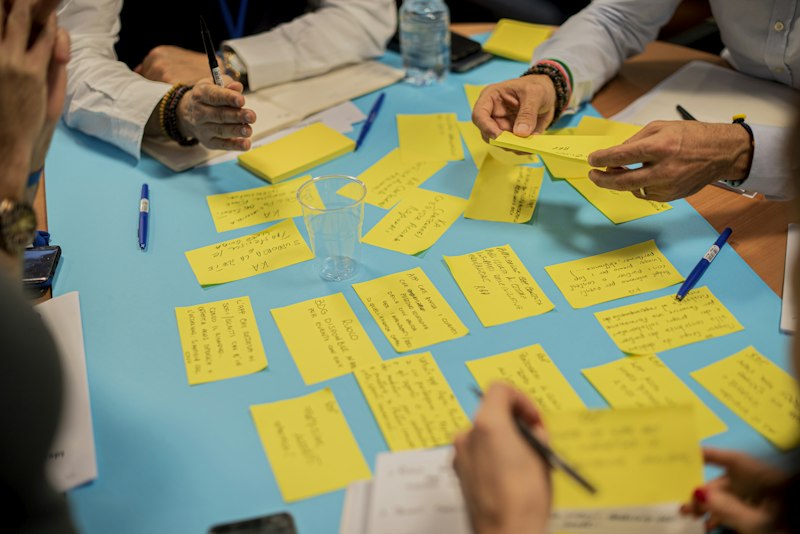
A core arsenal of techniques allows the facilitator to structure group activity, generate ideas, and manage interaction. One of the most common and effective techniques is brainstorming, a process designed to rapidly generate a large volume of ideas or potential solutions without immediate judgment or critique. The rules of brainstorming—such as deferring judgment, encouraging wild ideas, and building on the ideas of others—are strictly enforced by the facilitator to maximize creative output. Variations, such as silent brainstorming or the Nominal Group Technique (NGT), are used when group members are inhibited or when rapid idea prioritization is needed.
Another powerful technique, particularly useful for exploring different perspectives and developing empathy, is role-playing. This involves assigning participants specific roles or personas related to a complex problem and having them act out a scenario. Role-playing is invaluable in training sessions (e.g., customer service scenarios) and conflict resolution, as it allows participants to experience the emotional and practical implications of different viewpoints in a safe, simulated environment. The facilitator carefully debriefs the role-play afterward, guiding the group to extract key learnings and insights applicable to their real-world context.
Perhaps the most crucial communication tool in the facilitator’s toolkit is the strategic deployment of open-ended questions. Unlike closed questions that invite simple “yes” or “no” answers, open-ended questions require thoughtful, elaborated responses and are designed to stimulate deeper conversation, critical analysis, and exploration of complex ideas. Examples include: “What assumptions are we making about this solution?” or “If resources were unlimited, how might we approach this challenge differently?” The facilitator uses these questions not only to gather information but also to shift the group’s perspective or gently challenge potential biases.
Advanced Facilitation Methodologies
As group challenges become more complex, especially those involving large numbers of participants or deeply entrenched issues, advanced structured methodologies are often employed. Methods such as the World Café or Open Space Technology (OST) are designed specifically for large group interventions, promoting widespread dialogue and self-organization. World Café, for instance, involves participants rotating between small tables, building upon previous conversations and harvesting collective intelligence across the entire system. The facilitator designs the structure and questions, allowing the content to emerge naturally from the participants’ engagement.
Another advanced methodology is Appreciative Inquiry (AI), which shifts the focus from problem-solving (what is broken?) to strength-building (what is working well?). AI utilizes a structured cycle (Discovery, Dream, Design, Destiny) to focus the group on peak performance moments and organizational strengths, fostering a positive, energized environment conducive to visionary planning. The facilitator guides the group through careful interviewing and storytelling to identify the core drivers of success, which are then amplified to guide future organizational design and strategy.
For complex decision-making, facilitators often utilize structured processes for idea prioritization and refinement. This moves beyond simple voting to ensure a robust evaluation. Techniques might include multi-voting, where participants are given a limited number of votes to distribute among a long list of options, or weighted criteria matrices, where potential solutions are systematically scored against predefined metrics (e.g., cost, feasibility, impact). These advanced methods ensure that the decision-making process is transparent, data-driven, and less susceptible to the influence of dominant personalities.
Building Group Consensus and Trust
The ultimate objective of facilitation is frequently consensus-building, which is a meticulous process requiring dedication to equitable participation and mutual respect. Consensus does not imply unanimity, where everyone agrees completely, but rather that all members have had the opportunity to influence the final decision, feel that the outcome is viable, and commit to supporting its implementation. The facilitator must actively manage the continuum of agreement, ensuring that minority viewpoints are not silenced but are instead integrated or thoughtfully addressed before a decision is finalized.
The foundation of effective consensus is the establishment of trust among group members. Trust allows individuals to take intellectual risks, share vulnerabilities, and offer honest critique without fear of retribution. Facilitators build trust by modeling transparency, consistently enforcing ground rules, and intervening immediately when disrespectful behavior occurs. Initial activities often focus on relationship-building and establishing shared purpose, providing a necessary emotional baseline for tackling demanding intellectual or organizational challenges later in the process.
Managing dissent is central to achieving sustainable consensus. When resistance surfaces, the facilitator must treat it not as an obstacle but as a critical source of information. Dissent often highlights risks or considerations that the majority may have overlooked. The facilitator employs techniques, such as the “fist-to-five” voting scale or “consensus-minus-one” approaches, to gauge the level of commitment. If strong objections remain, the facilitator guides the group to pause and integrate the objection, refine the proposal, or document the risks, ensuring that the final agreement is robust enough to withstand scrutiny and implementation challenges.
Conclusion and Future Directions
This overview has demonstrated that facilitation is a formalized, essential discipline focused on optimizing the efficiency and effectiveness of group interaction. By managing the process of collaboration—including objective identification, action planning, and conflict resolution—the facilitator empowers groups to achieve superior outcomes and reach durable consensus decisions. Facilitation is the mechanism by which collective intelligence is successfully harnessed, transforming potential chaos into structured productivity across various organizational contexts, including business meetings, training programs, and strategic workshops.
As organizational structures continue to evolve toward flatter hierarchies, increased cross-functional teamwork, and globally distributed teams, the demand for sophisticated facilitation skills is growing exponentially. The complexity inherent in virtual collaboration, asynchronous communication, and diverse cultural integration necessitates expert process guidance to maintain cohesion and productivity. Future developments in facilitation will likely emphasize the integration of digital tools and virtual meeting platforms, requiring facilitators to adapt their techniques to manage screen fatigue, ensure equitable virtual participation, and utilize digital whiteboards and polling features effectively.
Ultimately, the longevity and relevance of facilitation stem from its unwavering focus on human interaction and effective communication. Whether operating within a corporate boardroom or a community center, the facilitator serves as the indispensable steward who ensures that groups not only meet their objectives but do so in a manner that strengthens their internal relationships and capacity for future collaboration. The art of facilitation remains critical for helping groups navigate complexity, build shared understanding, and translate ambitious goals into measurable reality.
Selected References
-
Barker, J. R. (2019). Facilitation: A practical guide for successful meetings, workshops and conferences. Routledge.
-
Kelsey, D. (2016). Facilitation: The art of helping groups make decisions. American Society for Training and Development.
-
McGill, M., & Klobas, J. (2018). The art of facilitation: How to create group synergy. Berrett-Koehler Publishers.
-
Svendsen, M. (2015). The art of facilitation: A practical guide to successful workshops, meetings and events. Kogan Page.