Semantic Memory: Decoding Your Mental Database
Scientifically Reviewed · Dr. Marwa Abd-Alazim · October 22, 2026
Review Criteria & Clinical Standards
This content undergoes rigorous scientific peer-review and medical editorial standards at Arab Psychology Network to ensure clinical accuracy, validity, and compliance with evidence-based guidelines from leading psychological and healthcare authorities (APA / WHO).
The Core Definition of Factual Knowledge
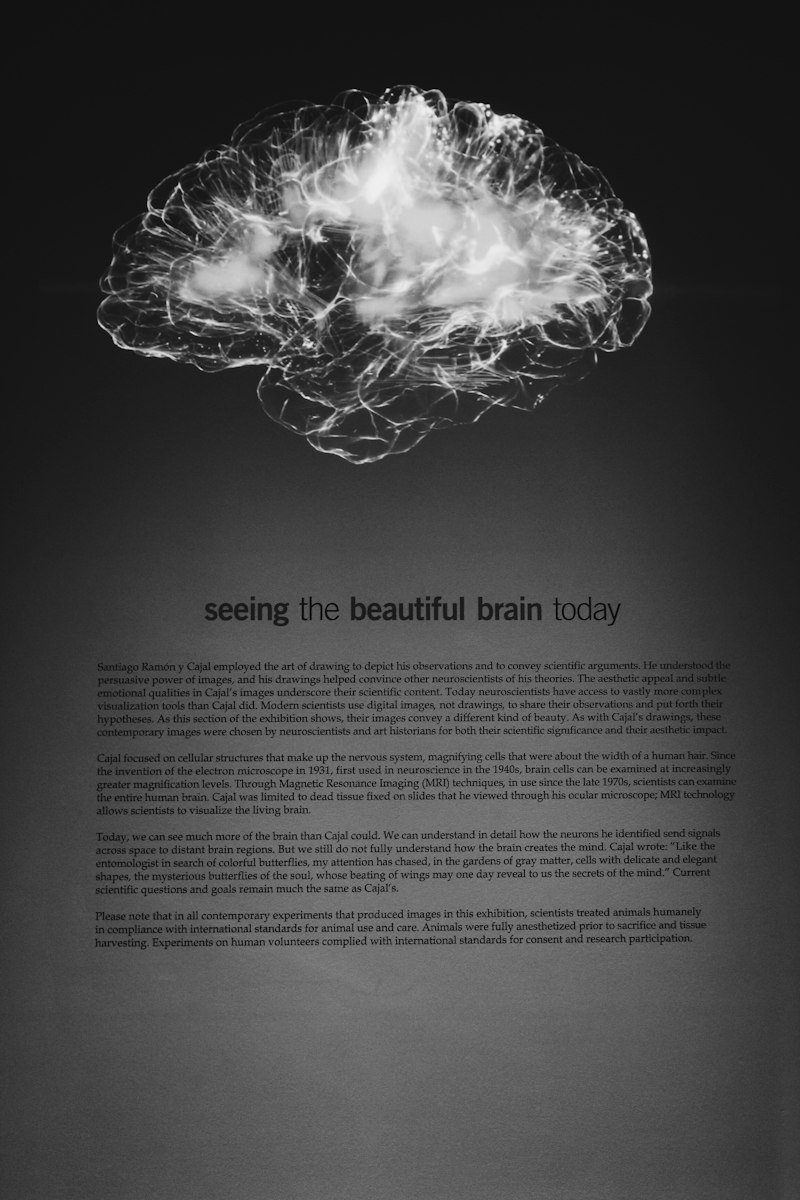
Factual knowledge, in the realm of Cognitive Psychology, is the component of long-term memory that stores information about the world, concepts, ideas, and facts, independent of personal experience or context. This type of knowledge is often referred to interchangeably as semantic memory or declarative knowledge, representing the mental encyclopedia and dictionary compiled within the individual’s mind. It includes everything from simple truths, like “Paris is the capital of France,” to complex scientific principles, mathematical formulae, and the vocabulary of a language.
The fundamental mechanism behind factual knowledge is its abstract and generic nature. When an individual recalls a piece of factual information, they typically do not recall the exact time or place they learned it; the information stands alone as a verifiable truth. For instance, knowing that water boils at 100 degrees Celsius is a piece of factual knowledge that remains constant regardless of whether it was learned in a classroom, read in a textbook, or derived from an experiment. This distinction highlights the impersonal quality of factual knowledge, contrasting sharply with memory systems tied to specific autobiographical events.
Acquisition of factual knowledge occurs primarily through systematic learning, instruction, reading, and exposure to information, a process often described as “knowing that” as opposed to “knowing how.” To be considered factual knowledge, the information must be stable, accessible, and generally accepted as true within the relevant cultural or scientific framework. While facts can be updated or proven false over time (e.g., Pluto’s status as a planet), the system itself is responsible for retaining and organizing these objective representations of reality, allowing individuals to make sense of and communicate about the world around them effectively.
Distinction from Other Knowledge Types
Factual knowledge exists in a complex relationship with other forms of long-term memory, most notably episodic memory and procedural knowledge. Episodic memory involves the recollection of specific events, experiences, and associated contexts—the “what, where, and when” of personal history. If semantic memory is knowing that the Battle of Gettysburg occurred, episodic memory is recalling the specific museum trip where one first learned about the battle, including the smell of the exhibit and the conversation held with a companion. Although distinct, these two systems often interact, as factual knowledge can provide the framework for interpreting and organizing personal episodes.
In contrast, procedural knowledge refers to the memory of skills and habits, often operating below conscious awareness, exemplified by tasks such as riding a bicycle, typing, or playing a musical instrument. While procedural knowledge relies on motor routines and repeated practice, factual knowledge relies on conceptual understanding and linguistic representation. A person may possess extensive factual knowledge about the physics and mechanics of riding a bicycle (declarative knowledge) but still lack the procedural skill necessary to perform the action. The acquisition paths and neural substrates for these two categories of knowledge are fundamentally different, demonstrating the specialized nature of human long-term memory.
The classification of knowledge into these subtypes is crucial for understanding how learning disorders, brain injuries, and age-related cognitive decline manifest. Damage localized to brain areas primarily responsible for semantic processing (such as parts of the temporal lobe) might severely impair an individual’s ability to recall factual information, vocabulary, or the names of objects, yet leave their ability to form new episodic memories or execute complex physical skills relatively intact. This modularity underscores the psychological reality of factual knowledge as a discrete, though interconnected, system.
Historical Roots and Cognitive Psychology
The concept of factual knowledge, specifically recognized as semantic memory, was formalized relatively late in the history of psychology, primarily emerging from the cognitive revolution of the mid-20th century. Before this era, memory was often treated as a monolithic entity, generally categorized as either short-term or long-term storage. However, growing experimental evidence demonstrated that long-term memory was not uniform and could be dissociated based on the type of information stored and the mechanisms required for retrieval.
The critical distinction was introduced by Canadian psychologist Endel Tulving in 1972, who proposed a structural division within declarative memory. Tulving argued that episodic and semantic memory systems were independent, though interacting, components of long-term storage. His work provided the necessary theoretical framework and empirical evidence, including studies of amnesia patients, to firmly establish semantic memory—the repository of factual, generic knowledge—as a unique and essential psychological construct. This groundbreaking work moved the field away from simple storage models towards a more nuanced understanding of memory organization.
Following Tulving’s proposal, subsequent research focused intensely on mapping the structure of factual knowledge, leading to the development of influential models such as the hierarchical network model and the spreading activation model. These models sought to explain how facts are interconnected in the mind, suggesting that accessing one piece of information automatically primes the retrieval of related concepts. For example, retrieving the fact “A robin is a bird” might quickly activate concepts like “feathers,” “nest,” and “flying,” demonstrating the highly organized, semantic structure that governs factual recall.
The Mechanisms of Encoding and Retrieval
The successful encoding of factual knowledge into long-term memory requires more than simple repetition; it relies heavily on depth of processing and organization. Information that is actively processed—meaning it is related to existing knowledge, organized into meaningful categories, or elaborated upon—is far more likely to be securely retained than information processed superficially (e.g., merely repeating words without understanding their meaning). Techniques such as mnemonic devices, chunking, and forming visual imagery are effective because they enhance the depth and structure of the initial encoding phase.
Retrieval of factual knowledge is typically a rapid and effortless process, although it can be susceptible to errors, such as retrieval failure (the “tip-of-the-tongue” phenomenon). The efficiency of factual recall is supported by the organized nature of semantic networks. When a cue is presented, the associated node in the network is activated, and this activation spreads to related concepts, allowing the brain to efficiently locate the desired information. The speed at which one can access and utilize facts directly impacts higher-order cognitive functions, including reasoning and problem-solving.
Consolidation, the process by which newly learned facts stabilize in memory, often involves the hippocampus initially, though the fully consolidated facts eventually reside primarily in the neocortex, particularly the temporal and frontal lobes, making them less dependent on the hippocampus for permanent storage. This shift explains why remote factual knowledge is often preserved in cases of hippocampal damage, which typically impairs the formation of new episodic memories but spares older, well-established facts. This physiological distinction further solidifies the view of factual knowledge as a distinct memory system.
A Practical Illustration in Education
A prime, relatable example of the application of factual knowledge is a student preparing for a comprehensive examination in a subject like history or biology. In order to successfully undertake the examination, the student must develop and consolidate their factual knowledge over an extended period concerning specific subjects and concepts. This scenario demonstrates both the acquisition and the utility of semantic memory in a real-world context.
The “How-To” of applying this psychological principle involves a structured series of cognitive steps. First, the student must acquire the facts, perhaps by reading a textbook detailing the causes of World War II or the structure of a cell. Second, they must organize and elaborate this information, linking the new facts to previously known concepts—for instance, connecting the economic factors of the Depression (known fact) to the rise of totalitarian regimes (new fact). Third, they must engage in systematic retrieval practice, using flashcards or practice tests, which strengthens the neural pathways associated with those specific facts, ensuring that the information is not only stored but readily accessible under the pressure of the exam environment. Failure to consolidate these facts effectively leads to poor performance, not because the student lacks intelligence, but because the foundational semantic network is weak or disorganized.
Significance in Human Cognition and Learning
Factual knowledge is immensely significant because it serves as the foundation for nearly all higher-order cognitive processes. Without a robust database of facts, concepts, and linguistic structures, abilities such as critical thinking, complex reasoning, and effective communication would be severely limited. The sheer volume and organization of an individual’s factual knowledge determine their expertise in any given domain, enabling experts to process information faster, categorize problems more efficiently, and generate more creative solutions than novices.
In the field of education, the recognition of factual knowledge as semantic memory has profoundly influenced pedagogical methods. Curriculum design now emphasizes not just the rote memorization of isolated facts, but the construction of meaningful conceptual networks. Educators strive to teach students how to organize information hierarchically and link new concepts to existing schemas, promoting deeper encoding and more efficient retrieval. Furthermore, in clinical psychology, assessing a patient’s semantic memory helps diagnose conditions like semantic dementia, Alzheimer’s disease, and various forms of aphasia, providing critical insights into the location and extent of neurological damage.
Clinical and Applied Relevance
The study of factual knowledge has critical applications in both clinical assessment and practical technology development. Clinically, specific neuropsychological tests are designed to measure the integrity of semantic memory, such as naming tasks, category fluency tasks (e.g., naming as many animals as possible in one minute), and general knowledge quizzes. Deficits in these areas are often early indicators of neurodegenerative diseases, where the loss of conceptual knowledge and vocabulary precedes more global cognitive decline.
Beyond clinical settings, the principles governing factual knowledge storage and retrieval are foundational to fields such as artificial intelligence and database management. Computer scientists and engineers model semantic networks—often using knowledge graphs—to allow machines to process and retrieve information in a human-like, associative manner. Furthermore, in marketing and communications, understanding how consumers store and retrieve facts about brands and products influences advertising strategies, focusing on creating facts that are easily encoded, highly memorable, and strongly linked to positive concepts.
Connections to Broader Psychological Theories
Factual knowledge is deeply embedded within the broader theoretical landscape of psychology. It is a cornerstone of the Information Processing Model, which views the mind as an active processor of information, using semantic memory as the primary long-term storage bank for generalized data. Furthermore, it connects to schema theory, developed by researchers like Sir Frederic Bartlett, which posits that people organize factual knowledge into structured mental frameworks (schemas) that guide perception and interpretation.
Within the domain of learning theory, factual knowledge is central to constructivism, which emphasizes that learners build new understanding based on prior knowledge. A student’s existing factual knowledge base dictates their ability to assimilate or accommodate new information; if the foundational facts are missing, the construction of complex concepts becomes impossible. Thus, factual knowledge acts as both the raw material and the organizing principle for continuous learning and cognitive growth, making its study essential to understanding the full scope of human intellect and adaptation.
Factual knowledge, therefore, belongs primarily to the subfield of Cognitive Psychology, specifically falling under the umbrella of Memory Research, but its applications spread extensively into developmental psychology (how factual knowledge is acquired across the lifespan), educational psychology (how it is best taught), and neuropsychology (the brain regions responsible for its maintenance and retrieval).