Gender Equality: The Psychology of Feminism Unveiled
Scientifically Reviewed · Dr. Marwa Abd-Alazim · September 8, 2026
Review Criteria & Clinical Standards
This content undergoes rigorous scientific peer-review and medical editorial standards at Arab Psychology Network to ensure clinical accuracy, validity, and compliance with evidence-based guidelines from leading psychological and healthcare authorities (APA / WHO).
Defining Feminism: Core Concepts and Scope
Feminism, in its contemporary and primary usage, refers to a multifaceted group of intellectual, political, and social perspectives fundamentally concerned with the social, economic, and political equality of the sexes. It is not merely a single doctrine but rather a comprehensive framework for analyzing the differential treatment and status afforded to individuals based on their gender. This analytical lens addresses phenomena spanning the entirety of human experience, including the interpretation of biological nature, the structure of social institutions, and the dynamics of power inherent in gendered relationships. Crucially, the movement seeks to identify, critique, and ultimately dismantle systemic inequalities that privilege one gender over others, historically focusing on patriarchy and the subordination of women.
The scope of feminism extends far beyond simple advocacy; it incorporates rigorous theoretical analysis across disciplines such as sociology, political science, history, philosophy, and increasingly, psychology. Within this academic context, feminist thought examines how gender roles are constructed and maintained, how social phenomena shape individual identities, and how cultural narratives influence perceptions of competence and value assigned to different genders. A central tenet involves the recognition that gender is a powerful determinant of life outcomes, access to resources, and personal safety, necessitating a committed effort to achieve parity through policy change, cultural critique, and educational reform.
Furthermore, it is vital to acknowledge a historical, now largely defunct, application of the term. Historically, “feminism” was sometimes used, particularly in late 19th and early 20th-century medical and psychological literature, to describe the appearance of secondary female characteristics or perceived effeminate traits in a male individual. This usage, which focused on perceived deviations from gender norms rather than social justice, has been completely abandoned by modern academia and social movements. The example, “Joe had some traits of feminism about his manner,” serves only as an artifact of semantic history, emphasizing the profound evolution in how this term is understood and applied today, focusing entirely on the political and theoretical analysis of gender relations.
The First Wave: Suffrage and Legal Rights
The origins of organized feminism, conventionally termed the First Wave, are primarily located in the mid-19th and early 20th centuries. This period was characterized by a concerted focus on legal and political inequalities, driven by the conviction that women were rational agents unjustly excluded from the public sphere. The foundational goal of this wave was the attainment of suffrage—the right to vote—as well as securing property rights, educational access, and recognition as autonomous legal subjects. Prior to these efforts, married women often lacked the legal standing to own property, enter into contracts, or retain custody of their children, reinforcing their status as dependents rather than independent citizens.
Key intellectual figures of the First Wave, such as Elizabeth Cady Stanton, Susan B. Anthony, and Emmeline Pankhurst, channeled Enlightenment ideals of liberty and equality into a compelling critique of existing societal structures. They argued that the denial of political rights stemmed from arbitrary biological distinctions rather than any justifiable moral or intellectual difference. This focus on legislative reform laid the essential groundwork for all subsequent feminist endeavors, establishing the precedent that deeply entrenched social customs and legal codes could, and must, be challenged in the pursuit of justice. The successful acquisition of the vote in various Western nations marked the symbolic conclusion of this wave, proving that collective action could fundamentally alter the political landscape.
However, the First Wave was not without its limitations, notably its often narrow focus that primarily served the interests of white, middle- and upper-class women. Issues pertaining to race, class, and economic exploitation were frequently sidelined or ignored, creating divisions that would later be addressed by subsequent waves. While the legal victories were transformative, the initial movement failed to fully engage with the underlying social and psychological norms that perpetuated gender inequality, leaving the deep structural roots of patriarchy largely untouched for the next generation of activists and theorists to address.
The Second Wave: Personal is Political and Social Critique
The Second Wave of feminism emerged prominently in the 1960s and 1970s, shifting the focus dramatically from purely political rights to a comprehensive critique of social, cultural, and personal life. This era is perhaps best summarized by the enduring slogan, “The personal is political,” which asserted that seemingly private experiences of oppression—such as domestic violence, reproductive control, workplace harassment, and inequitable labor divisions within the home—were not isolated incidents but were symptomatic of systemic, patriarchal power structures. This realization broadened the scope of feminist inquiry to include gender roles, sexuality, and the psychological effects of internalized sexism.
The theoretical output of the Second Wave was immense, generating diverse schools of thought, including radical feminism, Marxist feminism, and liberal feminism. Radical feminists argued that patriarchy was the most fundamental form of oppression, requiring revolutionary societal change rather than mere legislative reform. Liberal feminists, continuing the First Wave tradition, sought change through existing political channels. Central to the Second Wave’s contribution was the detailed analysis of women’s experiences with reproductive rights and sexual liberation. The fight for access to contraception and abortion became central, recognizing that control over one’s own body was a prerequisite for achieving genuine equality in the public sphere.
The psychological dimension of the Second Wave was crucial, as theorists began to analyze how societal expectations regarding femininity and masculinity influenced mental health and self-esteem. Concepts such as the “feminine mystique” critiqued the post-war societal pressure on women to find fulfillment solely through domesticity and motherhood, often leading to feelings of dissatisfaction and alienation. Through consciousness-raising groups, women shared experiences, realizing that their private struggles were shared social problems, thereby creating a powerful foundation for collective identity and political mobilization that sought to redefine the very nature of gendered existence.
The Third Wave and Beyond: Diversity and Intersectionality
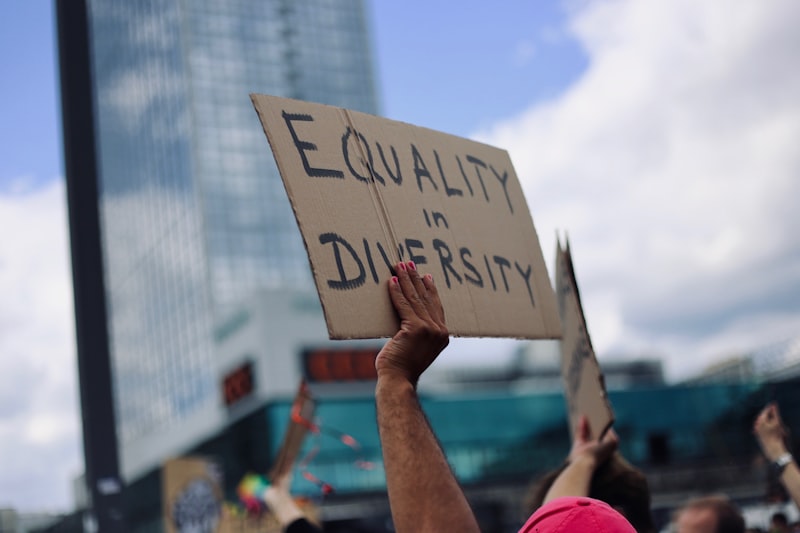
Starting in the early 1990s, the Third Wave of feminism emerged largely as a response to perceived limitations and exclusionary practices of the Second Wave, particularly its tendency to generalize the experiences of white, heterosexual, middle-class women as universal. This new wave emphasized the importance of diversity, embracing a multiplicity of voices and challenging essentialist definitions of womanhood. A primary intellectual tool of this era was the concept of intersectionality, developed by critical race theorist Kimberlé Crenshaw, which posits that various social and political identities—such as race, class, sexual orientation, disability, and gender—combine to create unique modes of discrimination and privilege.
Third Wave activists and scholars critically examined how media representations, consumer culture, and language perpetuated gendered stereotypes, often reclaiming previously derogatory terms and celebrating female agency, even within cultural spaces previously deemed oppressive. There was a conscious effort to navigate the complexities of identity politics, recognizing that an individual woman’s experience of sexism is fundamentally shaped by her simultaneous experiences of racism, classism, or homophobia. This perspective fundamentally altered feminist methodology, requiring a more nuanced, decentralized, and culturally specific approach to analyzing oppression.
The transition into what is sometimes termed the Fourth Wave (often associated with the rise of digital technologies since the 2010s) continues this focus on intersectionality while utilizing social media and digital platforms for activism, communication, and rapid mobilization. Key issues of the Fourth Wave include combating online harassment and misogyny, addressing institutionalized violence (such as the #MeToo movement), and advocating for transgender rights, further cementing the understanding that feminist struggle must be inclusive of all marginalized genders and identities. The continuous evolution of these waves demonstrates the dynamic nature of feminist analysis in adapting to changing social phenomena and technologies.
Feminist Theory and Psychological Science
Feminist perspectives have profoundly influenced the field of psychology, leading to the development of Feminist Psychology, a specialized area dedicated to critiquing traditional psychological theories and research methodologies that often exhibited male bias (androcentrism). Traditional models frequently pathologized behaviors that deviated from prescribed gender norms, or generalized findings based exclusively on male subjects to the entire population. Feminist psychologists challenged these practices, arguing that they often reinforced rather than questioned societal inequalities regarding the biological nature and social roles of gender.
A significant contribution of feminist psychological thought is the rigorous examination of gender socialization. This research investigates how cultural expectations shape the development of personality, cognitive abilities, and emotional expression from early childhood onward. Feminist models emphasize that psychological differences between genders are often far smaller than societal stereotypes suggest, and where differences do exist, they are overwhelmingly the result of environmental factors, social conditioning, and differential power dynamics rather than innate biological imperatives. This focus shifts the locus of explanation from internal deficiency to external societal structure.
Feminist psychology has also championed research into gender-related disparities in mental health, focusing on issues such as eating disorders, depression, anxiety, and the psychological trauma resulting from violence and oppression. By analyzing the social context of mental distress—for instance, linking depression in women to economic insecurity or societal expectations of perfectionism—feminist approaches offer more holistic and less blaming interpretations of psychopathology, paving the way for more equitable and effective therapeutic interventions that acknowledge the political reality of the client’s life.
Key Theoretical Constructs: Patriarchy and Gender Essentialism
Two concepts are fundamental to almost all feminist analysis: Patriarchy and the critique of Gender Essentialism. Patriarchy is defined as a social system in which men hold primary power and predominate in roles of political leadership, moral authority, social privilege, and control of property. Feminist theorists argue that patriarchy is not merely a collection of sexist attitudes but a pervasive, institutionalized structure that shapes laws, economic systems, religious doctrines, and family dynamics, thereby regulating the entire social phenomena of gender. Understanding patriarchy is essential because it provides the structural explanation for why gender inequality persists across cultures and time.
The critique of Gender Essentialism is equally central. Essentialism is the belief that women and men possess inherent, fixed, and universal qualities determined by biology (their biological nature). Feminist theory generally rejects this view, asserting instead that most characteristics associated with gender are socially constructed—meaning they are products of cultural norms, historical context, and societal expectations. By dismantling essentialist arguments, feminists challenge the idea that women are “naturally” suited for domestic roles or that men are “inherently” more aggressive or rational, thereby opening up the possibility for radical reorganization of social roles and expectations based on individual choice rather than biological determinism.
Feminist philosophy also utilizes critical tools to analyze how these constructs interact in language and culture. For example, theorists examine how gendered language reinforces power imbalances, or how media representations perpetuate stereotypes that limit the perceived potential of individuals. The application of these constructs allows for a deep, systematic analysis of inequality, moving the discussion beyond individual instances of bias to address the underlying mechanisms of power that sustain the subordination of women and the rigid enforcement of binary gender roles.
Feminism’s Historical Semantic Shift
The semantic history of the term “feminism” provides a fascinating case study in how social movements reclaim and redefine language. As noted earlier, the obsolete definition—referring to the manifestation of female characteristics in a male—originated in medical contexts, often viewing this manifestation as a deviation or pathological condition. This initial usage was deeply rooted in the biological determinism prevalent in late 19th-century scientific thought, focusing on the individual body rather than the societal structure.
The dramatic shift occurred as political and social activists adopted the term to describe the political movement advocating for women’s rights and equality. This reclamation effectively stripped the term of its pathologizing connotation and reinvested it with political agency and advocacy. The shift reflects a fundamental change in perspective: moving from seeing “feminine traits” in a man (e.g., “Joe had some traits of feminism about his manner”) as a biological curiosity or defect, to viewing “Feminism” as a comprehensive political ideology dedicated to restructuring societal relations concerning the biological nature and social phenomena of gender.
This historical contrast highlights the success of the modern movement in asserting its definition. Today, the obsolete medical usage is universally recognized as antiquated and irrelevant to the contemporary understanding of feminism as a commitment to gender equality. This distinction is crucial for scholars and students encountering historical texts, requiring them to differentiate carefully between the early, narrow clinical application and the modern, expansive political and intellectual movement.
Modern Applications in Mental Health and Well-being
Contemporary feminist applications in mental health extend beyond critique to proactive intervention, most notably through the development of Feminist Therapy. This therapeutic approach is distinguished by its emphasis on the socio-political context of clients’ problems, rejecting the notion that psychological distress is purely an intrapsychic phenomenon. Instead, feminist therapists operate on the understanding that clients are often victims of oppressive societal forces, including sexism, racism, and homophobia, which contribute significantly to their mental health challenges. The therapeutic relationship itself is characterized by egalitarianism, minimizing the traditional power imbalance between therapist and client.
Key techniques in feminist therapy include power analysis, which helps clients understand how societal power structures have impacted their lives and self-esteem, and demystification, which involves openly sharing the therapeutic process with the client. Furthermore, the focus often involves challenging traditional gender role stereotypes that limit personal growth and well-being. For example, a woman struggling with assertiveness might be helped to understand how cultural norms discourage female aggression or ambition, reframing her difficulty not as a personal failure but as a response to societal expectation.
The ultimate goal of these modern applications is empowerment. By connecting personal struggles to larger social phenomena, feminist interventions encourage clients to recognize their own strength and capacity for change, both individually and collectively. This psychological framework is deeply concerned with the societal implications of the biological nature of gender and the resulting social structures, providing a robust and ethically conscious model for promoting psychological health within a complex and often inequitable world.