Chromatic Perception: How Film Color Shapes Your Reality
Scientifically Reviewed · Dr. Marwa Abd-Alazim · August 27, 2026
Review Criteria & Clinical Standards
This content undergoes rigorous scientific peer-review and medical editorial standards at Arab Psychology Network to ensure clinical accuracy, validity, and compliance with evidence-based guidelines from leading psychological and healthcare authorities (APA / WHO).
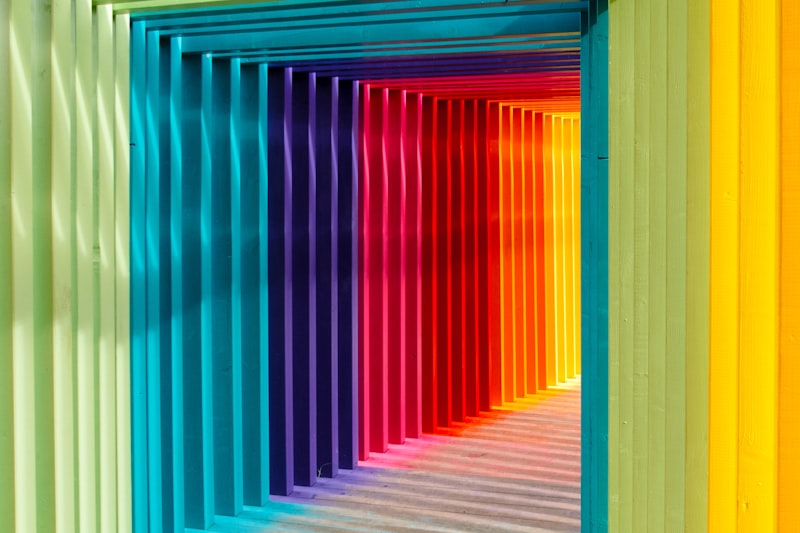
The concept of Film Color represents a fundamental category within the psychological study of color perception, specifically defining one of the primary “modes of appearance” that chromatic stimuli can assume for the observer. Unlike the color of objects, which is perceived as localized, textured, and belonging to a specific surface within three-dimensional space, film color is characterized by its distinct lack of these spatial attributes. It is typically described as a hue that appears soft, homogeneous, texture-free, and essentially two-dimensional, seeming to float or reside in an undetermined spatial position, often perceived as filling the aperture through which it is viewed. This mode of appearance is critical because it isolates the purely chromatic experience from the complex spatial and textural computations that the visual system performs when interpreting the colors of physical objects, thus providing a crucial window into the mechanisms underlying human color constancy and spatial processing.
Psychologically, film color serves as the baseline, or reduced, experience of color. When viewing conditions are intentionally manipulated to remove all cues related to depth, texture, and localization—a process often achieved by viewing a colored stimulus through a small, uniform aperture or hole (known as the reduction screen)—the observer experiences film color. This reductionist method strips away the environmental context, forcing the visual system to register only the chromatic information without assigning it to a specific surface or illumination source. The resultant perception is that of a pure color sensation, without any associated material quality, rendering it distinct from other perceptual modes such as Surface Color, Volume Color, or Luminous Color. Understanding this distinction is paramount in color science, as it separates the physical stimulus (the wavelength composition of light) from the highly sophisticated cognitive interpretation (the mode of appearance) constructed by the brain.
Definition and Core Characteristics
Film color, sometimes synonymously referred to as Aperture Color, is defined by several intrinsic phenomenal characteristics that differentiate it from other visual experiences. Its most defining trait is its homogeneity; the color is uniform across the entire perceived area, lacking any gradients, shadows, or textural variations that would suggest a material quality or surface structure. Furthermore, it possesses non-localization; the color does not appear fixed to a specific distance or plane. While the observer knows the light is coming from the aperture, the color itself seems to exist in a spatial void or right up against the viewing plane, appearing flat and depthless. This absence of spatial assignment is what allows the visual system to experience the chromatic quality in its simplest form, divorced from the complex calculations involved in assigning color to real-world objects under varying illumination conditions.
A key characteristic contrasting film color with surface color is the lack of lightness constancy. When viewing a patch of surface color (e.g., a piece of red paper), the perceived lightness and hue remain relatively stable despite changes in the intensity of the ambient light (a phenomenon known as color constancy). However, film color is highly sensitive to changes in illumination intensity. If the physical light intensity reaching the eye increases, the film color will appear brighter and potentially shift in hue or saturation, behaving more like a pure light source than a material surface. This direct, unmediated relationship between the physical stimulus intensity and the perceived attribute underscores the reduced nature of film color, confirming that the sophisticated mechanisms of constancy are not engaged when spatial and textural cues are absent.
The appearance of film color is inherently two-dimensional, often described as ‘veil-like’ or ‘gaseous.’ Although it occupies visual space, it does not possess the solidity or texture associated with material objects. This lack of material quality distinguishes it starkly from surface colors, which are experienced as possessing texture (matte, glossy, rough) and being localized onto a definite surface. The perception of film color is, therefore, an experience of pure hue and brightness, isolated from the depth and material cues that define our everyday interactions with the colored world. The rigorous maintenance of the aperture viewing condition is essential; if the observer’s attention shifts or if subtle cues about the environment or the material nature of the stimulus are introduced, the perception often rapidly shifts from film color back to the more ecologically relevant surface color mode.
Historical Context and Early Research
The systematic study of color modes of appearance, which includes the definition of film color, gained significant traction in the early 20th century, primarily driven by the work of German psychologists focusing on phenomenology and Gestalt principles. The most influential figure in establishing the taxonomy of color appearance modes was David Katz, whose seminal 1911 work, The World of Colour (later translated and expanded), provided a comprehensive framework for classifying how colors are experienced. Katz meticulously detailed the differences between surface, film, and volume colors, recognizing that physical stimulation alone was insufficient to predict the total perceptual experience. He argued that the visual system actively constructs the mode of appearance based on contextual cues.
Katz’s experimental methodology heavily relied on the use of the reduction screen—a device designed to eliminate spatial and contextual cues by forcing the observer to view the colored stimulus through a small, uniformly dark aperture. By removing the frame of reference, Katz demonstrated empirically that the color of a surface (which exhibits constancy and texture) transforms immediately into film color (which is flat and highly dependent on physical luminance) when its context is removed. This research fundamentally shifted the focus of color science from mere color matching (concerned only with wavelength) to the psychological reality of color perception, recognizing that color is intrinsically linked to perceived space and material properties.
Prior to Katz, researchers like Ewald Hering had laid the groundwork by emphasizing the subjective and phenomenal aspects of color, but it was the explicit classification by Katz that formalized film color as a distinct perceptual entity. The recognition of film color provided a crucial tool for researchers investigating color constancy—the phenomenon where the perceived color of an object remains stable despite drastic changes in the illuminant. By studying the transition between film color (where constancy fails) and surface color (where constancy holds), scientists could isolate the specific visual mechanisms, often involving simultaneous contrast and adaptation, responsible for achieving perceptual stability in the complex, dynamic environment of the real world.
Distinguishing Film Color from Surface Color
The distinction between film color and surface color (also called object color) is arguably the most important differentiation in the study of color modes of appearance, as it highlights the active, constructive role of the visual system. Surface color is the everyday experience of color—the red of an apple, the blue of a painted wall. It possesses three key attributes: localization (it belongs to a specific location and distance), materiality (it feels like it has a texture, gloss, or matte finish), and lightness constancy (its perceived shade is stable across varying light levels). Conversely, film color possesses none of these traits. It is spatially ambiguous, lacks any material texture, and its apparent lightness changes directly with the intensity of the light stimulus.
The visual mechanisms engaged for these two modes differ significantly. The perception of surface color involves complex cognitive processes that estimate the nature of the illuminant and separate the reflected light from the properties of the surface itself. This process requires cues related to spatial organization, shadowing, and depth. Film color, however, eliminates these requirements. When the visual system cannot determine the origin or context of the light, it defaults to the simplest possible registration: a pure chromatic field. This means that surface color is fundamentally an interpretation of an object, while film color is a direct perception of light energy.
The experimental conditions necessary to elicit each mode illustrate their differences clearly. Surface color is typically observed under natural viewing conditions, where binocular vision, depth cues, and surrounding context are available. Film color requires a constrained viewing environment, usually achieved via the aperture method, which effectively transforms the viewing experience into a forced two-dimensional projection.
Key differences can be summarized as follows:
- Spatial Quality: Surface color is perceived as three-dimensional, localized, and possessing depth; Film color is perceived as two-dimensional, flat, and spatially ambiguous (non-localized).
- Material Quality: Surface color implies texture (matte, glossy, porous); Film color is homogeneous, textureless, and lacks material association.
- Constancy: Surface color exhibits lightness and color constancy (stability under varying illumination); Film color lacks constancy, changing directly with physical luminance.
- Perceptual Origin: Surface color is interpreted as reflected light from an object; Film color is perceived as pure, transmitted light or illumination filling a void.
The Phenomenology of Film Color Perception
The subjective experience of perceiving film color is unique and often surprising to novice observers. When a subject successfully achieves the film color mode, the resulting field of color is often described as possessing a purity of hue that is difficult to replicate in the surface mode. Because the brain is not attempting to compensate for an assumed illuminant or surface quality, the chromatic sensation is experienced in its most direct form. The color seems to float effortlessly, divorced from the physical reality of the stimulus location. This phenomenon underscores the fact that color is not a property of light alone, nor is it strictly a property of the object; it is a complex construction derived from the interaction between light, object, and the observer’s visual system, heavily modulated by context.
The experience is intrinsically tied to the loss of depth perception within the aperture. The lack of disparity cues and the uniform background eliminate the necessary visual information for the brain to assign a distance or orientation to the colored field. This spatial uncertainty forces the perception into the flat, two-dimensional mode. Furthermore, film color is often perceived as inherently “softer” or less saturated than a comparable surface color, even when the measured chromaticity is identical. This subtle difference suggests that the brain adds a perceptual quality of “solidity” or “materiality” when interpreting light as belonging to a surface, a quality absent in the pure, ethereal quality of film color.
The difficulty in maintaining film color perception is itself a key phenomenological aspect. The visual system is powerfully biased toward interpreting visual information ecologically, meaning it constantly seeks to assign color to objects and surfaces (surface mode). If the observer detects even a minor reflection, a shadow, or a slight change in the shape of the aperture, the perception can “snap” back to surface color, instantly introducing depth and texture. This instability highlights the delicate balance between sensory input and cognitive interpretation that defines the modes of appearance. The observer must deliberately maintain an uncritical, focused attention on the field itself, ignoring peripheral cues, to sustain the reduced experience of film color.
Experimental Methods and Measurement
Studying film color requires precise control over viewing geometry and illumination, ensuring that confounding spatial cues are rigorously excluded. The primary method utilized across decades of research is the Aperture Method, which involves presenting the colored stimulus, usually generated by a uniform light source or a highly transmissive filter, behind an opaque reduction screen. This screen contains a small, often circular or square, opening (the aperture).
The setup is engineered so that the observer can only see the colored light filling the aperture, without being able to see the edges, the depth, or the material surrounding the actual stimulus source. Key experimental controls include:
- Uniform Background: The reduction screen must be uniform black or dark grey, eliminating simultaneous contrast effects that could introduce perceived boundaries or textures.
- Controlled Illumination: The observer’s environment must be strictly dark, ensuring that no stray light or shadows introduce depth cues.
- Fixed Viewing Position: Head and eye movements must often be restricted to prevent the observer from gaining parallax information that could localize the stimulus.
Measurement tasks related to film color often involve matching tasks, where the observer attempts to match the perceived hue and brightness of the film color to a comparison field. Since film color perception is highly sensitive to luminance, researchers use these tasks to plot the relationship between physical luminance and perceived brightness (or lightness, if a gray scale is used). Such experiments were crucial in establishing fundamental laws of color perception, demonstrating how the visual system encodes chromatic information when spatial context is minimized. For instance, psychophysical experiments using film color allowed researchers to accurately map out the visual system’s spectral sensitivity curves, as the measured response is less contaminated by higher-level constancy mechanisms.
Furthermore, film color research is foundational to understanding color scaling systems. Systems designed to represent perceived color attributes—such as the Munsell system, which scales hue, value (lightness), and chroma (saturation)—often rely on standardized viewing conditions that attempt to minimize contextual effects, leaning heavily toward the film color mode of appearance, though Munsell chips are technically viewed as surfaces. By studying film color, researchers gain a purer measure of the phenomenal experience of color, which is essential for creating accurate and perceptually uniform color spaces used in industry and science.
Relationship to Aperture Mode and Illumination
The term Aperture Mode is frequently used interchangeably with film color because the physical constraint of viewing through an aperture is the most reliable method for inducing this specific mode of appearance. The aperture acts as a reduction mechanism, achieving a state of minimal visual information regarding depth and surface quality. When the visual system receives chromatic information without the necessary spatial input to localize it, it interprets the stimulus as pure light filling a gap, rather than light reflected off a material surface.
Illumination plays a decisive role in defining film color. Since film color is experienced as pure light, its perceived brightness is directly proportional to the physical intensity of the light stimulus. This contrasts sharply with surface color, where the perceived lightness (value) is largely independent of the illumination intensity over a wide range. For example, if a gray patch is viewed as a surface color, doubling the light falling on it does not double its perceived lightness; the visual system compensates and it still looks like the same gray object. If that same gray patch is viewed as film color, doubling the light causes it to appear significantly brighter, perhaps even perceived as white or glowing, because the compensation mechanism for illumination has been disabled by the lack of context.
This sensitivity to illumination makes film color a powerful tool for studying visual adaptation. When the eye adapts to a specific light level, the appearance of film color changes dramatically. If an observer is dark-adapted and then views a moderate film color, it might appear intensely bright; if the observer is light-adapted, the same stimulus might appear dim. This dependency confirms that film color represents the perceptual state immediately prior to the implementation of constancy mechanisms, serving as the raw data that the visual system must process and interpret spatially to achieve stable object color perception.
Applications and Theoretical Significance
The theoretical significance of film color extends far beyond academic curiosity; it informs our understanding of how the brain constructs reality. The existence of film color demonstrates unequivocally that color perception is not merely a passive reception of wavelength data but an active, context-dependent cognitive process. Film color isolates the chromatic component, allowing researchers to study the neural pathways responsible for encoding hue and brightness before they merge with the pathways responsible for form, depth, and texture.
In visual art and display technology, the concepts derived from film color are applied to understand how light sources and displays are perceived. For example, electronic screens, such as computer monitors or televisions, primarily present color in the film mode—the light is emitted directly, lacks material texture, and often appears non-localized or flat. Understanding the psychological differences between emitted film color and reflected surface color is crucial for color management systems that attempt to accurately translate colors between print media (surface color) and digital displays (film color), accounting for the inherent perceptual shifts that occur when the mode of appearance changes.
Furthermore, the study of film color provides crucial evidence supporting the distinction between sensory input and perceptual output in models of vision. It highlights the importance of ecological validity in perception—the visual system is optimized to identify objects and surfaces in a stable manner. Film color is the exception that proves the rule; it is the perception achieved only under artificially reduced conditions, revealing the underlying sensory reality when the ecological interpretation mechanisms are deliberately thwarted. Thus, film color is a cornerstone for models of color constancy, such as the Retinex theory and various adaptation models, which must account for the transition between raw retinal input (approximated by film color) and stable object perception (surface color).
Related Perceptual Phenomena
While film color is distinct, it exists within a larger taxonomy of color modes of appearance, including Volume Color and Luminous Color. Volume color is experienced when a substance appears to fill a three-dimensional space, such as the color of fog, colored glass, or deep water. Unlike film color, volume color possesses depth and spatial localization, even though it lacks a solid surface. It is perceived as transparent or translucent, allowing light to pass through it, differentiating it from the opaque flatness of film color.
Luminous Color (or glow) is another related but distinct mode. Luminous colors are those that appear to be self-luminous, such as the filament of a light bulb, the sun, or a neon sign. These colors are typically perceived as having extremely high brightness and often appear to irradiate or cast light onto surrounding objects. While film color can be created by light sources, it is usually constrained within an aperture and lacks the radiating quality of truly luminous colors. In certain high-intensity film color experiments, however, the film color may transition toward a luminous appearance, particularly if the contrast ratio with the surrounding dark field is very high, blurring the perceptual boundaries between the modes.
The full range of color modes demonstrates the flexibility of the visual system in processing chromatic information. The categorization of film color, surface color, volume color, and luminous color underscores that the brain’s interpretation of color is always tied to its interpretation of the physical world—materiality, distance, and illumination. Film color, by stripping away these external interpretations, remains the most elemental and fundamental psychological experience of chromatic sensation, providing the necessary foundation for all further, complex modes of color appearance.