Fine Motor Skills: Unlocking Precision and Human Dexterity
Scientifically Reviewed · Dr. Marwa Abd-Alazim · September 15, 2026
Review Criteria & Clinical Standards
This content undergoes rigorous scientific peer-review and medical editorial standards at Arab Psychology Network to ensure clinical accuracy, validity, and compliance with evidence-based guidelines from leading psychological and healthcare authorities (APA / WHO).

Introduction to Fine Motor Skills
Fine motor skills represent the intricate coordination of small muscle groups, primarily those located in the hands, wrists, and fingers, synchronized with the eyes. These skills are fundamental to human dexterity and precision, enabling us to interact effectively with the immediate environment. Unlike gross motor skills, which involve larger movements necessary for locomotion and posture, fine motor skills are geared towards manipulation, requiring exceptional control over force, timing, and direction. The successful execution of fine motor tasks—ranging from the simple act of grasping a utensil to the complex movements required for surgical procedures or playing a musical instrument—is deeply interconnected with cognitive processing, visual perception, and sensory feedback mechanisms, making their development a central focus in developmental psychology and pediatric healthcare.
The acquisition of robust fine motor control is not merely about physical capability; it is a critical prerequisite for independence and academic success. During early childhood, mastering these skills allows children to engage in essential self-care activities, such as dressing and feeding, thereby fostering a sense of competence and autonomy. Furthermore, the development of sophisticated hand skills, particularly the precise movements needed for drawing and writing, directly impacts a child’s readiness for formal schooling and their ability to express knowledge effectively. Deficits in this area can significantly impede learning, not because of intellectual capacity, but due to the physical difficulty of recording thoughts or manipulating educational materials, highlighting the profound practical importance of fine motor proficiency.
This entry will provide a comprehensive examination of fine motor skills, beginning with a precise definition and a clear differentiation from gross motor movements. We will explore the historical context of how these developmental milestones have been studied and integrated into psychological theory. Emphasis will be placed on the developmental trajectory, detailing key milestones from infancy through school age, and discussing the pervasive role these skills play in supporting cognitive development and executive functioning. Finally, the article will address the practical applications in everyday life, methods of clinical assessment, and the therapeutic interventions utilized when fine motor challenges arise, offering a holistic view of this essential domain of human functioning.
Defining Fine Motor Skills and Distinctions from Gross Motor Skills
Fine motor skills are defined by the requirement for graded force control, accuracy, and efficiency in the use of small muscles, specifically those intrinsic to the hand (e.g., lumbricals, interossei) and extrinsic muscles controlling wrist and finger movement. These skills rely heavily on precise sensory input—tactile, proprioceptive, and visual—which informs the motor system about the object being manipulated and the necessary adjustments in muscle tension. Examples of highly refined fine motor skills include the pincer grasp, necessary for picking up small items; bilateral coordination, required for cutting paper with scissors; and manual dexterity, essential for tasks like buttoning a shirt or typing on a keyboard. The hallmark of fine motor proficiency is the ability to sustain these precise movements over time without excessive fatigue or tremor.
Crucially, fine motor skills must be distinguished from gross motor skills, although the two systems are interdependent. Gross motor skills involve the large muscle groups of the torso, arms, and legs, and are responsible for posture, balance, locomotion (walking, running), and major bodily movements. The core difference lies in the level of precision and the size of the muscle groups involved. However, the refinement of fine motor actions is fundamentally dependent upon the stability provided by the gross motor system. For instance, a child cannot effectively hold a pencil (fine motor task) unless their trunk and shoulder muscles (gross motor stability) are adequately engaged to stabilize the proximal joints. This concept is often summarized by the principle of “proximal stability for distal mobility,” meaning the body’s core must be stable before the extremities can achieve controlled, precise movement.
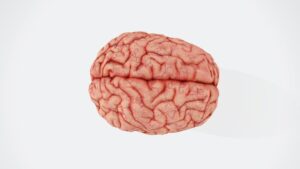
The neurobiological mechanisms underpinning fine motor control are complex and involve significant cerebral processing. Motor commands originate in the primary motor cortex but are heavily modulated by the cerebellum, which ensures coordination, timing, and error correction, and the basal ganglia, which assists in initiating and scaling movements. Furthermore, the development of fine motor dexterity requires the maturation of specific neural pathways, particularly the corticospinal tracts, which mediate voluntary, fractionated movements of the fingers. Continuous practice and feedback lead to myelination and synaptic pruning, resulting in faster and more accurate motor programs, demonstrating that fine motor skill is a product of both biological maturation and experiential learning.
Historical Perspectives on Motor Development Research
The systematic study of motor development, including the acquisition of fine motor skills, gained prominence in the late 19th and early 20th centuries. Pioneering researchers like Arnold Gesell established detailed norms for motor milestones, documenting the predictable sequence in which children acquire various motor abilities. Gesell’s work, heavily influenced by a maturational perspective, suggested that motor development followed a genetically predetermined timetable, with fine motor skills emerging in a predictable cephalocaudal (head-to-toe) and proximodistal (center-to-periphery) progression. This early research provided the essential framework for pediatricians and psychologists to identify developmental delays by comparing individual children against established norms.
Later theoretical frameworks, notably those proposed by Jean Piaget, integrated motor activity directly into cognitive development. Piaget emphasized that infants use their emerging motor schemes, such as reaching and grasping, to explore their environment, thereby constructing knowledge about object permanence, causality, and spatial relationships. From this constructivist perspective, fine motor manipulation is not merely a physical skill but a critical tool for learning and problem solving. The act of manipulating small objects requires focused attention and cognitive planning, directly contributing to the development of early logical thought and complex visual-motor integration.
The mid-to-late 20th century saw a shift toward dynamic systems theory, which posits that motor skills emerge from the interaction of multiple factors: the nervous system, the physical properties of the body, the task demands, and the environment. This perspective moved beyond the purely maturational view, recognizing that practice, coaching, and environmental support significantly influence the timing and quality of fine motor skill acquisition. Contemporary research continues this trend, utilizing advanced neuroimaging techniques to map the neural correlates of fine motor learning, showing strong links between fine motor proficiency in preschool and later performance in areas requiring executive function, solidifying the idea that motor learning is inherently integrated with cognitive development.
Key Developmental Milestones in Fine Motor Acquisition
The trajectory of fine motor development begins prenatally and progresses rapidly during the first few years of life, following a predictable sequence of acquisition. In early infancy (0–6 months), movements are largely reflexive, such as the palmar grasp reflex, which is gradually inhibited and replaced by voluntary reaching and grasping. Initially, infants use an ulnar grasp (using the pinky side of the hand), but by six months, they typically exhibit a palmar grasp where the object is held against the palm using all fingers. This period is characterized by the refinement of visual tracking and hand-eye coordination, essential for accurately targeting and manipulating objects.
The transition to sophisticated manipulation occurs around the end of the first year (9–12 months), marked by the emergence of the pincer grasp—the precise opposition of the thumb and index finger. This skill is transformative, allowing infants to handle small particles of food, pick up tiny crumbs, and explore objects in greater detail. Toddlerhood (1–3 years) brings further refinement, focusing on bilateral coordination and tool use. Children learn to stack blocks, turn pages of a book one at a time, transfer objects between hands efficiently, and begin to use simple utensils like spoons. Their scribbling evolves from uncontrolled movements to deliberate marks and rudimentary drawing strokes.
During the preschool years (3–5 years), fine motor skills become significantly more complex, laying the groundwork for academic tasks. Children master essential self-help skills like buttoning large buttons, zipping clothing, and manipulating fasteners. Tool usage improves dramatically: they can hold crayons with a dynamic tripod grasp (using the thumb, index, and middle fingers), draw basic shapes (circles, squares), and use safety scissors to cut along a line. This period is crucial for the development of pre-writing skills, where the coordination of wrist, finger, and hand muscles is consolidated to manage the physical demands of legible handwriting.
By the time children reach school age (5 years and older), fine motor development focuses on increasing efficiency, speed, and endurance. Handwriting shifts from being a laborious process to an automatic skill, allowing students to keep pace with note-taking demands. They gain proficiency in complex assembly tasks, participating in intricate crafts, and learning precise skills required for hobbies or specific vocations, such as typing, coding, or playing musical instruments like the piano or guitar. At this stage, fine motor performance is highly correlated with academic output and the overall sense of competence in navigating a world increasingly reliant on manual dexterity and precision.
The Critical Role of Fine Motor Skills in Cognitive Development
The relationship between fine motor function and cognitive ability is bidirectional and highly integrated. Early manipulation skills provide the primary means by which infants gather sensory data about the world, directly fueling cognitive growth. When a child grasps, rotates, and mouths an object, they are learning about concepts such as weight, texture, balance, and spatial orientation. This sensorimotor exploration forms the foundation for later abstract thought, as the physical experience of manipulating objects helps solidify mental representations of those objects and their properties. Deficiencies in fine motor skills can therefore limit the quality and quantity of exploratory learning, potentially leading to developmental delays in related cognitive domains.
Fine motor tasks are inherently linked to the development of executive functions, the set of cognitive processes necessary for controlling behavior and achieving goals. Performing a complex fine motor task, such as tying a shoe or building a complicated structure with small components, requires planning (sequencing the steps), working memory (holding the sequence in mind), inhibitory control (preventing impulsive or incorrect movements), and sustained attention. Children who struggle with fine motor skills often display associated difficulties with these executive functions, suggesting that the effort required to manage the motor output drains cognitive resources that could otherwise be dedicated to higher-level thought processes.
In academic settings, the link is particularly salient regarding handwriting fluency. If a student must expend significant cognitive effort simply to form letters legibly and quickly, fewer resources remain available for the actual composition of ideas, grammar, and organization. This cognitive load hypothesis explains why children with poorly developed fine motor skills often underperform in written assignments, even if their verbal reasoning and understanding of the subject matter are strong. Conversely, automatic, efficient fine motor performance allows the cognitive system to allocate maximum resources to complex problem-solving and creative output, demonstrating that physical dexterity is a vital component of intellectual expression.
Everyday Applications and Functional Significance
The functional significance of proficient fine motor skills permeates nearly every aspect of daily life, extending far beyond the classroom. The mastery of Activities of Daily Living (ADLs) is heavily reliant on fine motor precision. Self-feeding requires coordination to manage utensils and bring food accurately to the mouth. Dressing demands intricate skills for manipulating small fasteners like buttons, snaps, zippers, and shoelaces. Personal hygiene tasks, such as brushing teeth, combing hair, and operating faucets, also rely on fine motor control. The ability to perform these tasks independently is fundamental to a child’s self-esteem and minimizes reliance on caregivers, contributing significantly to social and emotional maturity.
In the realms of education and vocation, fine motor skills are indispensable tools. While handwriting remains crucial, modern life increasingly demands proficiency in keyboarding and digital manipulation. Operating computer mice, touch screens, and specialized electronic equipment requires high levels of hand-eye coordination and finger isolation. Furthermore, many professional fields, particularly those involving science, technology, engineering, and medicine, rely on exceptional dexterity. Surgeons, laboratory technicians, jewelers, and artists all depend on the ability to execute highly precise, controlled movements under varying levels of pressure and time constraints, illustrating that fine motor capacity often dictates access to certain career paths.
Beyond necessity, fine motor skills enrich quality of life through leisure and social engagement. Participation in hobbies such as knitting, drawing, painting, building models, or playing complex board games all require good dexterity and manipulation. The ability to play a musical instrument, one of the most demanding fine motor activities, provides a profound source of personal achievement and social connection. Thus, fine motor proficiency supports not only basic survival and education but also personal fulfillment, creativity, and successful navigation of the sophisticated demands of contemporary society, underscoring its broad and lasting functional relevance.
Assessment and Clinical Relevance of Fine Motor Function
Assessment of fine motor skills is a critical component of developmental monitoring, typically performed by pediatricians, occupational therapists (OTs), and physical therapists (PTs). Standardized instruments are used to objectively measure a child’s performance against age-matched norms across several domains, including precision, speed, manual dexterity, and visual-motor integration. Examples of widely used tools include the Bruininks-Oseretsky Test of Motor Proficiency (BOT-2) and the Peabody Developmental Motor Scales (PDMS-2). These assessments help clinicians identify specific areas of weakness, differentiate between difficulties arising from motor control versus visual perception, and establish a baseline for therapeutic intervention.
Fine motor deficits are a hallmark feature of several clinical conditions. Developmental Coordination Disorder (DCD), sometimes referred to as dyspraxia, is characterized by significant difficulty coordinating motor actions that is not attributable to a general medical condition or intellectual disability, often resulting in marked struggles with handwriting and daily tasks. Fine motor difficulties are also commonly observed in children with Autism Spectrum Disorder (ASD), impacting their ability to engage in complex play and social interaction, and in those with Attention-Deficit/Hyperactivity Disorder (ADHD), where impulsivity and attentional difficulties compound challenges with precision and speed. Early identification of these deficits is essential, as fine motor delays often persist without targeted intervention.
Intervention strategies are primarily delivered through Occupational Therapy (OT), which focuses on enhancing functional independence. Treatment typically involves a combination of direct skill practice (e.g., specific handwriting drills), task modification (adapting the environment or tools, such as using specialized grips or adaptive scissors), and addressing underlying components like strength, sensory processing, and visual-perceptual skills. Furthermore, contemporary intervention often incorporates play-based approaches and technological aids to make practice engaging and meaningful. The goal of therapy is not only to improve the quality of movement but also to ensure the child can successfully participate in all required home, school, and community activities, maximizing their overall motor functioning and confidence.
Further Reading
The body of scientific literature on fine motor skills continues to expand, reflecting the growing understanding of their fundamental role in child development and cognitive architecture. Recent research has focused heavily on longitudinal studies linking early fine motor proficiency to later academic outcomes and exploring neurological correlates using advanced imaging. The following list provides a selection of recent, high-impact journal articles detailing the impact of fine motor skill development on cognitive function, early intervention strategies, and the integration of fine motor ability into broader learning theories.
- Klein, L. (2020). The impact of fine motor skill development on cognitive development in preschool-aged children. International Journal of Developmental Science, 14(3), 125-132.
- Fernandez, J., & Kline, P. (2020). The development of fine motor skills in infants and toddlers: Implications for early interventions. Developmental Neuropsychology, 45(2), 167-182.
- Harding, K., & Simpson, J. (2020). The role of fine motor skills in learning and problem solving. Educational Psychology, 40(3), 434-444.
- Kline, P., & Biederman, J. (2019). The development of fine motor skills and its relation to cognitive development: A longitudinal analysis. Developmental Psychology, 55(10), 1620-1639.
- Henderson, L., & Brown, P. (2019). The importance of fine motor skills in early childhood development. Early Childhood Education Journal, 47(6), 703-711.