Flippancy: Why We Hide Serious Emotions Behind Humor
Scientifically Reviewed · Dr. Marwa Abd-Alazim · September 3, 2026
Review Criteria & Clinical Standards
This content undergoes rigorous scientific peer-review and medical editorial standards at Arab Psychology Network to ensure clinical accuracy, validity, and compliance with evidence-based guidelines from leading psychological and healthcare authorities (APA / WHO).
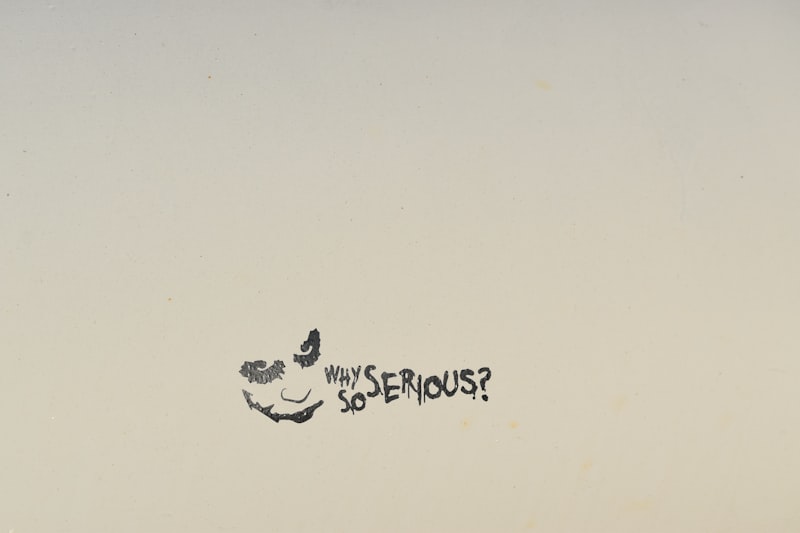
FLIPPANCY, in psychological terminology, is defined as a specific behavioral and communicative phenomenon characterized by the display of inappropriate levity or lightness when confronting a subject that demands gravity, seriousness, or deep emotional consideration. This term specifically targets the cognitive and affective misalignment that occurs when an individual addresses a serious problem, a stressful situation, or an anxiety-provoking subject with a demeanor or verbal response that is markedly trivial, casual, or overtly humorous. The core function of flippancy is often interpreted as a defensive mechanism, serving to neutralize overwhelming negative affect by substituting it with a superficial sense of control or detachment, thereby allowing the individual to bypass the immediate emotional requirement of the situation, often at the expense of genuine engagement or appropriate social signaling.
The inappropriate nature of flippancy is context-dependent but generally understood relative to established social norms regarding mourning, professional conduct, or emotional vulnerability. While humor often serves as a beneficial social lubricant, flippancy crosses a boundary, suggesting either a profound inability to process the gravity of the situation or a deliberate, if subconscious, attempt to minimize the reality of the threat or challenge being discussed. Unlike genuine empathy or even constructive problem-solving, flippancy provides a temporary, superficial antidote to discomfort, failing to address the underlying psychological tension or the objective severity of the external circumstance. This behavioral pattern is distinct because the levity is not intended to foster resolution but rather to dissolve the tension through avoidance, creating a sense of distance between the subject and the affect it should naturally elicit.
Definition and Core Characteristics
The central characteristic of flippancy is the observable contrast between the affective state displayed and the objective reality of the topic under discussion. When an individual employs flippant language or behavior, they are essentially signaling a detachment from the emotional weight that the topic carries for others or for themselves, manifesting as an unsettling lack of seriousness. This detachment can range from mild, overly casual language used in a formal setting, to overt joking about catastrophic events or personal tragedies. The psychological utility of this response lies in its ability to immediately reduce the perceived threat; by treating the severe matter as trivial, the individual temporarily sidesteps the emotional labor required for genuine coping or deep introspection, which can be immensely taxing when facing high-stakes situations such as medical diagnoses, financial ruin, or existential crises.
Furthermore, flippancy often relies on semantic distortion or rapid topic shifting to maintain its effectiveness. A flippant response might involve using euphemisms, minimizing adjectives, or introducing entirely unrelated humorous anecdotes to divert attention away from the core issue. This mechanism is highly effective in disrupting focused communication, forcing interlocutors to adjust to the sudden shift in tone, which often leaves the serious subject unresolved or inadequately addressed. This behavior is not merely an expression of humor, but rather an active psychological defense mechanism rooted in the need for emotional regulation, particularly when the anxiety generated by the subject exceeds the individual’s current capacity for healthy processing. The individual may genuinely feel stressed, but the flippant exterior serves as a protective façade against the vulnerability associated with admitting fear or distress.
Crucially, the perception of flippancy hinges entirely on the audience and the established social contract of the interaction. What one group perceives as lighthearted relief might be interpreted by another as callous disregard or profound immaturity. For instance, in a professional medical consultation discussing severe illness, any attempt to introduce humor that minimizes the seriousness of the diagnosis would be immediately categorized as flippant and inappropriate, undermining the therapeutic alliance and trust. The consistent use of flippancy signals an underlying psychological tension, prompting closer examination into the individual’s customary coping repertoire and their ability to tolerate painful or uncertain realities.
Psychological Functions of Flippancy
From a psychoanalytic perspective, flippancy operates primarily as an ego defense mechanism, serving a function similar to intellectualization or isolation of affect, where the emotional component of a threatening experience is deliberately separated from the cognitive content. By focusing on the superficial humor or trivial aspects of the situation, the ego protects itself from the potentially overwhelming anxiety, fear, or guilt that the serious subject inherently evokes. This mechanism is particularly prominent in situations where the individual feels a lack of control; converting gravity into levity is a way of symbolically asserting dominance over circumstances that are otherwise uncontrollable, providing a temporary, albeit false, sense of mastery. The relief experienced is immediate and potent, reinforcing the use of the defense in subsequent stressful encounters.
Another significant function is the management of social discomfort and interpersonal tension. In group settings, when a highly sensitive or taboo subject is introduced, flippancy can be utilized to rapidly diffuse the collective anxiety that arises. If all participants feel uneasy about discussing a specific loss or failure, a flippant remark can act as a catalyst for shifting the mood, relieving the pressure for everyone involved to engage in deep, painful introspection. However, this relief is often transactional; while it eases immediate tension, it simultaneously hinders the necessary communicative work of acknowledging and processing the event, potentially leading to unresolved issues persisting beneath the surface of the group dynamic.
Furthermore, flippancy can function as a form of self-protection against vulnerability. When an individual is required to discuss a personal failing, a mistake, or a deep fear, the act of treating the subject lightly preempts potential criticism or pity from others. By joking about their own vulnerability, the individual controls the narrative and dictates the permissible emotional response from their audience. This defensive humor shields the true emotional pain, preventing the disclosure of authentic distress which the individual may perceive as dangerous or humiliating. Therefore, flippancy is often a signal not of indifference, but of acute, often unrecognized, internal emotional conflict and difficulty with self-disclosure.
Flippancy vs. Related Concepts
It is essential to distinguish flippancy from other forms of humor and defensive strategies, particularly gallows humor, a comparison frequently noted in psychological literature. Gallows humor is defined as humor arising in extremely stressful or traumatic circumstances (often involving death, injury, or severe hardship) used specifically by those directly involved in or facing the danger. While both flippancy and gallows humor involve levity in serious situations, gallows humor often serves as a bonding mechanism among victims or professionals (e.g., soldiers, emergency responders) and is typically contextualized within shared, extreme adversity. Flippancy, conversely, often appears socially disruptive and is characterized by a lack of genuine understanding or respect for the seriousness of the situation, frequently employed by individuals who are not directly facing the immediate acute threat.
Another related concept is denial, which involves the outright refusal to acknowledge reality or painful facts. While flippancy shares the goal of avoiding unpleasant reality, it is a more active, communicative strategy. Denial is passive avoidance; flippancy is active minimization and trivialization, engaging with the subject only to immediately dismiss its gravity through humorous deflection. Similarly, flippancy differs from sarcasm, though the two can overlap. Sarcasm is a verbal mechanism intended to wound or mock through irony, often laced with aggression. Flippancy, while potentially hurtful due to its perceived insensitivity, is primarily aimed at protecting the speaker from their own anxiety, rather than delivering targeted criticism toward others.
In clinical contexts, flippancy must sometimes be differentiated from symptoms associated with manic states or certain personality disorders. In a manic episode, excessive levity, inappropriate jokes, and rapid, tangential speech might mimic flippancy, but they are symptoms of a broader physiological and cognitive dysregulation, often involving grandiosity and flight of ideas. While flippancy as a defense mechanism can be adopted by anyone under stress, pathologically pervasive flippancy, especially when coupled with lack of remorse or empathy, may suggest features of narcissism or antisocial personality traits, where the levity is used to manipulate or express profound indifference to the suffering of others. Therefore, assessing the underlying intent and pervasive pattern of the behavior is critical for accurate differentiation.
The Contextual Nature of Inappropriate Levity
The judgment of whether levity constitutes flippancy is highly dependent on the situational context, the cultural background of the participants, and the established relational dynamics. In Western professional settings, particularly those involving legal or medical matters, the expectation for formality and emotional restraint is high, making even mild attempts at humor regarding core topics susceptible to being labeled flippant. However, within certain subcultures or familial units, where humor is a primary tool for coping with intergenerational trauma or chronic adversity, a higher degree of seemingly inappropriate levity might be culturally acceptable, serving as an adaptive, shared coping strategy rather than an individual defense mechanism.
The relational hierarchy also plays a critical role in how flippancy is received. A subordinate using flippant language when addressing a serious directive from a superior is likely to be viewed as disrespectful and unprofessional, signaling a lack of commitment or seriousness regarding their duties. Conversely, a superior might use mild, seemingly flippant remarks to intentionally de-escalate tension or humanize a difficult decision, leveraging their position to redefine the emotional tone of the interaction. In these cases, the power differential allows the behavior to be interpreted as strategic management rather than merely a poor coping mechanism, highlighting the intricate social calculus embedded in the definition of appropriate affect.
Furthermore, the timing of the levity is crucial. Humor used immediately following a catastrophic announcement is almost invariably perceived as flippant because it bypasses the necessary phase of initial shock and emotional acknowledgment. However, humor introduced much later, during the sustained phase of coping or recovery, can often be reintegrated constructively as a sign of resilience and a return to psychological equilibrium. The inability to gauge this timing—the failure to allow for the appropriate window of gravity—is often the defining characteristic that transforms adaptive humor into maladaptive flippancy, demonstrating a profound difficulty in reading the emotional needs of the surrounding environment.
Developmental and Social Manifestations
In developmental psychology, flippancy is often observed in adolescents as they navigate the complex transition toward adult emotional responsibilities. Facing increasing academic pressure, social complexity, and the heightened awareness of existential threats, teenagers often employ flippant remarks about serious topics (e.g., death, future career failure, romantic rejection) as a means of managing their intense, often labile, anxiety. This behavior allows them to experiment with emotional detachment and test social boundaries, gauging how far they can push conventional seriousness before facing social sanctions. In this developmental context, occasional flippancy may be a transient, albeit sometimes frustrating, stage of emotional experimentation.
However, if this pattern persists into adulthood, especially in professional or intimate relationships, it signals a failure to integrate mature coping skills. In adult social dynamics, persistent flippancy often leads to interpersonal isolation, as others perceive the individual as emotionally unavailable, insensitive, or untrustworthy in times of crisis. When a partner consistently responds to serious relational conflicts with minimization or jokes, the foundation of trust erodes because the aggrieved party feels their concerns are being invalidated and dismissed. The social manifestation of chronic flippancy is thus a failure of emotional validation, leading to relational strain and the perception of superficiality.
Socially, flippancy can also be deployed as a calculated strategy of psychological warfare or status assertion. By treating another person’s deeply held beliefs or concerns with overt levity, the flippant individual subtly diminishes the importance and authority of the interlocutor, effectively asserting intellectual or emotional superiority. This form of social flippancy is less about anxiety avoidance and more about dominance signaling, functioning as a passive-aggressive form of dismissal that is difficult to challenge directly without appearing overly sensitive or humorless. The person using flippancy in this manner leverages the social ambiguity of humor to inflict subtle psychological injury while maintaining a veneer of innocence.
Clinical Implications and Assessment
While episodic flippancy is a common response to situational stress, persistent and pervasive flippancy warrants clinical attention, as it can be indicative of underlying psychological distress or maladaptive coping patterns. In clinical assessment, the clinician must ascertain whether the flippancy is merely a surface-level defense or a symptom of a deeper, chronic affective disorder. Questions must be posed to determine if the individual recognizes the inappropriateness of their response and whether they possess the capacity to shift into a more serious, engaged mode when necessary. Failure to modulate one’s emotional response according to context suggests a significant deficit in emotional intelligence or self-awareness.
Clinically relevant flippancy is often noted in patients struggling with severe trauma or Post-Traumatic Stress Disorder (PTSD). In these cases, the flippant remarks about traumatic memories or triggers serve as a highly rigid defense against the intrusion of overwhelming affect. By trivializing the severity of the trauma, the patient attempts to keep the memory at a distance, preventing emotional flooding. However, this defense ultimately impedes therapeutic progress, as successful trauma resolution requires the safe and gradual processing of the associated painful emotions. The flippancy acts as a powerful barrier to vulnerability, often manifesting as resistance within the therapeutic relationship itself.
Assessment tools should focus on the individual’s history of stress responses and their capacity for genuine emotional expression. Clinicians might look for patterns where flippancy consistently replaces sadness, fear, or anger, indicating a generalized avoidance of core negative emotions. Furthermore, chronic flippancy can complicate the assessment of mood disorders; a patient presenting a cheerful, overly casual demeanor while discussing suicidal ideation, for example, requires careful clinical triangulation to determine if the levity is manipulative, defensive, or indicative of an underlying mixed affective state. The therapeutic goal is not to eliminate humor, but to reduce the compulsion to use humor as an automatic avoidance response to seriousness.
Management and Therapeutic Responses
Therapeutic intervention aimed at managing flippancy must first address the underlying anxiety and fear of vulnerability that fuels the defense mechanism. Cognitive Behavioral Therapy (CBT) techniques can be employed to help the patient identify the precise situations and thoughts that trigger the flippant response. Once the trigger is identified (e.g., feeling judged, fear of failure, threat of loss), cognitive restructuring can challenge the core belief that seriousness equates to danger or helplessness. The patient is encouraged to replace the automatic flippant response with a more moderate, reality-based emotional acknowledgment.
Psychodynamic approaches focus on interpreting the flippancy as a form of resistance within the session, gently pointing out how the levity prevents deeper exploration of painful material. The therapist might utilize techniques such as reflective listening, mirroring the patient’s flippant remark and then asking what serious feeling that remark was intended to cover. By creating a safe, non-judgmental space, the therapist encourages the patient to tolerate the discomfort associated with genuine sadness or fear, slowly dismantling the need for the immediate defensive evasion. The therapeutic relationship itself serves as a corrective experience where seriousness is modeled as safe and productive, rather than threatening.
Furthermore, psychoeducation regarding appropriate emotional signaling is crucial. Patients who rely heavily on flippancy often lack awareness of how their behavior impacts others, particularly in professional or intimate settings. They must be taught the distinction between adaptive, contextual humor and defensive, dismissive levity. Skills training can focus on enhancing emotional literacy—learning to identify and verbalize feelings directly (e.g., “I feel scared,” “I am worried about this outcome”) rather than defaulting to minimization or joking. The ultimate aim is to equip the individual with a broader, more flexible repertoire of emotional responses, allowing them to choose seriousness when the situation demands gravity.