Olfactory Perception: Decoding the Essence of Floral Scents
Scientifically Reviewed · Dr. Marwa Abd-Alazim · October 23, 2026
Review Criteria & Clinical Standards
This content undergoes rigorous scientific peer-review and medical editorial standards at Arab Psychology Network to ensure clinical accuracy, validity, and compliance with evidence-based guidelines from leading psychological and healthcare authorities (APA / WHO).
The Core Definition of Flowery Odor
The term “Flowery,” within the context of psychological study, refers specifically to one of the six fundamental, primary odor qualities defined by German psychologist Hans Henning in his influential, though now largely historical, systematic classification known as the Odour Prism. This classification system, developed in the early 20th century, sought to categorize the vast and often amorphous world of scent perception into a manageable, three-dimensional geometric structure. The Flowery quality, designated as a vertex on this prism, denotes an odor sensation that is perceived as irreducible, serving as a foundational element from which all complex floral scents are derived. Essentially, it represents the prototypical, pure essence of a blossom smell, such as that derived from rose, jasmine, or lilac.
The fundamental mechanism behind Henning’s approach was purely perceptual, aiming to map subjective human experience rather than objective molecular structure. Henning proposed that any smell encountered in the environment could be plotted as a point on the surface or within the interior of his prism, based on how closely it resembled the six primary qualities situated at the vertices. The Flowery category is crucial because a vast majority of pleasant, naturally occurring odors possess a strong floral component. When an individual perceives a scent, the olfactory system registers a blend of these primaries; a pure floral odor would lie close to the Flowery vertex, while a complex perfume might lie on a face connecting the Flowery, Ethereal, and Resinous corners, representing a harmonious blend of these fundamental sensations.
The Genesis of Henning’s Odour Prism
The systematic study of Olfaction lagged significantly behind the study of other senses, such as vision and audition, largely due to the immense chemical complexity of odorants and the lack of a clear physical correlate (like wavelength for color) that could easily categorize smells. This deficiency spurred Hans Henning, a pioneer in German experimental psychology, to devise a system in the period around 1916. Henning’s goal was ambitious: to bring order to the subjective chaos of human smell perception by creating a visual, relational model. He meticulously collected and compared thousands of odor samples, asking subjects to rate their similarity and difference, ultimately concluding that six primary qualities were necessary and sufficient to describe the entire universe of perceived scents.
Henning’s work was heavily influenced by existing models in color theory, particularly the opponent process theory, which utilized geometric structures (like the color wheel) to explain relationships between primaries. By adopting the three-dimensional prism shape, Henning suggested that the transitional smells lay along the edges connecting the primary qualities. The six primaries were arranged such that opposing qualities (like Flowery and Foul) were separated by the greatest distance on the structure, indicating their perceptual antagonism. While the Odour Prism itself is now considered historically significant rather than scientifically definitive, it represented a monumental early effort to quantify and structure the qualitative experience of smell, providing a necessary framework for subsequent research in Sensation and Perception.
The Six Primary Odor Qualities
In Henning’s classification, the Flowery quality is but one of six anchors necessary to define the olfactory landscape. Understanding the Flowery vertex requires context regarding the five other fundamental qualities that complete the spatial model. These six primaries were chosen because Henning believed they could not be reduced further and served as the endpoints for describing all intermediate odors. The structural arrangement allowed for the mixing of adjacent qualities, while qualities opposite each other were considered fundamentally different and rarely blended harmoniously in natural smells.
The six vertices of the Henning Odour Prism are defined as follows, with Flowery often placed near the “pleasant” axis of the prism, standing in stark contrast to its conceptual opposite:
- Flowery: Representing sweet, delicate, and pleasant smells, often associated with natural blossoms (e.g., rose oil, lavender).
- Foul: Representing repulsive, decaying, or putrid smells (e.g., hydrogen sulfide, excrement).
- Ethereal (or Fruity): Representing light, volatile, and quickly evaporating smells, often associated with ripe fruits or chemical esters (e.g., ether, citrus oils).
- Resinous: Representing pungent, woody, or balsamic smells, often derived from tree saps or gums (e.g., frankincense, turpentine).
- Burnt (or Empyreumatic): Representing smells resulting from high heat or combustion (e.g., tar, toasted bread, smoke).
- Spicy: Representing sharp, piquant, or aromatic smells associated with certain common cooking spices (e.g., clove, cinnamon).
The significance of the Flowery quality, therefore, extends beyond just its pleasantness; it defines the boundary of an entire sector of the olfactory space. Any odor perceived as having a floral note is understood to possess a significant component derived from this primary vertex. For example, a “Spicy-Flowery” scent, like carnation, would plot along the edge connecting the Flowery and Spicy vertices, indicating a seamless blend of these two sensory attributes.
Practical Illustration: Analyzing a Perfume
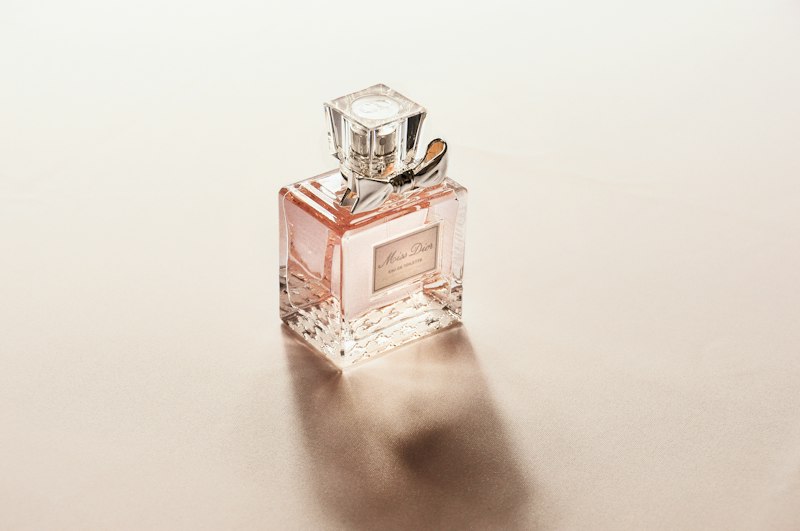
To illustrate the application of the Flowery quality according to Henning’s model, consider the real-world scenario of a master perfumer developing a complex fragrance intended to evoke a “spring garden at dusk.” This perfume must be analyzed not just by its chemical ingredients, but by the resulting sensory profile, which is where the primary qualities come into play. The perfumer is essentially aiming to balance the perception of the primary qualities, using Flowery as the dominant note, while ensuring it is grounded by other categories.
The psychological application of the Flowery primary in this scenario involves a step-by-step deconstruction and reconstruction of the desired scent profile:
- Establishing the Dominant Primary: The perfumer first selects highly concentrated floral essential oils (such as Bulgarian rose or tuberose) to establish the robust Flowery quality. This component ensures the core identity of the fragrance.
- Adding Modifying Primaries: To prevent the scent from being too heavy or cloying, the perfumer incorporates lighter, more volatile notes, such as bergamot or green apple. These ingredients contribute the Ethereal (Fruity) primary quality, lifting the scent and adding brightness. The resulting blend plots on the face of the prism between Flowery and Ethereal.
- Providing a Base and Depth: To ensure the scent lasts and gains sophistication, heavier base notes like sandalwood or patchouli are introduced. These contribute the Resinous primary quality, grounding the volatile top notes. This addition pulls the scent profile inward, creating a truly complex odor that blends three distinct primaries (Flowery, Ethereal, Resinous).
- Evaluating the Antagonist: The perfumer must constantly ensure the fragrance avoids any hint of the Foul primary quality, which would ruin the composition. Even slight impurities or degradation of the floral oils can introduce Foul notes, pulling the fragrance profile toward the opposite vertex of the prism and rendering it unpleasant to the wearer.
This process demonstrates that the Flowery term, in Henning’s framework, acts as a measurable vector of sensory input rather than just a descriptive adjective. It provides a foundational psychological unit for creation and analysis in the fragrance industry.
Significance and Impact
The Flowery quality, and the Odour Prism in which it is embedded, holds immense historical significance within experimental psychology, particularly in the study of sensory modalities. Its importance lies primarily in its role as a pioneering attempt to impose systematic, quantitative measurement onto a highly subjective field. Before Henning, descriptions of smell were entirely reliant on evocative but scientifically imprecise language (e.g., “like Grandma’s kitchen”). Henning provided a standardized, albeit flawed, psychological metric that allowed researchers to communicate about specific odor characteristics across different labs.
This framework found substantial practical application, especially during the mid-20th century, in specialized industries such as flavor chemistry and perfumery. While modern analysis heavily relies on gas chromatography and mass spectrometry to identify the chemical components of a scent, the initial conceptualization and blending processes often still rely on categorical perception. The understanding that all floral scents share a core perceptual quality—the Flowery primary—helped chemists and artisans predict how new compounds would be perceived by humans and how they would blend with existing ingredients. Although subsequent theories, such as those focusing on molecular shape, have provided a stronger physical basis for olfaction, Henning’s spatial model remains a crucial stepping stone in the history of experimental psychology, demonstrating the early drive to transform qualia into quantifiable data.
Connections to Modern Olfactory Theories
The study of the Flowery quality belongs squarely within the subfield of Experimental Psychology, specifically under the umbrella of Sensation and Perception. Henning’s model is related to, yet distinct from, several other key theories that attempted to explain how humans perceive odor. Its closest conceptual relative is the work of Linus Pauling and subsequently John Amoore, who developed the Stereochemical Theory of Olfaction.
Amoore’s theory, developed mid-century, maintained the idea of primary odors but crucially shifted the basis from purely psychological perception (Henning’s model) to physical reality. Amoore proposed that olfactory receptors respond to the precise shape and size of the odorant molecule, suggesting that the six or seven primary odors he identified (which included a “floral” or “fragrant” category, similar to Henning’s Flowery) corresponded to specific molecular lock-and-key fits in the nasal cavity. While Amoore’s list of primaries differed slightly from Henning’s, the existence of a distinct, fundamental “floral” category persisted across both models, highlighting the universal psychological salience of flowery odors. Modern research has moved toward mapping specific receptor genes (the discovery of which won the 2004 Nobel Prize) to specific classes of odorants, but the descriptive language derived from models like Henning’s persists in clinical and commercial settings where subjective human experience remains paramount.