Focal Symptoms: Mapping the Mind Through Brain Injury
Scientifically Reviewed · Dr. Marwa Abd-Alazim · October 2, 2026
Review Criteria & Clinical Standards
This content undergoes rigorous scientific peer-review and medical editorial standards at Arab Psychology Network to ensure clinical accuracy, validity, and compliance with evidence-based guidelines from leading psychological and healthcare authorities (APA / WHO).
Defining Focal Symptoms within the Neuropsychological Paradigm
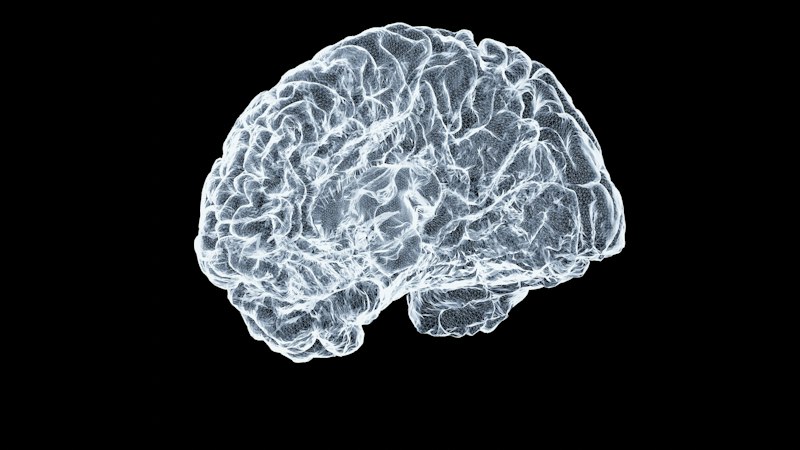
The concept of focal symptoms represents a critical bridge between physical neurology and clinical psychology, offering a window into how localized organic alterations manifest as distinct psychological phenomena. Historically rooted in general medicine, the term originally referred to localized physiological abnormalities, such as a specific motor deficit, localized pain, or sensory loss restricted to a single organ system. However, within the specialized domain of neuropsychology, focal symptoms are understood as circumscribed impairments in cognitive, emotional, or behavioral functions that result from damage or pathology in a highly restricted area of the brain. This conceptual framework shifts the focus from global, systemic brain dysfunction to highly specific, isolated deficits, allowing clinicians to understand how discrete neural networks underlie complex mental operations.
At the core of this neuropsychological perspective is the foundational principle of the localization of function. This scientific tenet posits that the human brain is not a homogeneous organ operating as a single, undifferentiated unit; rather, it is composed of highly specialized regions and networks responsible for mediating distinct mental processes. When a pathology—such as an ischemic stroke, a localized traumatic injury, a primary tumor, or a focal infection—disrupts a specific cerebral region, the resulting psychological deficits are predictably confined to the cognitive or behavioral functions governed by that damaged structure. Consequently, the presence of these selective impairments allows clinicians to infer the precise anatomical site of the underlying brain pathology, illustrating the highly predictable relationship between brain structure and mental processing.
Distinguishing neuropsychological focal symptoms from general medical symptoms requires an appreciation of how localized brain lesions alter an individual’s subjective experience and functional capacity. While a general medical focal symptom might present as a localized physical tremor or a specific visual field deficit, a neuropsychological focal symptom manifests as a selective disruption of higher-order cognitive processing. For example, a patient may experience a profound inability to recognize familiar faces while retaining perfectly normal visual acuity, or they may struggle to execute complex, purposeful motor sequences despite possessing full muscular strength. Recognizing these highly specialized patterns of impairment is crucial, as they demand sophisticated, multi-dimensional assessment techniques that go beyond basic neurological testing to evaluate the fine-grained nuances of human cognition and behavior.
Historical Milestones in Brain Localization and the Discovery of Focal Deficits
The historical trajectory of understanding focal symptoms in psychology is deeply intertwined with the evolution of neurological science and the gradual acceptance of brain localization. During the early nineteenth century, scientific and philosophical debates intensely contested whether mental faculties were distributed globally throughout the cerebrum or mapped to specific cortical areas. An early, albeit scientifically flawed, precursor to localization theory was Franz Gall’s phrenology, which asserted that distinct personality traits and intellectual capacities were housed in specific cranial locations. Although phrenology was ultimately discredited due to its lack of empirical validation, it played a pivotal role in shifting scientific curiosity away from speculative metaphysics toward the systematic study of localized brain pathology and its observable behavioral outcomes.
The mid-nineteenth century marked a watershed era in neuropsychology, characterized by rigorous clinical-pathological correlation studies that provided indisputable evidence for localization. In 1861, the French physician Paul Broca presented the historic case of his patient “Tan,” who possessed intact cognitive comprehension but was entirely unable to articulate any word other than the single syllable “tan.” Upon the patient’s death, Broca’s post-mortem examination revealed a distinct lesion in the posterior portion of the left inferior frontal gyrus, a region now universally designated as Broca’s area. This discovery established Broca’s aphasia (expressive aphasia) as a classic neuropsychological focal symptom, proving that the motor production of language is localized to a specific region of the cerebral cortex.
This localization framework was further expanded in 1874 when the German neurologist Carl Wernicke identified a contrasting language deficit. Wernicke documented patients who spoke with fluent, natural-sounding rhythms and grammar, yet their speech was entirely devoid of meaning, and they demonstrated severe deficits in auditory comprehension. Post-mortem analyses revealed localized lesions in the left superior temporal gyrus, a region subsequently named Wernicke’s area. The identification of Wernicke’s aphasia (receptive aphasia) as a focal symptom complementary to Broca’s aphasia confirmed that language is not a singular, monolithic faculty but is instead composed of discrete sub-components, each localized within distinct cortical regions and interconnected through complex neural pathways.
Conceptual Evolution: From Rigid Localization to Dynamic Functional Systems
As the twentieth century progressed, the scientific community encountered findings that challenged overly simplistic, rigid models of localization. Researchers like the American psychologist Karl Lashley conducted extensive animal lesion studies that led him to formulate the laws of mass action and equipotentiality, which suggested that the brain operates as an integrated whole and that cognitive deficits are proportional to the total volume of cortical damage rather than its precise location. Lashley’s work sparked a vital debate, highlighting the limitations of viewing the brain as a collection of isolated, independent “compartments” and pushing researchers to search for a more sophisticated, integrative theory of brain-behavior relationships.
This conceptual tension was brilliantly resolved by the pioneering Russian neuropsychologist Alexander Luria, who introduced the groundbreaking model of functional systems. Luria proposed that complex psychological processes—such as writing, reading, planning, and memory—are not localized in single, isolated cortical zones but are instead mediated by dynamic, widespread networks of collaborating brain regions. According to this model, each localized area of the brain contributes a highly specific, elementary component to the overall functional system. Therefore, damage to a single, discrete node within this network will result in a focal symptom that reflects the loss of that specific component, which in turn alters the operation of the entire functional system without necessarily obliterating the cognitive capacity as a whole.
Luria’s dynamic framework revolutionized clinical neuropsychology by providing a nuanced method for interpreting focal deficits. It explained how different localized lesions could lead to distinct variations of the same general cognitive impairment. For instance, a writing deficit could arise from a motor-planning lesion in the frontal lobe, a spatial processing lesion in the parietal lobe, or an auditory-processing lesion in the temporal lobe, with each lesion producing a unique, signature error pattern. This perspective preserved the core clinical utility of localization while embracing the modern neuroscientific understanding of the brain as a highly integrated, network-based organ, laying the groundwork for contemporary cognitive neuroscience.
Classification and Clinical Manifestations across Psychological Domains
Unlike diffuse cerebral conditions that lead to generalized intellectual decline, neuropsychological focal symptoms are classified by the highly specific psychological domains they disrupt. This targeted impairment profile allows clinicians to categorize focal symptoms based on whether they primarily affect language, memory, sensory perception, motor planning, or emotional and behavioral regulation. By identifying the exact boundaries of a deficit, neuropsychologists can trace the impairment back to its anatomical source and differentiate it from global cognitive deterioration.
In the cognitive domain, focal symptoms present as highly selective processing failures. The most common manifestations include:
- Aphasia: Selective disruptions in language processing, encompassing expressive deficits (difficulty producing speech) or receptive deficits (difficulty comprehending spoken or written language) while non-verbal intelligence remains preserved.
- Amnesia: Profound memory impairments, such as an inability to form new declarative memories (anterograde amnesia) or recall past events (retrograde amnesia), typically resulting from localized damage to the medial temporal lobes and hippocampus.
- Agnosia: The selective inability to recognize or interpret sensory stimuli—such as objects, environmental sounds, or familiar faces (prosopagnosia)—despite having intact primary sensory organs.
- Apraxia: An impairment in the planning and execution of learned, purposeful motor movements, which cannot be attributed to primary motor weakness, sensory loss, or a lack of comprehension.
Focal symptoms also frequently manifest in the emotional, behavioral, and personality domains, particularly when lesions occur within the frontal lobes or subcortical limbic structures. Damage to the orbitofrontal cortex, for example, can result in frontal lobe syndrome, characterized by a dramatic shift in personality, marked by social disinhibition, impulsivity, impaired ethical judgment, and emotional apathy, even though the patient’s formal intellectual capacities and memory remain completely intact. Similarly, localized lesions in the amygdala can lead to highly specific deficits in processing social threat cues or recognizing fearful facial expressions, illustrating that emotional intelligence and social conduct are also underpinned by discrete, localized neural substrates.
Etiological Factors and Multidisciplinary Diagnostic Pathways
The etiology of neuropsychological focal symptoms is diverse, encompassing any pathological process capable of producing localized structural or functional disruption within the central nervous system. The most frequent acute cause is cerebrovascular accidents (strokes), where a localized interruption of blood supply due to a clot or hemorrhage causes rapid tissue death in a circumscribed vascular territory. Other common etiologies include traumatic brain injuries (TBIs), which can cause localized cortical contusions; slow-growing brain tumors that compress adjacent brain tissue; focal infections such as localized herpes simplex encephalitis; and early-stage neurodegenerative diseases that selectively target specific neural pathways before progressing to global degeneration.
To identify and characterize these symptoms, clinical teams follow a rigorous, multidisciplinary diagnostic pathway that begins with a comprehensive neurological examination. This initial physical assessment evaluates basic motor reflexes, sensory perception, and cranial nerve function to detect gross lateralized abnormalities. Following this, advanced neuroimaging techniques are employed to visualize the structural and functional status of the brain. Structural imaging, such as high-resolution Magnetic Resonance Imaging (MRI) or Computed Tomography (CT) scans, allows clinicians to pinpoint physical lesions, infarctions, or localized tissue atrophy, while functional neuroimaging, such as functional MRI (fMRI) or Positron Emission Tomography (PET), reveals regional changes in blood flow or metabolic activity associated with specific cognitive tasks.
The definitive characterization of focal psychological symptoms, however, relies on a detailed neuropsychological assessment. This process involves administering a specialized battery of standardized, psychometrically validated tests designed to isolate and measure specific cognitive functions, such as executive control, verbal memory, spatial processing, and expressive language. By analyzing the patient’s performance profile, the neuropsychologist looks for patterns of focal brain dysfunction, characterized by severe deficits in one or two highly specific areas alongside completely preserved performance in other domains. This behavioral mapping not only validates the functional consequences of structural lesions visible on neuroimaging but can also detect subtle, microscopic focal dysfunctions that standard structural scans might overlook.
A Case Study in Clinical Application: Post-Stroke Expressive Aphasia
To fully appreciate the real-world application of these neuropsychological principles, it is highly instructive to analyze a concrete clinical scenario. Consider the case of Mr. Johnson, a 65-year-old retired schoolteacher who suddenly experiences an acute onset of weakness on the right side of his body and finds himself completely unable to speak, despite feeling mentally alert and understanding everything happening around him. Upon his arrival at the emergency department, a brain MRI confirms that he has suffered an ischemic stroke, specifically localized to the posterior portion of his left inferior frontal gyrus. This localized cerebrovascular lesion has directly caused a classic neuropsychological focal symptom: expressive aphasia.
The clinical team approaches Mr. Johnson’s diagnosis and treatment plan through a systematic, structured process designed to isolate the focal nature of his cognitive deficit:
- Structural Localization: Medical neuroimaging is used to confirm the presence and precise boundaries of the stroke within Broca’s area in the left hemisphere.
- Behavioral Dissociation: A neuropsychologist administers targeted tasks to demonstrate that while Mr. Johnson cannot generate fluent speech, his auditory comprehension, non-verbal reasoning, and long-term memory remain entirely intact.
- Functional Mapping: The diagnostic testing rules out global intellectual decline, confirming that his communication barrier is a pure, circumscribed motor-planning language deficit.
- Rehabilitative Targeting: A highly focused speech-language therapy program is initiated, specifically targeting the damaged expressive circuits rather than wasting resources on global cognitive stimulation.
This case study perfectly illustrates how the principle of localization of function informs every step of clinical management. Mr. Johnson’s language difficulty is not a symptom of general confusion or intellectual decay, but a direct consequence of localized damage to the neural machinery responsible for translating thoughts into motor speech commands. By recognizing his expressive aphasia as a focal symptom, the clinical team can design a highly targeted rehabilitation program that capitalizes on neuroplasticity, encouraging adjacent cortical regions to gradually assume the functions of the damaged tissue, thereby optimizing his functional recovery and quality of life.
Theoretical Significance and Neurorehabilitation Methodologies
The study of focal symptoms is of profound theoretical significance to the broader field of psychological science, as it provides the primary empirical evidence for the modular organization of the human brain. By observing how a localized lesion can abolish a single, highly specific cognitive ability while leaving all other mental faculties completely untouched, cognitive scientists can map the internal architecture of the human mind. These observations, often documented through the scientific method of double dissociation, allow researchers to prove that complex psychological functions—such as visual perception, language processing, and memory retrieval—are comprised of independent, specialized sub-components that operate in concert to produce seamless conscious experiences.
In clinical practice, the identification of focal symptoms is indispensable for developing targeted cognitive rehabilitation strategies. Rather than employing a generic, one-size-fits-all approach to brain injury recovery, neuropsychologists design personalized interventions that address the patient’s specific pattern of cognitive strengths and weaknesses. For example, a patient suffering from focal executive dysfunction will engage in structured training focused on planning, organizing, and goal-directed behavior, while a patient with a focal memory deficit will be taught to use external compensatory aids, such as electronic organizers, or internal mnemonic strategies to bypass their damaged retrieval pathways, maximizing their independence in daily living.
Furthermore, understanding the precise nature of focal deficits has catalyzed the development of cutting-edge assistive technologies and environmental modifications. By pinpointing the exact cognitive bottleneck caused by a focal symptom, engineers and rehabilitation specialists can design targeted accommodations, such as speech-generating devices for non-verbal aphasic patients, or simplified, highly structured living environments for individuals with severe focal planning deficits. This synergy between theoretical neuroscience and clinical rehabilitation ensures that scientific insights into the localized functions of the brain are directly translated into meaningful, life-enhancing interventions for individuals navigating the challenges of brain injury.
Interdisciplinary Connections and the Broader Cognitive Context
In contemporary neuroscience, the study of focal symptoms is deeply integrated with the concepts of neuroplasticity and compensatory mechanisms. Neuroplasticity refers to the brain’s remarkable capacity to reorganize its neural connections in response to learning, experience, or injury. When a focal lesion occurs, the brain often attempts to compensate for the lost function by recruiting surrounding, undamaged cortical areas or by utilizing alternative neural pathways to accomplish the same cognitive goal. Understanding these adaptive processes allows clinicians to design therapy programs that actively stimulate and guide this cortical reorganization, helping patients regain lost skills by leveraging the brain’s natural capacity for self-repair.
The clinical lessons learned from studying focal symptoms are also crucial for understanding and diagnosing complex, progressive neurological conditions. For instance, certain forms of atypical dementia, such as primary progressive aphasia or frontotemporal lobar degeneration, frequently present in their early stages with highly selective focal symptoms—such as progressive word-finding difficulties or discrete personality changes—long before spreading to cause widespread cognitive decline. Recognizing these early focal presentations is vital for accurate differential diagnosis, enabling clinicians to initiate appropriate pharmacological and behavioral therapies at a time when they can offer the greatest therapeutic benefit.
Ultimately, the study of focal symptoms sits at the vital intersection of neuropsychology, cognitive neuroscience, clinical psychology, and rehabilitation medicine. By bridging the gap between physical brain pathology and complex mental processes, the concept of focal symptoms provides a unifying framework that enriches our understanding of the human mind. Whether investigating rare, highly specialized neuropsychiatric conditions like Capgras syndrome (the delusional belief that a loved one has been replaced by an identical imposter) or designing routine rehabilitation programs for stroke survivors, the clinical and theoretical insights gained from studying focal deficits continue to drive scientific progress, deepening our appreciation of the profound connection between the biology of the brain and the tapestry of human experience.